
How to Cure a Dog Ear Infection Naturally: Safe Home Care and When to Call the Vet

A dog ear problem can look simple from the outside and still be a mess underneath. That matters because “natural” care is only useful when you’re dealing with mild irritation or as support alongside proper treatment. Natural remedies can help mild irritation, but they usually do not cure a true ear infection. If your Border Collie is shaking their head, scratching, or carrying a sour smell from one ear, your job is not to guess wildly. Your job is to sort out whether this is a low-risk situation you can monitor briefly at home, or a problem that needs a veterinarian now.
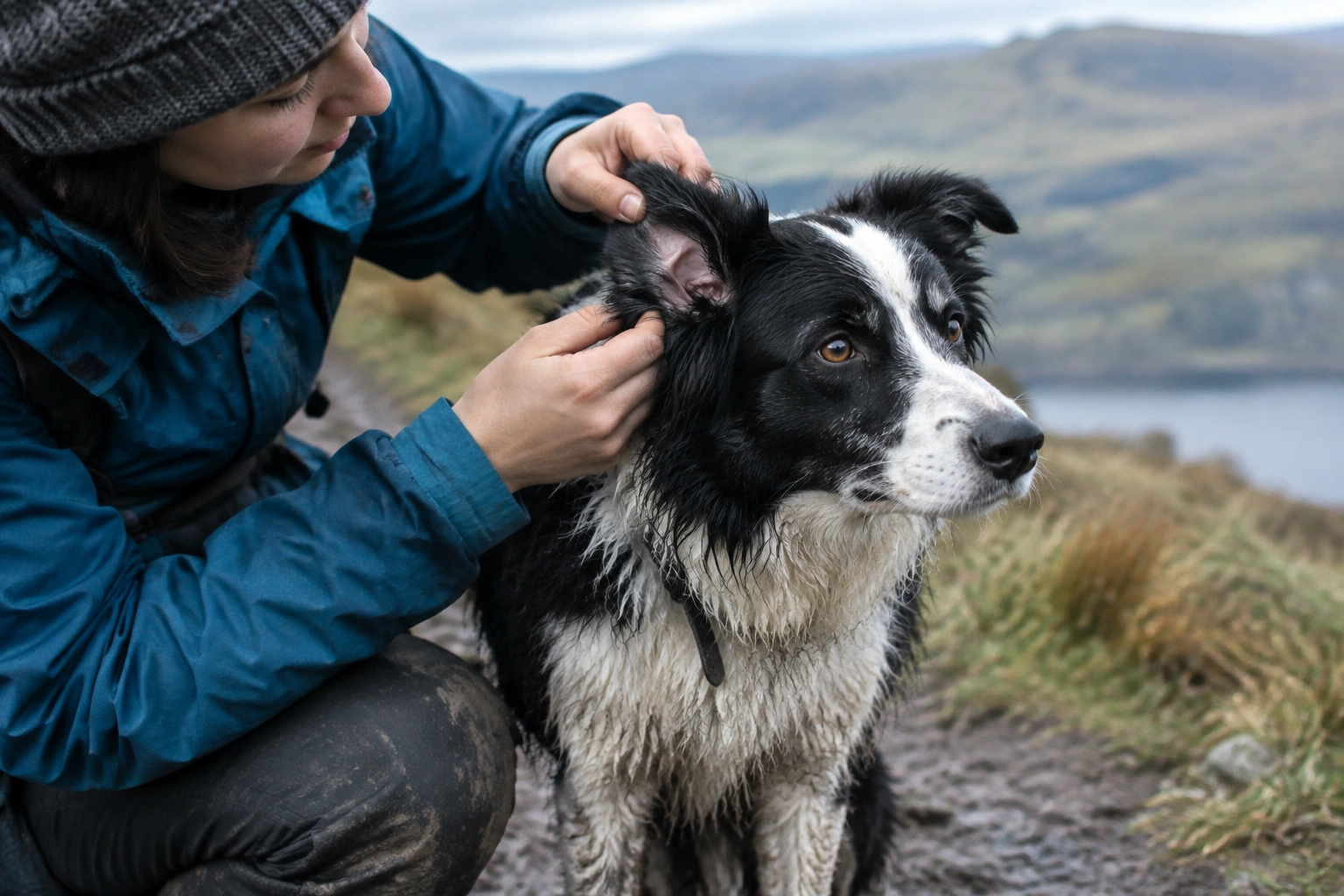
For Border Collies, this can happen after muddy walks, river swims, windy hikes, or time spent pushing through brush. Debris and moisture may irritate the ear canal, and once the skin inside the ear gets inflamed, yeast and bacteria can move in quickly. That is why the safest natural approach is usually supportive care, not “cures” made from household ingredients.
Can You Cure a Dog Ear Infection Naturally?
Sometimes you can soothe mild ear irritation naturally. You usually cannot cure a true ear infection naturally with home remedies alone.
That distinction matters. A dog ear infection, also called otitis externa when it affects the outer ear canal, may involve yeast, bacteria, mites, allergies, trapped moisture, wax buildup, or a foreign body. If the ear is already infected, the problem often needs targeted veterinary treatment. Natural care may help keep the ear dry, reduce irritation, and prevent things from getting worse, but it should not be treated like a replacement for diagnosis.
A useful rule is this: if the ear problem is mild, recent, and not very painful, short-term home care may be reasonable. If the ear is smelly, very red, swollen, painful, bloody, or the dog seems off-balance, stop trying to manage it yourself and contact a veterinarian.
For a broader step-by-step on safe cleaning and warning signs, see our guide on how to get rid of a dog’s ear infection safely.
How to Tell It’s an Ear Infection — and Not Ear Mites, Allergies, or Simple Irritation
The outside signs can overlap, so don’t rely on one clue alone. Smell, discharge, scratching, and head shaking all point to “something is wrong,” but they do not tell you exactly what.
Here is the practical difference:
- Simple irritation or debris: Often follows swimming, bathing, dust, grass seeds, or a muddy outing. The ear may look mildly red or dirty, but the dog is still fairly comfortable.
- Yeast infection: Often has a strong, musty odor and dark waxy discharge. The ear may feel greasy or look inflamed.
- Bacterial infection: May produce more intense redness, pain, and discharge. Some ears become swollen or warm.
- Ear mites: Usually cause intense scratching and dark crumbly debris. They are more common in some dogs than others and can spread to other pets.
- Allergies: Often affect both ears or keep coming back. You may also notice licking, paw chewing, or skin irritation elsewhere.
The key point is that the same “head shaking” behavior can come from very different causes. If the problem keeps recurring, appears in both ears, or comes with skin itching elsewhere, allergies become more likely. If there is thick discharge, a bad smell, or notable pain, infection rises on the list. If the dog is constantly scratching and you see gritty dark debris, mites are worth considering.
That is why a home remedy chosen by smell alone is a gamble. You may calm the ear temporarily while missing the real cause.
Signs Your Dog’s Ear Problem Is Mild Enough for Care at Home
Home care is only worth considering when the problem is clearly mild.
A dog is a better candidate for cautious supportive care if:
- the ear is only slightly red or dirty
- there is no severe pain when you touch the outer ear
- there is no blood, pus, or heavy discharge
- the dog is acting normal otherwise
- there is no head tilt, stumbling, or loss of balance
- the problem started recently after water, dirt, or a bath
That is the narrow lane where gentle cleaning and drying may help. Even then, the goal is not to “treat an infection” on your own. The goal is to remove obvious debris, reduce moisture, and watch closely for improvement.
If your dog flinches, cries, snaps, or pulls away when you approach the ear, skip home treatment. Pain is a warning sign, not a challenge to work through.
Safe Natural Supportive Care for Mild Ear Irritation
The safest natural support is boring, not flashy. That is a good thing.
For a mildly irritated ear, the most useful steps are:
Keep the ear dry
Moisture is one of the easiest ways to keep an ear inflamed. After swimming, bathing, rain, or a wet hike, gently dry the outer ear flap and the visible part of the ear opening with a soft towel or gauze. Do not pack anything deep into the canal.
Reduce further irritation
Avoid more water, rough play that worsens head shaking, and anything that makes the dog rub the ear against furniture or the floor. If your dog is digging at the ear, a cone may be needed briefly to stop self-trauma until you can get advice.
Use only vet-approved ear care products if cleaning is appropriate
If the ear is only mildly dirty and not painful, a vet-approved ear cleaner may be safer than household ingredients. These products are designed for canine ear canals; they are not the same as random disinfectants or kitchen remedies.
The trade-off is simple: gentle supportive care is lower risk, but it works slowly and only when the problem is minor. If the ear is truly infected, you may waste time while the condition worsens.
How to Clean Your Dog’s Ears Safely Without Making Things Worse
Cleaning can help, but only if you do it gently.
Use this approach:
- Look at the ear first. If it is very red, swollen, bloody, or painful, stop.
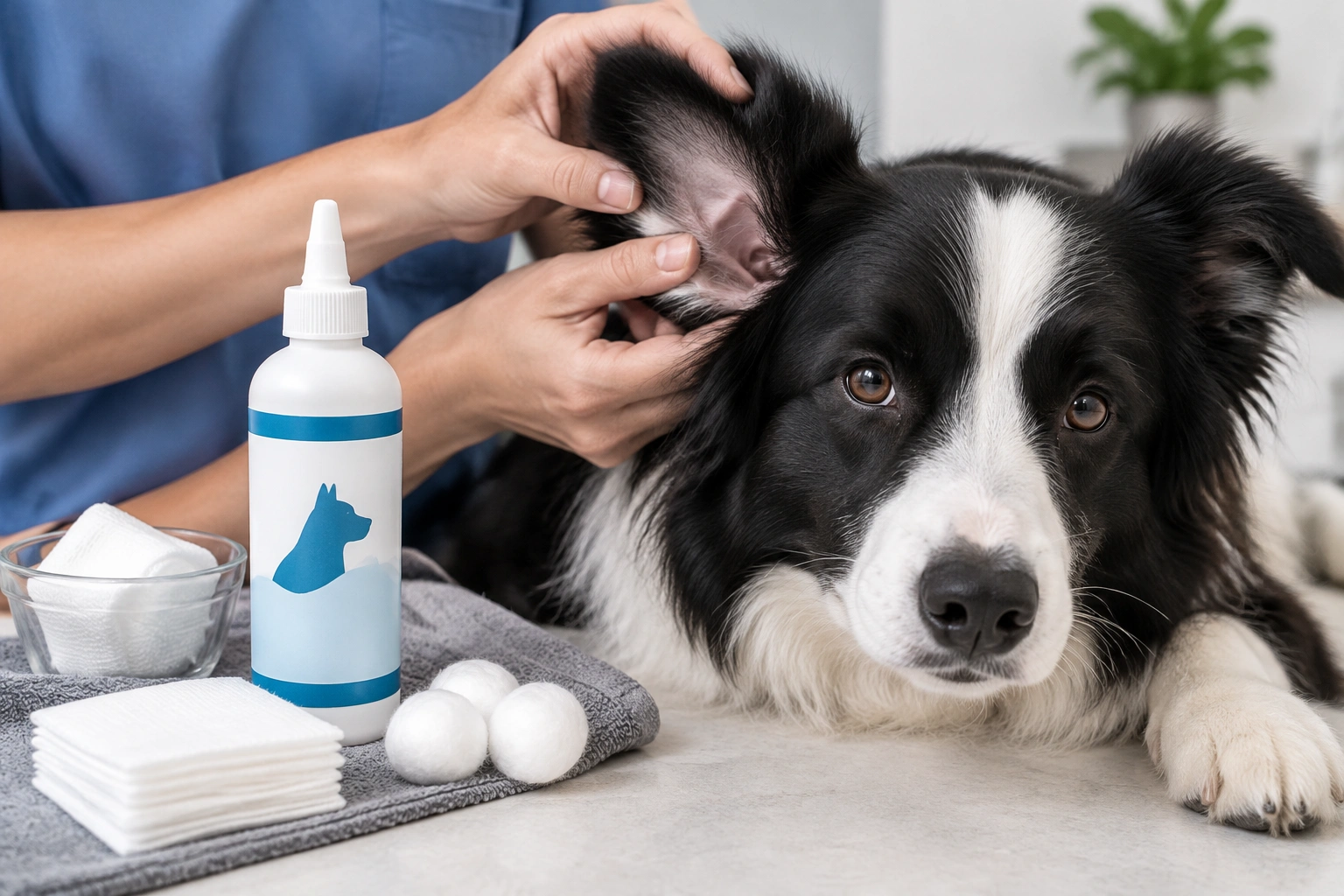
- Use a vet-approved ear cleaner. Follow the label directions and your veterinarian’s guidance.
- Apply only as directed to the visible ear canal. Do not force the nozzle deep into the ear.
- Massage the base of the ear gently. This helps loosen debris without scraping the canal.
- Let your dog shake. That is often how loosened material moves outward.
- Wipe the outer ear and opening with gauze or a cotton ball. Use what you can see, not what you can reach.
- Stop if the dog resists hard or shows pain.
Do not clean at home if the ear is very painful, swollen, bloody, or if you suspect a ruptured eardrum. In those cases, the safest move is to call a veterinarian instead of trying to clean through the problem.
Never use cotton swabs deep in the ear canal. They can push debris farther in and may injure delicate tissue. Also avoid repeated cleaning sessions in the same day unless a veterinarian specifically told you to do that. Overcleaning can strip the ear’s natural protection and make inflammation worse.
A practical example: if your Border Collie comes home from a muddy trail with light odor and a little brown debris, one gentle clean and a dry ear may be enough to settle things. If the ear still smells bad the next day, that is a clue the issue is bigger than dirt.
What to Put in a Dog’s Ear — and What to Never Use
A lot of “natural” advice online is simply unsafe.
Safer choices
- vet-approved dog ear cleaner
- gentle drying with gauze or a soft towel
- veterinarian-directed follow-up care
Avoid unless your veterinarian specifically instructs otherwise
- apple cider vinegar
- hydrogen peroxide
- alcohol
- essential oils
- undiluted vinegar
- oily home mixtures
- random herbal drops
Why avoid them? Because irritated ear tissue is not the same as skin on the outside of the body. Household substances can sting, worsen inflammation, or be unsafe if the eardrum is damaged. Some oils and essential oils are also risky because they are not made for canine ear canals and can irritate sensitive tissue.
If you remember only one thing from this section, make it this: “natural” does not automatically mean safe in the ear.
For general breed care and behavior-related health awareness, the American Kennel Club’s dog care resources are a solid starting point for owners who want to stay practical and prevention-focused.
When Natural Care Is Not Enough: Red Flags That Need a Veterinarian
Some ear problems should never be managed at home for long.
Call a veterinarian promptly if you notice:
- strong odor that does not improve
- thick yellow, green, or bloody discharge
- obvious swelling of the ear flap or canal
- severe pain or crying when touched
- head tilt, stumbling, circling, or balance problems
- a dog that won’t let you near the ear
- symptoms in both ears that keep returning
- worsening redness or discharge after home care
- fever, loss of appetite, or marked lethargy along with ear symptoms
These signs suggest more than mild irritation. They can point to a deeper infection, a ruptured eardrum, a foreign body, or another problem that needs proper treatment. Balance issues are especially important because they suggest the infection or inflammation may be affecting deeper structures.
The practical stop rule is simple: if the ear is getting worse instead of better, home care is no longer the right tool.
Natural Support vs Veterinary Treatment: What Each Is Best For
Natural support and veterinary treatment are not enemies. They solve different problems.
| Situation | Natural support is best for | Veterinary treatment is best for |
|---|---|---|
| Mild irritation after water or dirt exposure | Drying, gentle cleaning, short monitoring | Not usually needed unless symptoms persist |
| Mild ear wax or debris | Removing visible debris carefully | If the ear stays inflamed or smelly |
| Suspected infection | Temporary comfort only | More effective and more reliable |
| Recurrent ear problems | Prevention and early monitoring | Finding the underlying cause |
| Pain, swelling, discharge, balance issues | Not appropriate | Needed promptly |
The trade-off is speed versus certainty. Home care may be cheaper and less invasive, but it is not dependable for true infections. Veterinary treatment is more definitive, especially for bacterial or yeast-related ear disease, and it can prevent the problem from dragging on or recurring.
If your dog’s ear problem keeps coming back, that usually means there is an underlying trigger such as allergies, chronic moisture, anatomy, or a recurring infection pattern. In that case, repeated home treatment is usually the wrong strategy.
How to Prevent Future Ear Infections
Prevention is mostly about moisture control, early detection, and not letting small problems linger.
A practical prevention routine looks like this:
- check the ears after swimming, bathing, or wet weather
- dry the visible ear flap and opening after moisture exposure
- look for redness, odor, or new scratching once or twice a week
- keep an eye on recurring itchiness, especially if allergies are suspected
- do not overclean healthy ears
- address repeated ear issues early instead of waiting for a flare-up
Border Collies are active enough that they often pick up grass, dirt, burrs, and water in the ears during normal life. That means prevention is not about pampering; it’s about quick checks after the activities that make ear trouble more likely.
For dogs that are outdoors a lot, a quick ear check after a hike can be a useful habit. You do not need to inspect every day with a flashlight. You do need to notice changes early.
The ASPCA’s pet health information is also useful if you want a straightforward reminder of when a symptom pattern deserves professional attention rather than more home experimentation.
When to Recheck the Ear or Escalate Care
If you try cautious home support for a mild case, give it only a short window.
Recheck the ear within about 24 to 48 hours. You should see at least a small improvement in odor, redness, scratching, or comfort. If the ear is the same or worse, stop home care and call your veterinarian.
Do not keep trying different remedies one after another. That usually delays real treatment and makes it harder to tell what changed the ear in the first place.
A good rule for owners is this: one gentle clean, one short watch period, then a decision. Improvement means you keep observing. No improvement means you escalate.
FAQs
Can I cure my dog’s ear infection naturally at home?
Sometimes you can help mild irritation settle, but a true ear infection often needs veterinary treatment. Natural care is more about support than cure.
Is apple cider vinegar safe for dog ear infections?
Not as a default home remedy. It can irritate inflamed tissue and may be unsafe if the ear canal is damaged. Ask your veterinarian before using anything acidic in the ear.
Should I clean my dog’s ear if it smells bad?
A bad smell can mean infection, not just dirt. If the ear is painful, swollen, or producing discharge, do not try to scrub it clean at home.
What if my dog keeps shaking its head?
Repeated head shaking usually means the ear is uncomfortable. If it continues after a gentle clean or happens with redness, odor, or discharge, the dog should be seen by a vet.
How long should I wait before calling the vet?
If the problem is mild and clearly linked to water or debris, watch it briefly. If there is no improvement within 24 to 48 hours, or if symptoms worsen sooner, contact a veterinarian.
Can ear mites look like an infection?
Yes. Ear mites can cause dark debris, scratching, and irritation that look similar to infection. That is one reason guessing at home can go wrong.
What should I never put in my dog’s ear?
Avoid hydrogen peroxide, alcohol, essential oils, and undiluted vinegar unless a veterinarian specifically tells you otherwise.
Why do Border Collies get ear issues after outdoor activity?
Because active dogs often pick up moisture, dirt, and plant debris. Those things can irritate the ear canal and create conditions that may contribute to infection.
Should I use cotton swabs to clean inside the ear?
No. Cotton swabs can push debris deeper and may injure the ear canal. Use gauze or a cotton ball only on the visible parts.
When is an ear problem an emergency?
If your dog has a head tilt, balance problems, severe pain, heavy bleeding, or sudden worsening, seek veterinary care quickly.