
How to Tell if Your Dog Has a Blockage: Signs, Risks, and What to Do Next

If you’re trying to figure out how to tell if your dog has a blockage, the safest answer is this: treat repeated vomiting, abdominal pain, loss of appetite, or trouble passing stool as a reason to call a veterinarian right away. A gastrointestinal blockage can progress quickly, so it’s better to get guidance early than to wait and hope it settles.
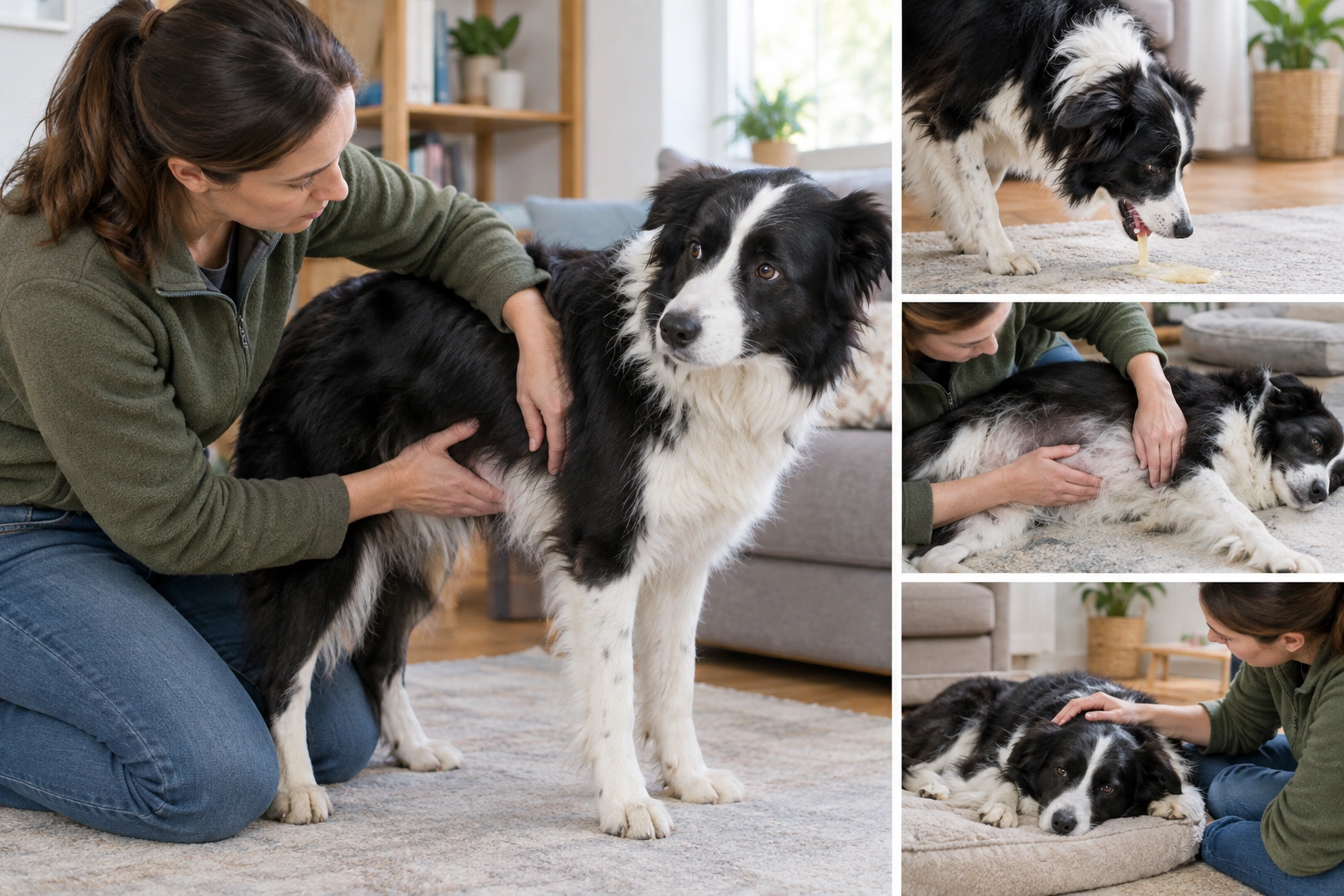
That matters even more with active, mouthy dogs like Border Collies. They explore the world with speed, focus, and a strong urge to carry or chew things. A sock, toy piece, stick, or bit of string can become a serious problem before you ever see the object disappear.
What a Dog Blockage Is and Why Timing Matters
A gastrointestinal blockage, also called an intestinal obstruction, means something is preventing food, fluid, or gas from moving normally through the digestive tract. That “something” is often a foreign object, but it can also be a mass or another physical problem.
Where the blockage is located matters. A problem in the stomach may cause repeated vomiting, retching, drooling, or refusal to eat, especially if the object is still sitting in the stomach or at the exit into the small intestine. A blockage in the small intestine more often causes vomiting, abdominal pain, reduced appetite, and a drop in stool output as the intestine struggles to move contents past the obstruction.
There are two broad patterns:
Partial obstruction
Some material still gets through. A dog may still pass small amounts of stool, seem on-and-off sick, or vomit only after eating. Symptoms can wax and wane, which is one reason owners may think the problem is improving when it is not.
Complete obstruction
Nothing meaningful passes. Vomiting tends to become more frequent, the dog may stop eating entirely, and dehydration or pain can build quickly.
The reason timing matters is simple: a blockage is not just an inconvenience. Depending on the object, its location, and how long it has been there, obstruction can lead to dehydration, tissue damage, electrolyte imbalance, and shock. In some cases, delay can make surgery more likely.
For a plain-language veterinary overview of the urgency, CareCredit notes that dogs with signs of intestinal blockage should be evaluated immediately, and that a family veterinarian may start with an exam and abdominal X-rays.
Early Signs Your Dog May Have a Blockage
The earliest signs are often easy to mistake for a mild stomach upset. That’s why the pattern matters as much as the symptom.
Watch for:
- Vomiting or repeated retching
- Loss of appetite
- Restlessness or inability to settle
- Whining, hunching, or a “prayer” posture
- Abdominal pain when touched
- Lethargy or weakness
- Diarrhea or very small amounts of stool
- Dehydration
- A bloated or tight-looking abdomen
A dog may not show all of these signs at once. One Border Collie might vomit twice after chewing a toy and then refuse dinner. Another might only seem restless, keep stretching, and then stop pooping normally. The point is not to wait for the “full list.” One or two concerning signs after a possible foreign-body ingestion are enough to justify a call.
A practical rule: vomiting plus abdominal discomfort is much more concerning than vomiting alone.
A swollen belly with a tight abdomen can also be seen with bloat/GDV, which is a separate life-threatening emergency that owners may confuse with blockage. If the abdomen looks distended and the dog is trying to vomit without producing much, do not wait for the problem to sort itself out.
How Symptoms Progress Over Time
A blockage often starts with vague signs and then becomes more obvious.
A common progression looks like this:
- Early phase: nausea, lip licking, restlessness, reduced appetite
- Middle phase: vomiting, retching, abdominal discomfort, less stool
- Later phase: dehydration, weakness, painful abdomen, bloating, repeated vomiting
- Severe phase: collapse, extreme lethargy, shock, or a very painful swollen belly
This progression can happen over several hours, depending on what was swallowed and where it is stuck. Partial obstructions may wax and wane, with symptoms seeming better for a period and then flaring again. Complete obstructions usually worsen more steadily.
That is why “he still seems bright” is not a reliable reason to wait. Dogs can mask discomfort well, and some will keep moving or trying to play even when they feel unwell.
Can a Dog Still Poop With a Blockage?
Yes. And that is one of the most misleading parts of the problem.
A dog with a partial obstruction may still pass some stool, sometimes even more than once. That does not rule out a blockage. Small, intermittent, or abnormal stools can happen when only part of the intestinal passage is open.
A complete obstruction is more likely to cause no stool output at all, but even then, early on, you might still see a bowel movement from material already farther along in the tract.
So the real question is not, “Did my dog poop?” It is, “Is my dog vomiting, painful, lethargic, or worsening after possibly swallowing something?” If the answer is yes, stool output should not reassure you.
Blockage vs. Upset Stomach: How to Tell the Difference
A stomach bug or mild dietary upset can look similar at first. The difference is usually in the pattern, severity, and whether the dog can keep anything down.
| Sign | More like simple upset stomach | More concerning for blockage |
|---|---|---|
| Vomiting | One or two episodes, then improvement | Repeated vomiting or retching |
| Water | Can usually keep some down | Vomits after drinking or cannot keep water down |
| Appetite | May be reduced but returns | Refuses food and stays off food |
| Stool | May be soft or loose | Little stool, no stool, or only tiny amounts |
| Pain | Mild discomfort or none | Abdominal pain, hunching, prayer position |
| Energy | Tired but still fairly normal | Lethargy, restlessness, weakness |
| Trend | Starts to improve | Gets worse over hours |
A useful decision rule: if symptoms are escalating rather than easing, treat it as urgent.
Vomiting after eating can happen with many digestive problems, but vomiting without producing stool is especially concerning for obstruction. PetMD describes that combination as a strong indication of intestinal blockage and advises contacting a veterinarian immediately.
What Objects Commonly Cause a Blockage
Foreign bodies are the most common reason dogs get obstructed. The usual suspects are the things dogs love to steal, chew, or swallow too quickly:
- Socks and underwear
- Toys and toy fragments
- Bones
- Rocks
- Sticks
- Fruit pits
- Tampons
- String, yarn, thread, or ribbon
Linear objects like string are especially tricky because they can bunch the intestines up as they move. That can turn a small mistake into a much more serious problem.
If you know or strongly suspect your dog swallowed something, that history matters. It should move the situation from “monitor” to “call the vet now.”
Why Border Collies and Other Active Dogs Can Be at Higher Risk
Border Collies are not uniquely prone to blockages in a medical sense, but their behavior can raise the risk.
They are often:
- Fast and intense around toys
- Mouthy when excited
- Persistent chewers
- Quick to grab dropped items
- Good at finding trouble before you do
That means a Border Collie may swallow part of a toy, a sock, or a stick before an owner realizes what happened. The risk is less about the breed label and more about the combination of energy, speed, and object fixation.
If your dog is a “grab first, think later” chewer, assume the risk is real and manage the environment accordingly.
When a Suspected Blockage Is an Emergency
A suspected blockage becomes an emergency when the dog is actively sick or getting worse.
Go to a veterinarian or emergency clinic right away if your dog has any of these:
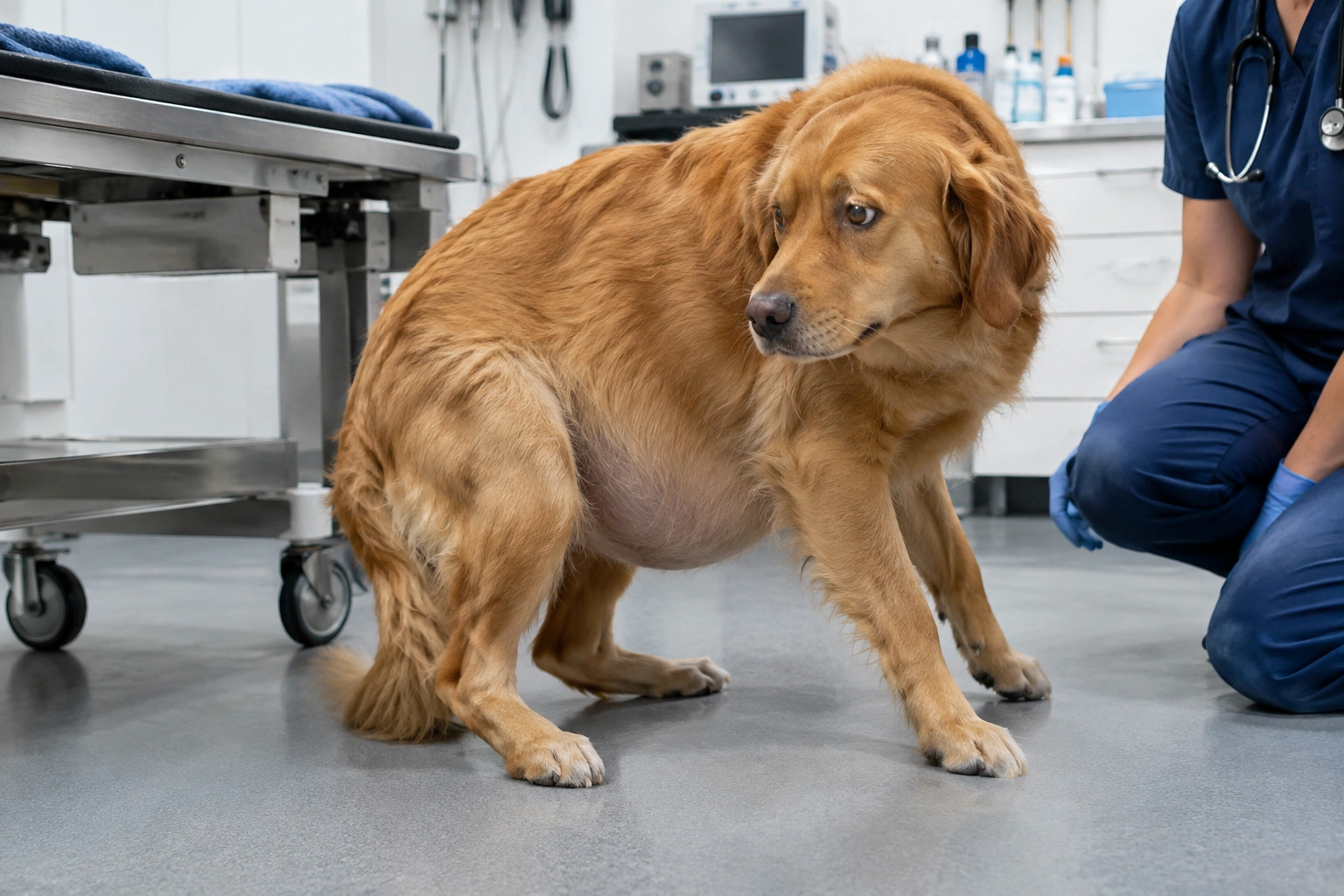
- Repeated vomiting
- Vomiting after drinking water
- Severe or worsening abdominal pain
- A swollen or tight abdomen
- Extreme lethargy or weakness
- Collapse
- Inability to keep water down
- Retching without bringing anything up
- A history of swallowing something dangerous, followed by symptoms
Practical decision path for owners:
– Call your regular vet the same day if you suspect your dog swallowed something and there is any vomiting, abdominal pain, refusal to eat, or trouble passing stool, even if the dog still seems fairly bright.
– Go directly to an emergency clinic if your dog is repeatedly vomiting, cannot keep water down, has a swollen or painful abdomen, seems weak or very lethargic, or collapses.
– Do not “watch overnight” if the dog is vomiting, painful, or clearly getting worse.
If your regular vet is closed, do not wait for morning if your dog is clearly unwell. The nearest emergency veterinary hospital is the right place.
A suspected blockage is not something to “watch overnight” if the dog is vomiting, painful, or showing marked lethargy or weakness.
What to Do Right Now While You’re Waiting for Vet Advice
Keep the response simple and calm.
- Remove access to more objects. Put away toys, socks, bones, sticks, and anything else the dog might chew.
- Keep your dog quiet and indoors. Avoid excitement and unnecessary movement.
- Note what may have been swallowed. Size, material, and time matter.
- Watch vomiting and stool closely. Write down when it happens.
- Prepare to leave quickly. Have a leash, carrier if needed, and your vet’s number ready.
- Bring helpful evidence if you have it. A photo of the suspected object, its packaging, or the item itself can help the vet judge size, material, and risk.
If you need a broader emergency-response framework for dogs, our guide on what to do when a dog has a seizure follows the same calm, practical approach to urgent situations.
What Not to Do at Home
This is where many well-meaning owners make the situation riskier.
Do not:
- Induce vomiting unless a veterinarian specifically tells you to
- Give food or treats “to see if it stays down”
- Offer large amounts of water if the dog is vomiting
- Use laxatives, oils, or home remedies
- Give human medications
- Push the dog into long walks or rough play
Hershey Veterinary Hospital advises owners to keep the dog calm and indoors, avoid food, treats, and home remedies without veterinary advice, and avoid human medications because many are unsafe for dogs and can worsen GI problems.
If the dog swallowed a foreign object, trying to “help it pass” at home can delay proper care and sometimes make the situation worse.
How Vets Confirm a Blockage
The first step is usually a physical exam. Your vet will ask what the dog may have eaten, when symptoms started, and whether vomiting, stool output, or pain has changed.
From there, common parts of the workup and treatment plan include:
- Bloodwork: often used to check hydration status, infection or inflammation, electrolyte changes, and overall organ function
- Abdominal X-rays: often the first imaging step; they may show gas buildup, abnormal intestinal patterns, or sometimes a visible object
- Ultrasound: useful when X-rays are unclear or the object is not visible
- Endoscopy: sometimes used to retrieve objects from the stomach or upper digestive tract
- Fluid support and other supportive care: may be started to address dehydration, vomiting, pain, or electrolyte imbalance while the vet determines the next step
- Surgery: needed when the object is stuck beyond reach, the intestine is compromised, or the obstruction is complete
One important limitation: not every foreign body shows up clearly on plain X-rays. That is one reason vets may recommend more than one test when the history and symptoms are suspicious.
How Treatment Decisions Are Made
Treatment depends on the object, its location, and how sick the dog is.
A vet may consider:
- Medical management if the object is small, the dog is stable, and the vet believes it may pass safely
- Endoscopic removal if the object is reachable without surgery
- Surgery if the obstruction is complete, the object is dangerous, or the dog is worsening
The big trade-off is time. Waiting may avoid a procedure in a mild case, but waiting too long can turn a manageable problem into a surgical emergency.
That is why diagnosis matters early. The goal is not to guess the outcome at home. The goal is to get the dog assessed before the situation becomes more complicated.
How Long Can a Dog Survive With a Blockage?
There is no safe home timeline to rely on. Some dogs decline quickly, while others appear stable for a while and then crash.
What matters is that delay increases the risk of:
- Dehydration
- Tissue damage
- Electrolyte imbalance
- Shock
- A more difficult recovery
- A higher chance of surgery
So the practical answer is: do not wait for certainty. If the symptoms and history fit, get veterinary help now.
When to See a Veterinarian or Certified Trainer
See a veterinarian immediately if your dog has vomiting, abdominal pain, lethargy, bloating, repeated retching, or trouble passing stool after possibly swallowing something.
A certified trainer can help reduce future risk by improving drop-it, leave-it, and toy-exchange habits, but training is prevention, not treatment. It does not replace veterinary care once a blockage is suspected.
If your Border Collie is a fast chewer or object-obsessed, prevention should focus on management: safer toys, tighter floor control, and fewer opportunities to grab fabric, sticks, or small items.
FAQ
Can a dog have a blockage and still act normal?
Yes, especially early on or with a partial obstruction. Some dogs stay bright for a while before worsening.
Is one vomit enough to worry?
One isolated vomit can happen for many reasons. But if it happens after chewing or swallowing something, or if more vomiting follows, call a vet.
Can I give my dog water?
Small sips may be tolerated in some cases, but if your dog is actively vomiting, don’t force water. Ask a vet for guidance.
Will a blockage go away on its own?
Sometimes small objects pass, but you should not assume that will happen. A suspected blockage needs veterinary evaluation.
What if my dog swallowed a sock?
Treat it as urgent, especially if vomiting, retching, or appetite loss starts. Socks are a common cause of obstruction and can become serious quickly.
Can X-rays always find the object?
No. Some objects are hard to see on plain X-rays, which is why ultrasound or other testing may be needed.
For a veterinary reference on the urgency and first diagnostic steps, VCA Hospitals’ pet health resources are a useful general starting point, and the ASPCA’s animal poison control guidance is helpful if you’re unsure whether what your dog swallowed is toxic as well as obstructive. For breed-management context and prevention habits, the AKC’s dog care resources can also be useful.