
What Kennel Cough Sounds Like in a Puppy: A Practical Guide for Worried Owners

A puppy cough can sound alarming fast. One minute your pup seems fine, and the next you hear a dry, harsh noise that makes you wonder whether it is kennel cough, choking, or something more serious.
The short version: kennel cough in a puppy often sounds like a dry, repetitive hack or a goose-like honk. It may come in bursts, and some puppies retch a little afterward as if they are trying to clear their throat. But sound alone is not enough to diagnose it. A puppy that is struggling to breathe, collapsing, or acting distressed needs urgent veterinary attention.
Kennel cough is also commonly used as shorthand for CIRDC, or canine infectious respiratory disease complex, which is an umbrella term for contagious respiratory illness in dogs rather than one single disease.
This guide will help you listen for the right clues, compare kennel cough with other common noises, and decide what to do next.
What kennel cough sounds like in a puppy
Kennel cough is the everyday name for a contagious respiratory syndrome that can cause a very distinctive cough. In plain language, it often sounds:
- dry, not wet
- harsh or hacking
- repetitive, like the puppy is trying to clear something stuck in the throat
- sometimes honking or goose-like
- sometimes followed by gagging or retching
A common pattern is a short burst of coughing, a pause, then another burst. Some owners describe it as sounding like the puppy is “trying to cough up a hairball,” even though dogs do not cough up hairballs the way cats do.
What matters most is the quality of the sound. Kennel cough usually has an irritated, hollow, throat-clearing feel to it rather than a deep chesty wet cough. It may also get worse when the puppy is excited, pulling on a collar, or active.
For first-time owners, a simple mental picture can help: a “honking goose” sound is often used to describe the classic kennel cough style, while a “dry hacking” sound is more of a scratchy, repetitive cough. Puppies may cough more after excitement or when a collar presses on the neck.
If you want a broader comparison of cough sounds in dogs, this related guide on what kennel cough sounds like in dogs can help you compare the sound more carefully.
A simple way to judge the sound
Use this quick test:
- Dry and harsh? Kennel cough becomes more likely.
- Wet and bubbly? That points away from the classic kennel cough sound.
- One sudden choking episode? Think about choking or something stuck.
- Fast snorting inward through the nose? That sounds more like reverse sneezing.
If you are standing there thinking, “That sounds like a cough, but not the cough I expected,” that uncertainty is common. Puppies do not always read the textbook version. The job is not to guess perfectly; it is to decide whether the pattern fits kennel cough closely enough to isolate the puppy and call the vet.
How to tell it apart from reverse sneezing, gagging, choking, and vomiting
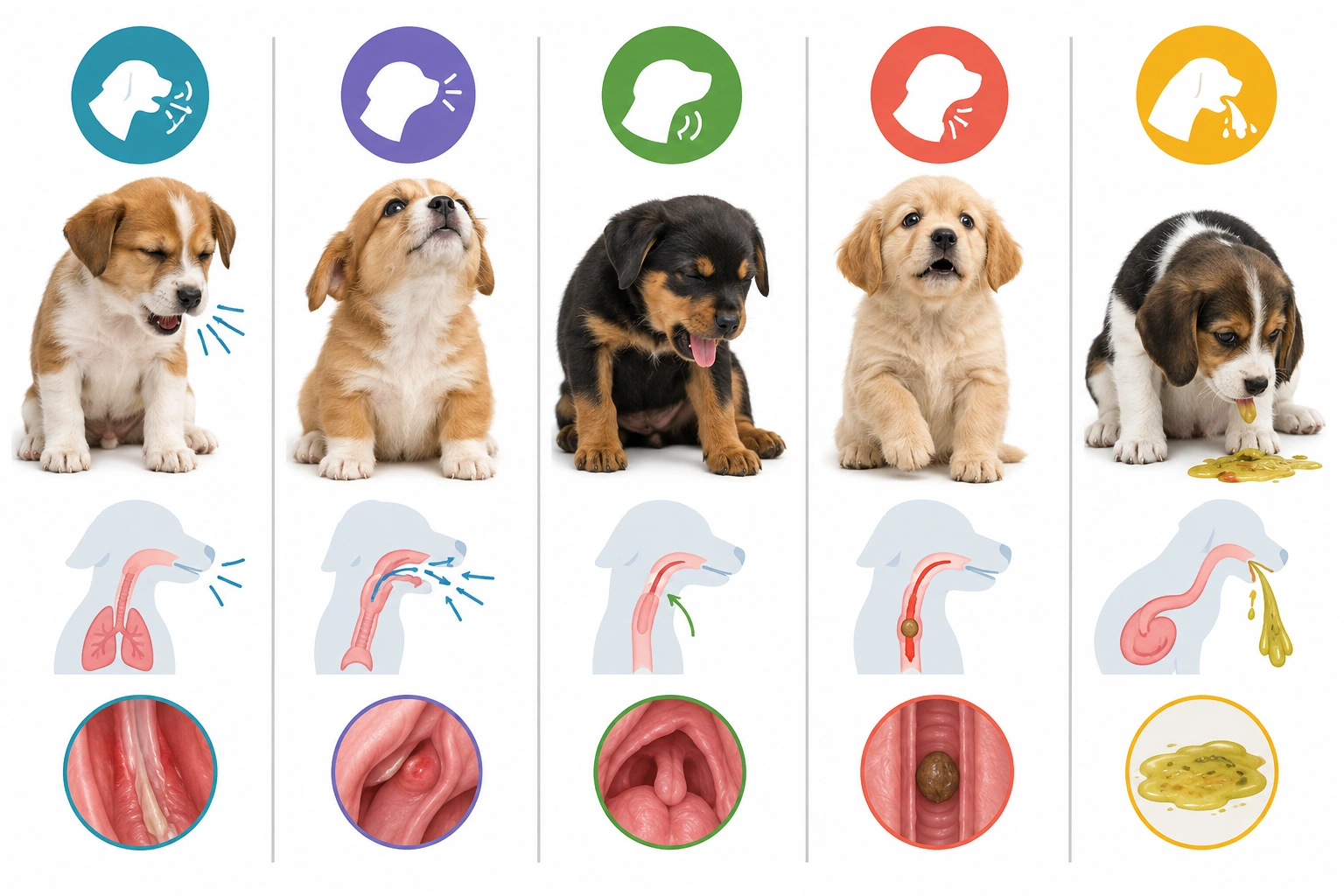
This is where many owners get stuck. Several puppy noises can sound similar in the moment, especially when you are worried.
| What you hear | More like kennel cough? | More like something else? | Clue that helps |
|---|---|---|---|
| Dry, repeated hacking or honking cough | Yes | No | Often comes in bursts and may end with retching |
| Loud snorting or rapid inward breaths through the nose | No | Reverse sneezing | The sound is usually nasal, not a true cough |
| Repeated gagging after pulling on a collar | Maybe | Gagging or throat irritation | Often linked to neck pressure or excitement |
| Sudden distress, pawing at mouth, trouble swallowing | No | Choking | This is urgent, especially if breathing is affected |
| Abdominal heaving with food or liquid coming up | No | Vomiting | Vomiting usually involves the stomach, not the throat |
| Coughing followed by foam or mucus | Maybe | Could be kennel cough or another issue | The full context matters more than the foam alone |
Kennel cough vs reverse sneezing

Reverse sneezing sounds more like snorting, honking inward, or repeated sharp inhalations through the nose. The puppy may stand still, extend the neck, or look startled, but the episode often ends quickly and the dog usually returns to normal.
Kennel cough is different because it is a true cough. You hear a forceful expulsion of air, often from the throat. If you are hearing a dry hack rather than a nasal snort, kennel cough moves higher on the list.
Kennel cough vs gagging or retching
A puppy with kennel cough may cough and then retch once or twice, which is one reason owners confuse it with gagging. The difference is that the coughing comes first and seems to trigger the retch.
With gagging alone, the puppy may repeatedly try to swallow, clear the throat, or bring something up without the classic cough sound. If the neck seems sensitive or the puppy starts coughing when the collar is pulled, that can also point to throat irritation rather than a simple kennel cough guess.
Kennel cough vs choking
Choking is the one you do not want to sit on and “watch for a bit.” A choking puppy often looks distressed, paws at the mouth, cannot settle, and may have trouble breathing or swallowing. The sound may be sudden and panicked rather than repetitive and rhythmic.
If the puppy is struggling to get air, that is not a home-observation situation.
Kennel cough vs vomiting
Vomiting usually involves the stomach and belly working hard. You may see heaving, drooling, or food and liquid coming up. Kennel cough can trigger a gaggy sound, which is why owners sometimes think the puppy is vomiting when it is actually coughing hard.
A practical rule: if the sound is driven by the chest and throat, think cough; if it is driven by abdominal heaving, think vomiting.
Other symptoms that often happen along with kennel cough
A cough by itself does not prove kennel cough. What raises suspicion is the pattern around it.
Common accompanying signs may include:
- sneezing
- mild nasal discharge
- a slightly hoarse or irritated throat sound
- coughing that worsens with excitement
- coughing after exercise
- mild tiredness
A puppy may otherwise seem fairly normal, which is part of why kennel cough can be easy to miss at first. But a puppy that is still bright, eating, and breathing normally between coughs is very different from one that is lethargic, refusing food, or working harder to breathe.
The presence of other symptoms also changes the urgency. A dry cough after a recent playdate is one thing. A cough plus feverish behavior, poor appetite, or breathing effort is a different conversation.
If you want a reliable external overview of contagious respiratory illness in dogs, VCA Hospitals’ kennel cough information is a useful veterinary reference point.
When a puppy with a cough needs a vet right away
Puppies deserve a lower threshold for veterinary advice than healthy adult dogs. Their airways are smaller, they can dehydrate faster, and they have less reserve if an illness is building. Puppies, especially young or unvaccinated ones, should be triaged sooner than adults if coughing persists or worsens.
Seek urgent veterinary care if your puppy:
- has trouble breathing
- has blue or pale gums
- collapses or seems faint
- may be choking
- cannot settle because of distress
- has a cough that is rapidly worsening
- refuses food or water and seems weak
- has repeated vomiting or significant lethargy
Even if the puppy is breathing normally, contact a veterinarian promptly if the cough is persistent, frequent, or paired with fever, nasal discharge, or obvious tiredness. Puppies can go from “mostly okay” to “not okay” faster than many owners expect.
A useful decision rule is this: if the cough is mild, the puppy is bright, and breathing is normal, you may be able to monitor briefly while arranging a vet call. If anything about the breathing, color, or energy level looks wrong, skip the waiting.
How contagious kennel cough is and why isolation matters
Kennel cough is generally contagious to other dogs. That is why the name often gets linked to places where dogs mix closely, such as boarding, daycare, grooming, training classes, or dog parks.
If your puppy has a suspicious cough, keep them away from other dogs until a veterinarian says it is safe. That includes family dogs in the same home if practical. Separate water bowls, bedding, and toys where you can.
The trade-off here is simple: temporary inconvenience now versus potentially exposing other dogs to something contagious.
The American Kennel Club’s kennel cough guidance is another helpful owner-focused resource on why separation and prevention matter.
What to do next
If you think your puppy may have kennel cough, keep the next steps simple:
- isolate the puppy from other dogs
- record a short video of the cough
- call your veterinarian for advice
- watch breathing, energy, appetite, and gum color closely
While you are waiting to speak with your vet, keep the plan simple and safe.
Do this
- limit contact with other dogs
- use a harness instead of a collar if neck pressure seems to trigger coughing
- keep the puppy calm and avoid overexcitement
- monitor appetite, energy, and breathing
- note when the cough happens and what it sounds like
That last point helps more than people expect. A short phone video of the coughing episode can give your vet far more useful information than a vague description later.
Avoid this
- do not assume the cough is harmless because the puppy still wants to play
- do not let the puppy roughhouse with other dogs
- do not force exercise to “see if it goes away”
- do not delay calling the vet if symptoms are worsening
If the puppy seems to cough more when the neck is pressed, a harness is a practical swap. It does not treat the cause, but it may reduce irritation while you are waiting for advice.
When the cough is probably not kennel cough
There are a few patterns that should push you away from a kennel cough assumption.
It sounds nasal, not like a cough
If the puppy is snorting inward, flaring the nostrils, and seeming to “suck air in” through the nose, reverse sneezing may be more likely.
It is a single distressing event
A one-off episode with pawing at the mouth, panic, or obvious trouble swallowing is more concerning for choking or a foreign object.
The puppy is working hard to breathe
A cough is one thing. Breathing difficulty is another. If the belly is pumping, the nostrils are flaring, or the puppy cannot rest comfortably, that needs prompt veterinary attention.
The puppy seems systemically unwell
A puppy with poor appetite, clear lethargy, feverish behavior, or worsening weakness should not be treated as a simple “wait and see” cough.
The sound is wet and deep
A wet cough can have different causes and deserves a vet conversation, especially in a puppy. The sound alone does not tell you the whole story, but it does tell you not to lock onto kennel cough too quickly.
A practical decision framework for worried puppy owners
If you are standing there listening and trying to decide what to do, use this order:
-
Is the puppy breathing normally?
If no, treat it as urgent. -
Does it sound like a true dry cough?
If yes, kennel cough becomes more plausible. -
Is the puppy otherwise bright and eating?
If no, call the vet sooner. -
Has the puppy been around other dogs recently?
If yes, isolate until you get advice. -
Is the sound actually snorting, gagging, or choking?
If yes, the next step may be very different from kennel cough care.
That sequence keeps you from overreacting to every cough, but it also stops you from missing the situations that need fast action.
FAQ
Can a puppy have kennel cough without other symptoms?
Yes. Some puppies mainly show the cough at first. That is one reason the sound matters so much. Even if there are no other symptoms, keep the puppy away from other dogs and watch closely for changes.
Does kennel cough always sound the same?
No. The classic sound is dry and hacking, but individual puppies can sound a little different. Some cough in short bursts; others have a more honking quality. The pattern matters more than one perfect sound description.
How long is a puppy contagious?
That can vary, and you should follow your veterinarian’s guidance. Because kennel cough is contagious, the safest move is to isolate the puppy until a vet has advised you on next steps.
Should I wait a few days before calling the vet?
Not with a puppy if the cough is frequent, worsening, or paired with any concerning signs. Puppies have less margin for error, so earlier advice is usually the better choice.
Can kennel cough turn into something more serious?
It can, especially in young, unvaccinated, or otherwise vulnerable puppies. That is why breathing difficulty, low energy, poor appetite, or a worsening cough should not be brushed off.
Final take
If a puppy’s cough sounds dry, harsh, repetitive, or goose-like, kennel cough is one possibility. If it sounds like snorting, gagging, choking, or vomiting, the next step may be different. The safest approach is to judge the sound, check the puppy’s breathing and energy, isolate from other dogs, record a video, and call your vet if you are unsure.