
Why Your Dog’s Breath Smells Like Poop: Causes, Red Flags, and What to Do Next

If your dog’s breath smells like feces, the odor is usually telling you one of three things: something dirty is on or in the mouth, bacteria are building up around the teeth and gums, or waste products from a medical issue are affecting the breath.
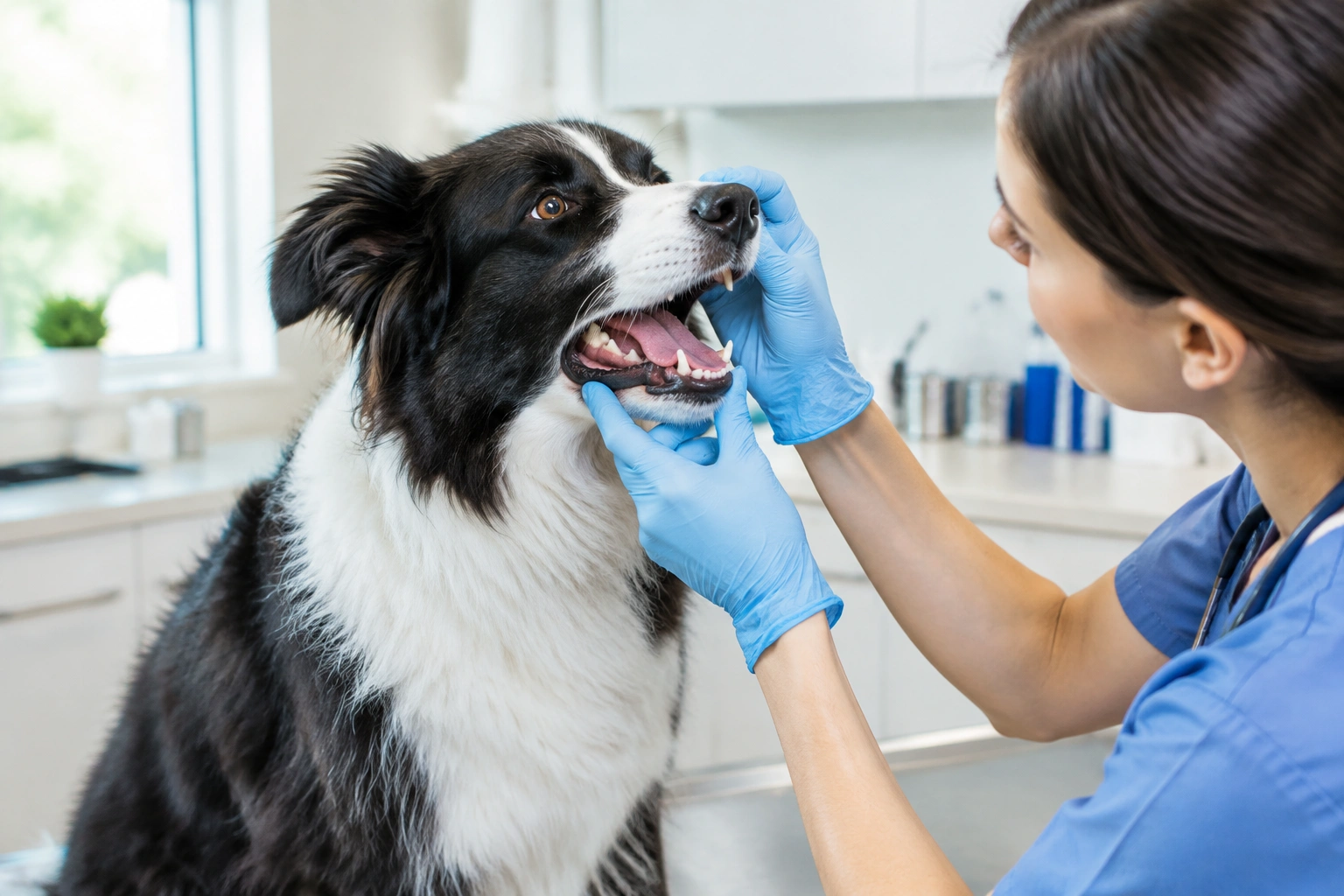
For Border Collie owners, this can be especially frustrating because these dogs are often busy, outdoorsy, and quick to sample things they should not. But the smell itself is not the diagnosis. The real job is figuring out whether you are dealing with a simple contamination problem, a dental problem, or something deeper that needs veterinary attention.
Why a dog’s breath can smell like poop
A poop-like smell usually comes from one of two places:
- The mouth is contaminated — for example, your dog ate stool, rolled in waste, or licked something foul.
- The body is producing foul-smelling compounds — often from dental disease, digestive upset, or less commonly kidney or liver problems.
That distinction matters because the fix is very different. If the smell started after your dog scavenged in the yard, cleaning the mouth and preventing re-exposure may solve it. If the smell is constant, especially with tartar, red gums, vomiting, or low energy, the cause is more likely medical.
A useful rule: a one-off smell after outdoor mischief is less concerning than a smell that keeps coming back for days.
Most likely causes, in practical order
1) Coprophagia or other contamination
If your dog ate poop, the breath can smell exactly like it. That is the most direct explanation, and it is common enough that veterinarians often ask about it first. Dogs may eat their own stool, another dog’s stool, cat feces, or anything rotten they find outside.
The smell can linger because tiny particles remain in the mouth, on the lips, or under the tongue. If your dog is a habitual scavenger, the odor may return repeatedly because the behavior keeps repeating.
What to look for:
– Fresh stool on the coat or around the mouth
– A sudden foul odor after time in the yard
– Interest in litter boxes, diapers, or other waste
– No other illness signs
What helps right away:
– Remove access to stool and waste sources
– Rinse or wipe the mouth area if the dog just ate something foul
– Supervise yard time more closely for a few days
– Pick up stool immediately
If the behavior is recurring, the smell is only part of the issue. Coprophagia can be a symptom of boredom, stress, hunger patterns, or a medical problem that needs a vet’s input.
2) Dental disease
Oral health problems are one of the most common causes of bad breath in dogs, and they can absolutely create a fecal, rotten, or sewer-like odor. Plaque hardens into tartar, tartar traps bacteria, and those bacteria produce the smell. Gingivitis, periodontal disease, tooth decay, and oral infection can all contribute.
The reason dental disease smells so bad is simple: the mouth becomes a warm, moist place where bacteria thrive along the gumline and around damaged teeth. Once the gums are inflamed or infected, the odor often gets stronger.
Signs the source is likely in the mouth:
– Yellow or brown tartar
– Red, puffy, or bleeding gums
– Drooling
– Chewing on one side
– Reluctance to chew hard food or toys
– Pawing at the mouth
– Loose or broken teeth
If you can smell the breath from a normal conversation distance, and you also see tartar or gum inflammation, dental disease moves high on the list.
For general dental-health guidance, the American Kennel Club’s dog dental care resources are a useful place to start, but a vet exam is what tells you whether your dog needs a cleaning or treatment for infection.
3) Digestive causes
Sometimes the smell is not from the mouth at all. It is coming up from the stomach or esophagus.
Dogs with regurgitation, reflux, vomiting, or gastrointestinal upset can have breath that smells sour, foul, or oddly fecal. The odor may be strongest after eating, after drinking, or when the dog is nauseated. You may also notice lip licking, swallowing, grass eating, burping, or a hunched posture.
This is one reason owners can misread the problem. A dog with reflux may not look “sick” in an obvious way, but the breath changes before the bigger GI signs become obvious.
4) Systemic illness, including kidney or liver disease
Less commonly, foul breath can reflect a wider health problem. Veterinary sources note that if a dog’s breath smells like feces or urine, it may be because the dog recently ate poop or because of kidney issues. Poor kidney function can allow waste products to build up in the body, which may contribute to bad breath.
Liver disease can also affect breath odor, though the smell is not always described the same way by every dog owner. What matters more than the exact scent is the pattern: bad breath plus appetite loss, vomiting, lethargy, weight loss, or yellowing of the eyes or gums deserves prompt attention.
This is the point where breath odor stops being just a nuisance and becomes a clue.
Mouth problem or stomach problem? Here’s how to tell
Use the pattern, not just the smell.
| Clue | More likely mouth/dental | More likely stomach/internal |
|---|---|---|
| Smell is constant | Yes | Sometimes |
| Smell started after chewing, scavenging, or eating stool | Yes | Less likely |
| Tartar, red gums, broken teeth | Yes | No |
| Vomiting, regurgitation, lip licking | Sometimes | Yes |
| Low energy, weight loss, poor appetite | Possible | More concerning |
| Smell improves after mouth cleaning | Yes | Less likely |
| Smell keeps returning despite brushing | Yes, dental disease possible | Yes, if GI/systemic issue |
A practical decision rule: if the smell is persistent and there are no obvious contamination clues, assume dental disease until a veterinarian proves otherwise.
That is not because every foul breath case is dental. It is because untreated periodontal disease is common, progressive, and easy to miss until it is advanced.
Coprophagia: why stool-eating creates this odor
If your dog has been eating feces, the odor may be direct contamination rather than illness. But repeated stool-eating is still worth addressing because it can become a cycle: the behavior creates the smell, the smell lingers, and the dog is exposed to more bacteria and parasites.
Some dogs do it opportunistically. Others do it because they are under-stimulated, competing for resources, or have a habit that has been accidentally reinforced. In young dogs, curiosity plays a role. In older dogs, the behavior can also be tied to diet or medical issues.
Immediate steps:
– Pick up stool as soon as it is produced
– Block access to litter boxes, cat feces, or other waste
– Use leash supervision during yard time
– Clean the mouth area after a known incident
– Track when it happens so you can spot patterns
If the behavior is frequent, your vet should know. Coprophagia can be behavioral, but it can also overlap with digestive upset or nutrient issues.
Dental disease: the problem you do not want to ignore
A lot of owners hope bad breath is just a “dog thing.” It usually is not.
When plaque and tartar collect along the gumline, bacteria irritate the tissues and can move deeper under the gums. That is where periodontal disease starts to do real damage. The smell can become strong long before the dog shows obvious pain.
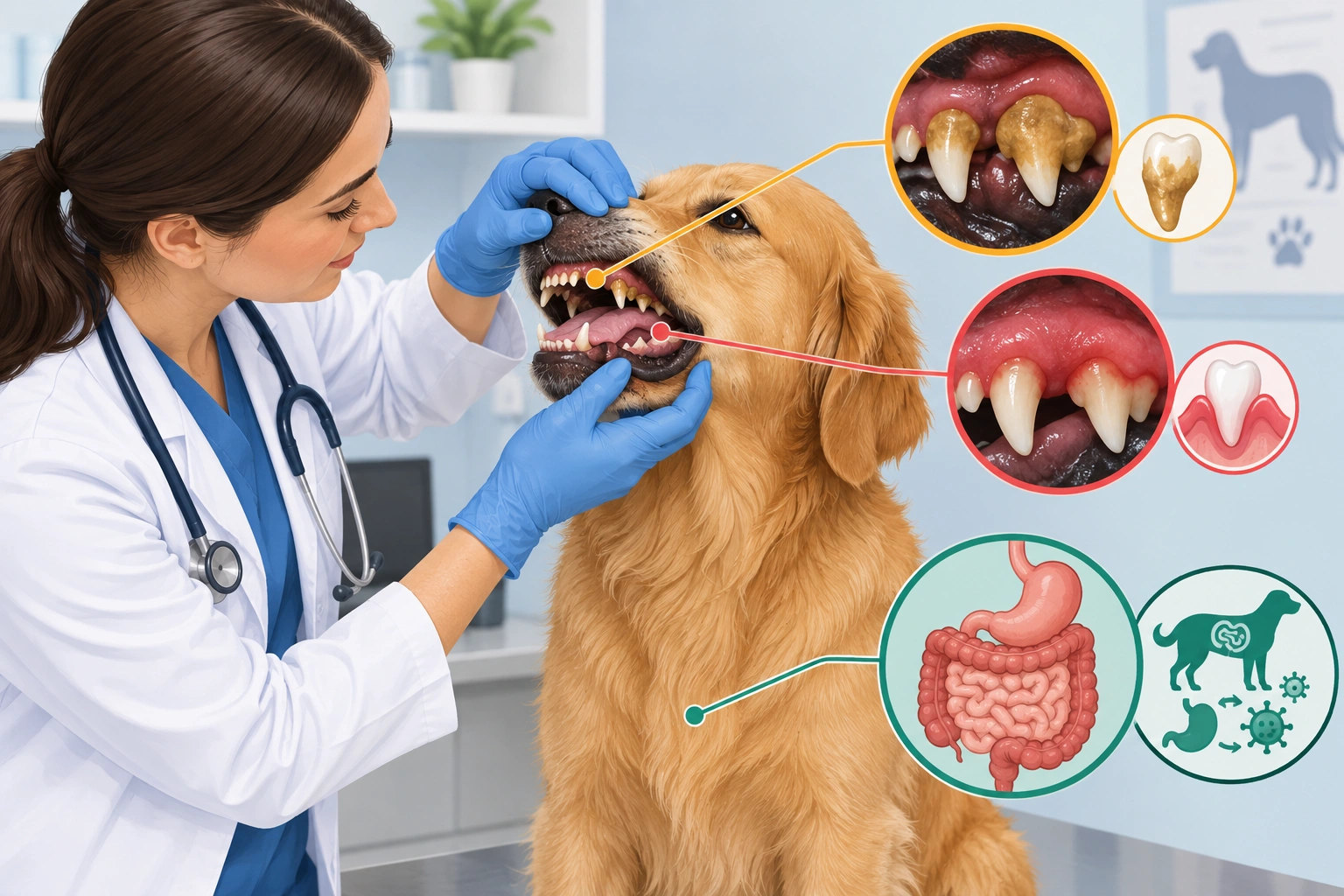
One useful sign: if the breath is bad and the gums are red or the teeth are coated in tartar, home remedies are not enough. Brushing can help prevent the problem from getting worse, but it will not remove hardened tartar or treat infected gums.
Professional dental care may involve an exam, dental X-rays, cleaning under anesthesia, and treatment for diseased teeth if needed. That sounds like a big step, but it is often the difference between controlling the odor and letting the disease progress.
Digestive and internal causes you should not brush off
Not every poop-like breath problem is about the mouth.
Reflux or regurgitation
These can bring stomach contents upward and leave a foul odor on the breath. If your dog also swallows repeatedly, licks lips, or seems nauseated, pay attention.
Vomiting or GI upset
A dog that vomits intermittently may have breath that smells off before the vomiting becomes frequent. Diarrhea, abdominal discomfort, or appetite changes make GI causes more likely.
Kidney disease
Veterinary sources note that when kidneys are not functioning properly, waste products can build up and contribute to bad breath. If the odor is paired with increased drinking, increased urination, vomiting, or lethargy, the vet should evaluate it.
Liver disease
Liver problems can also alter breath odor and often come with broader signs such as poor appetite, weight loss, vomiting, or jaundice.
The important point is this: internal disease rarely causes bad breath alone. It usually brings a pattern of other changes.
When to see a veterinarian or certified trainer
See a veterinarian promptly if the smell is paired with any of the following:
– Vomiting or regurgitation
– Diarrhea
– Loss of appetite
– Lethargy or weakness
– Drooling
– Bleeding gums
– Facial swelling
– Pain when chewing
– Loose teeth
– Black stools
– Yellowing of the eyes or gums
– Sudden worsening of breath odor
If the main issue is repeated stool-eating, a certified trainer can help with prevention and management, but only after you rule out medical causes with your vet. Behavior work is useful; it should not replace a health check when the odor is severe or persistent.
For broader dog-health guidance, VCA Hospitals’ pet health resources are a solid reference point, especially when you want to understand what a vet may be looking for.
What you can safely do at home right now
Here is the practical, low-risk approach I recommend.
1) Check the mouth
Look for tartar, red gums, broken teeth, swelling, or anything stuck between the teeth. Do not force your fingers deep into the mouth if the dog is painful.
2) Remove obvious contamination
If your dog ate stool or rolled in something foul, clean the face and mouth area as best you can. Then stop access to the source.
3) Improve oral hygiene
Brush with a dog-safe toothpaste if your dog accepts it. Human toothpaste and mouthwash are not safe choices. If brushing is new, keep it short and calm rather than trying to do a perfect job on day one.
4) Watch the pattern for 24 to 72 hours
If the odor fades after a clear contamination event and your dog otherwise acts normal, that points toward a simple cause. If it remains, treat it as a real health clue.
5) Track other symptoms
Write down appetite, stool quality, vomiting, water intake, and energy level. Those details help your vet narrow the cause faster.
What I would not do: mask the smell with sprays, mints, or random supplements and assume the problem is solved. Those products may temporarily change the odor, but they do not tell you why it started.
What a veterinarian may check
A vet visit usually starts with the mouth.
Expect an oral exam, gum check, and a look for tartar, broken teeth, infection, or pain. If the vet suspects dental disease, they may recommend a professional cleaning and, in some cases, dental X-rays.
If the mouth does not fully explain the odor, the vet may ask about:
– Diet
– Stool-eating
– Vomiting or regurgitation
– Changes in thirst or urination
– Weight loss
– Energy level
If internal disease is a concern, bloodwork and possibly other tests may be recommended. That is how a vet separates a mouth problem from a kidney, liver, or GI issue.
How to keep the smell from coming back
Prevention depends on the cause.
If the issue was stool-eating, the fix is reducing access and interrupting the habit before it becomes routine. If the issue was dental disease, prevention means ongoing oral care and regular professional cleanings when recommended. If the issue was digestive, the plan may involve diet changes or treatment for the underlying GI problem.
For Border Collies in particular, the practical challenge is that they are active, observant dogs. They notice everything, including things they should not eat. That means management matters: clean yards, supervised outdoor time, and a consistent dental routine are often more effective than trying to solve the issue after the smell appears.
If your dog’s breath smells like poop once, you may be dealing with a simple contamination event. If it keeps happening, the mouth, gut, or body is trying to tell you something more important.