
Why Dogs Vomit After Eating Grass: What It Means and What to Do Next

If your dog eats grass and then throws up, the first question is usually the right one: did the grass cause the vomiting, or was your dog already feeling sick?
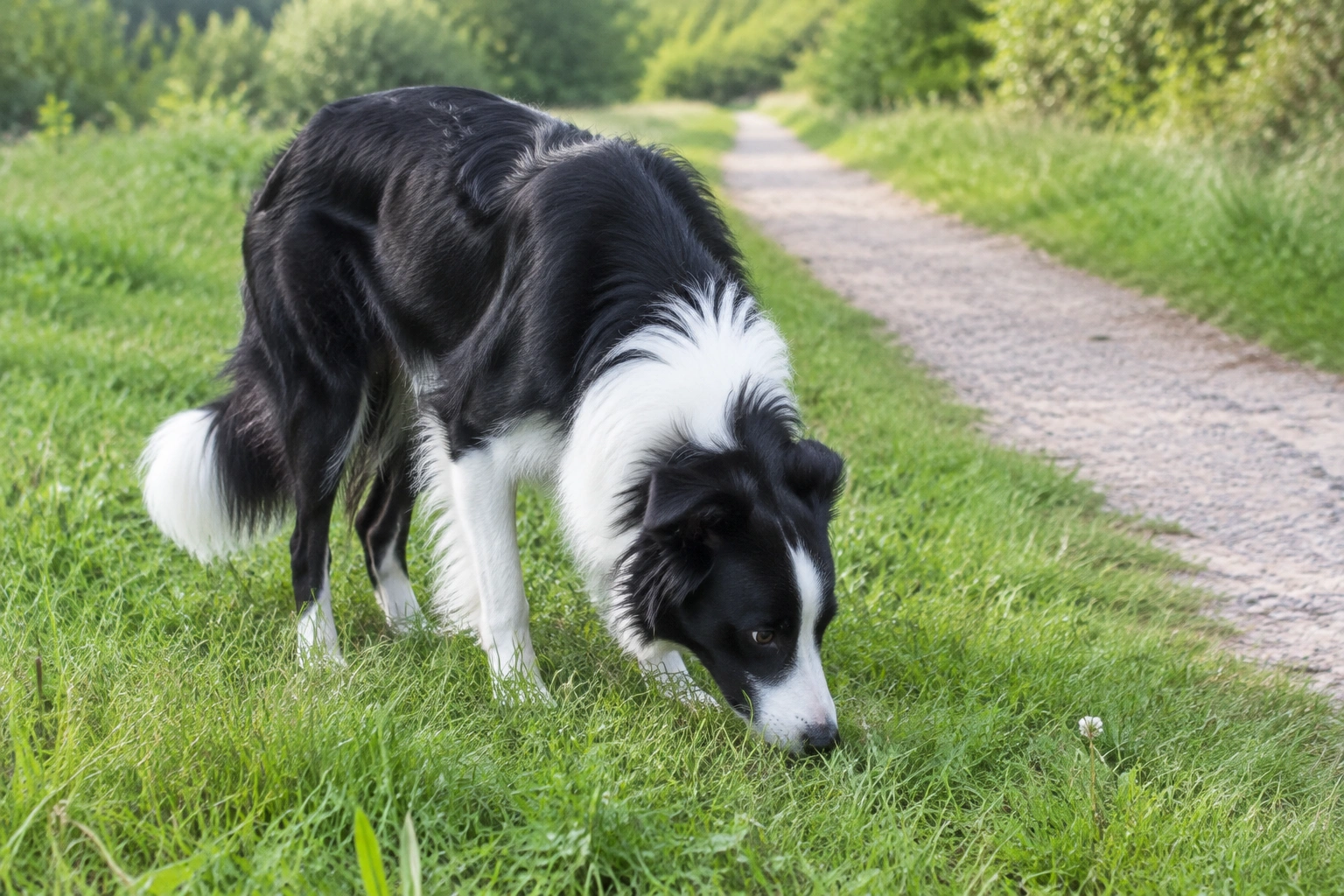
In many cases, grass is a clue rather than the root problem. A dog may already feel nauseated, then seek out grass, carpet, or another rough surface. In other cases, the grass itself may irritate the throat or stomach enough to trigger gagging and vomiting, especially if the dog bolted a large mouthful of long blades.
For Border Collie owners, this can be especially confusing because a high-energy dog may graze after exercise, stress, boredom, or a frantic burst of activity. That makes it easy to blame the grass when the real issue is a mild stomach upset, diet problem, or something more serious.
Why dogs eat grass before they vomit
There are a few common explanations, and they do not all mean the same thing.
Nausea may come first
One of the most practical interpretations is that the dog already feels unwell. Nauseated dogs often lick carpets, upholstery, or other nearby surfaces, and grass can become the outdoor version of that behavior. If a dog was already nauseated and had an empty stomach, the vomit may include yellow bile.
That detail matters. Yellow bile often suggests the vomit is coming from farther along in the digestive tract and is more common when the stomach is empty. So if your dog ate grass on an empty stomach and then brought up yellow fluid, the grass may not have caused the nausea at all.
Some dogs may be seeking fiber or just opportunistically grazing
Grass-eating can happen for several reasons, including simple opportunistic grazing or a dog’s preference for rough, fibrous material. That does not mean every grass-eater has a nutritional deficiency, and grass alone is not proof that the diet is lacking.
Others do it out of habit, boredom, or opportunity
A Border Collie that is under-stimulated, stressed, or simply moving too fast through the yard may graze because the behavior has become self-rewarding. In those cases, the grass-eating is more of a pattern than a medical signal.
The key question is not “Why did my dog eat grass?” but “What else was happening before and after?”
Does grass cause vomiting, or was the dog already sick?
This is the distinction most owners need.
Grass can sometimes trigger vomiting mechanically. Long strands may tickle the throat or stomach lining, which can provoke gagging. That said, grass is not a reliable or intentional vomiting trigger. Some summaries cited by veterinary sources report that only a minority of dogs vomit after eating grass, and many dogs show no obvious illness beforehand—but those figures should be treated as broad observations rather than precise, universal statistics.
That means three things can be true at once:
- Some dogs vomit after grass because the grass irritated them.
- Some dogs eat grass because they already feel nauseated.
- Many dogs eat grass and never vomit at all.
So if your dog vomits after grazing, the grass may be the final nudge, not the original cause.
Common reasons a dog vomits after eating grass
A single episode is often mild, but repeated episodes deserve more attention because the grass may be surfacing an underlying issue.
Mild stomach upset
This is one of the most common explanations. A dog may have a brief digestive upset from eating too fast, getting into something rich, or having a stomach that is simply off that day. Purina notes that abrupt food changes are a more common cause of vomiting than grass itself.
Dietary indiscretion
Dogs that sample trash, table scraps, compost, or unknown yard debris often end up with vomiting that gets blamed on the grass because the grass was the last thing seen. In reality, the stomach upset may have started earlier.
Parasites or intestinal irritation
If repeated grass-eating comes with vomiting or diarrhea, parasites become part of the conversation. So do other causes of gastrointestinal irritation. Petfolk specifically notes that repeated grass-eating paired with vomiting or diarrhea can point to parasites, food sensitivities, or conditions such as pancreatitis.
Food sensitivity, pancreatitis, or another GI problem
These are not the first explanation for every dog, but they matter when the pattern repeats. Persistent vomiting after grass can also reflect other gastrointestinal illness beyond the examples above. A dog that graze-vomits once and acts normal afterward is a different case from a dog that keeps returning to the grass, vomits several times, and then refuses breakfast.
A possible foreign body problem
If your dog is retching without producing much, seems bloated, or appears painful, do not assume it is “just grass.” A foreign body obstruction or another urgent abdominal problem can present with repeated retching and vomiting. Grass may be a coincidence, not the cause.
When vomiting after grass is probably harmless
A one-off episode can be monitored at home if your dog otherwise looks well.
A reassuring pattern usually looks like this:
- The dog vomits once or only briefly.
- There is no blood.
- The dog is bright, responsive, and not painful.
- Water stays down.
- Appetite returns within a reasonable time.
- There is no repeated retching, bloating, or diarrhea.
A practical example: a Border Collie comes in from a long walk, grazes for a minute, then brings up a small amount of foam or partially digested food and acts normal afterward. If the dog drinks normally and settles, that is often a watch-and-wait situation.
What makes this less concerning is not the grass itself. It is the absence of ongoing symptoms.
When to see a veterinarian or certified trainer
If the grass-eating is frequent, frantic, or paired with vomiting, treat it as a possible symptom rather than a harmless habit.
Call a vet sooner if you see any of these red flags
- Repeated vomiting in the same day
- Blood in vomit or stool
- Lethargy or weakness
- Abdominal pain, stiffness, or a hunched posture
- Repeated unproductive retching
- A swollen or distended abdomen
- Inability to keep water down
- Signs of dehydration, such as dry gums or marked tiredness
- Diarrhea along with vomiting
- Sudden loss of appetite
- A known exposure to pesticides, herbicides, or toxic plants on the grass
Repeated retching without bringing anything up is especially important. That can signal something more urgent than a simple stomach bug.
A certified trainer is not the first stop for vomiting. If the dog’s grass-eating is clearly tied to boredom, stress, or frantic arousal, behavior help can be useful after medical causes have been ruled out by a veterinarian. For Border Collies, that distinction matters because high drive can look like “bad habits” when the real issue is under-met needs.
For broader dog-health guidance, the VCA overview on why dogs eat grass is a useful starting point, and the AKC’s dog health resources can help you think through when a symptom needs more attention.
What to do at home after a single mild episode
If the episode was brief and your dog now seems normal, focus on observation and hydration.
1. Pause food briefly if your vet has previously advised it
Many dogs do better with a short rest after vomiting, but the exact timing depends on age, health status, and how severe the episode was. Puppies, small dogs, diabetic dogs, and dogs with other medical issues should not be managed the same way as a healthy adult without guidance.
2. Offer small amounts of water
The goal is to keep the dog hydrated without provoking another round of vomiting. If your dog gulps and throws up again, that is a reason to call your vet.
3. Watch the next 12 to 24 hours closely
You are looking for a trend, not a single event. If your dog stays bright, keeps water down, and returns to normal stool and appetite, the problem may have passed.
4. Skip hard exercise for the moment
A dog that has just vomited should not go straight back into intense running, fetch, or rough play. Let the stomach settle first.
5. Check the grass area
If your dog was on treated lawn, near compost, or around unknown plants, that changes the risk calculation. Grass itself may not be the issue.
Do not encourage your dog to keep eating grass as a home remedy, especially if vomiting is recurrent or the area may have been treated with chemicals. Do not give human anti-nausea medication or home remedies unless your veterinarian has told you to. That can make the picture harder to read if symptoms worsen.
How to reduce repeated grass-eating and vomiting
Prevention works best when you address both the stomach and the behavior.
Review feeding routine first
A dog that eats too quickly, gets fed irregularly, or goes too long between meals may be more likely to graze or vomit. For some dogs, smaller, more consistent meals reduce empty-stomach nausea and the yellow-bile vomit that can follow it.
Check whether the diet is actually meeting the dog’s needs
If your dog regularly seeks out grass, a diet review is worth discussing with your vet. That does not mean grass is proof of a deficiency, but it does mean the diet may not be the whole answer either.
Increase structured activity, not just raw exercise
Border Collies often get a lot of motion but not enough mental work. A dog that has sprinted, sniffed, and still has nothing to do may turn to grazing, especially if it has become an outlet for arousal or frustration.
Useful options include:
- Short training sessions
- Nose work
- Food puzzles
- Place work or settle practice
- Controlled sniff walks
The goal is not to exhaust the dog. It is to reduce the restless, scavenging state that can precede grass-eating.
Reduce access when the behavior is repetitive
If your dog repeatedly eats grass and then vomits, limiting access while you investigate is reasonable. That is especially true if the lawn may contain chemicals or if the dog eats so quickly that it cannot be interrupted.
The trade-off is simple: unrestricted access is convenient, but it makes it harder to tell whether the behavior is harmless grazing or a sign of something more serious.
Ask for a parasite check when the pattern changes
If grass-eating is new, more intense, or paired with loose stool, a fecal exam is a sensible next step. Petfolk specifically notes that a fecal exam may be recommended when grass-eating is new or accompanied by loose stools.
When grass-eating is a symptom, not just a habit
This is the pattern that should make you pause:
- The behavior starts suddenly
- The dog eats grass more aggressively than usual
- Vomiting happens more than once
- Stool changes appear
- Appetite drops
- Energy level changes
- The dog seems unsettled, drooly, or uncomfortable before grazing
That combination suggests the grass is not the main issue. It is the symptom you happened to notice first.
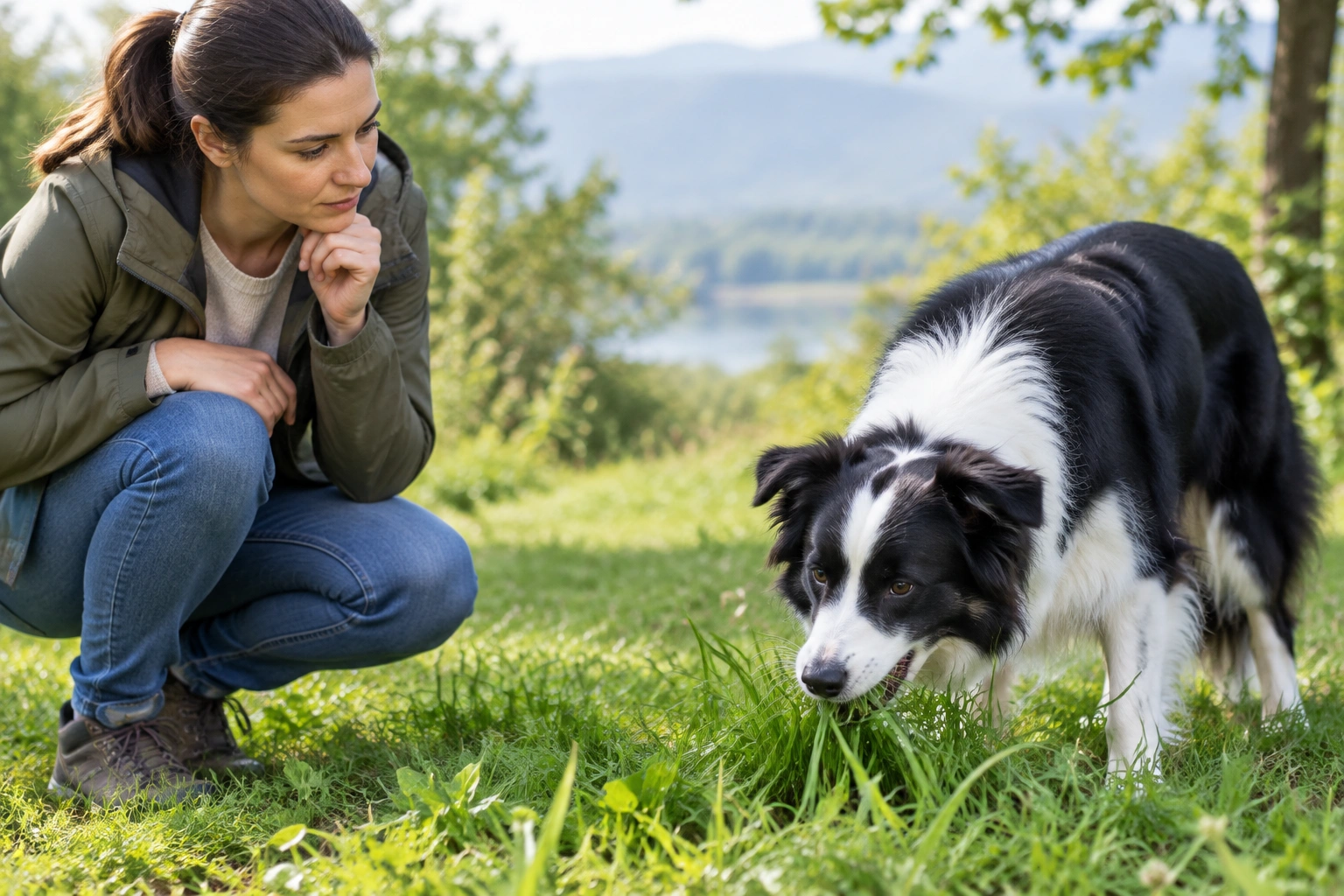
A Border Collie that normally ignores the lawn but suddenly starts grazing after every meal, then vomits and acts quiet, needs a different response than a dog that casually nibbles a few blades and moves on.
A simple decision rule you can use
Use this quick filter:
- One mild episode, normal behavior afterward, drinking normally: monitor at home.
- Repeated vomiting, blood, pain, lethargy, bloating, or unproductive retching: call a vet.
- Frequent grass-eating without vomiting, especially in a high-energy dog: look at boredom, stress, feeding routine, and diet.
- Grass-eating plus diarrhea or appetite loss: ask about parasites or other gastrointestinal disease.
That framework keeps you from overreacting to a single harmless event while still catching the cases that need attention.
FAQ
Is it normal for dogs to vomit after eating grass?
It can happen, but it is not something every dog does. Some veterinary sources describe it as relatively uncommon, and most dogs do not show obvious illness beforehand.
Does grass make dogs sick?
Sometimes grass can irritate the throat or stomach and trigger gagging, but the more important question is whether the dog was already nauseated. Grass is often part of the story, not the whole cause.
Why does my dog eat grass and then throw up yellow foam?
Yellow foam or bile can happen when a dog has an empty stomach and is already nauseated. The grass may have been a response to that nausea, not the cause of it.
Should I let my dog eat grass if it seems to help?
If the grass is clean, untreated, and your dog only does it occasionally, a brief nibble is not automatically a problem. But if the behavior is frequent or followed by vomiting, treat it as a sign to investigate rather than a cure to encourage.
When is grass-eating a vet issue?
When it is new, repetitive, paired with vomiting or diarrhea, or linked with pain, lethargy, blood, or inability to keep water down. Those are the cases where waiting is riskier than getting checked.
For more on how dogs use grass and what the evidence suggests, the ASPCA’s pet care resources are also a helpful reference point.
Does this mean my Border Collie has a serious problem?
Not always. But Border Collies are active, intense, and easily under-stimulated, so behavioral grass-eating is common enough to confuse the picture. If the vomiting repeats or the dog seems off in any other way, it is safer to rule out a medical cause first.
Bottom line
A dog that vomits after eating grass is not automatically in danger, but the grass is rarely the whole explanation. One mild episode with a normal dog afterward usually just calls for monitoring. Repeated vomiting, pain, blood, lethargy, bloating, or unproductive retching is a different situation and deserves veterinary attention.