
What to Do for a Dog Seizure: A Calm, Practical Guide for Owners

A dog seizure is one of those moments that can make even a steady owner panic. The good news is that your job in the moment is simple: keep your dog safe, keep track of what happens, and know when it has crossed into an emergency.
If you own a Border Collie, that calm response matters even more. These dogs can be quick and intense, so when they lose control of their bodies, they may be more likely to bump into furniture, stairs, or hard flooring. Your focus is not to stop the seizure. Your focus is to protect the dog until it passes and then decide what comes next.
What a Dog Seizure Looks Like vs. Fainting or Collapse
A true seizure usually looks dramatic. The dog may suddenly fall, stiffen, paddle their legs, drool, snap at the air, or lose awareness of what is happening around them. Some dogs urinate or defecate during the event. Many seizures last about one to three minutes, though they can feel much longer when you are watching them.
Fainting or collapse can look similar at first, but there are clues. A dog that faints may go limp, recover more quickly, and not show the same paddling, jaw movement, or post-seizure confusion. Their gums may also look pale or gray rather than normal pink, which can point more toward a circulation or heart issue than a seizure. A dog that collapses because of pain, heat stress, heart disease, or weakness may also behave differently afterward.
| Event | What it often looks like | What to do |
|---|---|---|
| Seizure | Stiffening, paddling, drooling, loss of awareness, confusion afterward | Protect the dog, time it, and watch for emergency signs |
| Fainting/collapse | Sudden loss of strength, often limp, sometimes quick recovery, may have pale gums | Treat as a vet problem and note what you saw |
| Unclear episode | Mixed signs or no clear pattern | Record video if safe and contact a veterinarian |
If you are unsure, treat the episode seriously. A brief video can help your vet decide whether this was a seizure, fainting, or something else.
Learn more about seizure warning signs from the Cornell Canine Health Center.
What to Do Immediately During the Seizure
Your first job is to make the area safer, not to physically control the dog.
Move furniture, sharp objects, lamps, and anything hard away if you can do it without putting yourself at risk. If the dog is near stairs, a pool, a fireplace, or a busy doorway, guide the surroundings rather than the dog. Keep children and other pets back. Speak softly, but do not crowd the dog.
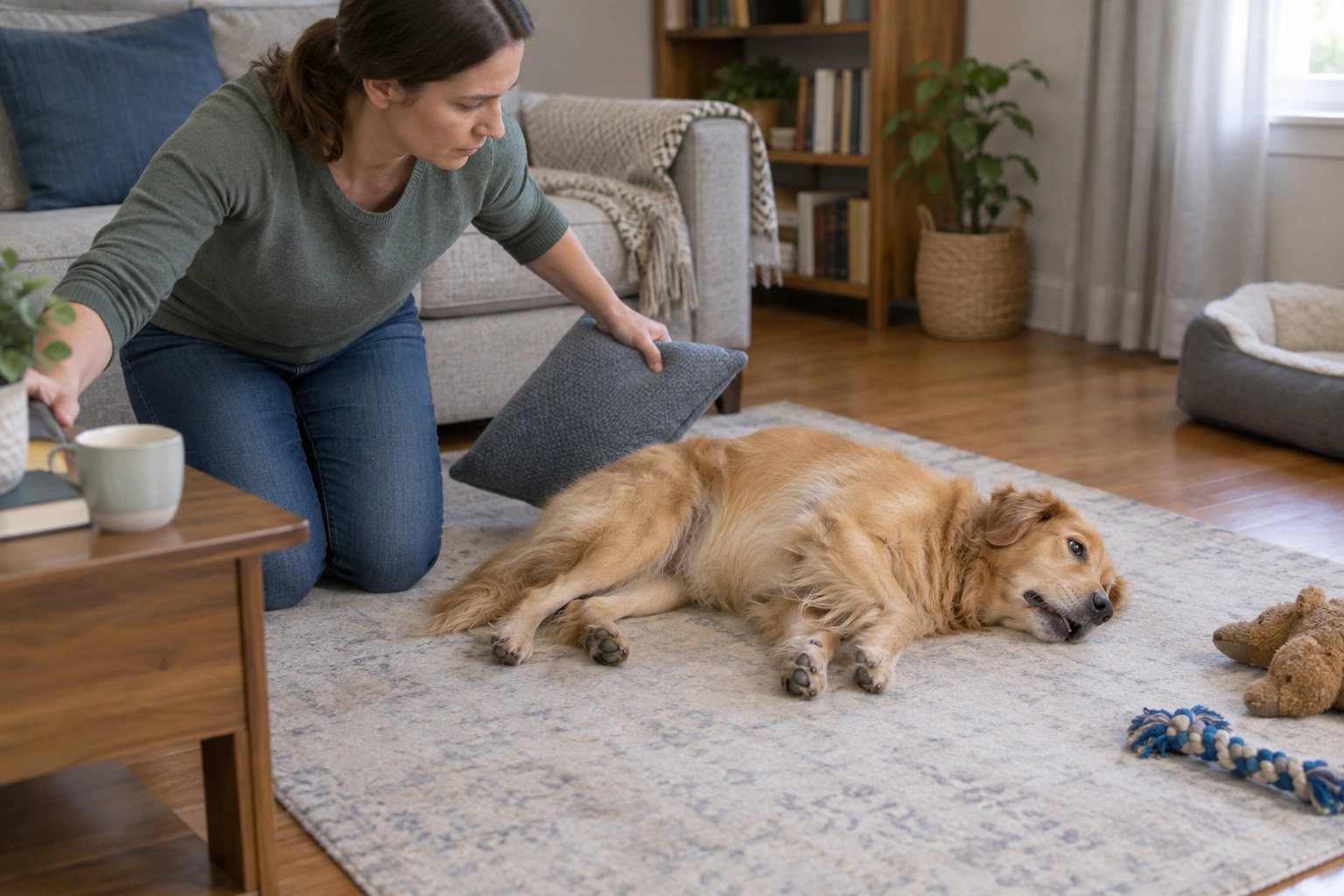
Then time the seizure. Use your phone. Write down the start time as soon as you can. That single detail can matter a lot later when your vet is deciding whether this was a one-off event or something more serious.
If the dog is on a couch or bed and you can safely lower them to the floor, do so gently. If they are already on the floor, leave them there unless they are in immediate danger. The goal is to reduce injury, not to move them around.
A practical example: if your Border Collie is seizing beside a coffee table, slide the table away and clear the surrounding space. Do not try to carry the dog unless there is an immediate hazard like water, stairs, or fire.
Veterinary Specialty Center’s seizure guidance emphasizes the same priorities: keep the dog safe, avoid the mouth, time the episode, and contact a veterinarian as soon as possible.
What Not to Do During a Dog Seizure
A few common instincts can cause harm.
Do not put your hand in the dog’s mouth. Dogs are not swallowing their tongue during a seizure, and you can be badly bitten without meaning to. Do not try to hold the tongue, pry the jaws open, or insert a spoon, towel, or fingers.
Do not restrain the body. The seizure is not something you can physically stop, and holding the dog down can increase injury risk for both of you. Do not shake the dog, yell, or splash water on them.
Do not assume the episode is harmless because it stops on its own. A dog can look normal afterward and still need veterinary evaluation, especially if this is the first seizure, the seizure was prolonged, or more than one episode happens in a short time.
The rule is simple: create space, reduce risk, and wait it out.
When a Seizure Is an Emergency
Some seizures need urgent veterinary care right away.
A seizure that lasts longer than five minutes is a medical emergency. A dog that has more than one seizure in a short period can also be in danger, especially if the episodes are close together or the dog does not fully recover between them. If your dog seems to be worsening instead of improving, that is another reason to go in.
Treat the situation as urgent if any of these apply:
- The seizure lasts longer than five minutes
- Your dog has repeated seizures close together
- Your dog does not come back to baseline after the event
- You suspect poisoning or toxin exposure
- The dog was injured, hit by a car, or had a head trauma before the seizure
- Breathing seems abnormal after the seizure
- This is a first seizure and the recovery looks unusual
Cluster seizures are commonly defined as two or more seizures within 24 hours. That pattern usually deserves prompt veterinary attention because the brain is showing a tendency to repeat the event rather than settling down.
If you need a practical threshold, use this: one brief seizure that ends quickly and is followed by a normal recovery still deserves a call to your vet, but a prolonged seizure, repeated seizures, or any suspicion of toxin exposure moves you into emergency territory.
WebMD’s dog seizure overview notes that a veterinarian can use emergency medication such as IV diazepam to stop an active seizure.
What Happens After the Seizure Stops: The Postictal Phase
The period after a seizure is called the postictal phase. This is when many owners realize the dog is not “back to normal” yet.
A dog may seem confused, restless, temporarily blind, wobbly, hungry, thirsty, or clingy. Some dogs pace, stare, or seem unable to recognize people or familiar surroundings. Cornell notes that post-seizure confusion can sometimes show up as aggressive behavior, which is why you should give the dog space even if they seem to be looking at you strangely.
Keep the environment quiet and low-stimulation. Dim lights. Reduce noise. Keep children and other pets away. Move slowly. This is not the time for visitors, grooming, or rough reassurance.
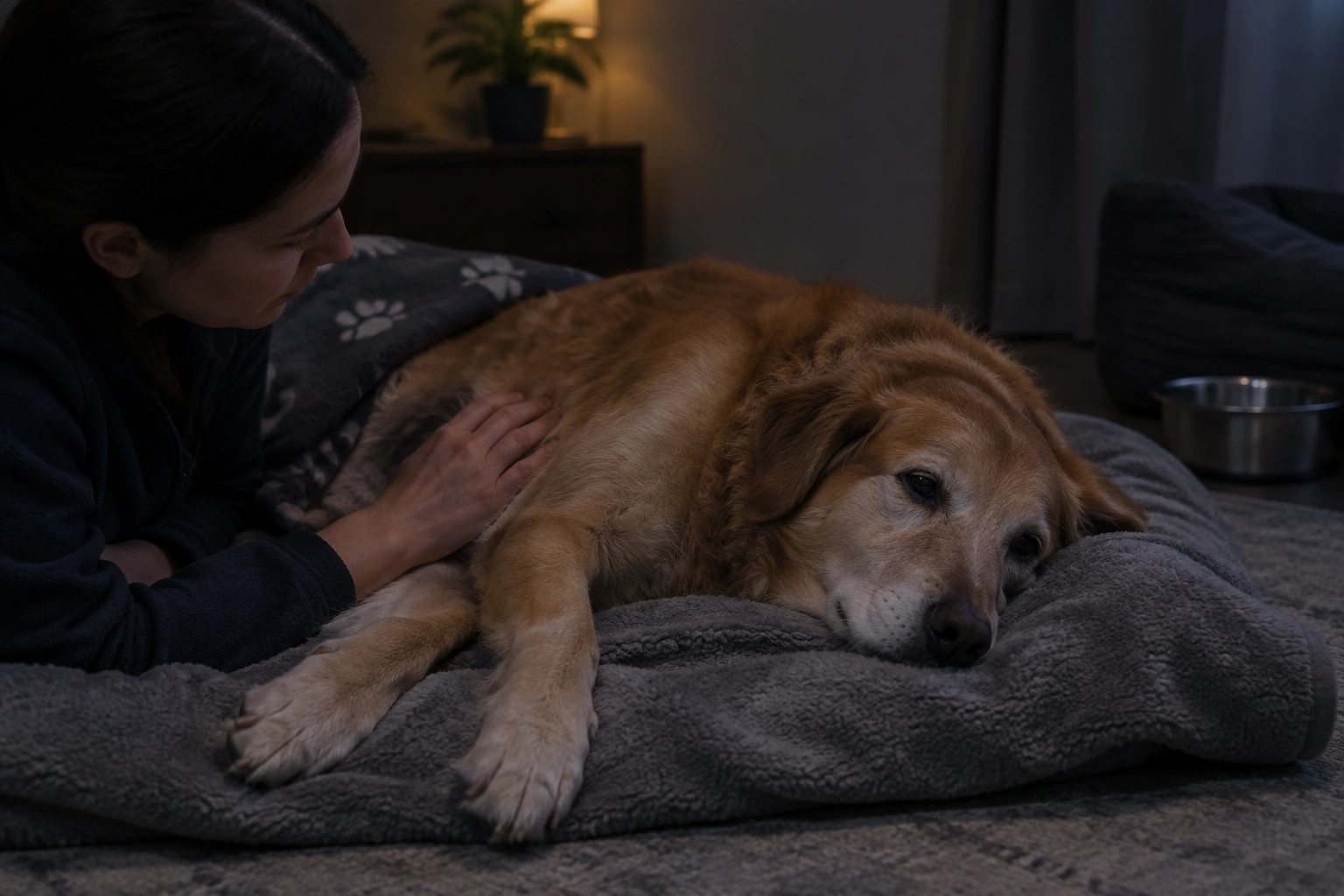
A small amount of water may be appropriate once your dog is fully awake and able to swallow normally, but do not force food or water into a disoriented dog. If they are still unsteady, wait. A dog that is still confused can choke or stumble into something hard.
A useful rule: if your dog cannot walk safely, cannot focus, or seems aggressive or panicked, treat the recovery period as part of the emergency.
What to Record for the Vet
The more exact your notes, the easier it is for your vet to narrow the cause.
Write down:
- The time the seizure started and ended
- What the dog was doing right before it happened
- Whether the dog fell, stiffened, paddled, drooled, vocalized, or lost bladder/bowel control
- How long it took to recover
- Whether the dog seemed blind, disoriented, or aggressive afterward
- Any possible exposure to toxins, trash, medications, xylitol, cannabis, pesticides, or human food
- Any recent illness, vomiting, diarrhea, fever, or injury
- Whether this has happened before
If it is safe to do so, record video. Even a short clip can help your vet tell the difference between a seizure, fainting, or another collapse event. If you are alone and have to choose between filming and keeping the dog safe, safety wins every time.
One practical detail many owners miss: note whether the dog was asleep, resting, excited, or exercising before the event. That context can help the vet interpret the episode.
What Could Have Caused the Seizure
A seizure is a symptom, not a diagnosis. The cause could be relatively straightforward or something that needs urgent treatment.
Common cause categories include:
- Idiopathic epilepsy, where no structural cause is found
- Toxin exposure or poisoning
- Metabolic problems such as low blood sugar or liver issues
- Infections or inflammation
- Head injury
- Structural brain disease
That is why a first seizure usually deserves veterinary evaluation even if your dog seems fine afterward. A dog that looks normal on the sofa may still have a problem that needs treatment.
If toxin exposure is even a possibility, treat it as urgent. Do not wait to “see if it happens again.” The difference between a brief, isolated event and a toxin-related seizure can be the difference between monitoring and emergency care.
What Your Vet May Recommend Next
A vet will usually start with a neurologic exam and bloodwork. Those first tests help look for metabolic causes, organ disease, and other problems that can trigger a seizure.
If the dog has repeated seizures, a prolonged seizure, severe post-seizure dysfunction, or evidence of structural brain disease, long-term antiseizure medication may be recommended. As a general veterinary guideline summarized by MedVet from ACVIM guidance, common treatment triggers can include more than two seizures in six months, cluster seizures, status epilepticus, a single severe or prolonged seizure, or underlying structural brain disease.
That does not mean every dog will need lifelong medication after one seizure. It means the vet is looking at pattern, severity, and cause. A one-time event with normal labs may lead to watchful follow-up. Repeated or severe events usually shift the balance toward treatment.
If you want a general reference point for emergency and routine canine care, AKC’s health resources and VCA Hospitals both provide accessible owner-facing information, but your own veterinarian’s advice should guide the actual plan for your dog.
Border Collies and Seizures: What to Know
Border Collies can have seizures, but it is better to be careful than dramatic about breed risk. Breed alone does not tell you the cause. A Border Collie with a first seizure still needs the same basic evaluation as any other dog.
What matters more is the pattern. If your Border Collie is a young adult with a brief seizure and normal recovery, your vet may think about idiopathic epilepsy, but they will still want to rule out other causes first. If the dog is older, has abnormal behavior between episodes, or has repeated seizures, the workup usually becomes more urgent.
Border Collies are also active dogs, so post-seizure disorientation can make them more likely to stumble or get into trouble if they try to move too soon. Keep them in a safe, enclosed area during recovery rather than allowing free access to stairs or outdoor space.
Practical Decision Guide: Monitor at Home or Seek Care Now
Use this simple framework when you are deciding what to do next.
| Situation | Best next step |
|---|---|
| One brief seizure, dog recovers normally, no toxin exposure known | Call your regular vet for guidance and document the event |
| First seizure with uncertain recovery or unusual behavior afterward | Seek veterinary evaluation soon, same day if possible |
| Seizure lasts longer than five minutes | Emergency vet now |
| Two or more seizures in 24 hours | Emergency vet now |
| Possible poisoning, trauma, or breathing trouble | Emergency vet now |
| Dog seems blind, very confused, aggressive, or unable to stand after the seizure | Urgent veterinary care |
If you are on the fence, ask yourself three questions:
- Did the dog fully recover?
- Was there more than one seizure?
- Could this be toxin exposure, injury, or another urgent illness?
If the answer to any of those is concerning, do not wait.
When to See a Veterinarian or Certified Trainer
For a seizure itself, a veterinarian is the right professional. A certified trainer does not diagnose or treat seizures. If your dog later develops fear, reactivity, or handling issues because of the experience, a trainer can help with that emotional fallout, but only after the medical issue is addressed.
Call your vet promptly after any first seizure, even if it was brief. Go to an emergency clinic immediately if the seizure is prolonged, repeated, linked to toxin exposure, or followed by abnormal recovery.
A seizure is one of those moments where calm, simple action matters more than perfect knowledge. Protect the dog, time the event, record what you can, and let the veterinary team handle the medical side.