
How Far Can a Dog Travel in a Day? A Practical Guide for Border Collie Owners

A dog’s daily travel distance is one of those questions that sounds simple until you try to answer it honestly.
The real answer is not a single number. It depends on the dog, the pace, the weather, the ground underfoot, and how much conditioning that dog already has. A fit Border Collie on a cool day is working with a very different set of limits than a puppy on pavement, a senior dog on a rocky trail, or a family pet who is suddenly asked to “keep up” on a long hike.
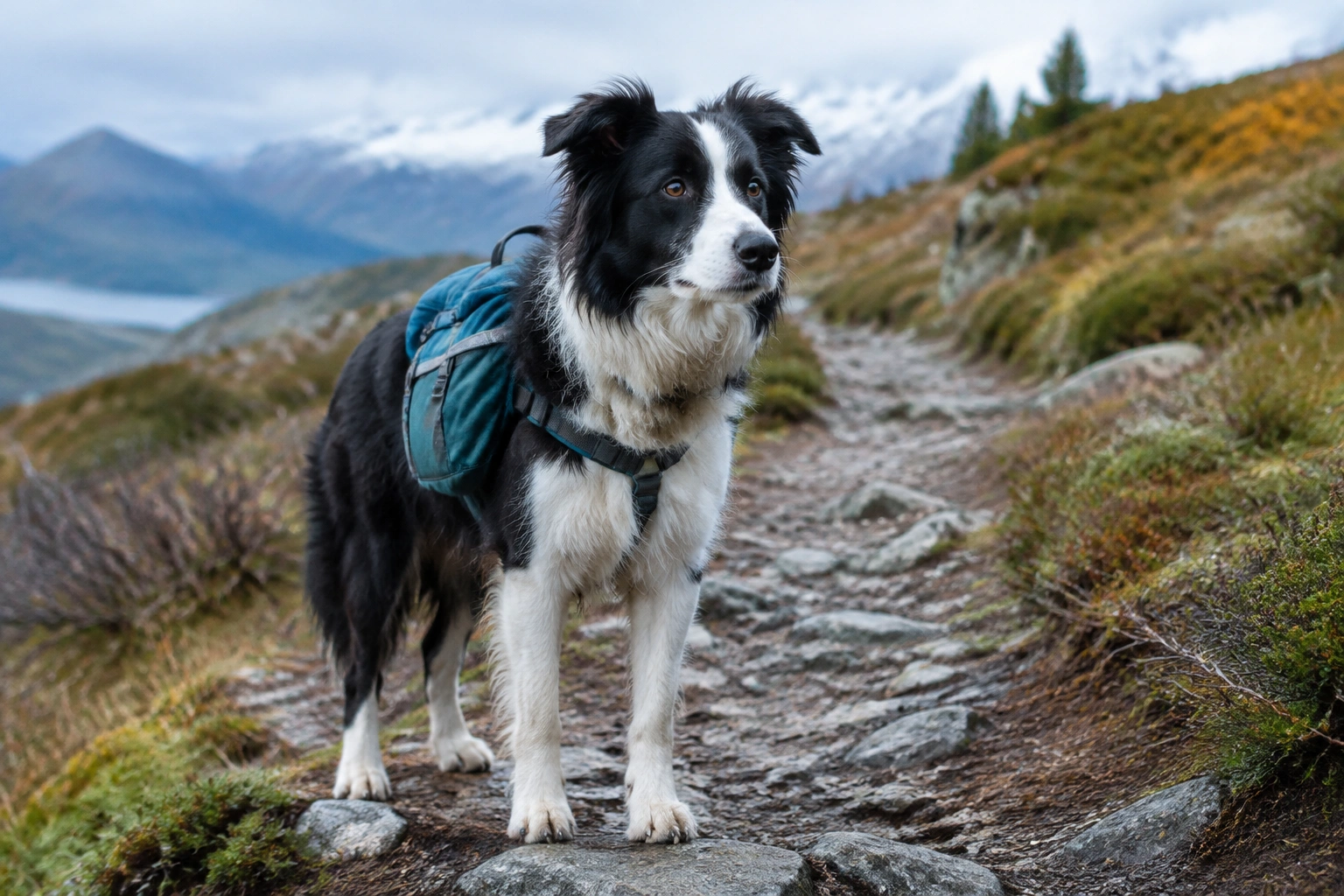
If you want a useful answer, think in ranges and in context. That is what keeps you from underestimating a dog’s needs on one hand or overdoing it on the other.
Quick practical summary:
– Puppy: short, frequent outings; avoid long repetitive mileage
– Healthy adult pet dog: often several miles in a day in favorable conditions
– Senior dog: usually shorter, flatter, slower outings with more recovery
– Fit Border Collie: can often handle longer hikes than many breeds, especially in cool weather
– Hot weather adjustment: cut the distance back early; heat and humidity can reduce safe mileage fast
How Far Can a Dog Travel in a Day? Realistic Ranges
For ordinary pet-dog walking and hiking, the safe daily distance varies widely. Many healthy adult dogs can comfortably handle a few miles in a day, while very fit dogs may do much more when conditions are favorable. But “can do” and “should do” are not the same thing.
A useful way to frame it:
- Short neighborhood walks: often fine for most dogs, including puppies and seniors, if kept brief and unhurried.
- Moderate day hikes: feasible for many healthy adult dogs in cool weather with breaks.
- Long hikes: possible for highly conditioned dogs, but not something to jump into casually.
- Extreme endurance travel: reserved for working dogs and elite canine athletes, not typical pets.
Here is a more practical planning guide for specialized benchmarks and everyday outings:
| Conditions / dog type | More realistic planning range |
|---|---|
| Cool weather, flat terrain, moderate pace | Often a few miles for many pet dogs; fit adults may handle more |
| Hot weather, rough terrain, fast pace | Shorten the outing significantly; even modest mileage may be too much |
| Puppy | Short, low-impact outings rather than mileage goals |
| Healthy adult dog | Several miles may be reasonable if conditioned and monitored |
| Senior dog | Usually shorter, flatter, slower outings |
| Fit Border Collie | Can often go longer than average pets, but still needs pacing and recovery |
One verified benchmark from specialized hiking contexts is that very avid dogs in good condition can cover 25 to 30 miles in a day when hiking. That is an impressive number, but it should not be treated as a general target. It describes a highly fit dog under favorable hiking conditions, not the average family dog. At the far end of canine endurance, elite sled dogs can run an average of 100 miles a day for a week to 10 days straight. That tells you what the species is capable of in a specialized working context, not what is safe for most household dogs.
For lost dogs, the pattern is different. Lost dogs typically travel between 1 and 4 miles in a day, though every case is different. In the early stages, many stay close to home, often within a few blocks to about a mile. Fear, traffic, terrain, and weather can all change that. If you are searching for a missing dog, those numbers help you focus your search area. They do not translate into a normal exercise goal.
What Changes a Dog’s Safe Daily Distance
The biggest mistake owners make is assuming breed alone tells the whole story. It does not.
A dog’s safe distance is shaped by a combination of:
- Breed and body type
- Age
- Fitness and conditioning
- Health status
- Pace
- Terrain
- Weather
- Surface
A Border Collie may have more stamina than many breeds, but stamina is not immunity. The dog still tires, overheats, dehydrates, gets sore paws, and needs recovery time.
Pace matters more than people expect
A mile at a relaxed walk is not the same as a mile at a brisk trot or a mile of constant climbing. Faster movement increases strain and can shorten the distance a dog can safely cover. A dog that looks “fine” for the first hour may still be accumulating fatigue that shows up later as lagging, stiffness, or refusal to continue.
Terrain can cut distance in half
Flat, even ground is easier than steep, rocky, sandy, or muddy terrain. Uneven footing forces a dog to work harder with every step. That matters for the shoulders, hips, paws, and core muscles. A dog that handles a 6-mile flat walk well may struggle on a 3-mile rugged hike.
Weather changes everything
Heat and humidity reduce safe travel distance fast. Hot pavement adds another layer of risk because it can burn paw pads and raise body temperature from below. Cool weather usually allows longer outings, but cold rain, wind, and wet fur can still make a dog work harder than expected.
Health and fitness are not optional factors
A dog recovering from illness, carrying extra weight, or living with orthopedic or heart concerns should not be judged by a healthy athlete’s standards. Even within the same breed, two dogs can have very different safe limits.
A practical rule
If the outing includes heat, steep terrain, or a fast pace, reduce your distance goal before you leave. Do not wait for the dog to show you it is too much.
Border Collie Endurance: How Far They Can Go and Where Limits Still Apply
Border Collies have a deserved reputation for stamina. They were bred for sustained work, quick thinking, and the ability to keep going without falling apart after a short burst. That makes them different from many companion breeds.
But there is a common trap here: people hear “high endurance” and turn it into “almost unlimited endurance.” That is where problems start.
A healthy adult Border Collie can often tolerate longer outings than a low-energy companion breed, especially if the dog is already conditioned. On a cool day, a fit Border Collie may handle a long hike better than many other dogs. In the right setting, that might mean a substantial distance with breaks.
Still, the limits are real:
- Heat reduces endurance sharply
- Rocky or steep terrain increases fatigue
- A fast human pace can outstrip the dog’s recovery
- A dog that is mentally driven may push past physical warning signs
That last point matters. Border Collies often want to keep going because they are engaged, not because the body is fresh. Owners sometimes mistake enthusiasm for readiness. A Border Collie that is still scanning for work or staying glued to your side may not be telling you the whole story.
If you want a Border Collie to cover longer distances safely, build the distance gradually and watch recovery the next day. A dog that is sore, unusually sleepy, or stiff after the outing was not ready for that load.
For broader guidance on exercise and dog care, the American Kennel Club has practical breed and training resources, and the ASPCA offers useful safety information for pet owners.
Puppies, Adult Dogs, and Senior Dogs: Distance by Life Stage
Age changes the answer more than many owners realize.
Puppies
Puppies should not be treated like miniature adults. Their joints, bones, and soft tissues are still developing. Long repetitive outings are a poor trade-off because the short-term exercise benefit does not outweigh the risk of overuse.
A puppy’s walk should be short, calm, and focused on learning, not mileage. Frequent breaks are more useful than pushing for distance. If a puppy starts lagging, lying down, or becoming distracted in a dull, tired way, the outing is over.
Adult dogs
Healthy adult dogs are the most flexible group. They can usually handle more distance than puppies or seniors, especially if they have been conditioned gradually. Even here, there is a big difference between a dog that walks daily and one that only gets occasional exercise.
Senior dogs
Older dogs often need shorter distances, more breaks, and more attention to footing. Some seniors still enjoy long, easy walks, but the pace needs to be slower and the surface kinder. A senior dog may want to keep moving even when the body is starting to complain, so watch for subtle changes in gait or enthusiasm.
A simple comparison
- Puppy: short, frequent, low-impact outings
- Adult: moderate to long outings depending on conditioning
- Senior: shorter, flatter, slower outings with more recovery
If you are not sure where your dog fits, assume the more conservative category until the dog proves otherwise over time.
Walking vs Hiking vs Running: Why the Activity Type Changes the Number
Distance alone can be misleading because activity type changes the load.
Walking
Walking is the easiest of the three. It allows a dog to regulate pace, sniff, and recover between bursts of movement. A dog can often cover more total ground by walking than by running because walking is less stressful.
Hiking
Hiking usually means uneven footing, elevation changes, and longer continuous effort. Even if the mileage looks modest on paper, the physical demand can be much higher than a neighborhood walk.
Running
Running covers ground quickly, but it is harder on the body. It increases impact on joints and paws and leaves less room for recovery. A dog that can walk 6 miles may not be able to run 6 miles safely.
The trade-off
If your goal is exercise, hiking or brisk walking may be a better endurance builder than running. If your goal is to cover distance efficiently, running does that faster but with more strain. For most pet dogs, especially Border Collies that already get plenty of movement, the safer choice is usually controlled walking or hiking rather than long-distance running.
How to Tell When a Dog Has Reached Its Limit
This is the section that matters most in real life. Distance goals should end the moment the dog starts showing stress.
Watch for these warning signs:
- Excessive panting that does not settle with rest
- Lagging behind or refusing to move forward
- Limping or favoring a leg
- Unsteady gait or wobbliness
- Drooling more than usual
- Bright red gums or very pale gums
- Vomiting
- Repeated attempts to lie down
- Stiffness that appears during the outing
- Collapse or near-collapse
A tired dog may simply slow down. A dog that is overheating or medically struggling often looks more distressed: frantic panting, glazed eyes, weakness, or a refusal to continue.
Do not wait for the dog to “push through it.” Dogs are excellent at masking discomfort until they are not.
If you suspect heatstroke, treat it as an emergency. The VCA Hospitals site has solid veterinary guidance on recognizing and responding to heat-related illness in dogs.
How to Plan Breaks, Water, and Basic Fuel on Long Outings
Long outings are safer when they are broken into manageable pieces.
Breaks
A practical approach is to pause before the dog looks tired, not after. On longer walks or hikes, use regular rest stops to check breathing, paw condition, and overall attitude. If the dog is panting heavily or seems eager to lie down, the break is already overdue.
Water
Bring water any time the outing is long, warm, or remote enough that you cannot easily refill. Offer small amounts at intervals rather than waiting until the dog is desperate. As a simple rule of thumb, if conditions are cool and the pace is easy, offer water at planned rest stops; if conditions are warm, humid, or the pace is brisk, offer it more often and shorten the outing sooner if the dog is not recovering well.
Basic fuel
For very long outings, some dogs may need a little food or an easy-to-digest snack, but the main priority is hydration and pacing. Do not experiment with new foods on a long hike. Keep it simple and familiar.
A practical rule
If you would be uncomfortable doing the outing without a water plan, your dog should not do it without one either.
How to Build a Dog’s Distance Gradually
Conditioning is the safest way to increase distance. The key is not how far the dog can go once, but how well the dog recovers afterward.
A gradual build-up usually works better than a sudden jump in mileage. Increase distance in small steps and keep the pace steady. After a longer outing, watch the dog later that day and the next morning.
Signs the dog handled it well:
- Normal appetite
- Normal interest in movement the next day
- No stiffness after resting
- No paw soreness
- No unusual fatigue
Signs you increased too quickly:
- Stiffness the next day
- Reluctance to get up
- Lingering panting or restlessness
- Sore paws or limping
- Lower enthusiasm on the next outing
If recovery is slow, hold the distance where it is or back off. Progress should be boringly steady, not dramatic.
When to Shorten, Stop, or Get Veterinary Help
Shorten or stop the outing if:
- The weather gets hotter than expected
- The dog’s pace drops significantly
- The dog begins limping
- The dog pants heavily and does not settle
- The ground becomes more punishing than planned
- The dog loses interest in continuing
Get veterinary help if you see:
- Collapse
- Vomiting that continues
- Severe weakness
- Signs of heatstroke
- Persistent limping or pain
- Wobbliness that does not clear quickly
- Any behavior that suggests the dog is not recovering normally
If you are unsure whether a symptom is “bad enough,” err on the side of caution. Dogs can go from tired to truly unwell faster than many owners expect.
Practical Distance-Planning Rules for Real-World Trips
Before you head out, run through this quick decision framework:
-
What is the dog’s current condition?
Puppy, adult, senior, healthy, recovering, or managing a health issue? -
What are the conditions today?
Cool and flat, or hot, humid, steep, rocky, or paved? -
What type of movement is this?
Easy walk, moderate hike, or faster running pace? -
How well has the dog handled similar outings before?
If this is new territory, cut the plan down. -
What is your exit plan?
Water, shade, rest stops, and a way to shorten the outing if needed.
A Border Collie may be capable of more than many dogs, but the safest plan is still the one that matches the day, not the breed stereotype. If the dog finishes the outing looking comfortable, recovers well, and is ready again the next day, you probably chose well. If not, the distance was too ambitious.
When to See a Veterinarian or Certified Trainer
See a veterinarian if your dog has repeated fatigue, ongoing limping, breathing trouble, heat intolerance, or pain after normal outings. A vet check is also wise before you significantly increase distance in an older dog or a dog with known health concerns.
A certified trainer can help if your dog pulls hard, ignores rest cues, or becomes over-aroused on hikes and walks. That is not just a manners issue. It can turn a manageable outing into an exhausting one.
FAQ
How far can a healthy dog walk in a day?
It varies widely. Many healthy adult dogs can handle several miles with breaks, but the safe amount depends on fitness, weather, terrain, and pace.
How far can a Border Collie travel in a day?
A fit Border Collie can often go farther than many breeds, especially in cool weather, but there is no universal number. Heat, steep ground, and speed can reduce safe distance a lot.
Are puppies able to do long hikes?
Usually no. Puppies need shorter, lower-impact outings because their bodies are still developing.
Do senior dogs need shorter distances?
Usually yes. Many seniors do better with slower, flatter walks and more rest.
Is hiking harder on a dog than walking?
Usually yes. Uneven ground, climbing, and longer continuous effort make hiking more demanding than a normal walk.
What should make me stop the outing?
Heavy panting that won’t settle, limping, wobbliness, vomiting, collapse, or clear signs of overheating should end the outing immediately.
How much water should I bring?
Enough that you are not guessing. For any long, warm, or remote outing, carry water for the dog and offer it regularly.
Can a dog travel farther in cool weather?
Often yes, but cool weather does not make a dog unlimited. Pace, terrain, and fitness still matter.
How do I know if my dog is fit enough for longer distance?
A dog that recovers well, shows no stiffness the next day, and handles gradually longer outings without trouble is usually adapting well. If recovery is slow, back off.
Should I ask my vet before increasing distance?
Yes, if your dog is older, has a medical condition, or has had any recent pain, lameness, or breathing issues.
Can a lost dog travel far in one day?
Yes, but the pattern is unpredictable. Lost dogs typically travel between 1 and 4 miles in a day, though some stay much closer at first and others keep moving.
What is the safest way to build endurance?
Increase distance slowly, watch recovery, and only progress when the dog handles the current level comfortably.
How far can a dog travel in a day if it is very fit?
Very fit hiking dogs can cover 25 to 30 miles in a day in favorable conditions, but that is not a general target for most pets.
Do elite working dogs go farther?
Yes. Elite sled dogs can run an average of 100 miles a day for a week to 10 days straight, but that level of work is highly specialized.
Can I use my Border Collie’s enthusiasm as a guide?
Only partly. Border Collies often want to keep going even when they are physically nearing their limit, so enthusiasm should not replace observation.