
What Golden Retrievers Are Allergic To: Common Triggers, Symptoms, and What to Do Next

Golden Retrievers can be wonderful companions, but they are also a breed many owners notice for recurrent itching, ear trouble, and skin flare-ups. If you are trying to work out what are golden retrievers allergic to, the short answer is: usually not just one thing. The most common triggers fall into four buckets — food, environmental allergens, fleas, and contact irritants.
That matters because the next step depends on the pattern. A dog that itches after spring walks needs a different plan from one that licks paws year-round or keeps getting ear problems that may be linked to diet or other triggers. Treating every itchy Golden as if it has the same problem wastes time and often makes symptoms worse.
A practical approach is to look at when the symptoms happen, where they show up on the body, and what changed before the flare started. That simple framework helps you narrow the likely cause before you spend money on tests, new diets, or products that may not help.
How to Tell if It’s Allergies
In plain language, the pattern can help you guess what’s going on:
- Seasonal itching often points toward pollen, grass, or other outdoor triggers.
- Year-round itching can fit food allergy, dust mites, mold, or ongoing flea exposure.
- Paw licking and ear trouble are common with allergies, especially environmental allergies, but they can also happen with food allergy or infection.
- Digestive signs like soft stools or vomiting make food allergy more worth checking, but they do not prove it on their own.
That pattern is a clue, not a diagnosis. Parasites, yeast, and bacterial skin infections can cause similar signs, so itching alone is not enough to self-diagnose.
What Golden Retrievers Are Most Commonly Allergic To
Golden Retrievers can react to several types of allergens, but the most common categories are:
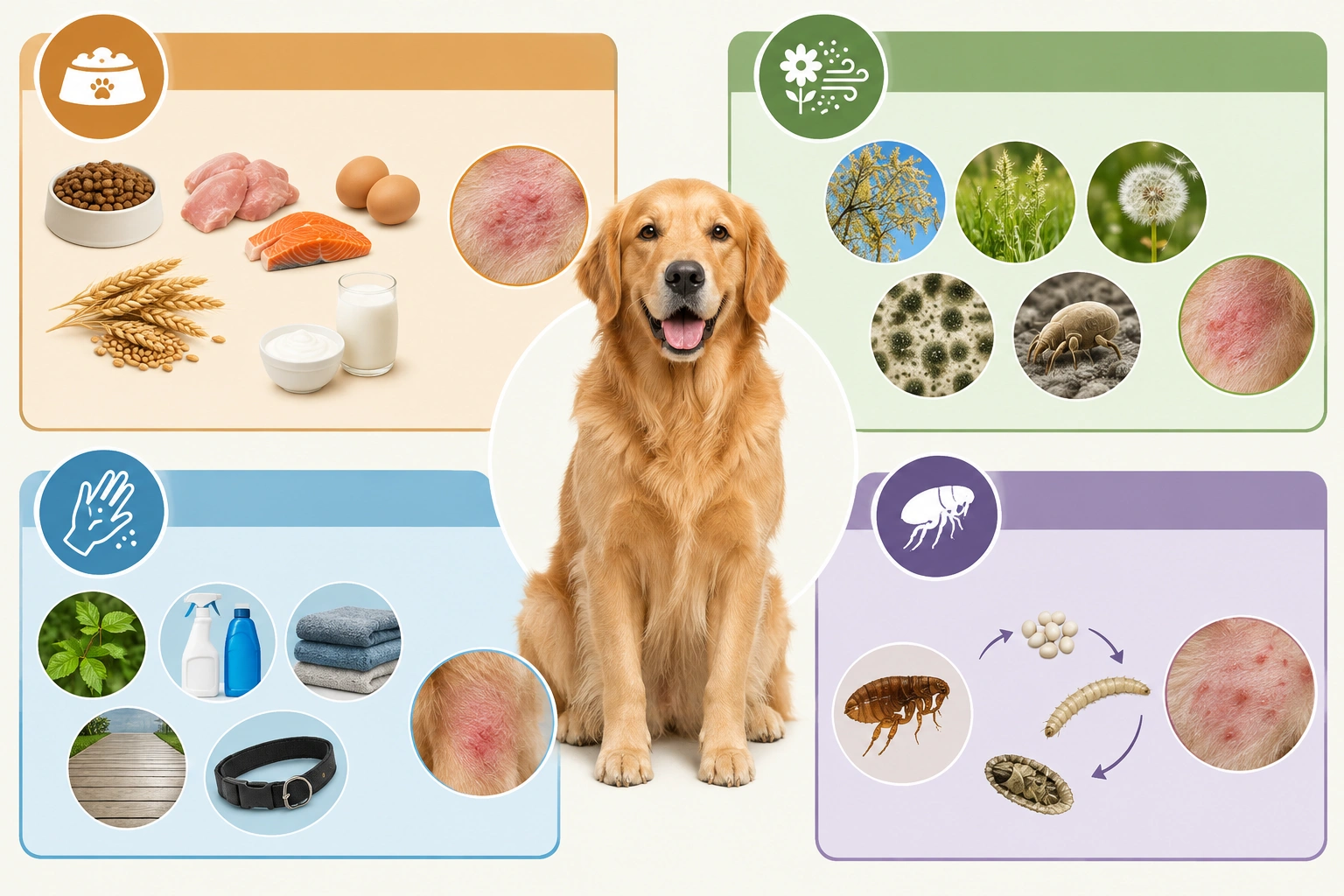
- Food ingredients
- Environmental allergens such as pollen, grass, dust mites, and mold
- Flea saliva
- Contact irritants like shampoos, detergents, cleaning products, or fabrics
Skin allergies are a common problem for Golden Retrievers and can make the skin itchy and irritated. Food allergies can also occur when the body reacts to something in the diet. Flea allergies can trigger intense itching and hot spots. Environmental allergies are also common and may show up seasonally or all year, depending on the trigger.
One useful caution: true food allergies are less common than many owners assume. A lot of dogs blamed on “food sensitivity” are actually reacting to fleas or environmental allergens. That is why the symptom pattern matters more than guessing from a single bad week.
How Allergy Symptoms Usually Show Up in Golden Retrievers
Allergies in Golden Retrievers usually show up in the skin and ears first, but digestive signs can also appear.
Common signs to watch for
- Itching, especially around the paws, belly, ears, armpits, and face
- Repeated paw licking or chewing
- Red, inflamed skin
- Ear scratching, head shaking, or recurring ear infections
- Hot spots
- Hair loss from chronic licking or scratching
- Soft stools, vomiting, or frequent stomach upset in some food-allergic dogs
The pattern can be more telling than the symptom itself. For example, a Golden that licks its paws after every walk in grass may be reacting to environmental exposure. A dog that scratches all year and keeps getting ear infections may be dealing with ongoing environmental allergies or a food issue. A dog with itchy skin plus vomiting or loose stools after meals deserves a closer look at the diet.
If the main problem is one area only, such as the belly or paws, contact irritation becomes more likely. If the problem is generalized itching plus ears, allergies move higher on the list. If the dog is also losing coat, creating raw patches, or developing infections, the underlying issue has probably been going on for a while.
Food Allergies vs Environmental Allergies vs Contact Allergies
This comparison is where many owners save time. The cause often becomes clearer when you compare timing, exposure, and symptom location.
| Allergy type | Common triggers | Typical timing | Common symptoms | Best next step |
|---|---|---|---|---|
| Food allergy | Beef, chicken, dairy, wheat, soy, and other ingredients | Often year-round; may not follow seasons | Itching, ear infections, paw licking, vomiting, soft stools | Vet-guided elimination diet |
| Environmental allergy | Pollen, grass, dust mites, mold | Often seasonal, but can be year-round | Itching, face/paw licking, belly rash, ear problems | Vet exam; consider allergy testing and exposure control |
| Contact allergy | Shampoo, detergent, cleaning products, fabrics | Flare after direct contact | Belly, paw, or skin-fold redness and irritation | Remove suspected product and monitor response |
| Flea allergy dermatitis | Flea saliva | Can flare quickly after bites; worse in warm months or with poor prevention | Intense itching, hot spots, tail-base scratching | Strict flea control and vet evaluation |
A few trade-offs are worth noting:
- Food trials are controlled, but slow. They are the best way to investigate a food allergy, yet they require patience and discipline.
- Environmental triggers are harder to avoid. You can reduce exposure, but you usually cannot eliminate pollen or dust mites completely.
- Medication can calm the itch fast, but it does not identify the cause. Relief and diagnosis are related, but they are not the same job.
Common Food Triggers in Golden Retrievers
When Golden Retrievers do have food allergies, the usual suspects are ingredients they have eaten for a long time. That is one reason a dog can suddenly seem “allergic” to a food it has tolerated for years — allergies can develop after repeated exposure.
The foods most often implicated include:
- Chicken
- Beef
- Dairy
- Wheat
- Soy
Some owners also suspect grains in general, but grain is often blamed too quickly. The real issue is usually a specific protein or ingredient, not “all carbs” or “all grains.” That distinction matters because switching to a random grain-free food may not solve anything if the dog is actually reacting to chicken or beef.
A common mistake is changing foods several times in a row. That creates confusion. If the itching improves, you still do not know which ingredient mattered. If it gets worse, you do not know whether the new food caused it or whether the original problem was still active.
If your Golden Retriever has both skin symptoms and digestive signs, food allergy climbs higher on the list. If the dog only itches and never has stomach issues, food is still possible, but environmental causes are often more likely.
Environmental Allergens Golden Retrievers Often React To
Golden Retrievers can react to the same outdoor and indoor allergens that affect many dogs.
Outdoor triggers
- Pollen
- Grass
- Weeds
Indoor triggers
- Dust mites in bedding, rugs, and upholstery
- Mold
- Household dust
These triggers often create a pattern. A dog that flares in spring or after time in tall grass may be reacting to pollen or grass. A dog that seems worse indoors, especially around bedding or carpeted rooms, may be dealing with dust mites or mold.
Environmental allergies are often frustrating because you can reduce exposure, but you cannot fully control the world. That is why symptom management and trigger reduction usually have to work together. A dog with pollen allergy may still need bathing, medication, or other veterinary support even if you wipe paws after walks and keep grass trimmed.
The note from the AKC on dog allergies is useful here: environmental allergies are common in dogs, and symptoms often overlap with other causes of itching. That overlap is exactly why pattern recognition matters.
Contact Triggers: Shampoo, Detergents, Grass, and Fabrics
Contact allergies or irritant reactions happen when something touches the skin and causes a flare. In Golden Retrievers, the belly, paws, and skin folds are common trouble spots because those areas touch the ground, bedding, or grooming products most often.
Common contact triggers include:
- New shampoos or conditioners
- Laundry detergents
- Fabric softeners
- Cleaning sprays used on floors or bedding
- Certain grasses
- Rough or synthetic fabrics
A simple example: you bathe your dog with a new shampoo, and within a day or two the belly turns red and itchy. That timing makes contact irritation more plausible than a food allergy. Another example is a dog that lies on freshly cleaned bedding and starts licking its paws or belly afterward.
The practical move is to remove the suspected product and return to a bland, fragrance-free option. If the reaction settles quickly, you have a useful clue. If it does not, the problem may be broader than contact irritation.
How to Tell Allergies Apart From Fleas, Skin Infections, or Other Causes
This is where owners get tripped up. Itching does not automatically mean allergy.
Clues that point toward fleas
- Scratching around the tail base, lower back, or hindquarters
- Itching that seems out of proportion to what you see on the skin
- Lapses in flea prevention
- Tiny black flea dirt in the coat
The ASPCA’s pet allergy guidance is a helpful reminder that parasites and skin problems can look similar from the outside. Flea allergy dermatitis can cause intense itching even when you never spot many fleas.
Clues that point toward a skin infection
- Pustules, crusts, odor, or greasy skin
- Moist, raw, or oozing patches
- Symptoms that worsen despite basic allergy care
Allergies and infections often travel together. Allergic skin gets damaged, and damaged skin is easier for bacteria and yeast to overgrow. That means a dog may need treatment for both the trigger and the secondary infection.
Clues that point more toward allergies
- Itching that keeps returning
- Recurrent ear infections
- Paw licking
- Belly or armpit rash
- Seasonal flare-ups
- Symptoms that improve and return with the same exposure pattern
If the same problem keeps coming back, especially in the ears or paws, allergies deserve a serious look.
How Veterinarians Diagnose Dog Allergies
A good allergy workup is usually a process, not one test.
At the visit, the vet will usually start by asking about timing, diet, flea prevention, bathing products, and when the symptoms began. Then they will examine the skin and ears closely to look for clues that point toward parasites, infection, irritation, or allergy.
The usual sequence is:
- History — when symptoms started, whether they are seasonal, and what changed recently
- Flea control review — because fleas can mimic or worsen allergy symptoms
- Skin and ear exam — to look for infection, parasites, or irritation
- Skin or ear testing if needed — to check for yeast, bacteria, or mites before assuming it is “just allergies”
- Treatment of any secondary infection if present
That order matters because vets usually try to rule out common look-alikes first. If a dog has yeast, bacteria, or parasites, allergy testing or diet trials can be misleading until those issues are addressed.
For suspected food allergies, the most useful next step is usually an elimination diet. For suspected environmental allergies, allergy testing may be more helpful, especially when the dog has repeated seasonal or year-round flares.
Here is the key trade-off: allergy testing is generally more useful for environmental triggers than for food triggers. For food, a strict diet trial is usually the more reliable path. For environmental triggers, testing can help identify what the dog is reacting to so you can reduce exposure or discuss longer-term management with your vet.
What an Elimination Diet Actually Involves
An elimination diet is not just “trying a different food.” It is a strict diagnostic trial.
What it usually requires
- Feeding only the prescribed diet
- No flavored treats, table scraps, chews, or leftover bits from other foods
- No unapproved supplements or flavored medications unless your vet says they are safe
- Staying consistent for the full trial period
The biggest mistake owners make is accidental cheating. A single bite of the old food or a flavored treat can blur the results. That is why these trials need a clear plan before they begin.
A vet-guided elimination diet often uses a novel protein or a hydrolyzed diet, depending on the case. The goal is to remove the ingredients most likely to trigger a reaction and then watch for improvement. If symptoms improve and return when the old food is reintroduced, that is strong evidence the diet mattered.
In practice, a food trial usually takes several weeks to a few months, depending on the protocol your vet recommends. Many dogs need enough time for itchy skin to settle before you can judge the result, so stopping early can make the trial useless.
A trial is valid only if the dog eats the assigned diet consistently for the whole period and does not get outside foods, flavored chews, or unapproved medications that could contaminate the test. It is invalid if the dog sneaks other foods, the diet is changed repeatedly, or the trial ends before the vet’s timeline is complete.
Patience is part of the process. If you stop too early, you may never know whether the food was the problem.
What a Vet May Recommend to Treat Dog Allergies
Treatment depends on the cause, but common vet-directed options include:
- Flea control if fleas are contributing
- Antihistamines in some dogs, especially for mild symptoms
- Medicated shampoos to remove allergens and calm the skin
- Prescription itch medications when scratching is persistent or severe
- Antibiotics or antifungal treatment if a skin or ear infection is present
Some dogs need more than one step at the same time. For example, a vet may treat a yeast infection, start flea prevention, and recommend an itch-control medication while you work through the underlying cause. That is often more effective than trying one home remedy after another.
What You Can Do at Home to Reduce Allergy Symptoms
Home care can make a real difference, especially while you are figuring out the trigger.
Low-risk steps that often help
- Keep up with reliable flea prevention on schedule, without gaps
- Rinse or wipe paws after walks if grass seems to trigger flares
- Wash bedding regularly with a fragrance-free detergent
- Avoid heavily scented cleaners around the dog’s resting areas
- Use your vet-recommended shampoo rather than swapping products often
- Track symptoms in a simple notebook or phone note
For paws, a quick rinse or wipe after outdoor time can remove pollen, grass, and other debris before the dog licks it off. For bedding, wash blankets, crate liners, and dog beds regularly, and choose unscented detergent if contact irritation is a concern. For bathing, follow your vet’s advice on frequency; some dogs do better with regular medicated baths, while others need less frequent washing so the skin does not dry out.
The goal is not to “fix” everything at home. The goal is to reduce noise so the real pattern is easier to see. If the dog improves after a bedding change, for example, that tells you something. If nothing changes, you have ruled out one more possibility.
For dogs with mild itching, bathing with a vet-approved medicated shampoo can help remove allergens from the coat and calm the skin. But if the skin is already raw, infected, or painful, get veterinary guidance before trying to manage it yourself.
When to See a Veterinarian or Certified Trainer
This is a vet issue, not a wait-and-see issue, if your Golden Retriever has:
- Persistent itching
- Recurrent ear infections
- Open sores or hot spots
- Noticeable hair loss
- Severe paw licking or chewing
- A rash that keeps returning
- Vomiting, soft stools, or other digestive signs alongside skin symptoms
- Swelling, trouble breathing, vomiting, or a sudden severe reaction
Sudden severe reactions need urgent care. Ongoing symptoms need a proper workup because repeated scratching, licking, and ear inflammation can turn into bigger skin problems fast.
If the symptoms are mild and recent, short-term monitoring plus flea control and product review may be reasonable. If they are recurring, worsening, or affecting quality of life, book the appointment and bring notes on timing, foods, products, and exposures. That history is often what helps the vet narrow the cause.
FAQs
Are Golden Retrievers more prone to allergies than other breeds?
They can be prone to allergies, but the more useful point is that they are a breed where skin and ear issues are common enough that allergies should be considered early. That does not prove an allergy on its own — it just means you should pay attention to patterns.
Can a Golden Retriever be allergic to chicken?
Yes. Chicken is one of the ingredients commonly implicated in dog food allergies. That said, you should not assume chicken is the problem without a proper elimination diet, because many dogs react to something else entirely.
Why does my Golden Retriever keep licking its paws?
Paw licking often points to environmental allergies, contact irritation, or sometimes food allergy. If it happens after walks or during certain seasons, environmental triggers move up the list. If it happens year-round with ear issues, food or ongoing environmental allergy becomes more likely.
Are Golden Retrievers hypoallergenic?
No. Golden Retrievers are not considered hypoallergenic. They shed and produce dander like other dogs, which can be an issue for people with dog allergies.
Can I diagnose my dog’s allergies at home?
You can gather clues at home, but you cannot reliably confirm the cause without veterinary guidance. A proper diagnosis matters because flea irritation, infection, food allergy, and environmental allergy can look very similar at first.
How long does a food trial take?
The exact timeline should come from your vet, but elimination diets usually take several weeks to a few months. The key is to follow the protocol long enough to make the result meaningful and to avoid anything that could contaminate the trial.
The safest way to answer what are golden retrievers allergic to is to work from patterns, not guesses. If your dog’s itching is seasonal, year-round, focused on paws or ears, or paired with digestive signs, that helps point your vet in the right direction. From there, the next step is a proper exam, not a guess — because flea problems, infections, and true allergies can look very similar at first.