
What to Do if Your Dog Is Attacked by Another Dog: A Calm, Practical Action Plan

If your dog has just been attacked, your job is simple but urgent: get both dogs separated without adding another injury, then check your dog for hidden damage, and decide whether this is a same-day vet visit or an emergency.
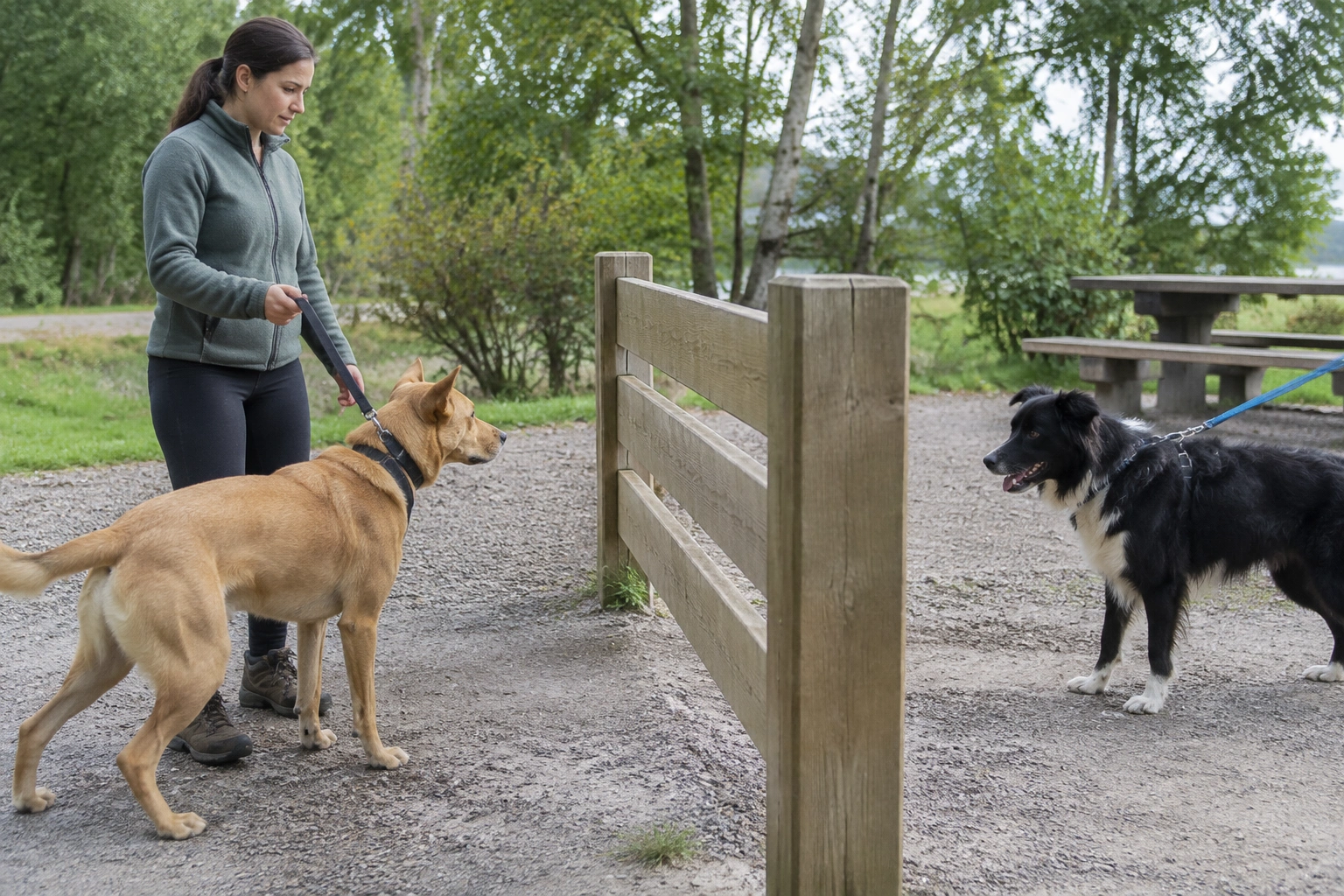
For Border Collie owners, this can feel especially unsettling. Many Border Collies are quick to read danger, quick to remember it, and may become more cautious on future walks after one frightening incident. The next few minutes matter for physical safety, and the next few days matter for confidence and recovery.
What to do in the first 60 seconds after a dog attack
Your first goal is not to “win” the fight. It is to break the contact and keep yourself from becoming the next bite victim.
If your dog is on leash, use the leash to create distance while staying out of reach of both dogs’ mouths. Premier Veterinary Group advises against jumping between fighting dogs because the other dog can turn and seriously injure you; if pulling away is possible, do it while keeping your body back. If you cannot separate them that way, a sudden blast of water from a bottle or hose may startle them enough to break focus. Premier Veterinary Group
If you cannot safely separate the dogs immediately, back away first. Use a barrier if one is within reach, then try water or loud noise only; do not grab collars or reach between the dogs. If the dogs are still actively fighting, your priority is distance and cover, not physical contact.
If an aggressive dog is approaching but has not yet made contact, move away calmly but quickly and put something solid between the dogs if you can — a car, gate, fence, wall, or even a parked bike. The PDSA gives the same practical advice: don’t let your dog approach, because closing distance can increase the other dog’s arousal and make the situation worse. PDSA
The safest order of operations
- Get the dogs separated.
- Move your dog behind a barrier or into a vehicle.
- Check for injury.
- Collect details.
- Decide on vet care.
That order matters because adrenaline can make a dog look more functional than it really is. A dog that is still standing, still wagging, or still trying to walk may still have punctures, bruising, or shock.
How to break up a dog fight safely
The safest method is the one that keeps your hands away from teeth.
If your dog is leashed, keep hold of the leash and pull your dog away if you can do it without stepping into the middle of the fight. If that fails, noise or water may create enough interruption to separate the dogs. Those are not magic tricks; they are disruption tools. Their value is that they avoid direct contact.
What not to do is just as important:
- Do not reach between the dogs.
- Do not grab collars unless you can do it without putting your hand near a mouth.
- Do not kneel over the fight.
- Do not try to pry jaws apart with bare hands.
- Do not assume your dog will not redirect onto you.
Many people are bitten when trying to break up a dog fight, which is why the instinct to “just grab them” is dangerous. Once adrenaline is high, even a familiar dog can bite whoever is closest.
A simple decision rule
Use the least physical method that can still create separation.
- Leash pullback: best when your dog is already attached and you can move away safely.
- Barrier: best when a car, fence, gate, or wall is nearby.
- Water or loud interruption: useful when you cannot reach the dogs safely.
- Physical intervention: last resort only, because it carries the highest bite risk.
Move your dog to safety and do a rapid injury check
Once the dogs are apart, move your dog to a quiet, secure place. The goal is not a full exam on the sidewalk. The goal is to catch the injuries that need urgent care.
Look for these signs first:
- heavy bleeding
- trouble breathing
- collapse or weakness
- pale, white, or gray gums
- trembling that does not settle
- obvious pain when standing or being touched
- limping or refusing to bear weight
- swelling, especially around the neck, chest, belly, or limbs
A dog can appear “fine” for a while after an attack and still be in pain or shock. That is especially true when adrenaline is masking the problem. If your dog is quiet, glassy-eyed, shaky, or suddenly unusually still, treat that as a warning sign, not a reassurance.
Check the gums if your dog will tolerate it. Healthy gums are usually pink, not pale or white. If your dog’s gums look pale and the dog seems weak or cold, that is an emergency until proven otherwise.
Hidden pain is common
A dog may flinch, lick one area repeatedly, or refuse to sit down normally even when there is no visible blood. Border Collies can sometimes stay mentally “on” for a while, then crash later once the excitement fades. That delayed shift is one reason the first look is never the final look.
Why small punctures can be more serious than they look
This is the mistake owners make most often: they see a tiny hole and assume the injury is minor.
Dog teeth make punctures that can close on the surface while leaving deeper tissue damage underneath. That creates a pocket where bacteria can develop into infection or a bite abscess later. So a wound that looks small from the outside may be much more serious than a scrape that looks larger but stays superficial.
Compare the three common injury types:
- Minor scrape: usually surface-level, with shallow skin damage and little swelling.
- Puncture wound: small entry point, but potentially deep; can seal over and trap infection.
- Deep bite injury: may involve tearing, crushing, muscle damage, or significant bleeding.
The reason punctures deserve respect is simple: the skin can lie to you. If the fur is thick, the wound may be hard to see at all. If the bite hit the neck, chest, or abdomen, deeper damage may be hidden under the coat and the dog may only show subtle signs at first.
When to go to an emergency vet versus calling your regular vet
Use the severity of the signs, not the size of the visible wound, to make the decision.
| Situation | What it usually means | Best next step |
|---|---|---|
| Heavy bleeding, collapse, pale gums, trouble breathing, severe pain | Possible shock or major injury | Emergency vet now |
| Deep puncture, multiple bites, limping, swelling, neck/chest/abdomen bite, unknown dog status | May need wound flushing, pain control, antibiotics, or imaging | Same-day vet visit; emergency clinic if your vet is closed |
| Small scrape with no limp, no swelling, no pain, and dog acting normal | Likely minor, but still watch closely | Call your regular vet for guidance and monitor |
| Dog seems normal at first but becomes quiet, stiff, trembly, or stops eating later | Delayed pain, shock, or infection can be developing | Vet evaluation the same day |
If you are unsure, call the clinic and describe the bite location, bleeding, and behavior. A good rule is this: puncture wounds and any bite to the neck, chest, belly, or face deserve veterinary attention even if they look small.
Basic first aid before transport
Keep first aid limited. The purpose is to stabilize, not to “treat it at home” and delay care.
Safe steps:
- Apply gentle pressure with clean gauze or a clean cloth if there is active bleeding.
- Keep your dog as still and calm as possible.
- Cover the wound lightly if it is exposed and bleeding.
- Transport your dog to the vet promptly.
Avoid these common mistakes:
- Do not scrub deep wounds aggressively.
- Do not pour random household products into punctures.
- Do not give human pain medicine unless a veterinarian specifically told you to.
- Do not assume the wound is clean because it is small.
If your dog is anxious, use the calmest transport method available. For some dogs, that means a crate. For others, it means a towel-lined back seat with one person sitting beside them quietly. The aim is to reduce movement and keep the dog from worsening a hidden injury.
If the dog was injured and may also have swallowed dirt, debris, or other foreign material during the attack, call your veterinarian or poison control for guidance before giving anything by mouth.
What to collect from the other owner, witnesses, and the scene
Once your dog is safe, gather details while the incident is still fresh. Arun District Council specifically recommends collecting as much information as possible right away, because notes made in the moment carry more weight than memory later. Arun District Council
Write down or photograph:
- the other owner’s name and phone number
- the dog’s description, breed, and color
- vaccination status if they will share it
- the exact time and location
- witness names and contact details
- whether the other dog was leashed, loose, or escaped
- photos of your dog’s injuries
- photos of the scene, gate, fence, trail, or street
- any visible tags, license numbers, or vehicle details
If the other owner is calm and cooperative, exchange information the way you would after a car accident: briefly, clearly, and without debating blame on the spot.
If the other owner is absent or hostile
If the other owner leaves, refuses to identify themselves, or becomes aggressive, prioritize documentation over confrontation. Take photos, get witness names, and contact local authorities or animal control if the dog is unknown, unvaccinated, or still at large.
Whether to report the attack to animal control or police
This depends on local rules, but the practical decision is straightforward.
Reporting is usually worth considering when:
- the other dog is unknown
- the dog was running loose
- the owner refuses to cooperate
- rabies vaccination status is unclear
- your dog needed veterinary treatment
- the attack happened in a place with leash laws or other animal-control rules
If the incident is minor, the other owner is cooperative, and vaccination information is verified, some owners handle it privately. That can be reasonable, but only if you still document everything and your dog is properly examined.
If you decide to report it, focus on the facts: what happened, where it happened, what injuries your dog has, and what information you collected. Keep copies of photos, vet records, witness names, and any messages or notes from the other owner. If you need a basic overview of how these reports can be handled, the Animal Legal & Historical Center has a useful explainer. Animal Legal & Historical Center
How to monitor your dog for the next 24 to 72 hours
The first hour is not the whole story. Some problems show up later.
Watch for:
- swelling around a bite site
- limping or stiffness
- drainage or a bad smell from a wound
- feverish behavior, shivering, or unusual warmth
- loss of appetite
- lethargy or hiding
- repeated licking at one spot
- pain when picked up or touched
- reluctance to jump, climb stairs, or lie down normally
This is the window when a puncture can turn into an abscess. It is also when a dog that seemed “shaken but okay” may reveal that it is sore or overwhelmed.
Part the coat over any bite area during the next 24 to 72 hours so you can recheck for punctures, swelling, heat, or discharge that may be hidden by fur.
If your dog’s energy drops sharply after the adrenaline wears off, do not write it off as being “dramatic.”
Behavior changes after an attack: fear, reactivity, and shutdown
A dog can recover physically and still struggle emotionally.
After an attack, some dogs become:
- wary of other dogs
- reactive on leash
- reluctant to leave home
- jumpy around sudden movement
- shut down and less engaged than usual
- clingy or unusually watchful
Border Collies can be especially sensitive to this kind of event because they notice patterns quickly and often remember them clearly. A single bad encounter may affect how they feel about certain places, times of day, or types of dogs.
The key is not to flood them with more exposure in the name of “getting over it.” If your dog is already tense, more close encounters can deepen the problem. A calmer, more controlled recovery is usually the smarter choice.
When behavior changes mean you need help
Call your veterinarian if behavior changes seem tied to pain, swelling, appetite loss, or sleep disruption.
Contact a certified trainer or behavior professional if:
- your dog starts barking, lunging, or freezing at other dogs
- the reaction appears only after the attack
- the behavior is getting worse instead of settling over several days
- your dog is now avoiding walks or specific locations
How to reduce the chance of repeat incidents on future walks
For the short term, make walks easier, not braver.
Practical changes that help:
- choose quieter routes
- avoid crowded off-leash areas while your dog is recovering
- walk at lower-traffic times
- keep more distance from unfamiliar dogs
- use visual barriers like parked cars or hedges to block contact
- turn and leave early if another dog is staring, stiff, or rushing forward
If you have more than one dog at home, keep feeding separate and reduce competition over toys or high-value items while everyone is still tense. If the household is noisy or overstimulating, give each dog a quiet space to decompress.
For a Border Collie, structure matters. Predictable routes and controlled distances are not “coddling”; they are how you keep the nervous system from staying on alert longer than necessary.
When to see a veterinarian or certified trainer
See a veterinarian promptly if there was any bite puncture, limping, swelling, bleeding, or a change in appetite, energy, or behavior after the attack. If the dog seems physically fine but has become fearful, reactive, or shut down, a certified trainer or behavior professional can help you rebuild confidence without forcing exposure.
If the other dog’s vaccination status is unknown, if the wounds are near the neck or chest, or if your dog is acting different in the hours after the incident, do not wait and hope it passes. A quick exam is cheaper and safer than finding out later that a “small” bite became a bigger problem.
If your dog is not up to date on vaccines, or if the other dog may have exposed your dog to rabies risk, contact your veterinarian right away and ask what follow-up is needed based on local rabies guidance.
FAQ
My dog looks okay right after the attack. Can I just watch at home?
You can watch at home only if there are no punctures, no limp, no swelling, no bleeding, and your dog is acting completely normal. Even then, recheck the dog over the next 24 to 72 hours, because hidden wounds and abscesses can appear later.
Should I clean the bite before I go to the vet?
Only very basic first aid. If there is bleeding, use gentle pressure. Do not scrub deep punctures or delay the vet visit to do a long home-cleaning routine.
What if the other owner says their dog is vaccinated?
Take the information, but still document it. If the dog is unknown or the details are unclear, ask for confirmation in writing if possible and follow your vet’s advice.
My Border Collie is acting clingy and jumpy after the attack. Is that normal?
It can be a normal stress response, especially after a frightening event. If the behavior is improving over a few days, that is encouraging. If it is escalating, or if your dog is also sore or not eating, contact your vet.
Should I call animal control even if the injury seems minor?
If the other dog was loose, unknown, or the owner was uncooperative, reporting is often sensible. If the situation was minor and fully resolved with clear ownership and vaccination details, some people handle it privately, but local rules may still apply.
How long should I keep my dog away from other dogs after an attack?
Long enough for physical healing and for the dog to settle emotionally. There is no universal timeline. Let pain, wound healing, and behavior guide the return, not the calendar alone.