
When Do Puppies Begin to Calm Down? A Practical Guide for Dog Owners

If you’re wondering when do puppies begin to calm down, the honest answer is: gradually, not all at once. Most puppies start to look a little more settled as they move toward maturity, often around 12 months, while larger breeds may not truly ease into steadier behavior until 18 months to 2 years.
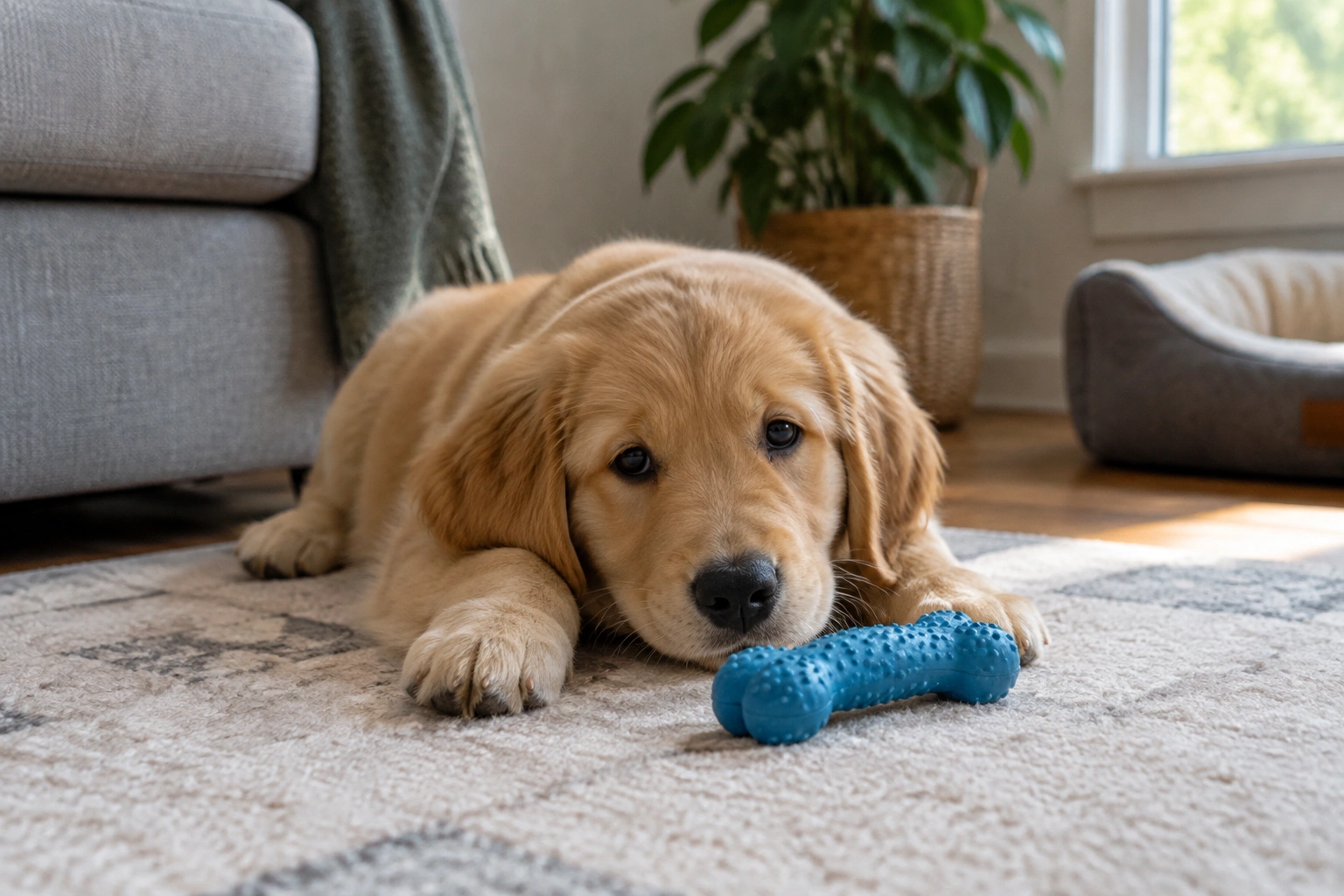
That range matters because puppy energy changes in stages. A 12-week-old puppy, a 6-month-old adolescent, and a young adult can all look “hyper,” but for very different reasons. The goal is not to wait for a magical calm switch. It’s to recognize what is normal for your puppy’s age, support better self-control, and spot the times when behavior may need veterinary or training help.
Quick Answer: When Puppies Usually Start to Calm Down
In practical terms, many puppies begin showing calmer behavior somewhere between 12 months and 2 years, depending on breed size, temperament, and how much structure they’ve had. Smaller breeds often mature earlier. Larger breeds often take longer to settle into consistent adult behavior.
That does not mean your puppy should be wild until then. You may notice small signs of progress much earlier:
- fewer frantic bursts of biting or zoomies
- slightly longer periods of rest after play
- better ability to pause before launching into every distraction
- shorter recovery time after exciting events
Think of calmness as a skill that develops alongside physical and social maturity. A puppy can learn to settle before it is fully mature, but the brain and body still need time to catch up.
What “Calmer” Actually Looks Like as Puppies Mature
A calmer puppy is usually not a sleepy puppy. The change is more about regulation.
You may see:
– less constant mouthing and less intense biting
– fewer “all gas, no brakes” zoomies
– more ability to lie down after stimulation
– better response to cues like sit, wait, or place
– less frantic reaction to every sound, person, or toy
This is why many owners are surprised by adolescence. Their puppy may have seemed manageable at 4 months, then suddenly becomes bolder, more distracted, and harder to settle. That does not automatically mean training failed. It often means the puppy has moved into a developmental phase where impulse control is still immature.
A useful way to judge progress is not by “Is my puppy calm all day?” but by “Can my puppy recover after excitement?” Recovery is a better marker of maturing self-control.
Puppy Energy by Age: What’s Normal at Each Stage
Here’s a simple way to compare typical stages.
| Age stage | What energy often looks like | What owners usually see | What to expect next |
|---|---|---|---|
| 8–12 weeks | Short bursts of activity, then sudden crashes into sleep | Zoomies, mouthing, clumsy play, frequent naps | Very rapid learning, but still limited self-control |
| 3–6 months | More awake time, more curiosity, stronger play drive | More chewing, testing boundaries, difficulty settling after excitement | Socialization and routine matter a lot here |
| 6–12 months | Adolescence begins for many dogs | More impulsive behavior, distractibility, “forgetting” cues | Calm behavior must be reinforced consistently |
| 12–18 months | Early adulthood for many medium dogs | Longer settling periods, fewer chaotic bursts | Many dogs begin to look noticeably steadier |
| 18 months–2 years+ | Often more mature, especially in larger breeds | Better routine tolerance, less constant overexcitement | Some dogs still need ongoing training and structure |
The biggest mistake at this stage is assuming a puppy needs to be tired out every time it acts wild. Often, the puppy is not under-exercised. It may be overtired, overstimulated, or simply developmentally immature.
Why Some Puppies Calm Down Earlier Than Others
Two puppies of the same age can behave very differently. That’s normal.
Breed size and maturity
Smaller breeds often reach physical and behavioral maturity sooner than larger breeds. Larger dogs may look “puppyish” for longer, both in body and behavior. That does not mean they’re less trainable. It means the timeline is different.
A small breed may begin to look steadier closer to 12 months, while a larger dog may still be in a bouncy, adolescent phase until 18 months or later. Some dogs do not feel fully settled until they are closer to 2 years old or beyond.
Temperament
Some puppies are naturally more cautious and easygoing. Others are bold, fast, and intensely playful from the start. Temperament affects how much energy a puppy shows and how quickly it learns to settle.
Sleep and routine
A puppy that sleeps enough is usually easier to live with. Overtired puppies often look more hyper, not less. If your puppy turns into a wild tornado in the evening, missed naps may be part of the problem.
Mental stimulation
A puppy that gets only physical exercise may still feel restless. Sniffing games, food puzzles, short training sessions, and simple problem-solving can reduce frustration in a way that running alone often cannot.
Household patterns
Puppies learn what their environment rewards. If excitement always leads to attention, play, or chasing, the puppy may rehearse that behavior more often. If calm behavior is noticed and rewarded, settling becomes more familiar.
Small Breeds vs Large Breeds: Do They Calm Down at Different Ages?
Yes, often they do.
Small breeds tend to mature faster in general, though there are always individual exceptions. Larger breeds usually need more time before their behavior looks reliably adult. That difference is partly physical, but it also reflects slower social and emotional maturity.
Here’s the trade-off:
– Smaller breeds may calm earlier, but some remain surprisingly energetic or vocal as adults.
– Larger breeds may take longer to settle, but they often benefit from a slower, more deliberate training approach while they mature.
So if your 8-month-old large-breed puppy still acts like a chaotic teenager, that may be very normal. If your small-breed puppy is still unable to relax at 18 months, that may deserve a closer look.
The key question is not “What age should all puppies calm down?” It’s “Is my puppy’s behavior typical for its breed size and stage?”
How Puppy Adolescence Can Make Energy Seem Worse Before It Gets Better
Adolescence is the phase that confuses many owners. A puppy may suddenly:
– ignore cues it knew last week
– become more mouthy
– get zoomies at the worst possible time
– seem more stubborn or distracted
– act as if every stimulus is urgent
This is not unusual. Adolescence often brings a temporary increase in impulsive behavior before maturity smooths things out. The puppy is not trying to be difficult. Its self-control systems are still under construction.
A realistic expectation helps here: progress is rarely linear. You may see a calmer week, then a chaotic one, then improvement again.
How to Help a Hyper Puppy Settle More Easily at Home
The goal is not to exhaust your puppy. The goal is to teach regulation.
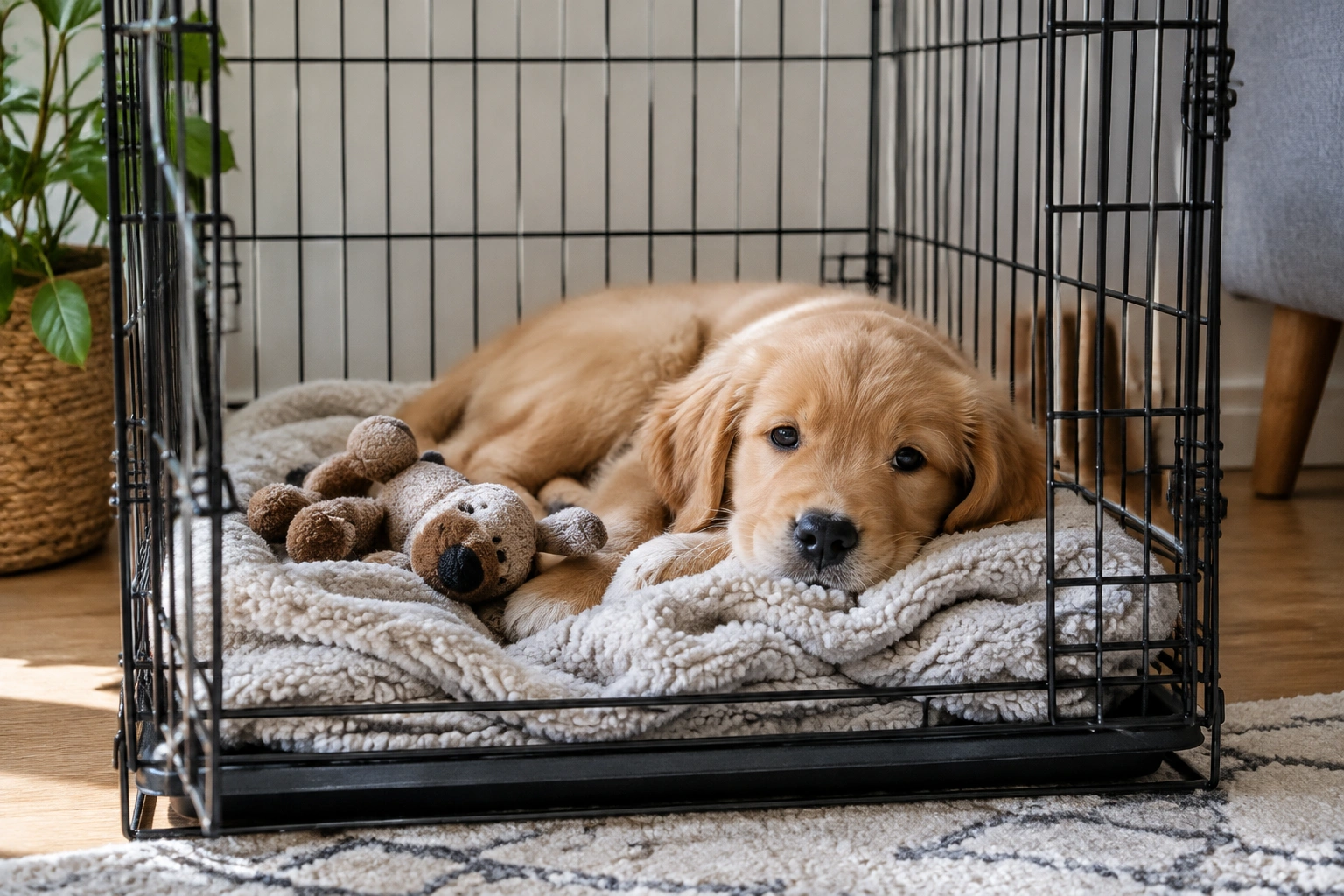
Build in structured rest
A puppy that never gets help resting is often harder to live with. Quiet time in a crate, pen, or small safe area can prevent the endless cycle of overstimulation. Many puppies need their downtime guided for them, especially when they are young.
Use short training sessions
Short, frequent sessions work better than long ones. Five minutes of sit, down, touch, or mat work can build more self-control than a long, exciting session that turns into chaos. Keep the reward calm and predictable.
Add mental work before adding more running
Try food puzzles, scatter feeding in grass, basic scent games, or simple “find it” exercises. These activities use the brain without overloading growing joints.
Match exercise to age
A young puppy does not need marathon exercise. Age-appropriate movement is enough. For example:
– Young puppy (around 8–12 weeks): several short play-and-potty breaks, a few minutes of gentle walking or exploring, and very brief training sessions are usually enough.
– Adolescent puppy (around 6–12 months): a bit more structured movement can help, such as a short leash walk, a sniffing game, or a controlled training walk, but the focus should still be on moderation rather than long endurance exercise.
– Older puppy or young adult: you can gradually build toward more activity if your veterinarian says it is appropriate, but keep an eye on recovery and arousal, not just mileage.
Overexercising may leave a puppy physically tired but mentally revved up, and it can be too much for developing bodies.
Add a simple daily calming routine
A predictable routine can help a hyper puppy learn what “settle” looks like. For example:
1. Morning: potty break, short walk or sniff time, then a brief training session.
2. Midday: play, then a scheduled rest period in a crate or pen.
3. Evening: a calmer activity such as a lick mat, chew, or scatter feeding, followed by quiet time.
For a young puppy, the routine should be very short and simple, with lots of sleep built in. For an adolescent puppy, the same structure can include a little more impulse-control work, such as waiting at doors, settling on a mat, or pausing before being released to play.
Reward calm behavior when it actually happens
If your puppy chooses to lie down, quietly chew, or watch the room without demanding attention, notice it. Calm behavior improves when it becomes worth repeating.
A practical example: if your puppy gets wild every evening, first check whether it had enough naps, then shorten the most exciting play session, and then add a quiet settle routine afterward. That sequence often works better than simply increasing exercise.
Signs Your Puppy Is Normal-High-Energy vs. When Something May Be Wrong
Normal puppy energy usually has a pattern. It comes and goes. The puppy may be wild, but it still sleeps, eats, plays, and recovers.
That looks different from behavior that may need professional attention.
Usually normal for age
- zoomies after play
- chewing and mouthing
- bursts of excitement around people
- trouble settling after stimulation
- occasional stubbornness or distraction
More concerning
- sudden change in energy level or behavior
- inability to relax most of the day, even with routine
- frantic pacing or constant restlessness
- persistent panting when the puppy is not hot or active
- inability to disengage from stimulation, even when you try to redirect
- restlessness that does not improve with routine, naps, or calmer activity
- distress that seems out of proportion to the situation
- behavior that gets worse instead of better despite sleep, structure, and training
- signs of pain, limping, digestive upset, or other illness
If a puppy is “hyper” all the time, ask whether it is actually overtired, anxious, uncomfortable, or unwell. Behavior is often the first clue that something else is going on.
For broader veterinary guidance on puppy development and behavior, the AVMA’s pet care resources are a helpful starting point.
When to Call Your Veterinarian
Call your veterinarian if your puppy’s energy seems unusual, sudden, or extreme. That’s especially true if the behavior changes quickly rather than gradually.
You should also seek help if:
– your puppy cannot settle despite enough sleep and a consistent routine
– the energy spikes are paired with pain, limping, vomiting, diarrhea, or appetite changes
– biting, pacing, or agitation is escalating instead of easing
– your puppy seems fearful, panicked, or unable to relax in normal situations
If the concern is mainly behavior rather than health, a qualified dog trainer or behavior professional can help you build a calmer routine and teach impulse control. Positive reinforcement is usually the most useful foundation because it teaches the puppy what to do, not just what to avoid.
For age-related development and settling expectations, this Border Collie guide on puppy calmness may also help if you want a breed-aware perspective.
FAQs About When Puppies Begin to Calm Down
At what age do puppies usually start to calm down?
Many puppies begin to look a little calmer around 12 months, but larger breeds often take until 18 months to 2 years, and some dogs keep maturing beyond that.
Does more exercise always help a hyper puppy?
No. More exercise can help if a puppy truly needs movement, but too much can overstimulate the puppy or stress growing joints. A mix of rest, training, and mental enrichment is usually more effective.
Why is my 6-month-old puppy worse than my younger puppy?
That can be adolescent behavior. Puppies often become more impulsive and distracted during this stage, even if they seemed easier at 4 months.
Do small dogs calm down faster than large dogs?
Often, yes. Smaller breeds may mature earlier, while larger breeds commonly take longer to settle into steady adult behavior.
How do I know if my puppy is overtired instead of underexercised?
An overtired puppy often becomes wild, bitey, or unable to focus after a lot of stimulation. If the behavior gets worse late in the day, missed naps may be part of the problem.
When should I worry about nonstop hyperactivity?
Worry if the behavior is sudden, extreme, or paired with pain, illness, fear, or an inability to settle even with routine. That’s a good reason to call your veterinarian.
Can training really help a puppy calm down?
Yes. Calm behavior is learned. Short training sessions, reward-based settling, and consistent routines can build self-control while the puppy matures.
The Bottom Line
Puppies usually begin to calm down gradually as they mature, not on a single birthday. Many start showing steadier behavior around 12 months, while larger breeds often need until 18 months to 2 years or more before they feel reliably settled. What matters most is whether your puppy is making progress, recovering from excitement, and able to rest.
If your puppy is still chaotic, that does not automatically mean something is wrong. But if the energy is sudden, extreme, or paired with distress or physical symptoms, it’s worth checking in with your veterinarian.