
When Does a Border Collie Coat Fully Develop?

Quick Answer
A Border Collie’s adult coat usually begins emerging around 4–6 months of age, but the complete transition can take considerably longer. Many dogs continue developing their adult coat through the first year and sometimes beyond. The timeline and final appearance depend on the individual dog and whether it has a smooth or rough coat.
If your Border Collie puppy still has soft, fluffy fur or seems to be changing length unevenly, that does not automatically mean something is wrong. Puppy coats change gradually, and the adult coat may appear at different times across the body.
The important distinction is between the first signs of an adult coat and the point when the coat has matured. Those are not necessarily the same milestone.
At What Age Does a Border Collie Get Its Adult Coat?
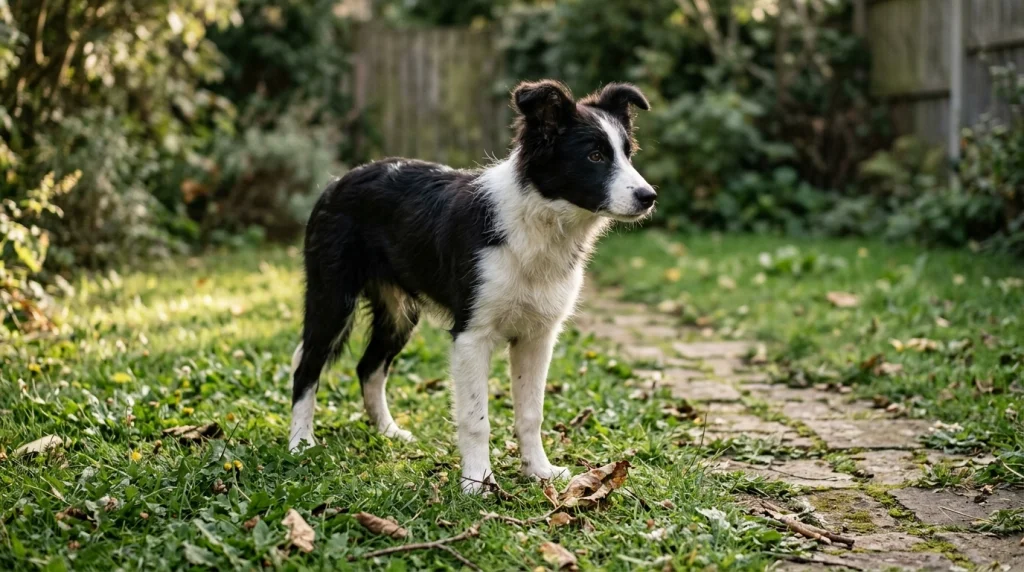
A Border Collie’s adult topcoat may begin appearing at around 4–6 months, while the overall coat can continue changing throughout puppyhood and adolescence. Some dogs develop their permanent coat relatively early; others take longer before their texture, length, and feathering become more obvious.
The Australian breed standard’s extended description notes that Border Collie puppies can display different coat qualities until the adult topcoat begins to appear at approximately 4–6 months. This provides a useful starting point, not a deadline for every puppy.
Use the following timeline as a general guide rather than a strict developmental schedule:
- Birth to around 3 months: The coat is typically soft and puppy-like. Its texture and length may not reliably indicate the finished adult appearance.
- Around 4–6 months: The adult topcoat may begin to emerge. Changes in texture, length, and the way the fur lies may become noticeable.
- Around 6–12 months: The coat may continue changing as the puppy grows. Feathering and differences between the puppy undercoat and adult outer coat can become more apparent.
- Beyond 12 months: Some dogs continue to develop their mature appearance. There is no single age at which every Border Collie’s coat must be considered complete.
These stages overlap. A puppy can have adult-type hairs in one area while retaining softer puppy fur elsewhere. Coat maturity should therefore be judged by the overall pattern of development rather than by one patch of hair or a specific birthday.
Why Does a Border Collie’s Coat Change as It Grows?
A puppy’s coat and an adult dog’s coat can differ in texture, density, length, and appearance. As the dog matures, its hair grows through natural cycles, and the emerging adult coat gradually changes the way the fur looks and feels.
Border Collies have a double coat: a protective outer coat and a softer undercoat. The outer hairs help protect the dog from the environment, while the undercoat contributes insulation. The breed’s coat is intended to be practical and weather-resistant rather than excessively long or heavy.
During the transition, you may notice several changes:
- Texture: Some hairs may feel firmer or coarser than the soft puppy fur.
- Length: Certain areas may grow longer while other parts remain relatively short.
- Density: The coat may look fuller as the dog’s adult coat develops, although the amount of fur varies naturally.
- Feathering: Longer hair around the chest, backs of the legs, and tail may become more noticeable in rough-coated dogs.
- Appearance: The coat may lie differently against the body as the balance between puppy hair and adult hair changes.
These changes are not always synchronized. An uneven-looking coat during a normal transition is different from unexplained bald patches, irritated skin, or progressive hair loss.
Does Coat Type Affect How Long Development Takes?
Yes, coat type affects what you see as a Border Collie matures. However, coat length alone does not provide a reliable way to predict the exact age at which an individual dog’s coat will be fully developed.
Rough-coated Border Collies
Rough-coated Border Collies have a moderately long coat, often with visible feathering on the chest, forelegs, hindquarters, and tail. As a puppy matures, these longer areas may become more distinct, making the change from puppy fur to adult coat especially noticeable.
The final coat should still follow the breed’s natural outline. A rough-coated Border Collie does not need an extremely long or unusually thick coat to be developing normally.
Smooth-coated Border Collies
Smooth-coated Border Collies have shorter hair across most of the body, although some feathering may be present. Their adult coat can look more subtle because it does not develop the same conspicuous furnishings as a rough coat.
A smooth-coated puppy may therefore look relatively similar to its adult self in terms of length, even while its hair texture and density are changing. A shorter coat is a recognized variety, not evidence that the coat has failed to develop.
The American Kennel Club’s Border Collie breed information describes both rough and smooth varieties and their characteristic double coats.
How Can You Tell Whether the Adult Coat Is Coming In?
Look for gradual changes across several areas rather than expecting the whole body to change at once. A combination of changes is more informative than any single sign.
- Different hair textures: Some areas may feel firmer or less uniformly soft than the puppy coat.
- Changing outlines: The chest, tail, or backs of the legs may develop more visible length in a rough-coated puppy.
- Gradual coverage: Adult-type hairs may appear in one area before becoming noticeable elsewhere.
- Normal shedding: Loose puppy hair may come away during brushing as the coat changes, but shedding alone cannot confirm that maturation is complete.
For a useful comparison, take a photograph every month in similar lighting and from the same angle. Record your puppy’s age and note changes in texture, length, and feathering. This can make gradual development easier to recognize than relying on memory.
Do not pull hairs, repeatedly rub the coat, or use aggressive grooming to test whether the adult coat has arrived. Gentle observation and routine brushing are sufficient.
What Can Affect a Border Collie’s Coat Development?
There is no universal schedule that fits every Border Collie. Genetics, normal individual variation, nutrition, and skin health can influence the appearance and condition of the coat.
Genetics and individual variation
Inherited characteristics help determine whether a dog has a smooth or rough coat, as well as its natural texture and the distribution of longer hair. Looking at the parents may offer clues about the likely adult appearance, but it cannot establish an exact development timeline.
Nutrition and general health
Hair growth depends on adequate nutrition and normal body function. A balanced, age-appropriate diet supports healthy skin and coat development, while nutritional problems or certain illnesses can affect hair quality and growth.
Do not add supplements simply because your puppy’s coat looks short or soft. A puppy can have a healthy coat that has not finished maturing, and unnecessary supplementation is not a substitute for an appropriate diet.
Seasonal shedding and coat changes
Border Collies shed, and shedding can make the coat look temporarily thinner or less even. However, seasonal shedding and the transition from puppy fur to adult coat are not identical processes. One may overlap with the other, so loose hair alone cannot tell you which process is responsible.
The VCA Animal Hospitals guide to grooming and coat care explains that coat appearance is influenced by health, nutrition, and grooming, and that abnormal shedding or hair loss can warrant veterinary assessment.
How Should You Care for a Border Collie’s Coat During the Transition?
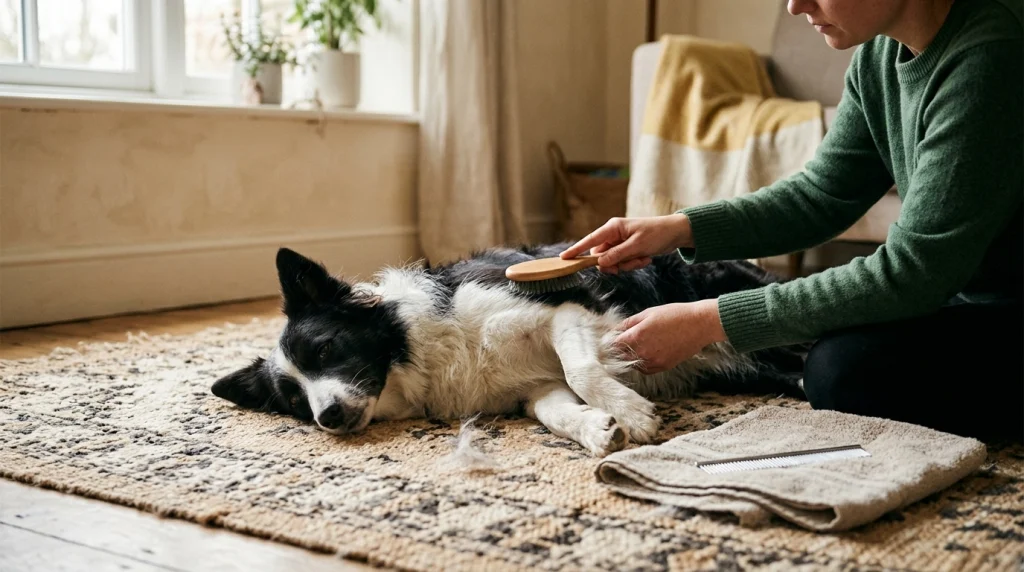
Keep grooming gentle and consistent while the adult coat develops. The goal is to remove loose hair, prevent tangles, and maintain healthy skin, not to force the coat to grow faster.
- Brush regularly. Start with a gentle session once or twice a week, adjusting the frequency to the coat’s condition. Rough-coated dogs or puppies developing tangles may need more frequent attention.
- Check friction-prone areas. Look around the ears, chest, behind the legs, and tail for knots, especially where longer hair is developing.
- Use suitable grooming tools. Choose a brush or comb that moves through the coat without scraping the skin or pulling painfully on tangles.
- Bathe only as needed. Use a dog-appropriate shampoo and rinse thoroughly. Frequent unnecessary bathing can dry or irritate the skin.
- Keep the diet consistent and appropriate. Feed a complete, balanced food suitable for your puppy’s life stage, and ask your veterinarian before introducing supplements.
Avoid shaving a Border Collie’s double coat simply to make the puppy fur appear neater or to encourage adult hair growth. Shaving does not make the coat mature faster and may interfere with its natural protective function.
Tip
Make grooming a short, positive routine while your puppy is young. Gentle brushing helps you notice tangles, skin changes, and unusual hair loss without irritating a developing coat.
When Is a Border Collie’s Coat Development a Reason for Concern?
A coat that is still soft, short, or uneven during puppyhood is not automatically a health problem. The more important question is whether the skin and hair appear healthy and whether the coat is changing in a gradual, otherwise normal way.
Arrange a veterinary assessment if you notice:
- Distinct bald patches or hair loss that continues to spread.
- Persistent scratching, licking, or chewing at the skin.
- Redness, sores, crusts, or significant flaking.
- A sudden change in coat quality, such as marked dullness or brittleness.
- Hair loss accompanied by changes in appetite, energy, or general condition.
These signs do not identify a specific disease by themselves. Parasites, skin irritation, infection, nutrition-related problems, and other health conditions can affect the coat, so a veterinarian may need to examine the skin and consider the dog’s wider health.
If your Border Collie is older than a year and still has a short or soft coat but has healthy skin and no abnormal hair loss, the appearance alone may not indicate a problem. If development seems unusually delayed or you are unsure whether the change is normal, discuss it with your veterinarian rather than trying treatments or supplements on your own.
Frequently Asked Questions
Do Border Collies get their adult coat at 6 months?
Not necessarily. Adult topcoat can begin appearing around 4–6 months, but the complete coat may continue developing through the first year or longer. Six months is a useful reference point, not a fixed deadline.
Why is my 8-month-old Border Collie still fluffy?
Some puppies retain soft-looking fur while their adult coat develops gradually. If the skin looks healthy and there are no bald patches or persistent irritation, fluffiness alone does not prove that development is abnormal.
Will my Border Collie’s coat get longer as it grows?
That depends largely on the dog’s natural coat variety. Rough-coated Border Collies develop a moderately longer coat and more feathering, while smooth-coated dogs retain shorter hair over most of the body.
Can you tell a Border Collie’s adult coat type from its puppy coat?
You may get clues from the puppy’s existing coat and its parents, but the final appearance can be difficult to predict when the dog is very young. The developing adult coat provides a clearer indication as maturation progresses.
Does shedding mean my Border Collie’s adult coat is coming in?
Not by itself. Shedding can occur during normal coat changes and at other times. Look at the overall pattern of growth and skin health rather than using loose hair as the only indicator.
Should I give my Border Collie supplements to help its adult coat grow?
Not unless there is a specific nutritional reason identified with veterinary guidance. A complete, balanced diet is the appropriate starting point; supplements will not make a genetically short coat longer or guarantee faster maturation.
Conclusion
A Border Collie’s adult coat often starts emerging around 4–6 months, but full development is gradual and varies from dog to dog. Rough-coated puppies may show increasingly noticeable feathering, while smooth-coated puppies can mature without a dramatic change in length.
Focus on healthy skin, gentle grooming, and gradual changes rather than expecting a particular appearance at an exact age. If your puppy’s coat is simply soft or short, that may be normal. If you notice spreading hair loss, irritation, sores, or a sudden decline in coat condition, seek veterinary advice. These signs deserve more attention than coat length alone.