

Quick Answer
To raise a happy Border Collie, meet the dog’s physical, mental, social, and emotional needs every day. Give your Border Collie purposeful exercise, short training sessions, problem-solving activities, enough sleep, positive human interaction, and preventive health care while adjusting the routine to age and personality; the AKC’s Border Collie guidance also emphasizes ongoing activity and mental stimulation.
6 steps to a happier Border Collie
- Move every day: Provide age-appropriate walks, running, play, hiking, or other physical outlets.
- Work the brain: Use scent games, puzzle feeders, tricks, obedience, and problem-solving activities.
- Train positively: Reward the behaviors you want and keep sessions short enough to stay enjoyable.
- Build connection: Include your dog in daily life instead of treating exercise as the only form of attention.
- Teach calmness: Balance stimulating activities with naps, quiet time, and a reliable settle routine.
- Protect health: Keep nutrition, grooming, veterinary care, weight, teeth, nails, and mobility on your routine checklist.
Raising a happy Border Collie takes more than tiring out an energetic dog. This intelligent herding breed, sometimes shortened to “Border” or “BC,” usually thrives when body, brain, routine, and human connection all work together.
I think of happiness as balance rather than exhaustion. In this 2026 guide, I’ll show you how to build that balance without turning every day into an endurance contest.
In This Guide
- What Makes a Border Collie Happy?
- How Much Exercise Does a Happy Border Collie Need?
- How Do You Mentally Stimulate a Border Collie?
- What Training Makes a Border Collie Happier?
- How Important Are Bonding and Socialization?
- Does a Border Collie Need Help Learning to Relax?
- How Do Health, Food, and Grooming Affect Happiness?
- What Does a Happy Border Collie Daily Routine Look Like?
- Frequently Asked Questions
What Makes a Border Collie Happy?
A happy Border Collie usually has enough productive activity to satisfy its working-dog brain, but also feels safe enough to relax. Happiness shows through comfortable body language, curiosity, play, appetite, social engagement, and an ability to settle.
A happy Border Collie is a dog whose physical, mental, social, and emotional needs are being met without keeping the dog in constant excitement.
Look for a pattern, not one behavior
A happy dog won’t wag its tail every minute. Your Border Collie might sleep deeply after a busy morning, ignore a toy, or choose a quiet corner.
Look at the whole week instead. Useful signs include:
- Relaxed body language: Soft muscles, natural ears, comfortable movement, and loose facial expressions.
- Interest in activities: Willingness to walk, sniff, train, play, or explore.
- Healthy social contact: Choosing to spend time near trusted people without constant panic when separated.
- Normal appetite and sleep: Eating and resting according to the dog’s usual pattern.
- Ability to settle: Relaxing after needs have been met instead of pacing endlessly.
One mistake is measuring happiness by fatigue. A dog can be physically exhausted while still frustrated, overstimulated, or mentally underused.
Respect the herding brain
Border Collies were developed to watch movement, make decisions, and respond closely to handlers. Their famous “eye” is the intense stare used when controlling livestock.
That heritage can appear at home as staring, chasing, circling, or trying to control moving people and pets. Giving those instincts safer outlets is more useful than simply trying to suppress them.
How Much Exercise Does a Happy Border Collie Need?
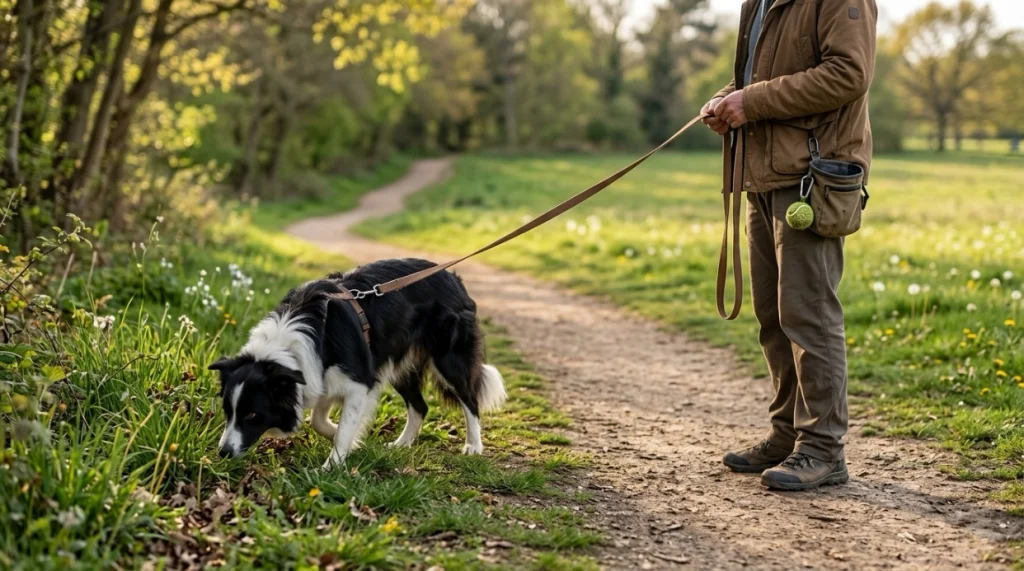
Many healthy adult Border Collies need substantial daily exercise, but the right amount depends on age, health, conditioning, and individual drive. PetMD notes that young Border Collies may need roughly one to two hours of daily activity, while older dogs with mobility limitations may need far less.
Think in terms of quality and variety. A purposeful 30-minute outing can offer more value than an hour of repetitive pacing around the same yard.
Use several types of movement
- Sniff walks: Let your dog investigate smells instead of marching continuously at heel.
- Fetch: Add waits, recalls, directional cues, and breaks rather than throwing endlessly.
- Hiking: New terrain provides movement, smells, problem-solving, and environmental variety.
- Tug: Structured tug can combine play, impulse control, and interaction.
- Dog sports: Agility, herding, rally, flyball, obedience, and similar activities can combine physical and mental work.
Increase strenuous activity gradually. Puppies with developing bodies and adults returning from inactivity should not suddenly copy the workload of a conditioned canine athlete.
Watch the dog after exercise too. Persistent stiffness, limping, unusual reluctance, or a sudden drop in stamina deserves veterinary attention.
Section Takeaway: A happy Border Collie needs meaningful movement, not an endless mission to become exhausted. Match exercise to the individual dog and mix physical activity with thinking.
How Do You Mentally Stimulate a Border Collie?
Mental stimulation gives a Border Collie a productive place to use attention, memory, scent, problem-solving skills, and self-control. For many Borders, this matters as much as physical exercise.
PetMD also highlights mental enrichment for intelligent working breeds and notes that boredom can appear through behaviors such as barking, digging, pacing, or other repetitive activity.
Rotate challenges instead of buying endless toys
You don’t need expensive equipment. A few simple activities can create plenty of thinking time.
- Find-it games: Hide treats or a favorite toy around one room.
- Food searches: Scatter part of a meal safely across grass or a snuffle surface.
- Trick training: Teach spin, middle, touch, chin rest, toy names, or retrieving objects.
- Shaping games: Reward your dog for gradually discovering a new behavior.
- Household jobs: Carrying a toy to a basket or finding a named object gives the dog a task.
- Puzzle feeding: Turn part of a normal meal into controlled problem-solving.
Short thinking sessions often work best
Try five to ten minutes of focused learning, then stop while your dog still wants more. Two or three short sessions can fit into an ordinary workday.
I like to change the type of challenge rather than making every task harder. One day might emphasize scent, while another uses body awareness or impulse control.
Variety keeps the brain engaged. It also reduces the risk of creating a dog that expects high-speed ball chasing as its only form of entertainment.
What Training Makes a Border Collie Happier?
Training should help a Border Collie understand the world and communicate with you. Clear, reward-based teaching can build confidence while giving this highly trainable breed something constructive to think about.
The ASPCA’s guidance on humane training methods supports approaches built around understanding learning and using rewards while minimizing unnecessary distress.
Teach useful life skills first
- Recall: Come back reliably when called.
- Leave it: Disengage from unsafe or distracting objects.
- Place or mat: Go to a defined resting area.
- Wait: Pause at doors, gates, roads, or before exciting activities.
- Drop: Release a toy or object willingly.
- Check in: Look back toward you during walks and changing situations.
Border Collies can learn patterns frighteningly fast. That includes patterns you never intended to teach.
If barking reliably makes you throw the ball, barking has become part of the game. If calm waiting makes the game restart, calmness becomes valuable instead.
Don’t turn mistakes into conflict
Harsh corrections can make training stressful, especially for a sensitive dog. Show the behavior you want, reward success, and change the setup when your dog repeatedly fails.
A training session should usually finish with your dog confident enough to try again tomorrow. Progress matters more than squeezing one more repetition from a tired brain.
How Important Are Bonding and Socialization?
Border Collies often develop strong working relationships with people, so shared activities matter. Your dog shouldn’t experience you only as the person who fills a bowl and throws a ball.
Spend ordinary time together too. Quiet grooming, relaxed walks, training, exploration, and simply resting in the same room all contribute to the relationship.
Socialization means safe exposure, not forced interaction
A socialized Border Collie doesn’t need to greet every stranger or play with every dog. The goal is helping your dog stay comfortable and functional around normal sights, sounds, surfaces, people, animals, and environments.
Useful exposure can include:
- People of different ages and appearances
- Calm, appropriate dogs
- Traffic viewed from a safe distance
- Veterinary handling practice
- Different walking surfaces
- Household noises
- New parks and quiet public spaces
Don’t push a fearful dog closer to something just to “get used to it.” Increase distance and let confidence develop gradually.
This matters with a motion-sensitive herding breed. Children running, bicycles, scooters, or other fast movement can trigger chasing or herding behavior in some individuals.
Does a Border Collie Need Help Learning to Relax?
Yes. Some Border Collies become so interested in action that owners accidentally create an athlete who constantly asks for the next activity.
More exercise isn’t always the solution to restlessness. A dog also needs opportunities to sleep, decompress, and learn that nothing exciting is happening.
Build an off-switch
Create predictable transitions between activity and calm. After a walk or training session, offer water, a quiet resting place, and a low-key activity if needed.
- Use a mat: Reward relaxed behavior on a bed or designated spot.
- Reduce stimulation: Give the dog a quiet room when household activity becomes intense.
- Reward calm choices: Occasionally place a treat between the paws when your dog settles naturally.
- Schedule downtime: Don’t fill every waking hour with games.
- Watch arousal: Frantic behavior after prolonged play can mean the dog needs less intensity, not more.
A useful example is the Border Collie that finishes 40 minutes of fetch yet immediately drops the ball at your feet again. That doesn’t automatically prove the dog needs another 40 minutes.
The dog may have learned that repetitive demand keeps the game alive. Teaching a clear finish cue followed by relaxation can produce a healthier rhythm.
Section Takeaway: Happiness includes the ability to stop. Exercise your Border Collie’s body and brain, but actively teach quiet routines too.
How Do Health, Food, and Grooming Affect Happiness?
A dog can’t enjoy training and play comfortably when pain, itching, digestive problems, excess weight, dental discomfort, or mobility issues interfere. Preventive care is part of emotional welfare.
The PetMD Border Collie health and care guide discusses breed care and several health concerns owners should recognize. Your own veterinarian should guide diagnosis, diet, medications, supplements, and exercise restrictions.
Vet note: A sudden change in appetite, sleep, activity, behavior, mobility, or tolerance of touch can have a medical cause. Contact your veterinarian rather than assuming the dog is simply bored or unhappy.
Keep body condition practical
Feed a complete diet appropriate for your dog’s life stage and monitor body condition rather than relying only on the number on a food bag. Treats used during training should still count toward the day’s overall intake.
Fresh water should always be available. Highly active dogs may need individualized feeding advice based on workload and health.
Care for the double coat
Both rough-coated and smooth-coated Border Collies have double coats. Regular brushing helps remove loose hair and find burrs, tangles, skin changes, or small injuries hidden beneath the coat.
Check nails, ears, teeth, paw pads, and skin as part of normal handling. Making these inspections calm and rewarding can also make future veterinary visits easier.
Know the value of health screening
The AKC herding-breed health testing requirements list Border Collie screening recommendations from the national breed club, including hip evaluation and specified DNA tests.
Health testing is especially relevant when choosing a breeder. For an existing pet, routine veterinary care and early attention to changes remain essential.
What Does a Happy Border Collie Daily Routine Look Like?
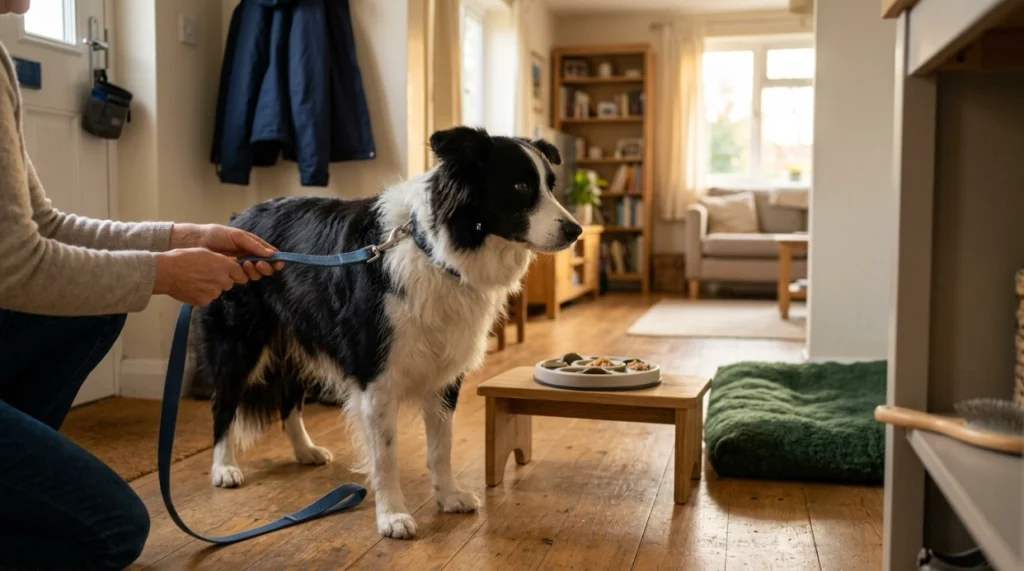
A good routine alternates movement, thinking, interaction, food, and genuine downtime. It doesn’t require entertaining your dog every minute.
Here’s a practical framework for a healthy adult Border Collie. Adjust it to your dog’s health, work, fitness, temperament, and veterinary advice.
| Part of Day | Example Activity | Approximate Time | Main Need |
|---|---|---|---|
| Morning | Brisk walk with sniffing and a few training cues | 30–45 minutes | Movement + exploration |
| Breakfast | Meal, puzzle feeder, or simple food search | 10–15 minutes | Food + problem-solving |
| Midday | Toilet walk and short scent or trick session | 15–25 minutes | Mental engagement |
| Late afternoon | Fetch, hike, structured play, training, or sport | 30–45 minutes | Purposeful exercise |
| Evening | Short calm walk, grooming, chew, and settling | 20–30 minutes | Connection + decompression |
This example can approach 60–120 minutes of total movement across the day without making all of it intense. The training and enrichment pieces are spread into manageable blocks.
Change the activities across the week. One day might include hiking, another scent work, and another a training class or relaxed neighborhood walk.
Use behavior as feedback
If your Border Collie settles comfortably, stays curious, maintains healthy body condition, and participates willingly, your routine may be working well. If problems grow, don’t automatically double the exercise.
Review sleep, stimulation, training, fear triggers, physical health, and reinforcement patterns. Persistent or serious behavior changes may require help from a veterinarian or qualified behavior professional.
Section Takeaway: The best routine doesn’t simply keep a Border Collie busy. It creates a repeatable cycle of activity, thought, connection, and rest.
Frequently Asked Questions
How can I tell if my Border Collie is happy?
A happy Border Collie usually shows relaxed body language, normal eating and sleeping, curiosity, willingness to interact, interest in appropriate activities, and an ability to rest afterward. Judge patterns over several days rather than relying on one behavior such as tail wagging.
Do Border Collies need two hours of exercise every day?
Some young, healthy adults may thrive with around one to two hours of total daily activity, but there is no perfect number for every Border Collie. Age, health, conditioning, temperament, weather, and activity intensity should change the plan.
Can a Border Collie be happy without sheep?
Yes. A pet Border Collie doesn’t need livestock to have a fulfilling life. Training, scent games, hiking, agility, rally, fetch with rules, problem-solving, trick work, and other structured activities can provide useful outlets for working-dog instincts.
Can you exercise a Border Collie too much?
Yes. Excessive high-impact or repetitive exercise can create physical strain, and nonstop stimulation can make some dogs poor at relaxing. Build fitness gradually, include recovery, and speak with your veterinarian about exercise if your dog is young, older, injured, or medically restricted.
Why is my Border Collie destructive even after exercise?
Physical exercise alone may not address boredom, anxiety, over-arousal, inadequate sleep, learned behavior, or a need for mental enrichment. Add problem-solving and calm training, review the dog’s routine, and seek professional help when destructive behavior is severe or linked to distress.
How much training should I do each day?
Several short sessions often work better than one long lesson. Five to ten focused minutes at a time can be enough for many everyday skills, especially when you also reinforce good behavior naturally during walks, meals, play, and household routines.
Are Border Collies happy as indoor family dogs?
They can be. Living indoors isn’t the main issue; meeting the breed’s physical, mental, social, and training needs is. A Border Collie with meaningful daily activity and family involvement can adapt to many homes better than a dog left alone in a large yard without interaction.
Build a life your Border Collie can enjoy, not just endure.
A happy Border Collie needs opportunities to move, think, learn, connect, and then switch off. Pay attention to the dog in front of you, because individual needs matter more than trying to match someone else’s schedule.
Start with one change today. Add a five-minute scent game, improve your settle routine, take a more interesting walk, or book the health check you’ve been postponing; small improvements repeated every day create a much better life.
