

Quick Answer
Yes, a healthy adult Border Collie can often learn to stay alone for five hours if they’ve been trained gradually, exercised beforehand, given a toilet break, and left with safe enrichment. Five hours shouldn’t automatically be treated as a comfortable limit for every dog, though. The AKC’s general guidance on dog alone time also stresses that individual dogs vary and need adequate social contact.
Five things that determine whether it works
- Age: Puppies normally need much shorter periods alone than settled adults.
- Training history: A Border Collie should learn alone time gradually rather than suddenly facing five hours.
- Exercise: Physical activity and mental work before departure make settling easier.
- Emotional response: Barking, pacing, escape attempts, or panic can signal that five hours is too long.
- Daily routine: An occasional five-hour absence is different from leaving a high-drive dog alone that long every day.
Border Collies, often called Borders or BCs, aren’t dogs I would leave alone for five hours without preparation. Their intelligence and working-dog drive can turn an otherwise reasonable absence into a long stretch of boredom.
As of 2026, my practical answer is simple: many well-adjusted adults can manage five hours, but puppies and anxious dogs often cannot. Here’s how I decide whether that schedule is fair and workable.
In This Guide
- Can a Border Collie really stay alone for five hours?
- Does age change how long a Border Collie can be left alone?
- Why can five hours be difficult for Border Collies?
- How should I prepare my Border Collie before leaving?
- What should I leave for my Border Collie while I’m gone?
- How do I train a Border Collie to stay home alone?
- Is my Border Collie bored or experiencing separation anxiety?
- Frequently asked questions
- Final takeaway
Can a Border Collie really stay alone for five hours?
For a healthy, house-trained adult Border Collie with solid alone-time skills, five hours can be manageable. I wouldn’t use the clock alone to decide, because the dog’s behavior before, during, and after the absence matters more.
A Border Collie’s alone-time tolerance is the length of time that dog can remain home without becoming distressed, needing an urgent toilet break, or repeatedly creating its own destructive entertainment.
- Comfortable alone time: The dog settles, sleeps, chews safely, and remains relaxed.
- Tolerated alone time: The dog copes but becomes restless or frustrated near the end.
- Too much alone time: The dog repeatedly barks, paces, destroys objects, soils indoors, or attempts to escape.
The American Kennel Club reports a broad guideline that dogs generally shouldn’t go beyond about six to eight hours without an opportunity to relieve themselves. That is a general maximum guideline, not a Border Collie-specific target.
A five-hour absence therefore isn’t automatically unreasonable. However, the AKC’s Border Collie guidance describes this breed as highly energetic and strongly dependent on activity and mental stimulation.
That’s the distinction I pay attention to. A Border Collie may physically hold its bladder for five hours yet still struggle mentally with five empty hours.
Occasional versus daily five-hour absences
An occasional five-hour period is usually easier to accommodate than the same schedule every weekday. Daily repetition increases the importance of exercise, training, enrichment, and meaningful interaction after you return.
If your BC spends much of the workweek alone, consider breaking some days up with a walker, trusted family member, sitter, or suitable daycare.
Section Takeaway: Five hours can work for many trained adult Border Collies, but successful alone time is measured by calm behavior, not just bladder capacity.
Does age change how long a Border Collie can be left alone?
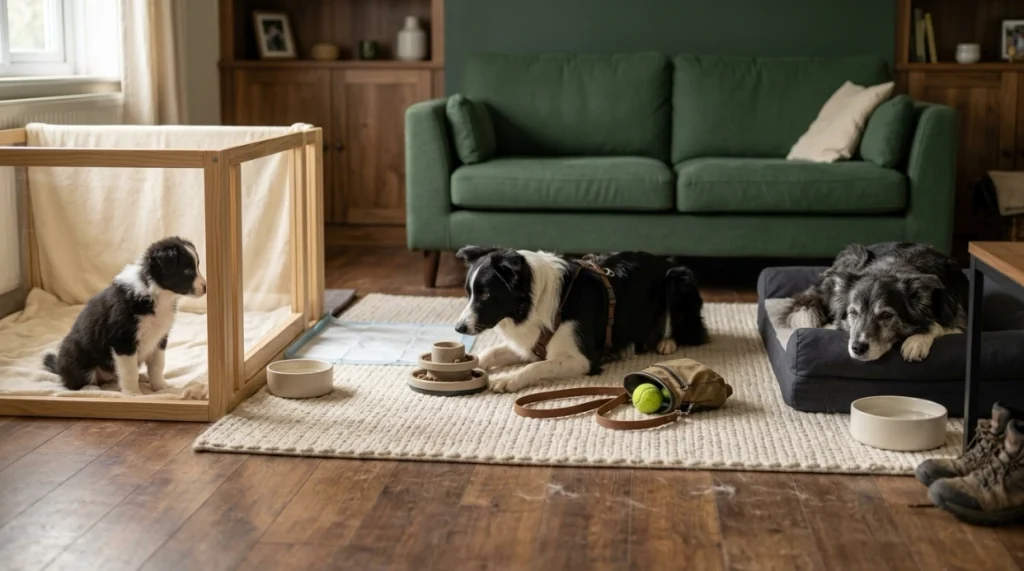
Yes. Age can change the answer dramatically because toilet control, emotional development, activity needs, and medical needs aren’t the same throughout a Border Collie’s life.
I use the following table as a practical planning guide rather than a rigid medical rule.
| Life stage | Is five hours appropriate? | Main concern |
|---|---|---|
| Young puppy, under about 4 months | Usually no | Toilet needs, social development, and gradual independence training |
| Older puppy, roughly 4–6 months | Still a poor routine goal | House training and emotional tolerance are still developing |
| Adolescent, roughly 6–18 months | Individual | High energy, chewing, frustration, and inconsistent impulse control |
| Healthy trained adult | Often manageable | Adequate exercise, mental work, toilet access, and calm alone-time behavior |
| Senior or dog with medical needs | Depends on the dog | Medication, mobility, bladder control, discomfort, or cognitive changes |
Puppies need a different plan
I wouldn’t jump from short puppy absences to a five-hour workday. Alone-time training should grow in small steps while house training develops alongside it.
A young Border Collie also learns incredibly quickly. Unfortunately, that includes learning that your departure predicts panic if every training session goes past the puppy’s coping point.
Adults aren’t automatically ready
Turning one or two years old doesn’t magically create independence. An adult BC that has always followed someone around the house might struggle more than a younger dog that’s been taught calm separation gradually.
Seniors deserve the same individual approach. A dog that once slept comfortably for five hours may later need more frequent toilet or comfort breaks.
Vet note: Sudden changes in toilet habits, sleep, anxiety, mobility, or ability to settle should be discussed with your veterinarian rather than blamed on age alone.
Why can five hours be difficult for Border Collies?
Border Collies were developed for demanding herding work that combines endurance, observation, responsiveness, and independent decision-making. That working heritage matters inside your house too.
The famous Border Collie eye refers to the intense visual focus used while controlling livestock. The same ability to notice tiny changes can produce a dog that’s constantly watching doors, windows, sounds, people, and routines.
- High physical drive: Many BCs want more than a quick toilet walk.
- Strong problem-solving ability: Bored dogs may invent activities you didn’t approve.
- Handler focus: Many Border Collies form close working relationships with their people.
- Sensitivity: Sudden routine changes can affect some individuals more than others.
- Herding heritage: Their brains were selected to observe, react, and work for long periods.
Australian Shepherds and Kelpies can share some of these working-dog characteristics. Still, breed labels never tell you exactly how an individual dog will behave alone.
Boredom isn’t the same as anxiety
A bored Border Collie may dismantle a cardboard box, raid something accessible, or bark at outdoor activity. A dog experiencing separation-related distress can show a much stronger emotional response tied specifically to your absence.
This is why trying to “wear out” a Border Collie isn’t the entire solution. I want the dog to learn an off-switch and view quiet rest as part of its normal routine.
In my routines with Border Collies, the easiest longer absences start before I pick up my keys. I combine useful activity with a calm cooling-down period instead of creating an exhausted but over-aroused dog.
Section Takeaway: Border Collies don’t simply need more exercise than many dogs; they need appropriate mental work and the learned ability to switch off afterward.
How should I prepare my Border Collie before leaving?
Preparation can make five hours feel uneventful rather than frustrating. I focus on toileting, useful activity, mental engagement, and then calmness.
A practical pre-departure routine
- Start with a toilet opportunity. Don’t make your dog spend the first hour waiting to go outside.
- Add meaningful movement. For a healthy adult, a brisk walk, controlled fetch, or other suitable activity can help.
- Use the brain. Add 5–15 minutes of obedience, scent work, trick training, or searching games.
- Cool things down. Give your Border Collie several quiet minutes before departure.
- Leave calmly. Avoid turning every goodbye into a major emotional event.
The exact amount of physical exercise varies by age, health, fitness, and the rest of the day’s activity. I prefer quality over trying to produce an exhausted dog every morning.
Don’t create a canine endurance athlete by accident
Some owners respond to Border Collie energy by increasing intense ball chasing every week. The dog gets fitter, then requires even more repetitive activity to feel tired.
Mix movement with sniffing, problem-solving, impulse-control exercises, and deliberate relaxation. That combination better reflects what these smart dogs need.
After you return, plan meaningful time together rather than assuming the pre-work session completed your responsibilities for the day.
Section Takeaway: Prepare for five hours with toileting, age-appropriate physical activity, short mental work, and a calm transition into rest.
What should I leave for my Border Collie while I’m gone?
Leave enough enrichment to support settling, but don’t turn the room into an unsupervised obstacle course. Anything available while you’re gone should already have a safe history with your individual dog.
- Food puzzle: Use part of the dog’s normal meal in an appropriate food-dispensing toy.
- Stuffed food toy: A prepared or frozen option can make departures more positive.
- Safe chew: Only use items you’ve already established are safe for unsupervised use.
- Comfortable bed: Give your dog an obvious place to settle and sleep.
- Fresh water: Water should remain available unless your veterinarian has given different instructions.
- Safe room: Remove cords, trash, food, chemicals, and anything the dog might swallow.
Should a Border Collie stay in a crate for five hours?
I don’t treat a crate as the automatic solution to a five-hour absence. A crate can be useful for dogs that genuinely relax there, but confinement can make distress worse in some dogs.
For a trustworthy adult, a dog-proofed room, gated area, or larger secure space may provide more freedom. The correct setup depends on the dog’s training and behavior.
Use a camera at least a few times
A basic pet camera can answer questions that your intact furniture cannot. Watch whether your BC settles after you leave or spends much of the time pacing, vocalizing, and watching the door.
Don’t expect constant entertainment. A successful five-hour absence should contain plenty of boring sleep and rest.
How do I train a Border Collie to stay home alone?
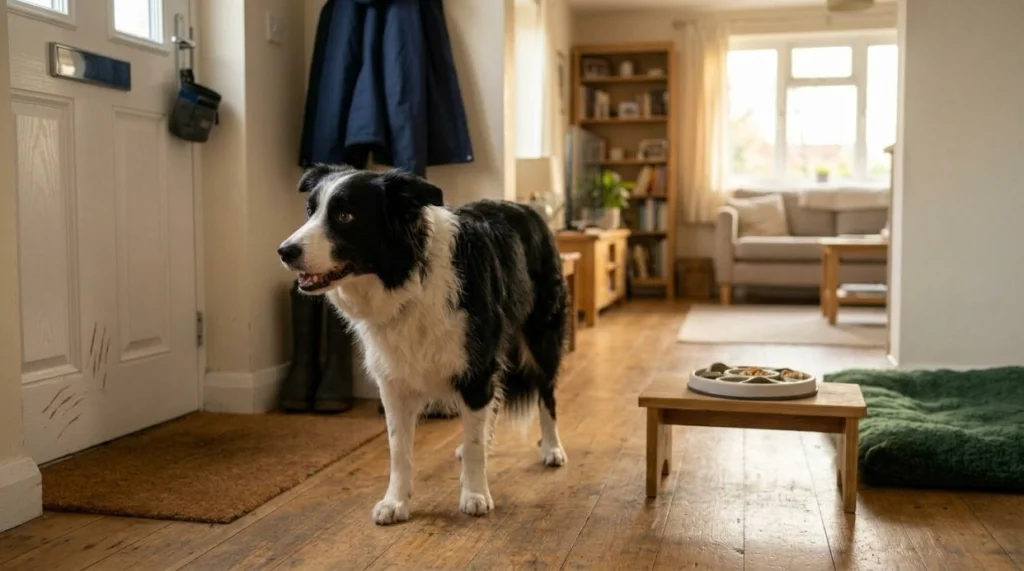
Build alone time gradually instead of testing how long your dog can endure. The goal is repeated successful departures that finish before serious distress appears.
- Start inside the house. Teach your dog to relax while you’re in another room.
- Practice departure cues. Pick up keys or put on shoes without always leaving.
- Begin tiny absences. Walk outside briefly and return while the dog remains calm.
- Increase slowly. Move from seconds to minutes, then progressively longer periods.
- Vary the duration. Don’t make every absence longer than the previous one.
- Use a camera. Look for stress that isn’t visible when you return.
- Back up when needed. Shorten the next session if your dog struggles.
Don’t practice panic
The ASPCA’s separation anxiety guidance describes gradual departures as an important part of helping dogs that struggle with being alone. The duration should remain below the point that causes serious anxiety.
This matters with clever Border Collies because repetition creates strong patterns. You want departure cues to predict calm downtime, not frantic behavior.
Five hours is the end of the progression, not the beginning
I would first want to see a dog comfortably handle shorter absences. A dog that struggles after 30 minutes shouldn’t be pushed to five hours just because a new work schedule starts Monday.
If your job requires an immediate longer absence, temporary help from a sitter, walker, friend, or family member can protect the training process.
Section Takeaway: Increase alone time according to the dog’s calm behavior, not according to a fixed calendar.
Is my Border Collie bored or experiencing separation anxiety?
Boredom and separation anxiety can look similar, but they aren’t the same problem. Separation anxiety involves significant distress connected to being separated from an attached person.
Common warning signs include:
- Persistent vocalizing: Barking, whining, or howling continues after departure.
- Pacing: The dog repeatedly follows the same path rather than settling.
- Escape behavior: Scratching, biting, or digging around doors and windows is concerning.
- Heavy panting or drooling: These can accompany significant stress.
- House soiling: A normally house-trained dog eliminates during absences.
- Destruction near exits: Damage concentrates around doors or other departure points.
- Food refusal: The dog ignores a normally irresistible food toy while alone.
PetMD’s overview of canine separation anxiety also lists behaviors such as pacing, vocalization, destructive behavior, house soiling, trembling, and appetite changes.
What boredom often looks like
A bored dog may search for entertainment, chew available objects, or become restless without showing obvious panic. The behavior may also happen when family members are home.
Video is especially helpful here. A dog that finishes a puzzle and sleeps for three hours presents a different picture from one that spends those hours pacing between the door and window.
When to get professional help
Don’t punish a Border Collie for behavior caused by distress. Punishment after you return doesn’t teach the dog how to feel safe during your absence.
Contact your veterinarian or a qualified behavior professional when the behavior is intense, persistent, sudden, or risks injury. Severe separation anxiety usually needs a structured plan rather than simply more exercise.
Vet note: Destructive behavior, house soiling, excessive panting, gastrointestinal signs, or sudden behavior changes can also have medical contributors. Your veterinarian should help rule those out.
Section Takeaway: Use video and behavior patterns to distinguish ordinary boredom from genuine distress, and seek professional help when signs are severe.
Frequently Asked Questions
Can a Border Collie be left alone while I work?
Some trained adult Border Collies can stay home for part of a workday. A full workday without a break is much harder, so a walker, sitter, family visit, or appropriate daycare can help break up long periods.
Is five hours too long for a Border Collie puppy?
Five hours is generally too ambitious for a young Border Collie puppy as a regular routine. Puppies need more frequent toilet opportunities, supervision, social contact, and carefully graduated alone-time training.
Can I leave two Border Collies alone together for five hours?
Possibly, but a second dog doesn’t automatically solve boredom or separation anxiety. Both dogs should already be safe together around toys, food, resting spaces, and other resources before they’re left unsupervised.
Should I leave the television or radio on?
Background sound may help some dogs by masking outdoor noises, but it isn’t a substitute for training or enrichment. Test it while you’re home and use a camera to see whether it changes your dog’s ability to settle.
How much exercise should a Border Collie get before being left alone?
There isn’t one safe number for every Border Collie. Age, health, conditioning, weather, and daily activity matter, so use an appropriate combination of movement and mental work rather than trying to exhaust the dog.
Will a dog walker help if I’m gone five hours every day?
A reliable walker can be useful for dogs that benefit from a midday toilet break, movement, and human contact. It’s especially worth considering when your work schedule regularly creates long periods of isolation.
Can Border Collies develop separation anxiety?
Yes. Border Collies can experience separation anxiety like other dogs, although not every destructive or vocal dog has the condition. Look for distress specifically linked to departure and absence rather than assuming ordinary misbehavior.
So, should you leave a Border Collie alone for five hours?
A well-adjusted adult Border Collie can often handle a five-hour absence after gradual training. I would judge success by what the dog does during those hours rather than assuming every adult BC has the same limit.
Give your dog meaningful activity before leaving, safe enrichment while you’re away, and quality interaction when you return. Puppies, seniors with changing needs, and dogs showing separation-related distress need a different plan.
If five-hour absences will happen every weekday, watch your dog on camera and assess the routine honestly. A midday break can be a small change that makes the entire schedule easier for an active herding breed.
The goal isn’t teaching a Border Collie to tolerate as much isolation as possible. It’s teaching your dog that reasonable periods alone are safe, predictable, and followed by the physical and mental engagement this breed needs.
