

Quick Answer
A healthy adult Border Collie can often be bathed about every 4–8 weeks, but there isn’t one perfect schedule. I adjust the timing around dirt, odor, swimming, coat condition, activity, and skin health, which matches the flexible approach in AKC dog bathing guidance.
Signs Your Border Collie Is Ready for a Bath
- Noticeable odor: The coat still smells unpleasant after brushing and drying.
- Greasy coat: The fur feels oily, sticky, or unusually heavy.
- Heavy dirt: Mud or debris has reached more than the paws and lower legs.
- Dirty swimming: Pond water, grime, or salt has worked into the coat.
- Skin treatment: Your veterinarian has prescribed a specific bathing schedule.
Before You Shampoo
- Check first: If brushing, a paw rinse, or spot cleaning solves the problem, a complete shampoo bath may not be necessary.
Border Collies, sometimes called Borders or working sheepdogs, have dense double coats that can stay surprisingly clean with regular brushing. Their active lifestyle, however, can turn a clean coat into a muddy one within minutes.
I don’t let the calendar make every bathing decision. In this guide, I’ll show you how I set a practical schedule without over-washing the coat or ignoring a dog that clearly needs cleaning.
In This Guide
- How Often Should You Bathe a Border Collie?
- What Changes a Border Collie’s Bathing Schedule?
- How Does a Border Collie’s Double Coat Affect Bathing?
- When Should You Bathe a Border Collie Sooner?
- Can You Bathe a Border Collie Too Often?
- What Is the Best Border Collie Bath Routine?
- How Do You Keep a Border Collie Clean Between Baths?
- Frequently Asked Questions
- Final Takeaway
How Often Should You Bathe a Border Collie?
For many healthy adult Border Collies, roughly every 4–8 weeks is a useful starting range. Some clean companion dogs can comfortably go longer, while active dogs may need washing sooner.
There is no universal veterinary rule that every Border Collie must follow. The PetMD Border Collie care guide uses monthly bathing as a general baseline and emphasizes regular coat care.
Definition: A Border Collie’s bathing schedule is the interval between full wet-and-shampoo baths, adjusted for the dog’s coat, lifestyle, cleanliness, and medical needs.
Should you follow the calendar exactly?
No. I treat four to eight weeks as a checkpoint rather than a deadline.
At that point, I examine the coat and decide whether a complete bath would accomplish anything useful. A clean, comfortable dog doesn’t need shampoo simply because a date arrived.
- Clean and odor-free: Brush and continue normal grooming.
- Lightly dusty: Brush or wipe the affected areas.
- Muddy paws: Rinse the paws and lower legs.
- Dirty or greasy coat: Give a complete bath.
- Skin symptoms: Ask your veterinarian before changing products or frequency.
A farm dog working around livestock may need different care than an indoor Border who walks on paved trails. Frequency follows the dog’s real life.
What Changes a Border Collie’s Bathing Schedule?

Activity level, age, environment, weather, swimming, coat condition, and skin health all affect bathing frequency. The messiest Border Collies usually need more cleaning, but not every cleanup requires shampoo.
Activity and outdoor work
A Border Collie that runs agility, hikes muddy trails, or works sheep encounters more soil and plant debris. I check those dogs after every substantial outdoor session.
A dusty coat may only need brushing. Wet mud across the belly, chest, tail, and legs can justify an earlier bath.
Age and lifestyle
- Puppies: Bathe when necessary while keeping sessions short, calm, and positive.
- Healthy adults: Start around a 4–8 week check-in and adjust from there.
- Senior dogs: Prioritize secure footing, comfortable water, warmth, and shorter sessions.
- Working dogs: Inspect often and clean according to actual exposure.
- Indoor companions: They may stay fresh longer with consistent brushing.
Season and shedding
Border Collies shed throughout the year and often release more undercoat seasonally. During a heavy shed, brushing usually matters more than adding extra baths.
The breed’s coat-care principles resemble other medium double-coated herding breeds, including the Australian Shepherd or Aussie. Kelpies may have different coat density, so I never copy another breed’s schedule automatically.
As of 2026, my rule remains simple: bathe for a reason, not because the calendar demands it.
How Does a Border Collie’s Double Coat Affect Bathing?
A Border Collie’s double coat has a softer insulating undercoat beneath protective outer hairs. Both rough-coated and smooth-coated Border Collies have this basic two-layer structure.
The AKC’s double-coat guidance places Border Collies among medium double-coated breeds and emphasizes routine brushing.
Rough coat vs smooth coat
| Feature | Rough-Coated Border Collie | Smooth-Coated Border Collie |
|---|---|---|
| Outer coat | Longer with feathering | Shorter and closer |
| Pre-bath brushing | Extra attention behind ears, legs, tail, and chest | Still important for loose undercoat |
| Wetting | Usually takes longer to reach the undercoat | Usually faster |
| Drying | Often slower because of feathering | Usually quicker |
| Bath frequency | Use the same condition-based approach | Use the same condition-based approach |
Coat length changes the work involved more than it changes the reason for bathing. A smooth Border can need an early bath after filthy pond water just as easily as a rough-coated dog.
Why brushing matters before bathing
Loose undercoat and existing tangles become harder to manage once saturated. I brush first, especially behind the ears, under the front legs, through the hindquarters, and around the tail.
- Remove loose hair.
- Pick out burrs and grass.
- Work through small tangles.
- Check the skin for redness or sores.
- Separate dense coat before wetting.
When Should You Bathe a Border Collie Sooner?
Bathe sooner when the whole coat is dirty, oily, strongly smelly, or contaminated. Don’t wait for the normal schedule when leaving a substance on the coat could irritate the skin or be licked off.
Full bath or quick cleanup?
| Situation | Best First Response | Full Bath? |
|---|---|---|
| Dry dust | Brush thoroughly | Usually no |
| Muddy paws | Paw and leg rinse | Usually no |
| Full-body mud | Brush when appropriate, then wash | Often yes |
| Strong persistent odor | Check skin and coat, then bathe | Often yes |
| Unknown chemical or irritant | Contact a veterinarian or poison resource promptly | Follow professional advice |
I use smell as one clue, not the only clue. Persistent unusual odor can also come from skin or ear problems, so repeated bathing shouldn’t become a way to hide it.
Vet note: Persistent odor, sores, hair loss, intense itching, or inflamed skin deserves veterinary attention rather than repeated home shampooing.
Can You Bathe a Border Collie Too Often?
Yes. Unnecessarily frequent shampooing, especially with an unsuitable product, can leave some dogs with dry or irritated skin.
Frequent bathing isn’t automatically harmful when a veterinarian recommends it for a skin condition. The product and purpose matter.
Signs your routine may need adjustment
- New flaking: Dry-looking skin appears after repeated baths.
- More scratching: Your dog becomes noticeably itchier after washing.
- Redness: Sensitive areas look irritated.
- Dry coat: The coat feels unusually brittle or rough.
- Repeated odor: The smell quickly returns despite bathing.
Use shampoo made for dogs rather than human shampoo. VCA’s grooming guidance explains that canine skin differs from human skin and recommends dog-formulated products.
What about medicated shampoo?
Medicated shampoo changes the rules because it treats a specific medical problem. Your veterinarian may prescribe baths much more frequently than your normal grooming schedule.
Follow the prescribed product, contact time, rinsing instructions, and frequency exactly. Don’t substitute a cosmetic shampoo schedule for veterinary treatment.
Vet note: If bathing seems to trigger ongoing itching or redness, stop experimenting with frequency and ask your veterinarian to check the skin.
What Is the Best Border Collie Bath Routine?
A good Border Collie bath starts with brushing and ends only when the dense coat is properly rinsed and dried. The washing itself is just one part.
1. Brush the dry coat
Remove loose undercoat, debris, and manageable tangles before adding water. I spend extra time around the chest, rear legs, ears, armpits, and tail.
2. Prepare secure footing
Put a non-slip mat in the tub or shower. Keep towels, shampoo, and a rinsing tool within reach before bringing in the dog.
3. Use lukewarm water
Wet the shoulders first and work backward. Separate the coat with your fingers so water reaches beneath the weather-resistant outer hair.
4. Apply dog-specific shampoo
Follow the label, especially if the shampoo is concentrated. Massage in the direction of hair growth rather than aggressively twisting long feathering.
The ASPCA’s dog grooming guidance also recommends brushing before bathing and choosing shampoo formulated for pets.
5. Rinse more thoroughly than you think
Work through the neck, chest, belly, rump, tail base, and rear feathering. Keep rinsing until the water is clear and the coat no longer feels slippery.
6. Dry the undercoat
Blot with towels instead of roughly rubbing the fur. A pet-safe dryer on cool or low airflow can help with a thick coat if your dog is comfortable with it.
One of the easiest mistakes is stopping when the surface feels dry. I part the coat and check dense areas near the neck and hindquarters before calling the job finished.
Section Takeaway: A Border Collie’s bath is only successful when the coat is brushed first, rinsed completely, and dried through the undercoat.
How Do You Keep a Border Collie Clean Between Baths?
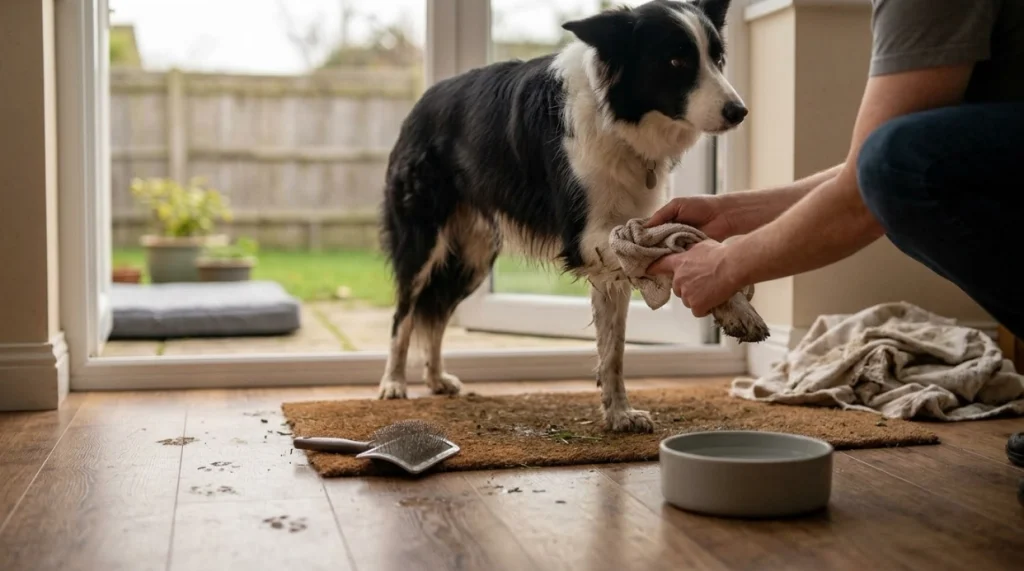
Regular brushing is the easiest way to extend the time between shampoo baths. It removes loose coat, dry soil, grass, and debris before they become a bigger grooming problem.
For my own routine, I prefer targeted cleanup after outdoor adventures. That avoids washing the entire dog because of four muddy feet.
Useful between-bath options
- Brush regularly: Work through the coat at least several times each week when needed.
- Rinse muddy paws: Wash only the feet and lower legs after wet walks.
- Wipe the belly: A damp dog-safe cloth can handle light splashes.
- Remove debris promptly: Pick out burrs, seeds, and twigs before they tangle.
- Use water alone: A plain lukewarm rinse may be enough for light fresh mud.
- Keep bedding clean: A freshly bathed dog quickly picks up odors from dirty bedding.
Don’t confuse shedding with dirt
A shedding Border Collie can look untidy while still being clean. More brushing is usually the first answer when loose undercoat is the main issue.
Bathing can loosen ready-to-shed hair, but shampoo isn’t a replacement for coat maintenance. Brushing also lets you notice skin changes before bath day.
If a dog suddenly smells despite a clean environment and regular grooming, look for a cause rather than automatically increasing baths.
Frequently Asked Questions
Can I bathe my Border Collie once a week?
A healthy Border Collie usually doesn’t need a routine shampoo bath every week. Weekly bathing may be appropriate when a veterinarian prescribes it for allergies, infection, or another skin condition, but follow the recommended product and schedule.
Is once a month too often for a Border Collie?
Not necessarily. Monthly bathing is a reasonable schedule for many active Border Collies when a gentle dog shampoo is used and the coat is rinsed and dried properly.
How often should a rough-coated Border Collie be bathed?
Use roughly the same condition-based schedule as a smooth-coated Border Collie. A 4–8 week starting interval works for many healthy adults, but rough coats often require more brushing, rinsing, and drying time.
How often should a Border Collie puppy be bathed?
Bathe a puppy when genuinely dirty rather than constantly shampooing the coat. Keep early baths calm, short, warm, and positive so handling becomes familiar instead of stressful.
Should I bathe my Border Collie after swimming?
It depends on the water. A clean freshwater swim may only require rinsing and drying, while saltwater, dirty ponds, algae, or contaminated water can justify more complete cleaning.
Why does my Border Collie smell soon after a bath?
Check whether the undercoat dried completely and whether bedding is clean. Persistent strong odor, especially with itching, redness, discharge, or greasy skin, can indicate a problem that deserves veterinary evaluation.
Can I use human shampoo on a Border Collie?
Use shampoo formulated for dogs instead. Canine skin differs from human skin, and human products may be too harsh or irritating for routine bathing.
Final Takeaway
If you’re asking how often a Border Collie should be bathed, start with roughly every 4–8 weeks for a healthy adult and then let the dog’s condition guide you. Mud, odor, swimming, skin health, and lifestyle matter more than an exact date.
Brush often, spot-clean small messes, use dog-safe shampoo when a full bath is needed, and rinse and dry the double coat thoroughly. If your Border Collie develops persistent itching, redness, odor, sores, or coat changes, make the next step a veterinary check rather than another bath.
