

Quick Answer
A Border Collie’s life expectancy is usually about 12 to 15 years. Genetics, body weight, preventive veterinary care, inherited disease, exercise, and overall lifestyle can all influence where an individual dog falls within that range, according to current Border Collie health guidance.
What most affects lifespan?
- Genetic health: Inherited joint, eye, neurological, and immune conditions can affect longevity.
- Healthy weight: Staying lean reduces unnecessary stress on joints and other body systems.
- Veterinary care: Routine exams can identify problems before they become advanced.
- Daily activity: Border Collies need regular physical exercise without constant overexertion.
- Mental stimulation: Training, sniffing, problem-solving, and appropriate work support overall wellbeing.
A useful benchmark
- Many healthy Border Collies remain active well into their senior years, but every dog’s aging pattern is different.
Border Collies, sometimes shortened to BCs, are athletic working dogs with a reputation for stamina, intelligence, and intense focus. Their energetic nature can make a nine-year-old Border Collie look younger than expected.
That doesn’t mean aging should be ignored. I’ve found that understanding normal life stages makes it much easier to adjust exercise, food, training, and veterinary care before an older dog begins struggling.
In This Guide
- How long do Border Collies usually live?
- What affects Border Collie life expectancy?
- Which health problems can affect lifespan?
- How can you help a Border Collie live longer?
- How do Border Collie care needs change with age?
- How does Border Collie lifespan compare with similar breeds?
- What aging signs should owners watch for?
- Border Collie lifespan FAQ
- Final takeaway
How Long Do Border Collies Usually Live?
Most Border Collies have an expected lifespan of roughly 12 to 15 years. That is a useful planning range, not an expiration date.
Definition: A Border Collie’s life expectancy is the approximate number of years dogs of the breed can be expected to live based on population-level breed and veterinary information. It cannot predict the lifespan of one individual dog.
Some Border Collies die younger because of disease, injury, or inherited conditions. Others remain comfortable and engaged beyond the typical range.
Current VCA breed information also lists a 12-to-15-year lifespan and places the breed’s senior stage around age nine.
- Young adult: Often physically energetic, fast, and highly trainable.
- Middle age: Usually still active, although recovery after hard activity may slowly change.
- Senior years: Mobility, hearing, vision, sleep patterns, and exercise tolerance deserve closer attention.
Working heritage matters here. Border Collies were developed to move livestock over demanding terrain, so many retain impressive athletic ability throughout adulthood.
Good athletic ability shouldn’t hide pain, though. A driven Border Collie may continue chasing a ball despite soreness or an orthopedic problem.
Vet note: Changes in stamina, weight, movement, appetite, or behavior deserve veterinary attention rather than being dismissed as normal aging.
What Affects Border Collie Life Expectancy?
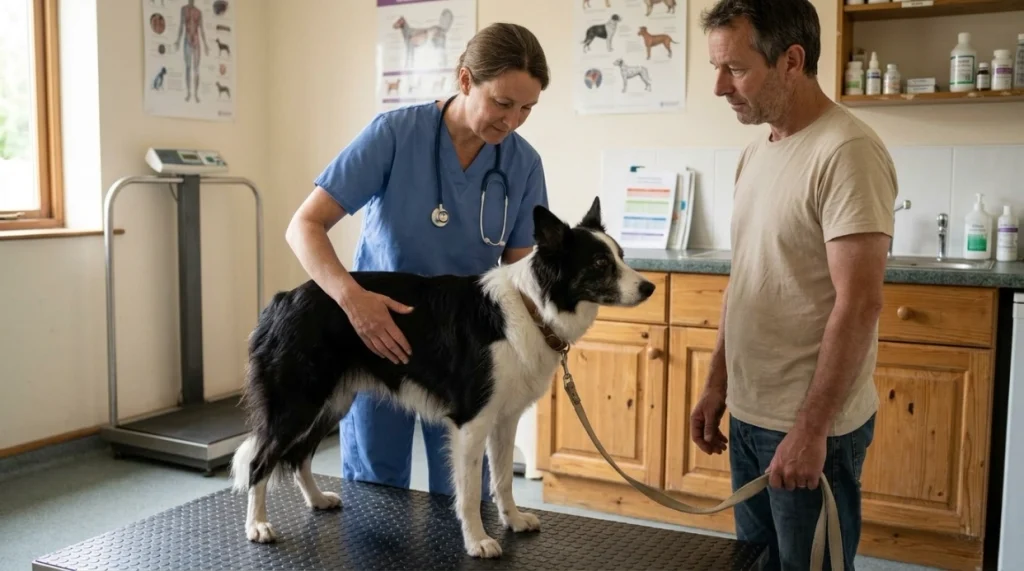
No single habit guarantees a long life. Border Collie longevity reflects a combination of genetics, preventive care, nutrition, body condition, activity, environment, and chance.
Genetics and breeding
Inherited health risks begin before a puppy comes home. Responsible health screening can reduce the chance of passing certain preventable genetic problems through breeding lines.
The AKC’s breed-specific DNA testing information lists several genetic variants identified in Border Collies.
- Collie eye anomaly: An inherited disorder affecting structures within the eye.
- Trapped neutrophil syndrome: A serious inherited immune-system disorder associated with Border Collies.
- Neuronal ceroid lipofuscinosis: An inherited neurological disease that can severely affect quality of life.
- Other genetic variants: Different tests may be relevant depending on a dog’s pedigree and breeding background.
Body condition
Keeping a Border Collie lean is one of the most practical health habits an owner can control. Extra body weight increases strain during every walk, jump, turn, and sprint.
A healthy dog should have a visible waist when viewed from above. You should also be able to feel the ribs without pressing through a thick layer of fat.
Preventive care
Routine veterinary visits establish a baseline for your dog. Changes in weight, heart sounds, joints, teeth, skin, eyes, or laboratory results may be easier to investigate when previous information exists.
As dogs age, those trends become increasingly useful. Small changes can matter.
Vet note: Your veterinarian can recommend an examination and screening schedule based on your Border Collie’s age, medical history, medications, and individual risks.
Which Health Problems Can Affect Border Collie Lifespan?
Border Collies are generally considered a healthy breed, but they are not free from inherited or age-related disease. The presence of a risk does not mean every Border Collie will develop it.
Hip dysplasia and joint disease
Hip dysplasia occurs when the hip joint does not develop or fit normally. It can contribute to pain, reduced mobility, and arthritis over time.
Watch for changes rather than waiting for obvious limping.
- Slower rising after sleep
- Reluctance to jump into a vehicle
- Shorter strides or stiffness
- Reduced enthusiasm for stairs
- Difficulty after strenuous exercise
Epilepsy
Epilepsy is among the neurological problems reported in Border Collies. Any seizure warrants veterinary discussion, especially when it is a dog’s first episode.
Some seizure disorders can be managed for years. The outlook depends on the cause, seizure pattern, response to treatment, and overall health.
Inherited eye disorders
Border Collies can be affected by inherited eye conditions such as collie eye anomaly. Older dogs can also develop conditions such as cataracts.
Vision loss doesn’t automatically mean poor quality of life. Dogs often compensate well when their environment stays predictable and safe.
Trapped neutrophil syndrome and neuronal ceroid lipofuscinosis
These inherited disorders are especially relevant to breeding decisions because they can be severe. DNA testing helps breeders understand whether certain genetic variants are present.
Testing doesn’t replace veterinary care. It provides one more piece of information for responsible breeding and health planning.
Vet note: Genetic test results should be interpreted with a veterinarian or qualified breeding-health professional, particularly before making medical or breeding decisions.
How Can You Help a Border Collie Live Longer?
You cannot control every cause of illness, but you can improve the conditions surrounding your dog’s health. Consistency matters more than chasing a single “longevity hack.”
1. Keep your Border Collie lean
Measure meals instead of estimating portions by eye. Treats, chews, training rewards, and table food all count toward daily calories.
Current veterinary longevity guidance emphasizes healthy weight as an important part of long-term care. The broader PetMD guide to canine lifespan also identifies preventive care, body condition, genetics, and early treatment as meaningful factors.
2. Exercise the dog in front of you
A healthy young Border Collie often needs substantial daily activity. An arthritic twelve-year-old shouldn’t follow the same routine simply because the breed is famous for endurance.
Useful activities can include:
- Purposeful walks
- Sniffing and exploration
- Short training sessions
- Herding or structured dog sports
- Controlled fetch rather than endless repetitive chasing
- Low-impact exercise for older dogs when appropriate
3. Don’t forget the brain
Mental work is part of Border Collie care. Their herding background rewarded concentration, decision-making, responsiveness, and stamina.
The AKC Border Collie profile describes the breed as an exceptionally bright working dog. Training should therefore remain part of life even after intense physical exercise starts declining.
4. Notice small changes early
Track what is normal for your dog. Appetite, water intake, body weight, stool, sleep, gait, breathing, and willingness to exercise can reveal useful changes.
I pay particular attention when a normally eager Border Collie starts hesitating before a familiar activity. Drive can hide discomfort, so subtle hesitation sometimes tells you more than dramatic limping.
5. Protect recovery time
More exercise is not always better. Repetitive high-speed turns, hard stops, jumping, and uncontrolled ball chasing can place considerable stress on an athletic dog’s body.
Balance demanding activity with walking, sniffing, skill training, and rest. Senior dogs usually benefit from an even more deliberate balance.
Vet note: Exercise plans should be adjusted with veterinary guidance when a dog has heart, joint, neurological, respiratory, or other medical problems.
How Do Border Collie Care Needs Change With Age?
Border Collies do not suddenly become old on one birthday. Aging is gradual, and different body systems may change at different speeds.
| Life stage | Approximate age | Main care priorities |
|---|---|---|
| Puppy | Birth to about 12 months | Growth, socialization, foundation training, appropriate exercise, preventive care |
| Adult | About 1 to 9 years | Healthy weight, conditioning, mental work, dental care, routine health monitoring |
| Senior | Around 9 years and older | Mobility, comfort, weight control, sensory changes, adjusted exercise, closer health monitoring |
Puppies need controlled development
A Border Collie puppy may appear tireless, but growing joints and bones are still developing. Training, exploration, free movement, and age-appropriate play are more useful than forcing endurance exercise.
Adults need sustainable fitness
Adult Border Collies often handle demanding activity well when properly conditioned. They still need recovery, weight management, and gradual preparation for strenuous sports.
Seniors need adaptation, not retirement
An older Border Collie usually still wants involvement. The goal is to change the job rather than removing everything the dog enjoys.
- Shorten demanding sessions.
- Choose softer walking surfaces when possible.
- Warm up before intense movement.
- Replace repetitive jumping with lower-impact activities.
- Continue easy scent games and training.
- Provide secure footing around the home.
Vet note: A sudden decline in an older dog’s activity should not automatically be blamed on age because pain and medical illness can produce similar signs.
How Does Border Collie Lifespan Compare With Similar Breeds?
Border Collies have a lifespan similar to several other athletic herding breeds. Breed averages remain estimates rather than guarantees for individual dogs.
| Breed | Typical reported lifespan | Typical adult weight |
|---|---|---|
| Border Collie | 12–15 years | 30–55 lb |
| Australian Shepherd | 12–15 years | 40–65 lb |
| Collie | About 10–14 years | 50–75 lb |
The comparison also helps clear up a common naming mistake. A Border Collie and a Collie are separate breeds, even though both have strong British herding roots.
Australian Shepherds are closer to Border Collies in both size and reported lifespan. Individual health history remains more useful than choosing between these breeds based on lifespan alone.
What Aging Signs Should Border Collie Owners Watch For?
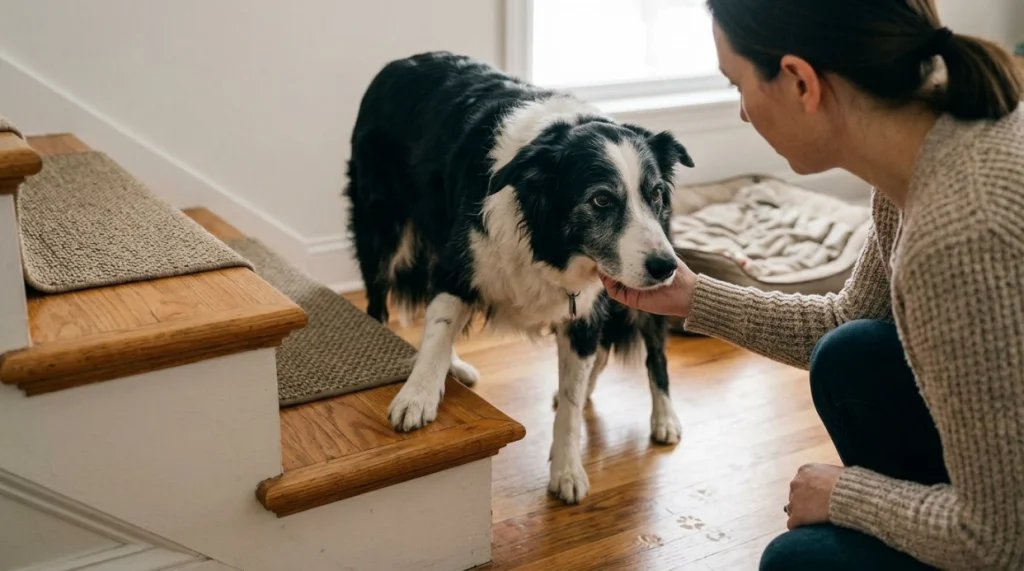
Normal aging can involve gradual changes in energy, muscle mass, senses, sleep, and recovery. Fast or dramatic changes deserve more attention.
Mobility changes
- Stiffness after resting
- Difficulty standing
- Hesitation on stairs
- Slipping on smooth floors
- Shorter walks or slower recovery
Behavior changes
A normally social dog may become less tolerant when painful. Restlessness at night, confusion, unusual anxiety, or altered interaction can also justify an examination.
Weight and appetite changes
Unexplained weight loss shouldn’t be celebrated as successful dieting. Likewise, unexplained weight gain may reflect reduced activity, excess calories, or a medical problem.
Changes that shouldn’t simply be called “old age”
- Persistent coughing or breathing difficulty
- Repeated vomiting or diarrhea
- Seizures
- Collapse
- Major increases in drinking or urination
- New lumps that grow or change
- Persistent pain or limping
- Sudden vision or balance problems
Border Collies can be intense dogs, and that intensity can mask discomfort. Watch what your dog stops doing, not only what they can still force themselves to do.
Vet note: Sudden neurological problems, breathing difficulty, collapse, repeated seizures, severe pain, or other acute changes may require urgent veterinary care.
Border Collie Lifespan FAQ
Can a Border Collie live 15 years?
Yes. Fifteen years falls within the commonly reported 12-to-15-year Border Collie lifespan range. An individual dog’s longevity depends on genetics, disease, weight, veterinary care, environment, and other factors.
Can a Border Collie live longer than 15 years?
Some individual dogs can live beyond the typical range. However, living past 15 should be viewed as individual variation rather than the expected lifespan for every Border Collie.
What is considered old for a Border Collie?
A Border Collie can generally be considered a senior at around nine years of age. Many nine-year-old dogs remain highly active, so senior status should trigger smarter monitoring rather than automatic restriction.
Do female Border Collies live longer than males?
Sex alone cannot reliably predict how long an individual Border Collie will live. Genetics, health conditions, body weight, preventive care, accidents, and lifestyle can all have substantial effects on longevity.
Do working Border Collies live as long as pet Border Collies?
There isn’t a simple lifespan rule separating working and companion Border Collies. Working dogs may be exceptionally fit, but their activity can also expose them to injuries and environmental hazards that differ from those faced by household pets.
What is the most important thing I can do for an older Border Collie?
Pay attention to change. Maintain an appropriate weight, keep the dog mentally involved, adjust exercise to physical ability, and discuss new mobility, appetite, behavior, or sensory changes with your veterinarian.
Does a rough-coated Border Collie live longer than a smooth-coated one?
Coat length itself isn’t considered a meaningful predictor of Border Collie lifespan. Rough and smooth coats are normal variations within the breed, while genetics and overall health matter much more.
Final Takeaway: Planning for a Long Border Collie Life
As of 2026, 12 to 15 years remains a useful expectation for Border Collie life expectancy. It gives owners a planning range while leaving plenty of room for individual variation.
The bigger goal is not simply adding birthdays. It is protecting mobility, comfort, curiosity, fitness, and quality of life throughout those years.
- Choose health-conscious breeding when getting a puppy.
- Keep your Border Collie at a healthy body condition.
- Provide physical exercise and mental work.
- Adapt high-impact activities as the dog ages.
- Schedule preventive veterinary care.
- Investigate meaningful changes instead of assuming they are normal aging.
A Border Collie may eventually slow down, but the need to participate rarely disappears. Give an older dog suitable jobs, comfortable movement, and attentive care, and those senior years can remain deeply rewarding.
