

Quick Answer
Border Collies should never be intentionally fed grapes or raisins, xylitol, chocolate, onions, garlic, chives, alcohol, macadamia nuts, caffeine, or raw yeast dough. The ASPCA’s foods-to-avoid guidance also warns that several everyday human foods can cause poisoning, digestive problems, or other serious complications in dogs.
Foods to keep away from your Border Collie
- Grapes and raisins: They can cause serious kidney injury, and there is no reliably safe amount.
- Xylitol: This sweetener can trigger dangerously low blood sugar and may damage the liver.
- Chocolate and caffeine: Their methylxanthines can affect the heart and nervous system.
- Onions and garlic: Allium plants can damage red blood cells and contribute to anemia.
- Alcohol and raw dough: Both can cause potentially life-threatening poisoning.
- Cooked bones and fatty scraps: These can cause injuries, digestive blockage, or pancreatitis.
If your dog eats something questionable
- Keep the package, estimate how much was eaten, and contact your veterinarian promptly rather than waiting for symptoms.
Border Collies are quick, curious dogs, and that intelligence can make food safety surprisingly important. I’ve seen a determined Border Collie work out how to reach something on a counter faster than many owners expect.
This guide explains which foods are dangerous, which are simply poor choices, what to do after accidental ingestion, and which human foods make safer occasional treats.
In This Guide
- What foods should Border Collies never eat?
- Which common foods are most dangerous?
- Are fatty foods, dairy, and table scraps bad?
- Are raw meat and bones safe?
- What human foods can Border Collies eat?
- What should I do if my Border Collie eats something bad?
- How can I stop a Border Collie stealing dangerous food?
- How do I build a safer feeding routine?
- Frequently asked questions
- Final takeaway
What Foods Should Border Collies Never Eat?
A Border Collie should avoid the same recognized food toxins that threaten other dog breeds. Being active, athletic, or genetically bred for demanding farm work doesn’t provide protection against poisonous ingredients.
Definition: A bad food for a Border Collie is either toxic to dogs, capable of causing physical injury, or likely to trigger significant digestive or metabolic problems.
Grapes and raisins
Grapes and raisins are among the foods I take most seriously. They can cause acute kidney injury in dogs, and sensitivity varies between individual animals.
Don’t assume that a dog is safe because it previously ate a grape without becoming sick. Any known ingestion deserves prompt veterinary advice.
Xylitol
Xylitol is a sweetener found in some sugar-free gum, candy, baked products, dental products, and other processed foods. It may also appear on ingredient labels in products owners don’t immediately associate with candy.
In dogs, xylitol can cause a dangerous drop in blood glucose. Larger exposures may also result in serious liver injury.
Chocolate, coffee, and caffeine
Chocolate and caffeine contain methylxanthines that dogs process poorly. Dark chocolate, cocoa powder, and baking chocolate generally create greater concern because of their higher concentrations.
Coffee grounds, caffeine tablets, energy products, and chocolate desserts should therefore stay securely out of reach. The PetMD overview of common dog poisons also lists these everyday exposures among important hazards.
Onions, garlic, chives, and leeks
These foods belong to the Allium family. They can damage canine red blood cells and may contribute to anemia.
Don’t only think about fresh onions. Onion powder, garlic powder, soups, sauces, seasoning mixes, and cooked leftovers can also contain these ingredients.
Other foods that belong on the no-feed list
- Alcohol: Beer, wine, spirits, alcoholic desserts, and fermented products can poison dogs.
- Raw yeast dough: Dough can expand inside the stomach, while fermentation can produce alcohol.
- Macadamia nuts: These can cause weakness, vomiting, tremors, and poor coordination.
- Excessively salty foods: Large salt exposures can disturb electrolyte balance and cause serious illness.
Vet note: Contact your veterinarian promptly after a suspected toxic-food exposure, even if your Border Collie still looks normal.
Section Takeaway: Treat known canine toxins as hazards, not occasional treats. Previous tolerance doesn’t prove that the next exposure will be safe.
Which Common Foods Are Most Dangerous?
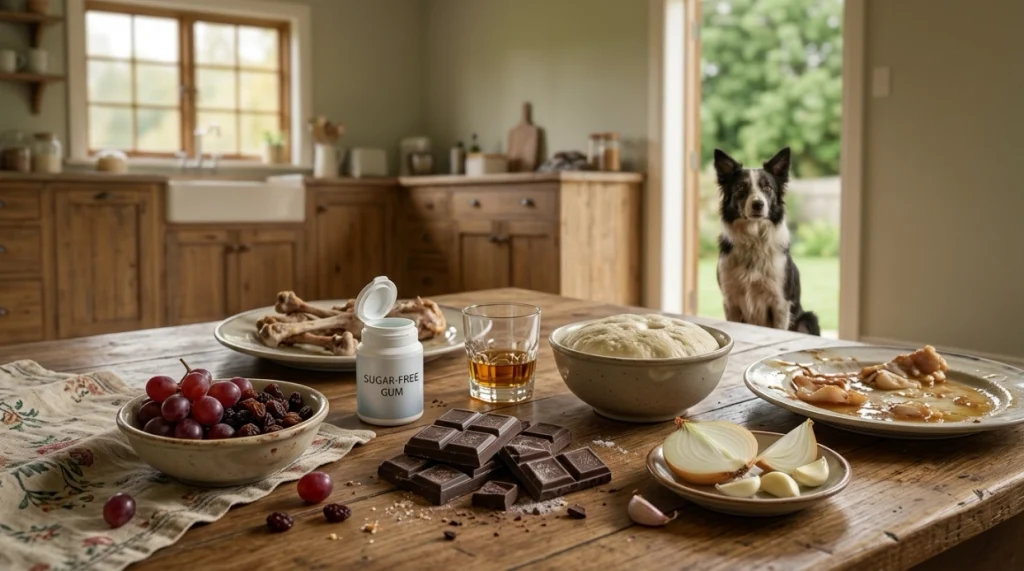
The greatest concern comes from foods associated with poisoning or serious internal injury. The table below gives a practical way to separate emergencies from foods that are mainly unsuitable for regular feeding.
| Food | Main concern | What I would do |
|---|---|---|
| Grapes or raisins | Kidney injury | Call a vet promptly after ingestion |
| Xylitol products | Low blood sugar; possible liver injury | Treat as urgent |
| Chocolate | Heart and nervous-system effects | Save wrapper and contact vet |
| Onion or garlic | Red blood cell damage | Ask a vet about the exposure |
| Alcohol or raw dough | Alcohol toxicity; dough expansion | Seek prompt veterinary advice |
| Cooked bones | Choking, splintering, obstruction | Call a vet if swallowed or symptoms occur |
| Fatty leftovers | Digestive upset; pancreatitis risk | Avoid routine feeding |
The danger level also depends on what was eaten, the amount, and your dog’s size and medical history. That is why trying to calculate safety from a generic internet chart can be risky.
Vet note: When calling your vet, have your dog’s approximate weight, food packaging, ingredient list, amount eaten, and estimated time of ingestion ready.
Section Takeaway: Grapes, raisins, xylitol, chocolate, alliums, alcohol, and raw dough deserve prompt attention rather than a wait-and-see approach.
Are Fatty Foods, Dairy, and Table Scraps Bad for Border Collies?
Not every poor food choice is a poison. Some foods are problematic because they’re rich, salty, fatty, difficult to digest, or nutritionally unsuitable.
Fatty and fried foods
Bacon grease, fatty meat trimmings, fried chicken skin, rich gravies, and similar leftovers can upset a dog’s digestive system. High-fat meals can also contribute to pancreatitis in susceptible dogs.
A hard-working Border Collie’s appetite can make generous portions look justified. Energy needs should still come mainly from a nutritionally complete dog diet rather than greasy leftovers.
Milk and dairy products
Some dogs tolerate small amounts of certain dairy products, while others develop gas or diarrhea. Milk shouldn’t become a routine drink simply because your dog seems to enjoy it.
Salty processed foods
Chips, processed meats, heavily seasoned leftovers, and other salty foods add ingredients your dog doesn’t need. Large salt exposures can become a medical problem rather than merely a nutrition issue.
Leftovers with hidden ingredients
- Gravy may contain onion or garlic powder.
- Cookies can contain chocolate, raisins, or xylitol.
- Sauces may contain alcohol, onions, garlic, or excessive salt.
- Mixed salads may contain grapes, raisins, onions, or macadamia nuts.
- Meat leftovers may include cooked bones.
This is why I prefer a simple rule at home: ingredients matter more than the name of the dish. A piece of plain cooked chicken and chicken covered in onion-rich gravy are completely different foods for a dog.
Vet note: Repeated vomiting, abdominal pain, marked lethargy, or persistent diarrhea after rich food warrants veterinary advice.
Section Takeaway: Human food doesn’t have to be poisonous to cause trouble. Plain, low-fat, unseasoned choices are safer than rich or heavily processed leftovers.
Are Raw Meat and Bones Safe for Border Collies?
Raw food isn’t automatically better because Border Collies descend from working dogs. Raw meat, raw eggs, and bones bring food-safety and physical risks that deserve careful consideration.
Raw meat and eggs
Raw animal products can carry bacteria such as Salmonella and E. coli. Contamination may affect the dog and may also expose people handling bowls, surfaces, stools, or the food itself.
That matters even more in households with young children, older adults, pregnant people, or anyone with a weakened immune system. Good kitchen hygiene remains important regardless of the feeding approach.
Cooked bones
I don’t recommend offering cooked bones as leftovers. They can splinter or create choking, mouth injury, gastrointestinal injury, or intestinal blockage risks.
Raw bones aren’t risk-free either. Teeth can fracture, pieces can become lodged, and raw products can carry harmful microbes.
- Don’t give leftover chicken, turkey, pork, or steak bones simply because your dog begs for them.
- Keep bones and food packaging inside a secure trash container.
- Supervise any chew product appropriate for your dog’s size.
- Discard damaged or swallowable pieces before they become a hazard.
Vet note: If your Border Collie swallows a bone and develops repeated vomiting, abdominal pain, difficulty passing stool, choking, or unusual lethargy, seek veterinary care.
Section Takeaway: “Natural” doesn’t automatically mean safe. Bones can injure dogs, while raw animal products introduce contamination concerns.
What Human Foods Can Border Collies Eat?
Several plain human foods can work as occasional treats for a healthy Border Collie. Preparation and portion size matter just as much as the ingredient itself.
Dog-safe examples commonly include:
- Carrots: Serve plain and cut into manageable pieces.
- Green beans: Use plain beans without salty sauces or seasoning.
- Blueberries: Small berries make convenient training rewards.
- Strawberries: Remove the leafy tops and offer small pieces.
- Apple: Remove the core and seeds before serving pieces.
- Banana: Offer small amounts because it is relatively sugary.
- Plain pumpkin: Choose plain cooked or canned pumpkin, not sweetened pie filling.
- Plain cooked chicken: Remove bones, skin, heavy fat, sauces, and seasoning.
For training, I like rewards small enough that the dog finishes them almost instantly. Border Collies learn through repetition, so dozens of oversized treats can add up quickly during one session.
Remember that extras aren’t a replacement for a complete dog food. Your dog’s normal diet should supply its core protein, fat, vitamins, minerals, and calories in an appropriate balance.
Vet note: Dogs with allergies, digestive disorders, pancreatitis, obesity, diabetes, kidney problems, or prescription diets may need different treat rules from healthy dogs.
Section Takeaway: Keep human-food treats plain, small, and simple. A familiar ingredient can become unsuitable when it’s mixed with sauces, seasoning, excess fat, or toxic foods.
What Should I Do If My Border Collie Eats Something Bad?
First, identify what your dog ate and contact your veterinarian when poisoning or another serious hazard is possible. Don’t wait for obvious symptoms after exposure to foods such as grapes, raisins, xylitol, or chocolate.
The American Kennel Club’s dog-poisoning guidance also recommends preventing access to toxic foods and contacting veterinary professionals after concerning exposures.
Collect these details before calling
- Food or product name: Keep the wrapper, recipe, or ingredient label.
- Estimated amount: Work out what is missing without delaying the call.
- Time: Note when your dog probably ate it.
- Dog’s weight: Give your veterinarian the best current estimate.
- Current signs: Report vomiting, weakness, tremors, collapse, diarrhea, breathing changes, or unusual behavior.
Don’t induce vomiting unless instructed
Trying to make your dog vomit at home isn’t appropriate for every substance or situation. Follow veterinary instructions rather than experimenting with salt, oils, household chemicals, or other home remedies.
A Border Collie may appear completely normal soon after stealing food. Some toxic effects can be delayed, so normal behavior isn’t enough to rule out danger.
Vet note: Collapse, seizures, breathing difficulty, severe weakness, repeated vomiting, choking, or loss of consciousness requires emergency veterinary attention.
Section Takeaway: Identify the food, preserve the package, estimate the amount, and get professional guidance. Early action is often safer than waiting for symptoms.
How Can I Stop a Border Collie Stealing Dangerous Food?
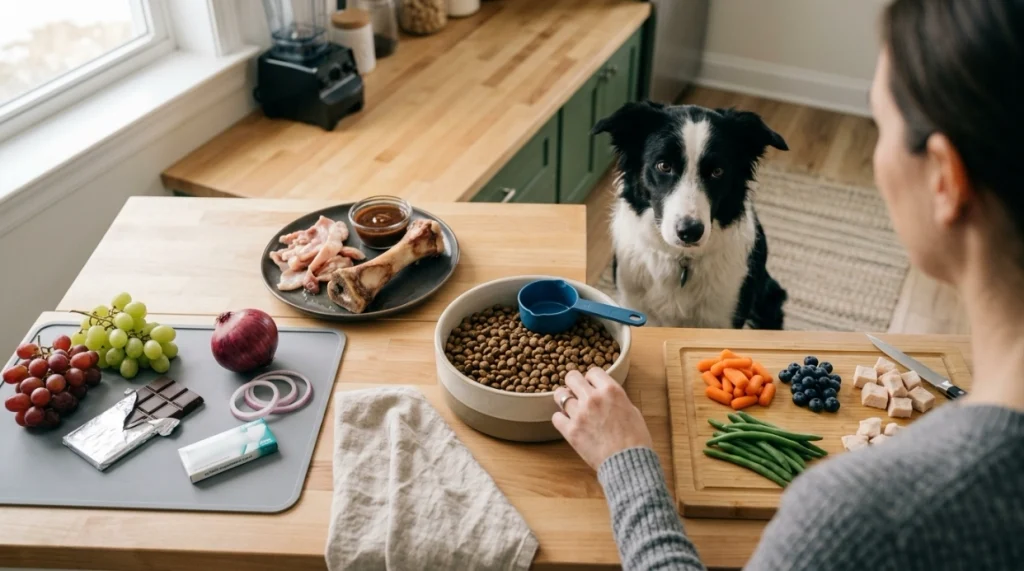
Management comes first. A clever dog shouldn’t get repeated opportunities to practise stealing food and discover how rewarding it can be.
Border Collies are observant problem-solvers. I’ve found that a dog that fails to reach a sandwich today may remember exactly where it appeared and try a new strategy tomorrow.
Change the environment
- Keep grapes, chocolate, baked goods, gum, and medicines inside closed cupboards.
- Push food away from counter edges during cooking.
- Use a securely closing kitchen bin.
- Don’t leave grocery bags unattended on the floor.
- Ask children and visitors not to share food without permission.
- Clear plates immediately after meals.
Teach useful cues
A strong “leave it” cue can interrupt interest before your dog grabs something. A reliable “drop it” cue helps when an object has already reached the mouth.
Train these skills using safe items first. Reward voluntary disengagement instead of turning food retrieval into an exciting chase through the house.
Give scavenging an appropriate outlet
Snuffle mats, food puzzles, search games, and structured scent work can satisfy a Border Collie’s desire to investigate. Use part of the dog’s normal ration when possible rather than constantly adding extra calories.
Section Takeaway: Prevention beats emergency treatment. Combine secure food storage with “leave it,” “drop it,” and safe enrichment activities.
How Do I Build a Safer Feeding Routine?
Consistency makes food safety easier. Decide in advance what your Border Collie may eat, where treats come from, and which household foods are always off limits.
Use a simple three-category system
| Category | Examples | Rule |
|---|---|---|
| Never feed | Grapes, raisins, xylitol, chocolate, onions, alcohol | Keep inaccessible |
| Usually avoid | Fatty scraps, salty foods, cooked bones, rich sauces | Don’t use as routine treats |
| Occasional treats | Carrot, blueberry, plain chicken, green bean | Small, plain portions |
As of 2026, my practical approach remains uncomplicated: use a complete diet as the foundation and treat human food as optional. Check unfamiliar ingredients before sharing them.
Teach everyone in the household the same rules. A careful feeding plan falls apart quickly when one person gives the dog whatever happens to be on their plate.
Vet note: Ask your veterinarian to help determine an appropriate diet and calorie intake for your Border Collie’s age, body condition, activity level, and health history.
Section Takeaway: Simple household rules prevent mistakes. Keep known toxins inaccessible and make safe treats an intentional part of the dog’s diet.
Frequently Asked Questions
Can Border Collies eat cheese?
Some Border Collies tolerate small amounts of plain cheese, while others develop digestive upset. Choose modest portions and avoid cheese containing onion, garlic, excessive seasoning, or other unsafe ingredients.
Can Border Collies eat peanut butter?
Plain peanut butter can be suitable in small amounts if it doesn’t contain xylitol. Always read the ingredient label before giving peanut butter or another nut spread to your dog.
Can Border Collies eat grapes?
No. Grapes and raisins can cause serious kidney injury in dogs, and there isn’t a reliably safe amount you can use as a treat.
Contact your veterinarian promptly if your Border Collie eats grapes or raisins.
Can Border Collies eat chocolate?
No. Chocolate contains methylxanthines that can cause vomiting, restlessness, abnormal heart activity, tremors, seizures, and other serious problems.
The risk varies with chocolate type, amount eaten, and dog size, so contact a veterinarian after a suspected ingestion.
Can Border Collies eat onions or garlic?
Onions, garlic, chives, and related Allium plants shouldn’t be intentionally fed to Border Collies. Raw, cooked, dried, and powdered forms can all present a concern.
Can Border Collies eat cooked chicken?
Plain, thoroughly cooked, boneless chicken can work as an occasional treat for many healthy dogs. Remove cooked bones, excess skin, rich sauces, garlic, onions, and heavy seasoning before sharing it.
What should I do if I’m unsure whether a food is safe?
Don’t feed it until you’ve checked the ingredients and confirmed that it’s appropriate for dogs. For accidental ingestion of a questionable product, keep the packaging and contact your veterinarian for guidance.
Final Takeaway
The biggest foods to keep away from a Border Collie include grapes, raisins, xylitol, chocolate, onions, garlic, chives, alcohol, raw yeast dough, macadamia nuts, and concentrated caffeine products. Cooked bones, rich fatty scraps, and heavily seasoned human food also belong outside the normal feeding routine.
For treats, keep things boring in the best possible way: plain, small, and easy to identify. Carrots, blueberries, green beans, or small pieces of plain cooked chicken are much easier to manage than mystery leftovers.
Most food accidents are preventable with secure storage and consistent household rules. If your Border Collie does eat something potentially toxic, contact your veterinarian promptly instead of waiting to see whether symptoms develop.
