

Quick Answer
Signs that a Border Collie may be nearing the end of life include a major loss of appetite, weakness, difficulty standing, abnormal breathing, confusion, withdrawal, incontinence, weight or muscle loss, and little interest in activities they once loved. However, these symptoms can also occur with treatable illness, so a veterinary assessment of end-of-life signs is the safest way to understand what is happening.
Common Signs to Watch For
- Eating much less: Your Border Collie repeatedly refuses meals or favorite treats.
- Severe weakness: Standing, walking, or changing position becomes difficult.
- Breathing changes: Breathing becomes labored, unusually fast, irregular, or uncomfortable at rest.
- Behavior changes: Your dog becomes confused, restless, unusually clingy, or withdrawn.
- Loss of normal functions: Toileting, grooming, sleeping, and staying comfortable become increasingly difficult.
- More bad days: Pain, distress, weakness, or disengagement begins to outweigh comfortable periods.
Get Emergency Help Now If
- Your dog collapses, becomes unresponsive, struggles to breathe, has blue or very pale gums, suffers ongoing seizures, or shows severe uncontrolled pain.
Few questions are harder for a Border Collie owner than wondering whether a beloved dog is dying. The changes can be subtle at first, especially in a focused, routine-driven Border Collie that still tries to follow you around.
This guide explains what to watch for, what can still be treatable, and when veterinary help should become urgent. As of 2026, the key principle remains simple: no single symptom can confirm that a dog is dying.
In This Guide
- What signs may mean a Border Collie is nearing the end of life?
- Which signs require emergency veterinary care?
- How can you tell normal aging from end-of-life decline?
- Can Border Collie behavior make decline harder to notice?
- How do you assess your Border Collie’s quality of life?
- What should you do if you think your Border Collie is dying?
- How can you comfort a dying Border Collie?
- When should you discuss hospice or euthanasia?
- Frequently asked questions
What Signs May Mean a Border Collie Is Nearing the End of Life?
A dying Border Collie usually shows a pattern of worsening physical and behavioral changes, rather than one unmistakable sign. Appetite, mobility, breathing, comfort, and social behavior often change together.
Definition: End-of-life decline is a progressive loss of normal body functions and quality of life caused by advanced disease, severe frailty, or irreversible organ failure.
Loss of appetite and reduced drinking
A dog nearing the end of life may repeatedly refuse meals, treats, or water. Nausea, pain, kidney disease, liver problems, cancer, dental pain, and many treatable conditions can cause the same change.
The pattern matters. Missing one meal is different from refusing food while also becoming weak, nauseated, or unable to stand comfortably.
Severe weakness and loss of mobility
You may notice your Border Collie struggling to rise, slipping, stumbling, or lying in one position for long periods. Muscle loss can make the hindquarters look noticeably thinner.
- Needing help to stand
- Falling or collapsing
- Unable to reach food or water
- Unable to toilet without assistance
- Showing pain when changing position
Changes in breathing
Breathing may become faster, harder, noisier, or irregular. Panting while resting in a cool room can also signal pain, respiratory distress, anxiety, or another medical problem.
Behavioral and mental changes
Some dogs become withdrawn and seek quiet areas. Others become restless, anxious, confused, unusually attached, or unable to settle.
Loss of interest also matters. A Border Collie that once watched every movement in the house may stop responding to familiar routines, toys, people, or outdoor activity.
Incontinence and declining hygiene
Advanced weakness can make it difficult to get outside in time. Urine or stool accidents may occur because your dog cannot rise, walk, or control normal elimination.
Incontinence alone does not mean death is near. Combined with immobility, pain, appetite loss, and severe weakness, it becomes more concerning.
Vet note: These signs are not specific to dying. A veterinarian should examine any Border Collie with a significant or persistent decline.
Section Takeaway: A pattern of several worsening signs is more meaningful than one isolated change.
Which Signs Require Emergency Veterinary Care?
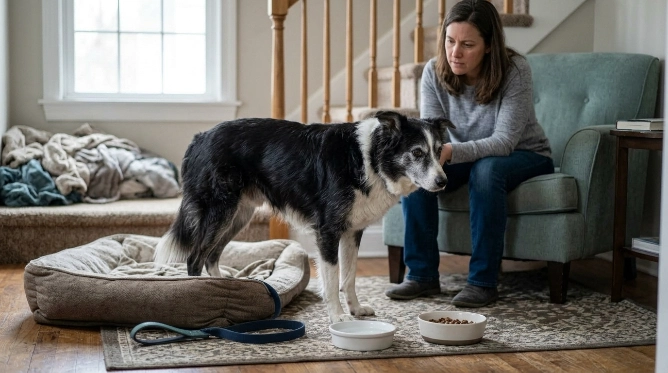
Some symptoms should not be watched at home to see what happens. They can signal a life-threatening emergency that may still be treatable.
The Merck Veterinary Manual’s emergency guidance identifies breathing difficulty, collapse, loss of consciousness, severe bleeding, seizures, and shock-related signs among problems requiring rapid veterinary attention.
- Labored breathing: Your dog appears to fight for each breath or cannot breathe comfortably.
- Blue, gray, or very pale gums: This can indicate poor oxygen delivery or circulation.
- Collapse: Your dog suddenly falls and cannot get back up normally.
- Unresponsiveness: Your Border Collie cannot be awakened or does not respond normally.
- Ongoing seizures: Prolonged or repeated seizures need urgent assessment.
- Severe pain: Crying, trembling, relentless panting, or inability to settle can indicate serious distress.
Call your regular veterinarian or emergency clinic while preparing to leave. Describe the breathing pattern, responsiveness, recent symptoms, medications, and known medical conditions.
Vet note: If your dog is struggling to breathe, collapsed, unconscious, or having ongoing seizures, seek emergency veterinary care immediately.
How Can You Tell Normal Aging From End-of-Life Decline?
Older Border Collies often slow down, sleep longer, and develop stiffness. Those changes do not automatically mean a dog is dying.
End-of-life decline is more likely when several essential functions deteriorate together and continue to worsen.
| Area | Typical Aging Change | Concerning Decline | Emergency Sign |
|---|---|---|---|
| Mobility | Slower rising or shorter walks | Regularly unable to stand or toilet comfortably | Sudden collapse or inability to move |
| Appetite | Minor appetite variation | Persistent refusal of food with weakness or weight loss | Cannot swallow or repeatedly vomits with severe weakness |
| Behavior | More sleep or less enthusiasm | Withdrawal, confusion, anxiety, or loss of normal interests | Unresponsive or severely altered consciousness |
| Breathing | Normal breathing while resting | Persistent unusual panting or breathing changes | Labored breathing, collapse, or blue-gray gums |
Trends are more useful than snapshots. Write down what your dog can comfortably do each day rather than relying only on memory.
Vet note: Arthritis, infections, endocrine disorders, heart disease, kidney disease, pain, and other conditions can look like “old age” but may be manageable with treatment.
Can Border Collie Behavior Make Decline Harder to Notice?
It can. Many Border Collies are intensely interested in routines, movement, people, and familiar cues, so one enthusiastic moment can hide a much harder day.
I prefer to judge the whole day rather than one response. A dog may still lift their head for a favorite person while struggling with eating, standing, sleeping, or toileting.
Watch for changes from your dog’s own normal
- Stops following familiar household movement
- No longer watches doors, windows, livestock, toys, or family activity
- Loses interest in training cues they once enjoyed
- Needs much longer to recover from a short walk
- Seems unable to find a comfortable resting position
- Withdraws despite previously seeking regular interaction
Border Collies also vary widely as individuals. A quiet senior dog should not be judged against a younger working dog or another Border Collie you owned years ago.
The useful comparison is today’s dog against that same dog’s established routine and comfort.
Vet note: Sudden behavioral change can be caused by pain, neurological disease, cognitive decline, medication effects, or other medical problems and deserves veterinary assessment.
How Do You Assess Your Border Collie’s Quality of Life?
Quality of life is about more than whether your Border Collie is alive or still accepts a treat. It asks whether daily life remains comfortable and includes enough positive experiences.
The ASPCA’s end-of-life guidance emphasizes comfort and avoiding prolonged suffering when considering hospice care.
Use the same questions every day
A consistent checklist makes changes easier to see. One commonly used approach considers Hurt, Hunger, Hydration, Hygiene, Happiness, Mobility, and whether there are more good days than bad.
- Hurt: Is pain controlled well enough for comfortable rest?
- Hunger: Can your dog willingly eat enough to maintain comfort?
- Hydration: Can your dog drink adequately or receive veterinary support?
- Hygiene: Can your dog remain reasonably clean and dry?
- Happiness: Are there still activities, people, foods, or routines they enjoy?
- Mobility: Can your dog change position and reach essential resources without major distress?
- Good days: Are comfortable days still more common than painful or distressed days?
Keep a simple good-day and bad-day calendar
Mark each day as comfortable, mixed, or difficult. Patterns often become clearer after several days than they feel during an emotional moment.
I also look for loss of several favorite experiences at once. For a Border Collie, that might mean no interest in sniffing outside, greeting family, watching movement, eating a favorite food, or resting peacefully nearby.
Bring your notes to your veterinarian. They give the veterinary team specific information about what life looks like between appointments.
Vet note: A quality-of-life checklist supports veterinary discussions but cannot diagnose terminal illness or determine the right end-of-life decision by itself.
Section Takeaway: Measure comfort across the entire day, especially pain, eating, hydration, mobility, hygiene, engagement, and the balance of good days to bad.
What Should You Do if You Think Your Border Collie Is Dying?
Start by contacting your veterinarian and describing the changes you have noticed. Ask whether your dog needs an emergency visit, a same-day examination, or a planned quality-of-life appointment.
Prepare useful information before the appointment
- When appetite or drinking changed
- Whether your dog can stand and walk unaided
- Any vomiting, diarrhea, coughing, or incontinence
- Breathing changes while resting
- Signs of pain or restlessness
- Current medications and supplements
- Known diagnoses and recent test results
- Number of comfortable versus difficult days
Short videos can help when a symptom is intermittent. Record unusual walking, breathing, trembling, coughing, or nighttime restlessness when it is safe to do so.
Ask what may still be treatable
Do not assume that an old dog with sudden weakness is simply dying. Dehydration, pain, infection, medication problems, and other conditions may cause dramatic changes.
Your veterinarian can explain the likely cause, testing options, treatment possibilities, expected progression, and whether palliative care is appropriate.
Vet note: Never stop prescription medication or give human pain medicine unless your veterinarian specifically tells you to do so.
How Can You Comfort a Dying Border Collie?
Comfort care should reduce stress and make basic needs easier to meet. The goal is not to force normal routines when your dog no longer has the strength for them.
Veterinary hospice can include pain control, environmental changes, caregiver support, and end-of-life planning. A useful overview is available in PetMD’s guide to canine hospice and palliative care.
Make resting easier
- Provide thick, clean bedding with good support.
- Keep water close enough to reach without a long walk.
- Use nonslip surfaces on smooth floors.
- Keep the room comfortably warm without overheating.
- Help your dog change position if your veterinarian recommends it.
Reduce unnecessary effort
A senior Border Collie does not need to prove anything by completing a familiar walk. Brief toilet trips may be enough when strength is limited.
Keep important resources on one level when possible. Stairs can become exhausting or unsafe for a weak dog.
Let your dog choose closeness
Some dogs want constant contact near the end of life. Others prefer a quiet bed where they can rest without being touched.
Stay nearby and follow your dog’s cues. Calm voices, familiar bedding, gentle handling, and predictable surroundings can reduce stress.
Keep hygiene gentle
Use washable bedding or absorbent pads when accidents occur. Clean soiled fur carefully and keep skin dry without repeatedly moving a painful dog.
Vet note: Comfort care works best with veterinary guidance, especially when pain, nausea, anxiety, breathing difficulty, or dehydration is present.
Section Takeaway: Good end-of-life care focuses on comfort, easy access to essentials, gentle hygiene, low stress, and effective veterinary pain management.
When Should You Discuss Hospice or Euthanasia?

You do not have to wait until your Border Collie is in a crisis to discuss end-of-life options. Planning earlier gives you time to understand what changes would indicate unacceptable suffering.
The American Kennel Club’s veterinary discussion of euthanasia and quality of life describes quality of life as a central part of the conversation when age or illness seriously limits normal function.
Questions to discuss with your veterinarian
- Is pain still controllable?
- Can my dog breathe comfortably?
- Can my dog eat and drink enough to remain comfortable?
- Can my dog stand, rest, and toilet without major distress?
- Is the underlying condition reversible or progressive?
- What changes would mean we should call immediately?
- What would hospice care involve at home?
- What should we expect from humane euthanasia?
There is rarely one perfect sign that announces the exact moment. Decisions usually come from the overall pattern of comfort, function, prognosis, and suffering.
Waiting for a dramatic crisis can also remove choices. Discussing a plan beforehand can help you respond calmly if breathing, pain, mobility, or awareness suddenly worsens.
Humane euthanasia is designed to prevent ongoing suffering when acceptable comfort can no longer be maintained. Your veterinarian can explain the process and help you consider your dog’s individual medical situation.
Vet note: End-of-life decisions should be made with your veterinarian based on your Border Collie’s condition, prognosis, comfort, and quality of life.
Frequently Asked Questions
Do Border Collies hide when they are dying?
Some seriously ill dogs withdraw or choose quiet locations, while others become clingier and seek constant contact. Hiding does not prove that a Border Collie is dying because pain, fear, illness, anxiety, or cognitive changes can produce similar behavior.
Will a Border Collie stop eating before death?
Appetite often decreases during serious end-of-life decline, but refusing food has many possible causes. Dental pain, nausea, infection, gastrointestinal disease, medication effects, kidney problems, and other treatable conditions can also reduce appetite, so persistent refusal deserves veterinary attention.
Why is my old Border Collie suddenly unable to stand?
Sudden inability to stand should be treated seriously. Causes can include severe weakness, neurological problems, injury, pain, circulatory problems, or other medical emergencies, and the symptom cannot safely be attributed to old age without veterinary assessment.
Do dogs know when they are dying?
There is no reliable evidence that dogs understand their own death the way humans understand it. They can, however, experience pain, weakness, confusion, nausea, anxiety, and other changes as illness progresses, which can alter their behavior significantly.
How long can a Border Collie show end-of-life signs?
There is no fixed timeline. Some dogs decline gradually over weeks or months, while others worsen quickly because of an acute illness or medical crisis. The underlying disease, treatment options, age, and overall health all influence the progression.
What is the clearest sign that it may be time to discuss euthanasia?
No single sign answers that question for every dog. A veterinary discussion becomes especially important when pain cannot be controlled, breathing is difficult, essential functions are failing, meaningful activities have disappeared, or difficult days consistently outnumber comfortable ones.
Vet note: If you are unsure whether your Border Collie is uncomfortable, contact your veterinarian rather than waiting for an unmistakable sign.
Final Takeaway
The signs that a Border Collie is dying usually involve several worsening changes in comfort and normal function. Watch eating, drinking, breathing, mobility, toileting, behavior, pain, and interest in familiar activities together.
Most importantly, do not assume that a serious change is simply part of dying. Veterinary assessment can identify emergencies, uncover treatable problems, provide comfort care, and help you make informed end-of-life decisions based on your individual dog’s needs.
