

Quick Answer
There isn’t one exact outdoor temperature that’s safe or unsafe for every Border Collie. As a practical rule, I become cautious once temperatures reach about 80°F (27°C), and I avoid hard running or prolonged exercise around 85°F (29°C) and above, especially in humidity or direct sun. The ASPCA’s hot-weather safety guidance also stresses water, shade, reduced exercise, and watching closely for overheating.
Signs the heat may already be too much
- Heavy panting: Panting becomes intense and doesn’t settle during a short rest.
- Slowing down: Your normally driven Border Collie starts lagging, seeking shade, or refusing work.
- Heavy drooling: Thick saliva or unusually excessive drool can signal heat stress.
- Behavior changes: Weakness, stumbling, confusion, or collapse requires urgent action.
- High body temperature: A temperature around 104°F (40°C) or higher with heat-related symptoms is an emergency concern.
The safest approach
- Exercise early or late, provide frequent water and shade, and stop before your Border Collie looks exhausted.
Border Collies are athletic working dogs, but their enthusiasm can make hot weather deceptive. A Border Collie or working collie may keep chasing a ball long after I would prefer the dog to rest.
That drive is why I don’t judge heat safety by enthusiasm alone. This 2026 guide explains temperature, humidity, exercise, warning signs, cooling, and summer coat care.
In This Guide
- What temperature is too hot for a Border Collie?
- Why do Border Collies overheat in hot weather?
- How do humidity, sun, and pavement change heat risk?
- What are the signs of heat stress and heatstroke?
- How should you exercise a Border Collie in hot weather?
- How do you cool down a Border Collie safely?
- Should you shave a Border Collie in summer?
- Frequently asked questions
What Temperature Is Too Hot for a Border Collie?
There is no scientifically fixed outdoor cutoff that suddenly makes a temperature dangerous for every Border Collie. Exercise intensity, humidity, sunlight, airflow, age, fitness, health, and acclimation all change the risk.
For everyday planning, I start modifying activity at about 80°F (27°C). Once conditions reach roughly 85°F (29°C) or higher, I generally replace hard running with short, controlled outings.
A practical Border Collie heat-risk guide
| Outdoor temperature | Practical approach | Border Collie activity |
|---|---|---|
| Below 70°F / 21°C | Usually lower heat risk for a healthy adult | Normal activity with water and breaks |
| 70–79°F / 21–26°C | Watch sun, humidity, and exercise intensity | Regular activity, but monitor panting |
| 80–84°F / 27–28°C | Caution zone for vigorous activity | Shorten sessions and increase cool-down breaks |
| 85–89°F / 29–31°C | High caution, particularly in humidity | Avoid sustained running, fetch, and hard training |
| 90°F+ / 32°C+ | Potentially dangerous during exercise | Keep outdoor trips brief and prioritize a cool indoor environment |
These bands are conservative planning guidelines, not veterinary diagnostic thresholds. A humid 78°F afternoon can challenge a hard-running dog more than a dry, breezy 82°F morning.
I’ve also learned not to treat a ball-obsessed Border Collie’s willingness to continue as proof that conditions are safe. Their work ethic can outlast sensible self-regulation.
Why Do Border Collies Overheat in Hot Weather?
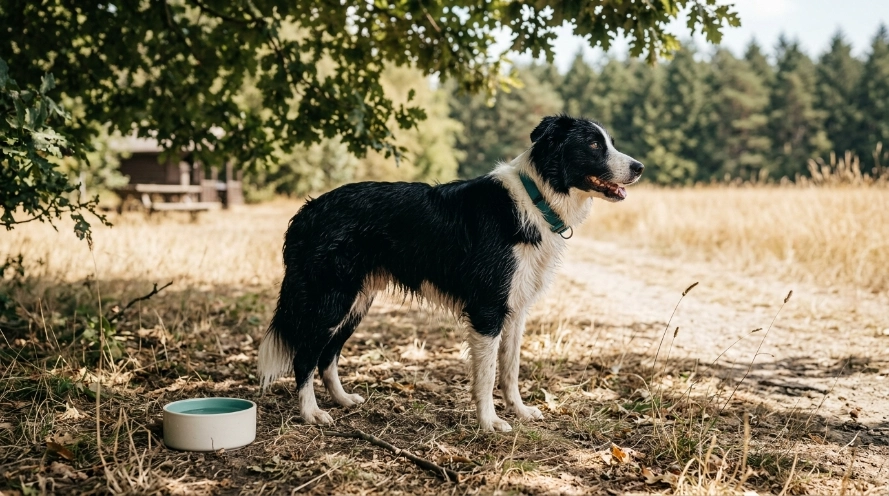
Dogs don’t cool themselves like people do. They depend heavily on panting, which releases heat through evaporation from moist respiratory surfaces.
The American Kennel Club’s heat-safety guidance explains why dogs can struggle when temperatures climb. Border Collies add another important factor: they are intensely active working dogs.
Heat stress in a Border Collie is the state where the dog’s body is gaining or producing heat faster than it can release it. Continued heat stress can progress to dangerous heat-related illness.
High drive creates extra body heat
Running, herding, agility, frisbee, and fetch generate heat inside working muscles. The faster and longer your dog works, the more heat the body must lose.
This matters with Border Collies because stopping voluntarily isn’t guaranteed. Some dogs remain focused on the toy, sheep, or handler while their heat load keeps rising.
The double coat isn’t the enemy
Both rough-coated and smooth-coated Border Collies have protective double coats. The coat helps shield the skin and plays a role in insulation.
Heat management should therefore focus on activity, environment, hydration, airflow, and grooming. Removing the coat is not a shortcut for preventing heatstroke.
- Working heritage: Border Collies were developed for sustained, demanding livestock work.
- High arousal: Excitement can encourage a dog to ignore normal rest opportunities.
- Dark coat areas: Black fur exposed to direct sunlight can become noticeably warm.
- Individual variation: Puppies, seniors, overweight dogs, and dogs with medical problems may tolerate heat less effectively.
How Do Humidity, Sun, and Pavement Change Heat Risk?
The thermometer only tells part of the story. Humidity, radiant sunlight, hot ground, and poor airflow can make the same air temperature much harder on your Border Collie.
Humidity reduces the effectiveness of panting
Panting works through evaporation. When the surrounding air already contains lots of moisture, evaporation becomes less efficient.
That means I treat hot, humid weather more cautiously than the same temperature with low humidity and a breeze. A short walk can become demanding much faster.
Direct sun adds radiant heat
Shade can make a meaningful practical difference even when the reported air temperature stays unchanged. Whenever possible, I choose tree-lined routes instead of open pavement.
- Walk before the strongest midday sun.
- Pick grass or shaded paths when available.
- Carry drinking water for longer outings.
- Schedule rest before the dog looks tired.
- Turn back early when panting rises quickly.
Hot pavement creates a second hazard
Asphalt and concrete can become much hotter than surrounding air. Paw-pad burns and extra radiant heat from below are both concerns.
A shaded grass route is often a better option than an exposed paved route. Surface temperature is one reason an apparently manageable day can still be unsuitable for a long walk.
What Are the Signs of Heat Stress and Heatstroke?
Early recognition matters. Excessive panting, heavy drooling, weakness, vomiting, abnormal gum color, confusion, stumbling, collapse, or seizures can indicate serious overheating.
PetMD’s veterinarian-reviewed heatstroke guidance identifies a body temperature of about 104°F (40°C) or above among concerning heatstroke findings. Don’t wait for a thermometer reading if your dog already looks seriously unwell.
Early warning signs
- Intense panting: Faster or harder than you’d expect from the activity.
- Constant shade seeking: Your dog repeatedly stops in cooler areas.
- Heavy saliva: Drooling becomes excessive or saliva appears thick.
- Sudden fatigue: A normally energetic dog slows sharply or lies down.
- Reduced responsiveness: Your dog becomes less focused on you or the activity.
Emergency warning signs
- Weakness or collapse
- Stumbling or poor coordination
- Disorientation
- Repeated vomiting or diarrhea
- Difficulty breathing
- Seizures
- Loss of consciousness
Once neurological signs, collapse, or severe breathing problems appear, this is not a “rest and see” situation. Move the dog toward a cooler environment and contact a veterinarian immediately.
Vet note: Suspected heatstroke is a veterinary emergency. Even a dog that seems better after cooling may need professional evaluation because serious internal problems can develop.
How Should You Exercise a Border Collie in Hot Weather?
You don’t need to abandon your Border Collie’s routine for an entire summer. You do need to shift the timing, intensity, and type of activity.
Move exercise to cooler hours
Early morning is my first choice during a hot spell. Late evening is another option once the ground and surrounding air have cooled.
Instead of one demanding outdoor workout, split activity into several smaller sessions. Five to ten minutes of focused training can tire the brain without creating the same heat load as nonstop sprinting.
Replace running with mental work
- Indoor obedience practice
- Short trick-training sessions
- Scent searches around the house
- Food puzzles
- Hide-and-find games
- Impulse-control exercises
- Gentle indoor tug with planned breaks
A Border Collie doesn’t need every calorie of energy burned through running. Mental work can be remarkably effective with this breed.
I also avoid endless ball throwing in warm conditions. Repeated sprinting, sharp turns, excitement, and little voluntary rest can build heat surprisingly fast.
Use your dog’s recovery as feedback
After a short exercise period, watch how quickly panting settles in shade. If your dog remains intensely panting or seems unusually tired, the session was already demanding enough.
Reduce the next session rather than testing the limit again. Heat safety works best when you stop early.
How Do You Cool Down a Border Collie Safely?
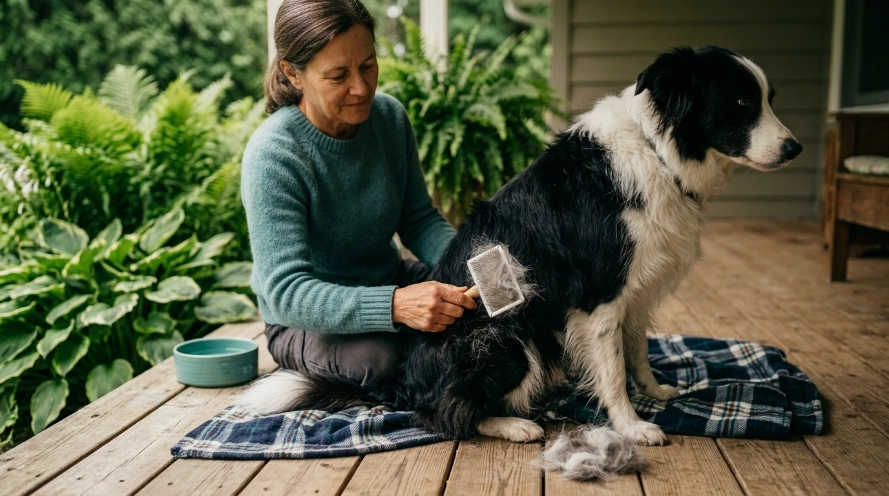
For mild overheating without emergency signs, stop exercise and move your Border Collie into shade or a cool indoor space. Offer fresh drinking water and allow the dog to rest.
If you suspect serious overheating, begin cooling while arranging veterinary advice. Use cool water rather than ice-cold water, especially over the body, underside, and legs.
Simple cooling steps
- Stop activity immediately. Don’t make the dog walk farther than necessary.
- Move somewhere cooler. Use shade, air conditioning, or a well-ventilated indoor area.
- Use cool water. Wet the dog with cool, not freezing, water.
- Improve airflow. A fan or moving air can support evaporative cooling.
- Offer water. Let an alert dog drink without forcing large amounts.
- Call your veterinarian. Seek urgent guidance when heatstroke is possible.
Don’t assume that a dog is completely safe because panting improved. Significant overheating can affect organs even after the dog appears calmer.
Vet note: Collapse, confusion, seizures, repeated vomiting, severe weakness, breathing difficulty, or suspected heatstroke warrants immediate veterinary care.
Should You Shave a Border Collie in Summer?
For routine summer heat management, shaving a healthy Border Collie’s double coat is generally not recommended. Their coat provides insulation and helps protect the skin from environmental exposure.
The AKC’s guidance on double-coated dogs identifies the Border Collie as a medium double-coated breed. Regular brushing is a better summer strategy than removing the coat.
What to do instead
- Brush regularly: Remove loose undercoat and prevent compacted fur.
- Deal with mats: Tangled coat can interfere with normal airflow around the skin.
- Keep the coat clean: Dirt and debris make coat maintenance harder.
- Provide shade: Coat care cannot compensate for hours in direct sun.
- Change exercise times: Environment and workload matter more than a dramatic haircut.
A veterinarian may recommend clipping for a medical procedure or skin problem. That’s different from shaving solely because summer has arrived.
For my own heat-management routine, brushing is paired with early walks, water, indoor enrichment, and shorter outdoor sessions. No single measure replaces the others.
Frequently Asked Questions
Can a Border Collie be outside in 90°F weather?
A brief toilet break may be manageable for a healthy dog with shade and water, but 90°F (32°C) isn’t a temperature I’d choose for running, fetch, agility, or a long walk. Humidity and direct sunlight can increase the risk further.
Is 80°F too hot to walk a Border Collie?
Not automatically, but 80°F (27°C) is where I start using extra caution. Choose shade, shorten the route, avoid intense running, check the ground surface, carry water, and watch your dog’s panting and recovery closely.
Do Border Collies tolerate heat better than Australian Shepherds?
Both are active herding breeds with double coats, so neither should be assumed heat-proof. Individual fitness, coat condition, age, health, acclimation, humidity, and exercise intensity can matter more than choosing one of these breeds as universally more heat tolerant.
How can I tell if my Border Collie is just panting or overheating?
Normal exercise panting should begin easing during rest in a cool area. Be more concerned when panting stays intense or appears with heavy drooling, weakness, vomiting, confusion, abnormal coordination, breathing difficulty, or collapse.
Should I give my Border Collie ice water when it’s hot?
For routine hydration, fresh cool water is appropriate. When actively cooling a dog that may be overheating, veterinary guidance generally favors cool rather than extremely cold water on the body, while urgent symptoms should prompt immediate veterinary contact.
Can Border Collies get heatstroke even if they have water?
Yes. Water helps prevent dehydration but doesn’t eliminate heatstroke risk. A Border Collie producing large amounts of body heat through intense exercise can still overheat, particularly during hot, humid, sunny, or poorly ventilated conditions.
The main takeaway is simple: don’t wait for a Border Collie to decide when exercise should end. Start adjusting activity around 80°F (27°C), become increasingly conservative as conditions approach 85–90°F (29–32°C), and treat humidity, direct sun, pavement, and hard exercise as major risk multipliers.
Keep summer activity smart rather than stopping it completely. Cooler exercise hours, shorter sessions, mental enrichment, regular brushing, water, shade, and early recognition of heat stress give an energetic Border Collie a much safer way to enjoy warm weather.
