

Quick Answer
Yes, a healthy adult Border Collie can stay outside during part of the day when the weather is suitable and the area is secure. However, Border Collies should not be left outdoors all day as a substitute for exercise, training, companionship, and rest indoors, especially because the Border Collie is an active working breed.
What makes daytime outdoor time appropriate?
- Suitable weather: Avoid dangerous heat, severe cold, storms, or other extreme conditions.
- Secure fencing: A Border Collie should not have an easy route to escape, chase traffic, or reach livestock.
- Water and shade: Fresh drinking water and protection from direct sun are essential.
- Regular interaction: Outdoor access should include play, training, sniffing, or time with you.
- Ability to settle: Your dog should be able to relax outside instead of constantly barking, pacing, or fence-running.
My practical rule
- Use outdoor time as one part of the daily routine, not as the Border Collie’s entire routine.
Can Border Collies stay outside during the day? Yes, but simply putting a Border, or BC, in a backyard for hours does not meet this intelligent herding dog’s needs.
I’ve found that good outdoor time has a purpose. The dog gets opportunities to move, sniff, train, relax, and interact rather than spending the day searching for something to do.
In This Guide
- Can a Border Collie stay outside during the day?
- How long can a Border Collie stay outside?
- What weather is safe for a Border Collie outside?
- What does a safe outdoor setup need?
- Is a backyard enough for a Border Collie?
- Can a Border Collie stay outside while you’re at work?
- Do puppies and senior Border Collies need different limits?
- Frequently asked questions
- Bottom line
Can a Border Collie Stay Outside During the Day?
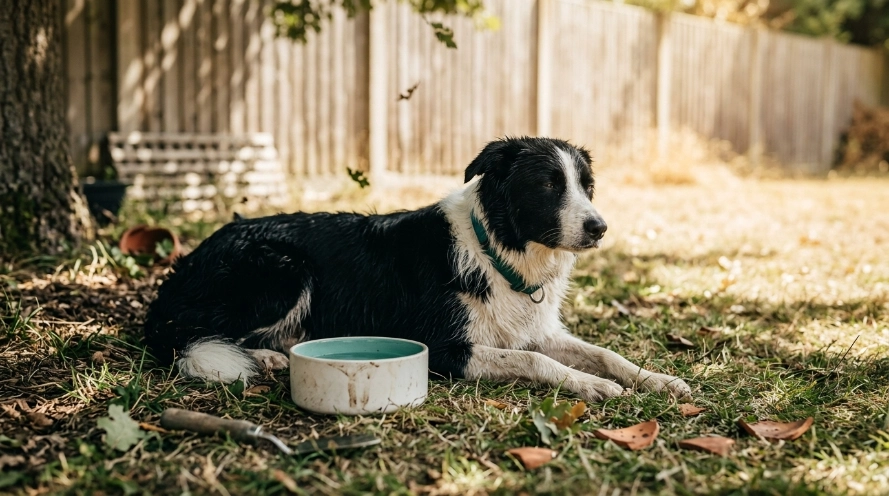
A healthy adult Border Collie can spend several periods outdoors during the day. The important question is not simply whether the dog is outside, but what happens during that time.
A Border Collie’s working heritage makes movement and problem-solving important. Sitting alone in the same yard for hours provides neither automatically.
Definition: Daytime outdoor time for a Border Collie means planned access to a safe outdoor area for exercise, exploration, training, toileting, relaxation, or supervised independent time.
Outdoor access is different from outdoor living
There’s a big difference between letting a Border Collie enjoy the yard and expecting the yard to become the dog’s main home. Most companion Borders thrive on regular contact with their people.
They notice routines quickly. A dog that spends meaningful time with you often learns when it’s time to work and when it’s time to settle.
Watch what your dog actually does outside
I pay more attention to behavior than to the clock. A dog calmly sniffing, resting in shade, or watching the garden is having a different experience from one racing along the fence.
Warning signs that outdoor time is becoming unproductive include:
- Fence running: Repeatedly charging along a boundary at people, dogs, cars, or bicycles.
- Constant barking: Reacting to every sound instead of settling between events.
- Digging from frustration: Persistent digging that appears when the dog has nothing else to do.
- Escape searching: Testing gates, climbing, squeezing through gaps, or digging under fencing.
- Repetitive chasing: Fixating on shadows, reflections, leaves, or movement outside the property.
Those behaviors do not always mean your Border Collie needs more running. Sometimes the dog needs less stimulation, more structured training, or a quiet indoor break.
Section Takeaway: Outdoor time can be excellent for a Border Collie, but quality matters more than simply leaving the dog outside for hours.
How Long Can a Border Collie Stay Outside During the Day?
There is no universal number of hours that suits every Border Collie. Age, weather, temperament, training, health, fencing, and access to you all change the answer.
I prefer several outdoor blocks spread through the day. This makes it easier to balance activity with genuine rest.
A practical daytime starting routine
For a healthy adult in mild conditions, a routine might look like this:
- Morning: 30–45 minutes of walking, sniffing, training, or active yard time.
- Mid-morning: A short toilet break followed by indoor rest.
- Midday: 15–30 minutes outside for sniffing, a food search, or relaxed exploration.
- Afternoon: Another 30–60 minute activity period suited to the dog’s fitness.
- Evening: A calmer walk, training session, or supervised yard time before settling indoors.
These are examples rather than hard limits. A working Border Collie, an adolescent, and a calm seven-year-old may need different schedules.
Compare common outdoor situations
| Outdoor situation | Example time block | Supervision | Main goal |
|---|---|---|---|
| Training or active play | 10–30 minutes | Direct | Physical and mental work |
| Relaxed yard time | 20–60 minutes | Frequent checks | Sniffing and settling |
| Scent or food search | 5–15 minutes | Direct | Mental enrichment |
| Independent outdoor time | Start short | Regular checks | Calm independence |
If your dog cannot settle outside, extending the session rarely fixes the problem. Bring the dog in, allow recovery, and rethink what the outdoor period is teaching.
What Weather Is Safe for a Border Collie Outside?
Border Collies have a double coat, but that does not make them weatherproof. Temperature, sun, humidity, wind, rain, activity level, and the individual dog all matter.
I never use a single temperature number as permission to leave a dog outside for hours. Conditions can change quickly even when the thermometer looks reasonable.
Hot weather needs extra caution
Direct sun and humidity can make active outdoor time harder on a dog. Running, fetch, and frantic fence activity also create additional body heat.
For general veterinary safety information, the American Veterinary Medical Association is a useful resource.
- Move activity earlier: Exercise during cooler parts of the day when possible.
- Provide shade: Shade should remain available as the sun moves.
- Keep water available: Use a container that is difficult to tip over.
- Reduce intense exercise: Replace nonstop running with sniffing or short training games.
- Watch closely: Bring the dog indoors if breathing, movement, or behavior looks abnormal.
Heavy panting that does not settle, weakness, vomiting, confusion, collapse, or unusual gum color can require urgent veterinary attention. Do not wait for a Border Collie to “work through” possible overheating.
Vet note: Heat illness can become an emergency. Contact your veterinarian or an emergency veterinary clinic if you suspect overheating.
Cold, wind, and wet conditions matter too
A healthy adult Border Collie’s coat offers useful protection in cool weather. Wet fur and strong wind can still make outdoor conditions uncomfortable much faster.
When temperatures approach or fall below freezing, I shorten idle outdoor time and watch the individual dog carefully. Puppies, seniors, thin dogs, and dogs with medical problems may need even more protection.
- Bring them in if shivering starts.
- Check paws after icy or salted surfaces.
- Dry the coat after rain or snow.
- Provide a warm indoor recovery area.
- Avoid leaving a wet dog outside to rest.
Section Takeaway: A double coat helps with weather resistance, but safe outdoor time still depends on the whole environment and the individual dog.
What Does a Safe Outdoor Setup Need?
A safe Border Collie yard needs more than grass and a fence. These dogs are observant, athletic, and often quick to investigate weaknesses in their environment.
Before allowing independent outdoor time, I check the basics below.
Secure boundaries come first
- Solid gates: Use reliable latches that cannot easily be pushed open.
- No fence gaps: Check corners, damaged boards, and spaces beneath fencing.
- Remove climbing aids: Keep bins, furniture, and stacked materials away from boundaries.
- Separate hazards: Block access to pools, chemicals, machinery, compost, and unsafe plants.
- Check visibility: Constant views of traffic or neighboring dogs can encourage fence-running.
The ASPCA also provides general pet-care and safety guidance worth reviewing when planning a dog’s environment.
Provide water, shade, and shelter
Fresh water should always be easy to reach. I prefer placing it somewhere shaded so it does not sit in direct sun for hours.
A covered area also gives the dog somewhere to escape sun or light rain. Outdoor shelter should never become a reason to leave a Border Collie outside during dangerous weather.
Avoid unsupervised tethering
A tie-out can tangle around objects, limit escape from hazards, and create frustration. A secure fenced space is a much better choice for routine outdoor access.
If fencing is unavailable, I use direct supervision, a leash, or an appropriate long line instead of treating tethering as an all-day solution.
Is a Backyard Enough for a Border Collie?
No, a backyard by itself is not enough for most Border Collies. Space provides opportunity, but the dog still needs meaningful activity and interaction.
I have seen Borders spend half an hour in a large yard doing little more than waiting beside the door. Size alone does not create enrichment.
Turn the yard into a working space
A Border Collie usually gets more value when the yard includes simple jobs. Those jobs do not need expensive equipment.
- Recall practice: Call the dog between two people and reward fast responses.
- Scent searches: Hide kibble or treats in safe areas and let the dog search.
- Short obedience: Practice sits, downs, stays, position changes, and heelwork.
- Body awareness: Use safe low objects for stepping over, around, or between.
- Controlled tug: Practice starting, stopping, dropping, and restarting the game.
- Toy searches: Hide a favorite toy and teach the dog to find it.
Five or ten focused minutes can be surprisingly useful. Mental work often helps a Border Collie settle better than another round of frantic ball chasing.
Remember the herding brain
Border Collies were developed to notice movement and respond to handlers. That attentiveness can turn passing bicycles, children, cars, or neighboring pets into powerful distractions.
Training should therefore include calm observation. Rewarding disengagement from movement is often as useful as teaching another high-energy game.
Can a Border Collie Stay Outside While You’re at Work?
I would not make eight or more hours alone in a yard the normal plan for a companion Border Collie. A secure yard cannot provide the social interaction, training, varied exercise, and monitoring a person can.
The problem is not only boredom. Weather changes, escape attempts, injuries, barking, stolen objects, and neighborhood activity can happen while nobody is watching.
Indoor rest is often the better default
A well-trained adult Border Collie can learn that part of the day is quiet time. That skill is valuable because a healthy routine should include recovery as well as activity.
Before leaving, I would prioritize:
- Toilet time: Give the dog a chance to relieve itself.
- Purposeful activity: Use a suitable walk, sniffing session, or training game.
- Calm transition: Avoid creating frantic excitement immediately before departure.
- Safe environment: Remove anything the dog could chew, swallow, or become trapped in.
- Appropriate enrichment: Provide only items you already know the dog handles safely.
If the absence is long, arrange a suitable break when possible. A family member, trusted sitter, or dog walker can provide toileting, movement, and human contact.
Watch for separation-related distress
Destruction, nonstop barking, drooling, escape attempts, or panic when you leave should not be dismissed as simple stubbornness. Those behaviors deserve a careful training plan and sometimes professional help.
General veterinary resources such as PetMD can help owners recognize when behavior or physical symptoms justify veterinary input.
Section Takeaway: A yard can add useful freedom to a Border Collie’s day, but it should not become an unattended holding area for the entire workday.
Do Puppies and Senior Border Collies Need Different Outdoor Limits?
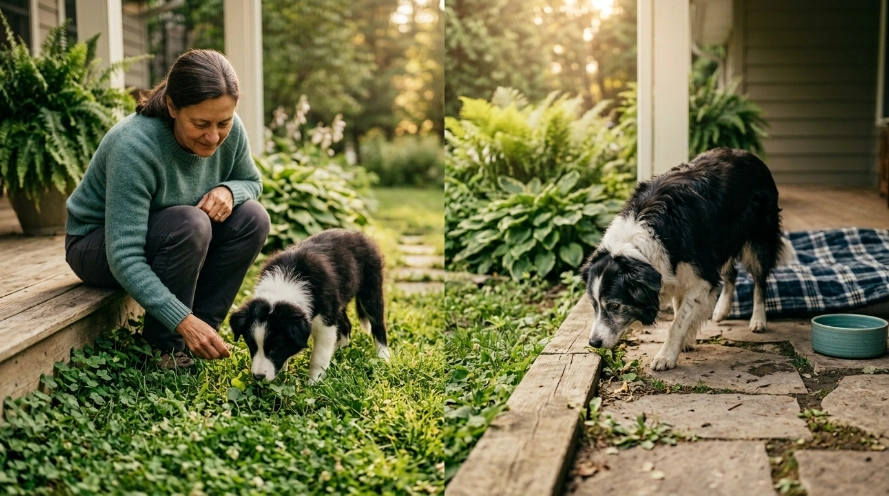
Yes. Puppies and senior dogs generally need more supervision and more frequent opportunities to come indoors.
Neither group should follow an outdoor routine designed around a fit adult Border Collie.
Border Collie puppies
Puppies explore with little awareness of danger. They may chew plants, squeeze through small gaps, eat objects, or overdo physical activity when excited.
Keep outdoor sessions short and purposeful, then allow plenty of sleep. Young puppies need extensive rest while their bodies and brains develop.
- Supervise exploration closely.
- Use several short play and training sessions.
- Avoid repetitive high-impact exercise.
- Provide frequent toilet opportunities.
- Introduce weather conditions gradually.
Senior Border Collies
Older Borders may still love going outside, but endurance and temperature tolerance can change. Joint stiffness, vision changes, hearing changes, or medical conditions can also affect safety.
Gentle sniffing and familiar yard exploration often work well. Comfort matters more than keeping pace with a younger dog.
Vet note: Ask your veterinarian to help adjust exercise and outdoor routines for puppies, seniors, injured dogs, or dogs with ongoing medical conditions.
Frequently Asked Questions
Can a Border Collie live outside permanently?
A Border Collie may be physically capable of spending substantial time outdoors in suitable conditions, but permanent outdoor isolation is not an ideal routine for most companion dogs. Borders typically benefit from close interaction, training, mental work, predictable rest, and regular time with their family.
Can I leave my Border Collie in the backyard all day?
I would not use an all-day backyard stay as the normal arrangement. Long unsupervised periods can encourage barking, fence-running, digging, escape attempts, and boredom, while weather or environmental hazards may appear without anyone noticing.
Do Border Collies get cold outside?
Yes. Their double coat provides some protection, but Border Collies can still become uncomfortable in cold, wet, or windy conditions. Watch for shivering, lifting paws, slowing down, reluctance to move, or repeatedly seeking the door.
Do Border Collies overheat easily?
Any dog can overheat during hot or humid weather, especially when exercising hard. Provide shade and water, reduce intense activity, and move the dog indoors if panting becomes excessive or you notice weakness, vomiting, confusion, or other concerning symptoms.
Will a Border Collie exercise itself in a large yard?
Usually not in a useful, balanced way. Some dogs simply wait by the door, while others create repetitive activities such as fence-running, digging, or chasing movement, so walks, training, sniffing, games, and interaction remain important.
Can a Border Collie sleep outside during the day?
A healthy adult may choose to nap outside during mild weather when secure shade, water, and a comfortable resting area are available. I would still provide free or regular access indoors and avoid outdoor sleeping during extreme temperatures or severe weather.
How do I know if my Border Collie enjoys being outside?
Look for relaxed behavior such as sniffing, exploring, lying down, chewing an appropriate item, or calmly watching the environment. Constant pacing, barking, escape attempts, frantic fence-running, or repeatedly waiting at the door suggest the setup needs changing.
Bottom Line: Should Your Border Collie Stay Outside During the Day?
Yes, daytime outdoor access can be excellent for a Border Collie when it is safe, varied, and balanced with indoor rest. I think of the yard as another training and enrichment space rather than a place to park the dog.
Give your Border Collie secure boundaries, shade, fresh water, purposeful activity, regular check-ins, and plenty of human interaction. Then bring the dog inside when the weather, behavior, or situation says the outdoor session has gone on long enough.
Your goal is not to keep a Border Collie moving every minute. A good routine teaches the dog to enjoy working, exploring, and relaxing with equal confidence
