
What Does a Border Collie Coat Look Like?

Quick Answer
A Border Collie usually has a dense, weather-resistant double coat with a softer undercoat and a straighter or slightly wavy outer coat. The breed comes in both rough and smooth varieties, and the AKC’s Border Collie information recognizes both coat types rather than treating one as more correct.
What to look for
- Double coat: A dense undercoat sits beneath protective outer hairs.
- Rough variety: Medium-to-long hair creates feathering around the chest, legs, belly, and tail.
- Smooth variety: Shorter hair lies closer to the body and gives the dog a cleaner outline.
- Many colors: Black and white is famous, but red, merle, tricolor, sable, and other combinations occur.
- Natural texture: The coat should look functional rather than heavily sculpted or styled.
- Seasonal shedding: The undercoat can become much more noticeable when the dog sheds heavily.
Simple identification tip
- Part the hair gently near the shoulder or back. You can often see the softer, denser undercoat beneath the protective outer layer.
If you’ve only seen the classic fluffy black-and-white dog, the variety within this breed can be surprising. A Border Collie, often shortened to BC, may look quite sleek or noticeably feathered while still having a typical breed coat.
I’ve handled both lighter-coated working dogs and fuller-coated Border Collies. This guide shows exactly what I look for when identifying coat type, color, texture, shedding, and signs that deserve a closer look.
In This Guide
- What Are the Main Features of a Border Collie Coat?
- What Is the Difference Between Rough and Smooth Border Collie Coats?
- What Colors and Markings Can a Border Collie Have?
- Does a Border Collie’s Coat Change as It Grows?
- How Much Does a Border Collie Coat Shed?
- How Should a Healthy Border Collie Coat Be Groomed?
- When Can Coat Changes Signal a Problem?
- Frequently Asked Questions
- Final Takeaway
What Are the Main Features of a Border Collie Coat?
A typical Border Collie coat is a dense double coat designed to protect an active herding dog from changing outdoor conditions. The outer hair protects the softer undercoat underneath.
Definition: A Border Collie’s double coat is a two-layer hair covering made of protective outer hairs and a softer, denser undercoat that provides insulation.
The outer coat
The outer layer may look straight or slightly wavy. Its texture normally feels more substantial than the soft hair close to the skin.
On an active dog, this layer also collects the evidence of daily life. Grass seeds, dust, burrs, and dried mud tend to sit in or on these longer protective hairs.
- Texture: Usually firm enough to feel protective without feeling harsh or wiry.
- Shape: Straight to slightly wavy hair is common.
- Purpose: It helps shield the skin and softer undercoat from the environment.
The undercoat
The undercoat is shorter, softer, and packed closer to the skin. On some dogs, you barely notice it until you separate the outer hairs with your fingers.
I often check behind the shoulders because the layers can be easy to see there. During a heavy shed, loose undercoat may come away in soft clumps during brushing.
- Feel: Soft and noticeably finer than the outer coat.
- Density: Thick enough to create insulation without making every dog look fluffy.
- Seasonal change: The amount of loose undercoat becomes more obvious during shedding periods.
The PetMD Border Collie breed guide also describes the breed as having a double coat and notes that shorter-haired Border Collies are common.
What Is the Difference Between Rough and Smooth Border Collie Coats?
Border Collies have two recognized coat varieties: rough and smooth. The main difference is visible hair length and feathering, not whether the dog has a proper double coat.
What does a rough-coated Border Collie look like?
A rough-coated Border Collie usually has medium or longer hair that creates a fuller outline. The hair around the neck, chest, underside, legs, and tail may be especially noticeable.
This longer decorative hair is called feathering. It can make a rough-coated dog look much fluffier than a smooth-coated working dog.
- Chest: Often fuller, creating a noticeable ruff or mane-like effect.
- Front legs: Longer hair may trail behind the legs.
- Rear legs: Feathering can form fuller “pants” around the thighs.
- Tail: Usually appears bushier because of longer hair.
- Ears: Hair around the ears can look soft or slightly feathered.
A rough coat does not need to be extremely long. Some Border Collies sit between the dramatic showy look people imagine and a shorter working coat.
What does a smooth-coated Border Collie look like?
A smooth-coated Border Collie has shorter hair over most of the body. The coat usually lies closer to the dog’s frame, making its athletic build easier to see.
Smooth does not mean single-coated or hairless-looking. You should still expect a dense protective coat and seasonal loose hair.
- Body: Shorter hair creates a streamlined silhouette.
- Legs: Feathering is limited compared with the rough variety.
- Tail: It can look less plumed, though individual dogs vary.
- Texture: The outer hair may feel somewhat coarser because it is short and close-fitting.
| Feature | Rough Coat | Smooth Coat |
|---|---|---|
| Visible length | Medium to longer | Short |
| Feathering | Noticeable on chest, legs, underside, and tail | Limited or slight |
| Overall outline | Fuller and fluffier | Sleeker and more athletic-looking |
| Tangle risk | Higher around feathered areas | Generally lower |
| Main grooming focus | Preventing tangles and removing loose undercoat | Removing loose hair and checking skin |
Section Takeaway: A short-haired Border Collie can be just as typical as a fluffy one. Rough and smooth coats are normal variations of the same weather-resistant double-coat design.
What Colors and Markings Can a Border Collie Have?
Black and white may be the best-known Border Collie color, but it is far from the only possibility. Coat color alone is a poor way to decide whether a dog looks like a Border Collie.
As of 2026, the breed standard allows a broad range of colors, combinations, and markings. No single color is supposed to define the breed.
Common Border Collie colors and patterns
- Black and white: The familiar classic combination seen in many working and companion dogs.
- Tricolor: Often combines black, white, and tan points around areas such as the face or legs.
- Red and white: Red can range considerably in depth and appearance.
- Blue merle: A mottled pattern with darker patches over a lighter base.
- Red merle: A mottled reddish pattern that can vary greatly between dogs.
- Sable: Individual hairs may show different shades, producing a layered appearance.
- Mostly solid colors: Border Collies can carry much less white than people expect.
What do typical white markings look like?
White frequently appears on the face, muzzle, neck, chest, feet, legs, belly, or tail tip. Some dogs have a dramatic facial blaze, while others have only small white areas.
Ticking can also appear inside white sections. These little colored speckles may become more noticeable as the dog matures.
- Blaze: A white strip running through part of the face.
- Collar: White extending around some or all of the neck.
- Socks: White markings on the feet or lower legs.
- Chest marking: A white patch across part of the chest.
- Tail tip: White at the end of the tail is common but not required.
Don’t expect every Border Collie to match the black-and-white image seen in movies or farm photographs. Working lines in particular can show striking variation.
Does a Border Collie’s Coat Change as It Grows?
Yes. A Border Collie puppy can look softer, fuzzier, and less clearly rough or smooth than it will as an adult.
The mature coat develops gradually. Hair length, feathering, undercoat density, and the overall silhouette can become easier to judge as the puppy grows.
What a puppy coat usually feels like
Puppy hair often feels softer and less weather-resistant than a mature outer coat. The fluffy look can temporarily make a future smooth-coated dog appear longer-haired than expected.
- Young puppy: Soft texture and a rounded, fuzzy outline are common.
- Growing youngster: Adult guard hairs gradually become easier to notice.
- Maturing dog: Rough-coat feathering or the smoother outline becomes clearer.
- Adult: Seasonal undercoat changes become more obvious.
Color can also appear different as the coat develops. Ticking, shading, and longer feathering may make markings look more detailed than they did on a small puppy.
Can you predict coat type from a puppy?
You can often make an educated guess, especially when you know the parents. I still avoid promising an exact adult look from a very young puppy alone.
Look at hair behind the ears, along the neck, and around the rear legs. Developing wisps and feathering can offer useful clues, but genetics can still surprise you.
How Much Does a Border Collie Coat Shed?
Border Collies shed because both rough and smooth varieties have double coats. Loose hair may appear throughout the year, with heavier periods as the undercoat changes seasonally.
During a strong coat change, brushing can release surprising amounts of soft undercoat. That does not automatically mean something is wrong.
What normal shedding looks like
- Loose individual hairs: These can appear on clothing, furniture, or bedding.
- Soft undercoat: It may collect in the brush during heavier sheds.
- Seasonal increases: Coat turnover often becomes much more noticeable during seasonal changes.
- Even coverage: Normal shedding should not create unexplained bald patches.
Rough-coated dogs can seem like they shed more simply because each visible hair is longer. Smooth-coated Border Collies can still leave plenty of short hair behind.
The important distinction is between shedding and hair loss. Normal shedding replaces hair while maintaining overall coverage.
Why does a double coat matter?
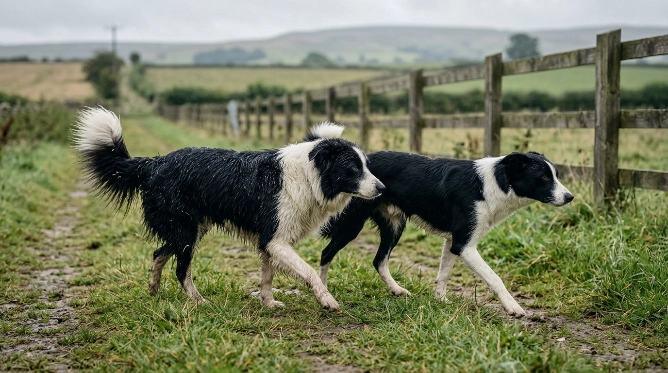
A double coat does more than create fluff. The Merck Veterinary Manual’s explanation of canine skin and hair describes hair as part of the dog’s protection and temperature-regulation system.
That is why I focus on removing dead hair rather than trying to make a Border Collie’s coat artificially thin. Healthy coat structure serves a practical purpose.
How Should a Healthy Border Collie Coat Be Groomed?
A healthy Border Collie coat should look clean, naturally textured, and free from tight mats. It does not need complicated styling to look good.
The best routine depends partly on coat length and the dog’s lifestyle. A rough-coated farm dog that runs through wet grass needs different attention from a smooth-coated dog living mostly indoors.
A practical brushing routine
The ASPCA’s dog grooming guidance explains that brushing removes dirt and loose hair while helping distribute natural oils through the coat.
- Brush regularly: Work through the coat before tangles tighten into mats.
- Reach the undercoat: Don’t skim only across the longest outer hairs.
- Check friction areas: Pay attention behind the ears, under the legs, and around feathering.
- Inspect after outdoor trips: Remove burrs, seeds, twigs, and dried mud.
- Increase brushing during shedding: Loose undercoat is easier to manage before it spreads around the house.
For my own dogs, the quickest useful check is running my fingers through the feathering after outdoor exercise. I can usually find a small tangle long before it becomes a grooming problem.
What should a healthy coat feel like?
A healthy coat can vary naturally in softness, length, and shine. What matters more is whether it stays reasonably clean, comfortable, evenly covered, and free from persistent irritation.
VCA’s coat-care guidance also emphasizes regular grooming and checking the skin and coat for tangles, debris, parasites, and unusual changes.
- Skin underneath: Should not be persistently red, greasy, crusted, or sore.
- Hair coverage: Should remain generally even outside normal shedding.
- Smell: A normal dog smell is different from a persistent strong or unusual odor.
- Comfort: The dog should not constantly scratch, chew, or lick the same area.
When Can Coat Changes Signal a Problem?
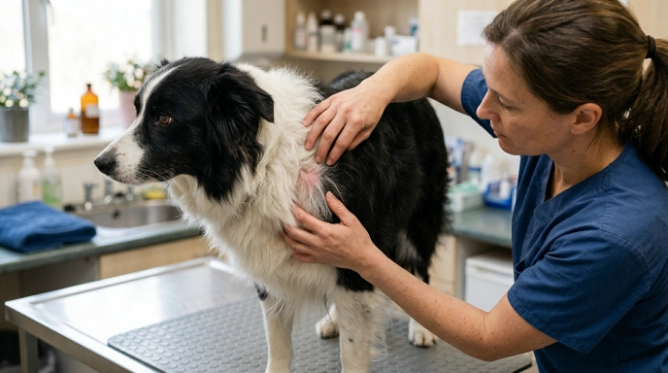
Not every dull patch or shed hair is a health problem. Sudden bald areas, persistent itching, inflamed skin, or major texture changes deserve more attention.
Coat appearance can change for many reasons, so looking at the skin underneath is important. Avoid trying to diagnose the cause from hair appearance alone.
Changes worth discussing with a veterinarian
- Patchy hair loss: Especially when the skin underneath looks irritated.
- Constant scratching: Repeated itching, chewing, or licking is not normal grooming.
- Red or sore skin: Inflammation can occur beneath apparently normal outer hair.
- Strong persistent odor: An unusual smell may accompany a skin or coat problem.
- Greasy or flaky areas: Persistent changes deserve investigation rather than repeated cosmetic washing.
- Sudden coat deterioration: A major unexplained change should be assessed in context with the dog’s overall health.
The general Border Collie health guidance from PetMD recommends veterinary attention when excessive scratching or licking raises concerns about skin health.
Vet note: Persistent hair loss, sores, itching, odor, skin inflammation, or sudden coat changes should be evaluated by your own veterinarian. A coat description cannot identify the underlying cause.
Frequently Asked Questions
Do all Border Collies have long fluffy coats?
No. Border Collies can have rough or smooth coats. Rough-coated dogs usually have more visible feathering and a fuller outline, while smooth-coated dogs have shorter hair that lies closer to the body. Both varieties still have the dense double-coat structure associated with the breed.
Are all Border Collies black and white?
No. Black and white is iconic, but Border Collies occur in many colors and patterns. Red, tricolor, sable, blue merle, red merle, and other combinations can occur. A dog’s color alone cannot tell you whether it is a typical or purebred Border Collie.
Does a smooth-coated Border Collie have an undercoat?
Yes. “Smooth” describes the shorter overall coat rather than the absence of an undercoat. Smooth Border Collies still have a dense double coat, although the short outer hair makes the dog’s body outline more visible and usually produces less obvious feathering.
Why is my Border Collie’s coat suddenly fluffy?
A seasonal undercoat change can make the coat look fuller, especially before loose hair is brushed out. Moisture can also make longer coats puffier. If the change comes with itching, bald areas, inflamed skin, odor, or discomfort, contact your veterinarian.
Which Border Collie coat type is easier to groom?
Smooth coats generally have fewer long feathered areas that can tangle, so routine brushing may be simpler. Rough coats need more attention around the ears, chest, legs, belly, and tail. Both varieties still shed and benefit from regular skin and coat checks.
How can I tell if my Border Collie has a double coat?
Gently separate the hair around the shoulder, back, or side. You should usually see softer, shorter, denser hair close to the skin beneath the more protective outer hairs. During seasonal shedding, this undercoat may loosen and come away easily during brushing.
Can coat appearance prove that a Border Collie is purebred?
No. Coat type, markings, color, and texture can support a visual identification, but appearance cannot prove ancestry. Mixed-breed dogs can inherit remarkably Border Collie-like coats, while registered Border Collies can differ greatly in hair length, markings, and overall appearance.
Final Takeaway
A Border Collie coat is best recognized by its functional double-layer structure, not by one color or one level of fluffiness. Rough dogs have more length and feathering, while smooth dogs show the same athletic breed in a shorter coat.
Look beyond the famous black-and-white pattern. Texture, undercoat, feathering, seasonal shedding, and overall coat health tell you much more about what you’re seeing.
If you live with a Border Collie, make grooming part of your regular hands-on health check. A few minutes spent feeling through the coat can reveal loose undercoat, burrs, tangles, skin irritation, or other changes before they become harder to manage.
