
Border Collie Picky Eater: Why It Happens and What to Do About It

A Border Collie that turns away from a full bowl can leave owners second-guessing everything: the food, the schedule, even whether the dog is being “stubborn.” In practice, picky eating usually falls into one of three buckets: the dog is not hungry, the food setup is working against you, or something medical is reducing appetite.
Border Collies also bring a few breed traits into the picture. They are typically high-drive, intelligent, and very aware of routine. That does not mean every Border Collie is fussy, but it does mean some dogs notice changes quickly and may react to stress, boredom, or inconsistent feeding habits more strongly than owners expect. Purina describes the breed as affectionate, smart, and energetic, which is useful context when you are trying to figure out whether mealtime behavior is normal or a warning sign. Purina’s Border Collie breed profile

Why a Border Collie May Seem Like a Picky Eater
A dog that eats enthusiastically one week and ignores meals the next is not always “picky” in the behavioral sense. Sometimes the dog is simply overfed, getting too many extras, or feeling a little off. But Border Collies can also be more reactive to the feeding environment than a lower-strung dog.
Sensitivity, routine awareness, and mealtime pressure
Many Border Collies do best when life is predictable. If breakfast time shifts, the bowl changes location, or a family member starts hovering and coaxing, some dogs stop eating. That does not prove anxiety, but it does suggest the dog is noticing the situation.
Pressure can backfire. A dog that gets repeated encouragement, hand-feeding, or a better treat after refusing dinner learns that waiting can pay off. That is how a temporary appetite wobble turns into a habit.
Activity level can change appetite
A Border Collie with a full day of exercise usually has a different appetite from one that spent the day resting. However, appetite and activity do not always move together cleanly. A dog can be active and still skip a meal because of heat, stress, travel, a minor stomach upset, or dental discomfort.
The practical point: activity level matters, but it is not a free pass to assume every skipped meal is normal.
Picky Eating vs. Appetite Loss: How to Tell the Difference
The most useful question is not “Is my dog picky?” but “Is my dog healthy enough to wait and watch, or do I need a vet visit?”
A quick decision rule
Use this simple split:
- Likely selective or routine-related: the dog skips a meal but acts normal, drinks normally, keeps weight stable, and eats later or eats other foods without issue.
- More concerning appetite loss: the dog is refusing food and also has vomiting, diarrhea, lethargy, drooling, obvious pain, weight loss, dehydration, or a sudden behavior change.
If the dog is eating less but still maintaining body condition and acting like itself, you can usually monitor closely for a short period and make feeding adjustments. If the dog is not eating at all, or not eating plus showing other symptoms, that is no longer a “picky eater” problem.
What “still acting normal” really means
A Border Collie can seem upbeat and still have a medical issue. So “normal” should include more than energy:
- normal drinking
- normal stool
- no vomiting
- no obvious mouth pain
- no abdominal sensitivity
- no weight loss over time
If those are all normal, feeding management is a reasonable first step. If not, skip the troubleshooting and call your veterinarian.
Common Causes of Food Refusal in Border Collies
Most picky-eating cases come down to a small set of causes. The trick is not guessing wildly; it is narrowing the field.
Too many treats, chews, and table scraps
This is one of the most common reasons a dog “isn’t hungry” at mealtime. Treats, training rewards, dental chews, and table scraps can easily take the edge off appetite. A dog that has already had a handful of training treats may simply be full enough to ignore dinner.
If your Border Collie is refusing meals but still happily taking snacks, that is a strong clue. The fix is not a more tempting dinner—it is cutting back the extras.
Overfeeding or oversized portions
Some dogs leave food because the portion is simply too large for their current needs. This is especially common after a drop in activity, a recent diet change, or a transition from puppy to adult feeding.
Package directions are a starting point, not a verdict. A Border Collie’s ideal amount depends on age, body condition, and activity level. A lean, highly active adult will usually need more than a neutered pet with moderate exercise.
Routine changes and stress
Household changes, travel, boarding, visitors, new pets, or a change in work schedule can all affect appetite. Border Collies often notice these shifts quickly. Some dogs eat normally once the household settles; others need a few days of consistency before appetite returns.
Food boredom or food aversion
Some owners report that their Border Collie seems to tire of the same food. That can happen, but it is worth separating genuine aversion from learned pickiness. If a dog learns that refusing kibble leads to wet food, toppers, or a brand switch, the dog may start holding out.
Dental pain, gastrointestinal upset, and parasites
If the dog wants to eat but seems hesitant, chews oddly, drops food, or avoids hard kibble, mouth pain is on the list. Dental disease can make eating uncomfortable even when the dog still acts bright.
GI upset is another common culprit. Mild nausea, gas, constipation, or a stomach bug can reduce appetite before more obvious symptoms appear. Parasites are less dramatic than vomiting or diarrhea, but they can still affect appetite and body condition.
How Much Should a Border Collie Eat Each Day?
There is no single correct amount for every Border Collie. A puppy, a working adult, and a senior pet do not need the same intake.
A better way to estimate food is to start with the calories the dog needs, then adjust based on body condition, age, neuter status, and activity level. Food labels can help you convert that calorie target into cups or grams, but the right amount depends on the food’s calorie density. As a rough illustration only, one practical guide for adult Border Collies with moderate exercise suggests about 200–260 g of dry food per day across two meals; the actual amount may be higher or lower depending on the diet and the dog. Vets Love Pets Border Collie feeding guide
Use body condition before chasing exact numbers
A dog’s body condition score matters more than the bowl being emptied. If your Border Collie is lean with a visible waist and good muscle, the current amount may be close. If the dog is gaining weight, leaving food, and getting lots of extras, the portion is probably too high.
A simple home check:
- ribs should be easy to feel but not sharply sticking out
- waist should be visible from above
- belly should tuck up slightly from the side
If your dog is overweight, “picky” may actually be “not hungry because intake is already too high.”
Puppies, adults, and seniors
Puppies need more frequent meals and more careful consistency because they can go downhill faster if intake drops. Adults usually do best on two meals a day. Seniors may need smaller, easier-to-eat meals, but not necessarily fewer calories if muscle is being lost.
Best Feeding Schedule for a Border Collie
For a picky eater, a feeding schedule usually works better than leaving food out all day. Scheduled meals make appetite changes easier to spot and reduce the habit of grazing.
Puppies usually need three or more smaller meals a day, while most adult Border Collies do best on two set meals.
Free-feeding vs. scheduled meals
| Feeding method | Pros | Cons | Best fit |
|---|---|---|---|
| Free-feeding | Convenient, may suit some low-interest grazers | Hard to track intake, encourages nibbling, makes pickiness harder to manage | Dogs that reliably self-regulate and stay lean |
| Scheduled meals | Clear appetite tracking, better routine, fewer opportunities for grazing | Requires consistency and may feel less convenient | Most picky eaters and dogs with treat dependence |
If your Border Collie is already selective, free-feeding usually makes the problem harder to solve. A dog that can snack whenever it wants never has much reason to show up hungry.
How long to leave food down
A practical window is 15 to 20 minutes. Put the food down, give the dog a calm chance to eat, then pick it up if the bowl is ignored. Offer the next meal at the next scheduled time.
That approach works because it avoids turning mealtime into a negotiation. It also helps you see whether the dog truly has a low appetite or is just waiting for something better.
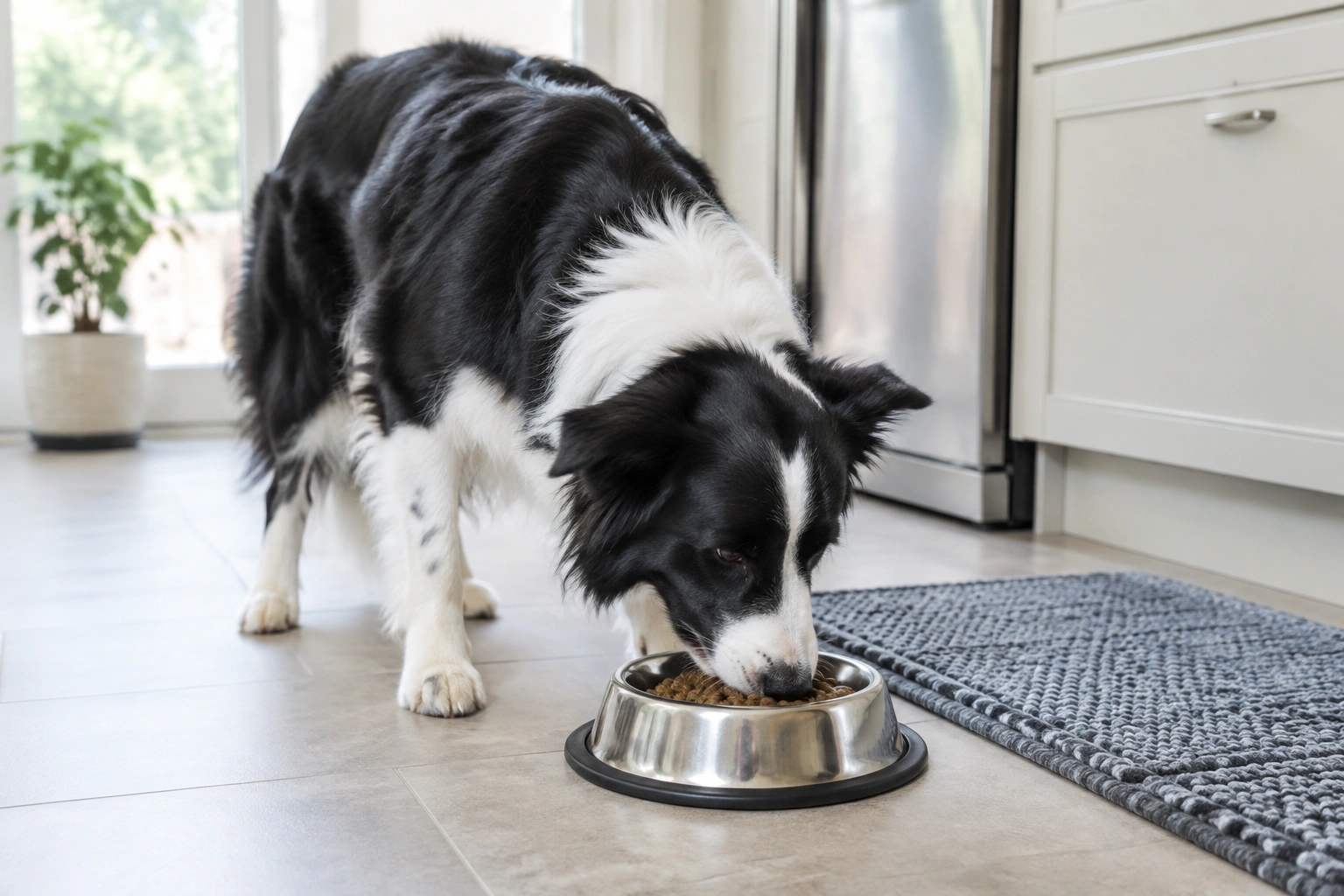
Dry Food vs. Wet Food: What Matters for a Picky Border Collie
Some Border Collies ignore dry food but eat wet food eagerly. That does not automatically mean wet food is “better”; it means texture, smell, and moisture are influencing the dog.
Dry food
Dry food is convenient, easy to portion, and simple to store. It also tends to work well for scheduled feeding because it is easy to measure precisely. The downside is that some picky dogs find the texture less appealing, especially if the food is stale or has been sitting in a warm bowl too long.
Wet food
Wet food usually smells stronger and can be more appealing to a reluctant eater. It may help a dog that is temporarily not interested in kibble. The trade-off is cost, storage, and mess. It can also be easy to overdo if you keep adding it as a fix every time the dog hesitates.
What to do with a texture issue
If the dog eats wet food but not dry food, don’t assume the answer is to keep swapping endlessly. First check whether the kibble is fresh, whether the bowl area is calm, and whether the dog is getting too many extras. If the dog still refuses, a planned food change may make sense.
Safe Ways to Encourage Eating Without Creating Worse Habits
The goal is to make food more acceptable without teaching the dog to wait for upgrades.
Keep the mealtime routine steady
Feed in the same place, at the same time, with minimal fuss. Skip the coaxing, spoon-feeding, and repeated “just one bite” negotiations. Those habits often reward refusal more than they solve it.
Reduce extras for a few days
If your dog has been getting a lot of treats, training rewards, or table scraps, pull those back temporarily. That often restores appetite faster than changing the main food.
Use toppers sparingly
A small topper can help restart eating in some dogs, but it should be a short-term tool, not a permanent crutch. If the dog will only eat when the topper is present, you may be building a new dependency.
Think of toppers as a bridge, not a destination.
When to Switch Foods and How to Transition Safely
Changing foods makes sense when the current diet is stale, poorly tolerated, or clearly not working. It is less useful when the real problem is overfeeding or too many extras.
When a switch is reasonable
Consider a gradual change if:
- the dog consistently refuses the current food but is otherwise well
- the food seems stale or the bag has been open too long
- the dog eats other formats much better
- your veterinarian recommends a different diet for digestive or dental reasons
How to transition
Move slowly over several days rather than swapping overnight. A gradual transition helps reduce digestive upset and gives you a clearer read on whether the new food actually helps.
A practical pattern is to blend the old and new food in increasing amounts over about a week. If the dog has a sensitive stomach, go slower.
Frequent switching is the mistake to avoid. If every refusal leads to a new bag, the dog may learn to hold out for a more exciting option.
How Exercise, Stress, and Enrichment Affect Appetite
Border Collies are active dogs, so daily exercise and mental work matter. A dog that has had no outlet may seem restless, distracted, or less settled at meals. On the other hand, a dog that has been overworked, overheated, or stressed may also eat poorly.
What helps
A calm walk, a short training session, or a bit of enrichment before mealtime can help some Border Collies settle enough to eat. The key is moderation. You are trying to create a relaxed appetite, not exhaust the dog into eating.
What does not replace a vet visit
Exercise and enrichment do not explain vomiting, diarrhea, pain, drooling, weight loss, or a dog that has stopped eating altogether. If those are present, treat the issue as medical first.
Red Flags That Mean It’s Time to Call the Vet
Call your veterinarian promptly if picky eating comes with any of the following:
- vomiting
- diarrhea
- lethargy or weakness
- drooling
- obvious mouth pain
- bloated or painful abdomen
- weight loss
- dehydration
- fever
- repeated refusal to eat over more than a day or two
Puppies and young dogs deserve faster attention if they stop eating, because they can decline more quickly than healthy adults.
Also pay attention to the pattern. A dog that is increasingly fussy over several weeks, even without dramatic symptoms, may still need a checkup if body condition is changing or the appetite trend is worsening.
Simple Troubleshooting Plan for a Picky Border Collie
Use this order instead of changing five things at once:
- Check for illness signs. If there is vomiting, diarrhea, pain, lethargy, or weight loss, call the vet.
- Look at extras. Cut back treats, chews, table scraps, and training rewards for a few days.
- Switch to a schedule. Feed two measured meals at set times and remove the bowl after 15 to 20 minutes.
- Track body condition. Make sure you are not overfeeding based on package directions alone.
- Assess the food itself. Check freshness, texture, and whether the dog eats other formats better.
- Consider a gradual food change only if the dog is otherwise well and the current food still seems like the problem.
- Book a veterinary exam if the issue persists, worsens, or comes with any red flags.
That sequence keeps you from rewarding refusal while still leaving room for a sensible diet change when it is truly needed.
When to Ask Your Veterinarian
If your Border Collie is eating less but otherwise bright, normal, and maintaining weight, you can usually watch closely while tightening up the feeding routine. But if the appetite change is sudden, prolonged, or paired with any other symptoms, don’t treat it as a training issue.
A Border Collie that refuses food because of dental pain, nausea, parasites, or another medical problem needs a different response than a dog that has simply learned to wait for better options. When in doubt, your veterinarian can help separate the two quickly.
For Border Collie owners, the most useful mindset is practical rather than dramatic: track the pattern, remove the easy feeding mistakes, and escalate when the signs point beyond simple fussiness. That approach solves a lot of cases without unnecessary food hopping.
FAQ
Is it normal for a Border Collie to be a picky eater?
It can be, but not always. Some Border Collies are selective, especially when routines change or they get too many extras. Ongoing appetite loss, though, is not something to shrug off.
Why is my Border Collie not eating but acting normal?
Common reasons include too many treats, overfeeding, stress, a routine change, or a mild food aversion. If the dog keeps acting normal and the issue is brief, monitor closely and tighten the feeding setup.
Should I leave food out all day?
Usually not for a picky eater. Scheduled meals make it easier to track appetite and reduce grazing, which often improves mealtime interest.
Can I use toppers every day?
You can, but it is easy to create dependence. If a topper is the only reason the dog eats, the dog may start refusing the plain meal.
How long can a Border Collie go without eating?
There is no universal safe window. A healthy adult that skips one meal may be fine, but refusal lasting more than a day or two, or refusal with other symptoms, should prompt a vet call. Puppies need faster attention.
Should I switch from dry food to wet food?
That can be reasonable if the dog clearly prefers wet food or has trouble with dry kibble. Make the change gradually and avoid using format changes as a reward for refusal.
