
Border Collie Food Allergy Symptoms: How to Spot the Signs and What to Do Next

Border Collies are active, alert dogs, so it’s easy to miss the early signs of a food allergy. A dog that seems “a little itchy,” licks its paws after walks, or has on-and-off soft stool may look like it’s dealing with something minor. In reality, those patterns can be the first clue that food is part of the problem.
The hard part is that food allergy symptoms in Border Collies rarely show up as just one obvious sign. More often, they affect the skin, ears, and digestive tract together. That overlap is why owners often chase the wrong fix first: a new shampoo, an ear cleaner, a different kibble, then another one. A better approach is to look for patterns and then work backward from there.
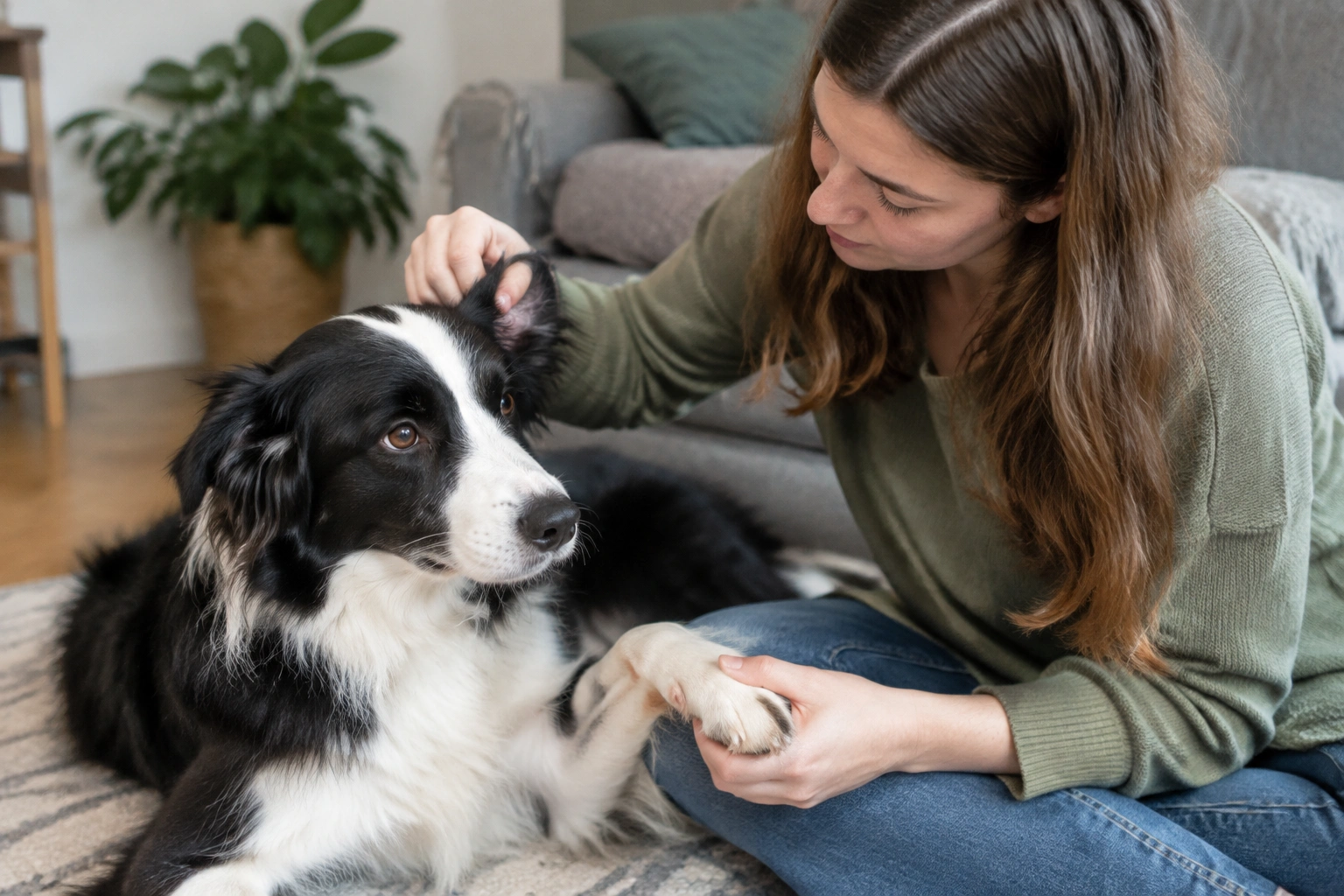
What Border Collie Food Allergy Symptoms Usually Look Like
Food allergies in dogs are an immune response to a food ingredient, most often a protein. In Border Collies, the symptoms usually show up as itchiness, ear trouble, digestive upset, or some combination of the three. The dog may not seem “sick” in the classic sense. Instead, it looks uncomfortable.
A Border Collie with a possible food allergy may:
- scratch or lick more than usual
- chew at the paws
- rub the face or body on furniture or carpet
- shake the head often
- develop recurring ear irritation
- have soft stool, diarrhea, vomiting, or extra gas
One useful clue is persistence. A one-off upset stomach after scavenging outdoors is not the same as a recurring pattern that returns week after week. Food allergy symptoms tend to linger or recur because the trigger keeps showing up in the diet.
Skin, Ear, and Digestive Signs to Watch For
The most practical way to spot a food allergy is to break symptoms into categories and ask where the discomfort seems to live.
Skin signs
The skin is often the first place owners notice trouble. Border Collies with food allergies may have:
- itching that doesn’t fully settle
- red or irritated skin
- paw licking or chewing
- face rubbing
- rashes or hot spots
- coat thinning from repeated scratching or licking
The paws, face, ears, abdomen, and rear end are common trouble spots in dogs with food allergies. That matters because a dog that keeps chewing its feet after meals, or wakes up to scratch at night, is giving you a useful pattern to investigate.
Ear signs
Ear problems are easy to dismiss as a separate issue, but they can be part of a food allergy picture. Watch for:
- repeated ear infections
- head shaking
- redness inside the ear
- odor
- discharge
- frequent scratching at the ears
AKC notes that ear infections occur in about 50% of dogs with food allergies and can sometimes be the only symptom. That makes recurring ear trouble worth taking seriously, especially if the infections keep returning after treatment.
Digestive signs
Food allergy symptoms are not limited to the skin. Some Border Collies show the issue mainly in the gut:
- vomiting
- diarrhea
- soft stool
- gas
- nausea
- changes in appetite
AKC reports that about 30% of dogs with food allergies may have diarrhea or vomiting, especially puppies. In a dog that otherwise looks bright and active, those symptoms can still point to diet as the underlying issue.
How to Tell a Food Allergy from Food Intolerance, Flea Allergy, or Environmental Allergies
This is where many owners get stuck. Several conditions can look similar, but they behave differently enough to narrow the field.
| Condition | Typical pattern | Common clues | What it means in practice |
|---|---|---|---|
| Food allergy | Itching, ear issues, skin irritation, vomiting, diarrhea | Symptoms may be chronic or recurring; can involve skin and gut | Needs a structured diet trial to confirm |
| Food intolerance | Digestive upset more than skin signs | Gas, loose stool, vomiting after certain foods | Often not immune-based; may improve with diet adjustment |
| Environmental allergy | Seasonal or exposure-linked itching | Worse at certain times of year or after outdoor exposure | Often affects skin and ears, but not usually tied to one food |
| Flea allergy dermatitis | Intense itch, often around the rear end and base of tail | Flea exposure may be minimal but still enough to trigger a reaction | Flea control has to be addressed before food is blamed |
A food allergy is more likely when the symptoms are ongoing and don’t clearly match season, grooming products, or a single flea exposure. Environmental allergies often rise and fall with pollen or grass seasons. Flea allergy dermatitis usually has a strong itch pattern, especially near the tail base, and can flare even if you only see a few fleas.
Food intolerance is different from a true food allergy. Intolerance usually means the dog’s digestive system doesn’t handle an ingredient well. That can still be miserable, but it is not the same immune reaction. A dog with intolerance may have loose stool or gas without the classic ear or skin signs.
Are Border Collies More Prone to Food Allergies?
Border Collies are not widely known as one of the most food-allergy-prone breeds, and it would be a mistake to assume that every itchy Border Collie has a diet problem. What matters more is the individual dog’s pattern than the breed label.
That said, Border Collies are active dogs, which can make symptoms easier to misread. A dog that scratches after a run, licks paws after muddy walks, or seems restless because it’s under-stimulated can look uncomfortable for reasons that have nothing to do with food. That is why the pattern matters more than a single symptom.
In practice, breed-specific context means this: don’t dismiss food as a possible trigger, but don’t jump to it either. Use the symptom pattern, timing, and veterinary guidance to sort it out.
Common Food Triggers in Dogs and Hidden Ingredients to Check
The most common food allergens in dogs include beef, chicken, dairy, wheat, soy, egg, and corn. In many cases, the problem is a protein source rather than the carbohydrate. That is why a dog can react to one chicken-based food but do fine on a different formula that uses a different protein.
Hidden ingredients are where owners get tripped up. A dog may appear to be on a “new” food, but still be getting the same trigger through:
- treats
- training rewards
- chews
- flavored toothpaste
- pill pockets
- supplements
- flavored medications
- table scraps
- broth or toppers
Reading the ingredient panel is not enough if the dog is also getting extras. For a Border Collie with suspected food allergies, the whole diet has to be treated as the diet: main food, snacks, supplements, and anything used to hide medication.
Commercial limited-ingredient foods can help reduce the number of variables, but they are not the same thing as a true diagnostic diet. A bag that says “limited ingredient” may still contain an ingredient your dog has already been exposed to, which means it can’t always tell you what the trigger is.
What to Do Before You Switch Foods
If symptoms are mild and stable, resist the urge to switch foods repeatedly. Random changes make it harder to know what actually helped or worsened the problem.
A better short-term plan is to gather clean information:
- Write down every food the dog eats for two weeks.
- Include treats, chews, toppers, supplements, and flavored meds.
- Note when symptoms happen and what they look like.
- Take photos of ears, skin, stool, or rashes if you can.
- Record whether symptoms are constant, seasonal, or tied to certain meals.
This kind of log is useful because veterinary diagnosis depends on patterns, not guesswork. If the dog has already been through several food switches, the history becomes harder to interpret, but it is still worth documenting what happened.

Here’s a simple decision rule: if you can clearly connect symptoms to a single new treat, chew, or food, that is useful information. If you can’t, and the problem keeps recurring, don’t keep experimenting blindly. That is the point where a structured veterinary plan becomes more efficient than another guess.
How Vets Diagnose Food Allergies with an Elimination Diet
A veterinarian may recommend a food elimination diet if food allergy is suspected. This is the standard way to find out whether food is involved and, if so, which ingredients are most likely to be responsible.
The logic is straightforward: feed a diet that avoids the suspected triggers, then watch whether symptoms improve. If they do, the diet is challenged later to see whether the symptoms return. That is much more reliable than trying to infer the answer from symptoms alone.
Two common diet approaches are used:
Novel-protein diets
These use a protein source the dog has not eaten before, such as duck, rabbit, venison, or another less familiar ingredient. The advantage is simplicity: if the dog has never been exposed to that protein, it may be less likely to trigger a reaction.
The trade-off is that “novel” is only novel if the dog truly hasn’t had it before. Many dogs have eaten more ingredients than their owners realize through treats, flavored chews, or mixed foods.
Hydrolyzed-protein diets
Hydrolyzed diets break proteins into smaller pieces so the immune system is less likely to recognize them as allergens. These diets are often more controlled for diagnosis because they reduce the chance of accidental exposure to a familiar trigger.
The trade-off is practicality. Some dogs need time to accept the taste, and these diets are usually best used under veterinary direction rather than as a casual home trial.
A key point: an elimination diet only works if it is strict. If the dog gets even small amounts of the old food, flavored treats, or a chew with the wrong protein, the trial can become useless.
For diet-label guidance and feeding context, it can also help to review AAFCO’s overview of pet food labeling, especially if you are comparing ingredient lists.
How Long It Takes to See Improvement After a Diet Change
This is where many good plans fail. Owners often expect a dramatic change in a few days, but food allergy symptoms can take weeks to settle.
Some dogs improve gradually. Others show a clearer shift only after the diet has been followed consistently for a longer stretch. That means a short trial is not enough to rule food in or out.
A practical way to think about it:
- Early improvement may show up as less paw licking or fewer soft stools.
- Later improvement may be seen in calmer skin, fewer ear issues, and better overall comfort.
- No improvement after a properly strict trial suggests the trigger may be something else, or the diet trial may have been contaminated by extras.
The important part is consistency. If the dog seems a little better but not fully normal, don’t assume the diet failed. Partial improvement can still be a clue that food is involved.
When to Ask Your Veterinarian
Book a veterinary visit if your Border Collie has:
- recurring ear infections
- persistent itching
- open sores or hot spots
- repeated vomiting or diarrhea
- blood in the stool
- weight loss
- reduced appetite
- symptoms that keep returning despite treatment
Seek urgent care if you see:
- facial swelling
- trouble breathing
- collapse
- marked lethargy
- repeated vomiting
- severe diarrhea
- dehydration
Severe reactions are not the norm, but they do happen. Swelling and breathing difficulty should be treated as an emergency, not a wait-and-see situation.
A vet visit is also the right move if the dog is already losing weight, seems medically fragile, or has a long history of mixed symptoms. In those cases, starting a diet trial without supervision can create more problems than it solves.
Practical Bottom Line for Border Collie Owners
If your Border Collie has itchy skin, recurring ear infections, and digestive upset, food is worth investigating. If the symptoms are mild, keep a clean food log and avoid random diet changes. If the symptoms are persistent, worsening, or severe, get your veterinarian involved and ask whether an elimination diet makes sense.
The goal is not to guess the answer from one symptom. It’s to build a clean enough picture that the real trigger can be identified without wasting months on trial and error.
Frequently Asked Questions
Can food allergies cause watery eyes or coughing in Border Collies?
They can, but those signs are less specific than itching, ear problems, or digestive upset. Watery eyes or coughing should also make you consider environmental irritants or another medical issue.
Do food allergies always cause diarrhea?
No. Some dogs only show skin or ear symptoms. Others show digestive signs, and some show both.
Should I switch to a grain-free food right away?
Not automatically. Grain-free does not equal allergy-friendly, and many food allergies are linked to protein sources rather than grains.
Is a limited-ingredient diet enough to diagnose a food allergy?
Not always. It may help reduce variables, but a true elimination diet is more controlled and easier to interpret.
What should I bring to the vet?
Bring a full food list, including treats, chews, supplements, and flavored medications, plus photos or notes about the symptoms and when they happen.
