
How to Stop a Dog from Eating Poop: Safe Home Remedies That Actually Help

Coprophagia, or poop eating, is one of those habits that feels disgusting to humans and strangely persistent in some dogs. If you want the practical answer fast: the most effective home approach is usually not a supplement alone. It is access control, fast cleanup, and training the dog to disengage before the poop becomes a habit.
What to do first
- Book a vet check if the behavior is new, worsening, or persistent even though your dog otherwise seems fine.
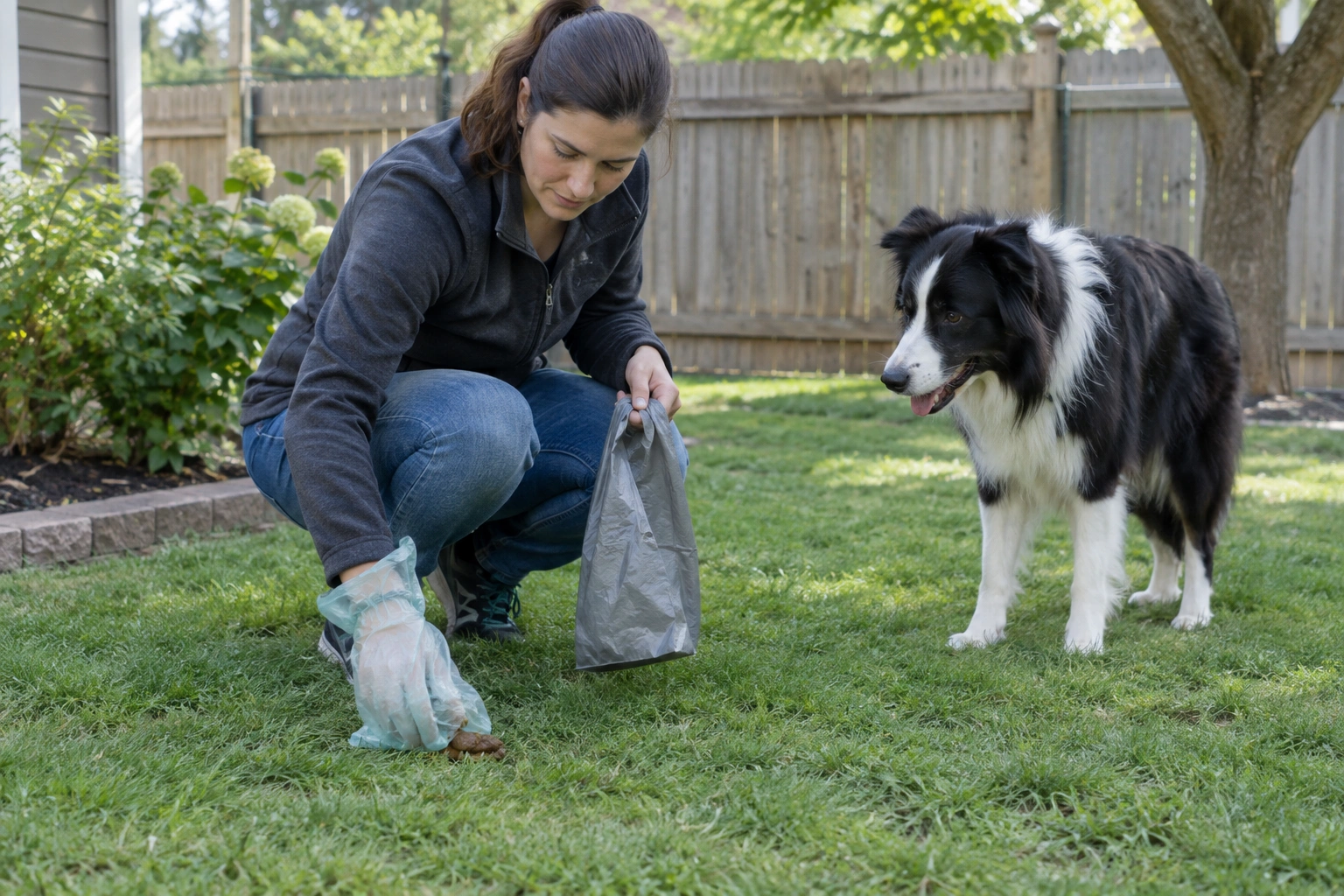
- Clean up and block access immediately in the yard, litter box area, rabbit area, or shared spaces.
- Supervise closely during potty breaks, walks, and time in the yard until the habit is under control.
- Start leave-it training away from real poop, then practice in easier real-world situations.
For Border Collies especially, this behavior can be harder to break because many are quick to notice patterns and quick to repeat what works. If eating poop has ever worked once — fresh stool found in the yard, cat litter box raided, rabbit droppings grabbed on a walk — the behavior can become self-rewarding. That means your plan has to remove the reward, not just hope a food additive changes the outcome.
A useful decision rule:
– If the behavior is new, intense, or paired with other symptoms, see a vet first.
– If it’s a long-running habit in an otherwise healthy dog, focus on management and training immediately.
– If the dog keeps getting access, no home remedy will outwork the environment.
Why Dogs Eat Poop in the First Place
There usually isn’t one single cause. In practice, it tends to come from a mix of access, reinforcement, and the dog’s emotional state.
Common behavioral reasons
- Scavenging instinct: Some dogs are simply opportunistic. If it smells interesting, they investigate with their mouths.
- Habit: Once the dog has done it a few times, the pattern can become automatic.
- Attention payoff: If every incident creates a dramatic reaction, some dogs learn that poop eating gets a big response.
- Boredom or under-stimulation: High-energy dogs may create their own “job” if they are not getting enough structured work.
- Anxiety or conflict: A stressed dog may do odd, repetitive things, especially if the behavior is hard to interrupt.
- Reinforcement by success: Fresh stool is easy to grab. If the dog gets there before you do, the habit can strengthen fast.
Border Collies may be especially likely to repeat behaviors that are fast, rewarding, and easy to pattern. That doesn’t mean the dog is “stubborn.” It usually means the dog has learned the sequence very well: see poop, move to poop, eat poop, and maybe get away with it.
When Poop Eating Points to a Medical Problem
Not every dog with coprophagia is sick, but some are. A vet check becomes more important when the behavior is sudden, more intense than usual, or paired with other changes.
Watch for:
– vomiting
– diarrhea or loose stool
– weight loss
– increased appetite
– lethargy
– a swollen or uncomfortable belly
– changes in thirst
– a sudden change in stool quality
Medical causes can include digestive upset, parasites, malabsorption, enzyme-related issues, or other problems that leave the dog hungry or nutritionally off balance. If your dog starts eating poop after a diet change, after a stomach bug, or alongside poor stool quality, don’t assume it is just a bad habit.
For general guidance on why dogs do this and why a vet conversation matters when the pattern is persistent, the American Kennel Club’s explanation of coprophagia is a helpful starting point.
A Quick Comparison: Medical Cause vs. Behavioral Habit
| Clue | More likely medical | More likely behavioral |
|---|---|---|
| Onset | Sudden | Gradual or long-standing |
| Other signs | Vomiting, diarrhea, weight loss, lethargy | Dog otherwise seems normal |
| Stool quality | Loose, frequent, unusual | Normal-looking stool |
| Pattern | New across settings | Happens in specific places or situations |
| Response to management | Little change | Improves when access is blocked |
If you’re unsure, treat it like a medical question first. It is safer to rule out illness than to spend weeks trying home fixes for a dog that actually needs veterinary care.
What Home Remedies Are Safe and Worth Trying
This is where many owners get misled. A lot of “home remedies” are really just deterrent ideas with mixed results. They may help some dogs, but they are rarely the whole answer.
Most useful: management first
Before trying add-ins, focus on the basics:
– pick up stool immediately
– block access to litter boxes, rabbit areas, and shared yards
– supervise during high-risk times
– train leave-it and recall away from poop
May help a little
These are the options that may be worth a cautious trial for some dogs:
– Deterrent supplements or powders: Some commercial products are designed to make stool less appealing. Results are inconsistent, but they may help a little in some homes.
– Apple cider vinegar: Sometimes suggested, but evidence is weak and results vary. If used at all, treat it as optional and uncertain, not essential.
– Pumpkin, pineapple, and other food add-ins: These are common internet suggestions. They are low-risk for some dogs, but they are not dependable fixes.
Low-confidence
These are popular, but the support is weak:
– Hot spices
– Strong-tasting toppers
– Random “taste-changing” add-ins without a clear plan
They may distract the dog or change stool smell a bit, but they are not reliable enough to count on.
Not recommended as a primary fix
- Relying on supplements alone
- Using harsh or irritating substances on stool
- Assuming a deterrent will work if the dog still has easy access
A short warning: many popular add-ins are only weakly supported, and some are basically guesswork. If the dog can still reach the poop, the behavior often continues even if the stool is less appealing.
Diet and Feeding Changes That May Reduce Coprophagia
Diet is worth reviewing, but keep your expectations realistic.
When diet changes are worth trying
Diet changes make the most sense when:
– stool is soft, bulky, frequent, or otherwise abnormal
– the dog seems unusually hungry
– the behavior started after a diet change or GI upset
– your vet thinks digestion or absorption may be part of the issue
When diet changes are less likely to help
If your dog has:
– normal stool
– a normal appetite
– no other symptoms
– a long-standing poop-eating habit driven by access
then a diet change alone is unlikely to solve the problem.
Check stool quality first
Loose, bulky, or frequent stool is easier for a dog to eat and may make the habit more rewarding. If your dog’s stools are consistently poor, that is a clue to look at the diet with your vet rather than just adding deterrents.
Feed on a predictable schedule
Dogs that are always grazing or going too long between meals can become more opportunistic around waste. A consistent feeding routine can reduce scavenging pressure.
Make diet changes gradually
If you do switch foods, change slowly. Sudden changes can upset the gut and make stool problems worse, which is the opposite of what you want.
Be cautious with “fix it” add-ins
If you already have a decent diet and normal stool, extra supplements may not add much. In that case, the better use of your energy is usually environmental control.
How to Stop Access: Cleanup and Environmental Management
This is the part that actually changes outcomes for many dogs.
The core rule
If the poop is accessible, the behavior will keep getting rehearsed.
In the yard
- Pick up stool immediately.
- Don’t leave the dog unsupervised in the yard if the habit is active.
- If your dog only does it when loose outside, the yard is not a training problem first — it is an access problem first.
On walks
- Keep the dog close enough that you can interrupt quickly.
- Watch for the “head drop and speed up” pattern. That is often the moment before the dog commits.
- Practice a leave-it cue with low-value distractions before expecting it to work around real poop.
In multi-dog homes
If one dog’s stool is the target, separate dogs during potty breaks or stagger access so the dog with the habit cannot immediately reach fresh stool. Feed on a schedule if needed, and supervise until each dog has finished and the area is clean.
In shared yards
Shared spaces need a simple routine:
– pick up waste as soon as it happens
– do a quick scan before releasing the dogs
– use leash control if you cannot fully clean the area first
– keep the dog on a shorter line during the highest-risk times
In multi-pet homes
Cat litter boxes are a major target because they are easy access and often left in quiet corners. Rabbit enclosures and other pet waste areas can create the same issue.
A few practical fixes:
– Put the litter box behind a gate or in a room the dog cannot enter.
– Use a covered box if the cat tolerates it.
– Clean litter boxes frequently.
– Keep rabbit cages and outdoor runs physically blocked from the dog.
– If needed, feed or confine pets on different schedules so the dog cannot patrol the area.
If you want a broader example of why hygiene and routine matter in dog spaces, our article on choosing between a professional and home bath for Border Collies shows how environment and routine often matter more than a single product.
Training and Interruption Strategies That Work Better Than Punishment
Punishment tends to create two problems: it can increase stress, and it can make the dog sneakier. That is the opposite of what you want.
A better approach:
1. Interrupt early. Use a calm “leave it” or recall cue before the dog reaches the poop.
2. Reward disengagement. The moment the dog turns away, pay well.
3. Practice away from real poop. Train the skill where the dog can succeed.
4. Rehearse the replacement behavior. Coming to you, checking in, or moving past the distraction should become the habit.
The key is timing. If you only react after the dog has already swallowed the stool, you are training too late. You need to catch the decision point, not the aftermath.
The ASPCA has general training and behavior resources that align with this kind of reward-based approach.
Using Supervision, Leash Control, and a Basket Muzzle Outdoors
Sometimes the fastest way to stop the habit is to make it impossible for the dog to rehearse it.
When these tools make sense
- The dog eats poop on every walk.
- The dog raids the litter box when unsupervised.
- The dog is not yet reliable with leave-it or recall.
- You need a temporary solution while training catches up.
Basket muzzle trade-off
A basket muzzle can be useful outdoors because it can block scavenging while still allowing the dog to pant and drink, if it is properly fitted and introduced gradually. But it is not a substitute for supervision, and it must be conditioned gradually so the dog is comfortable wearing it.
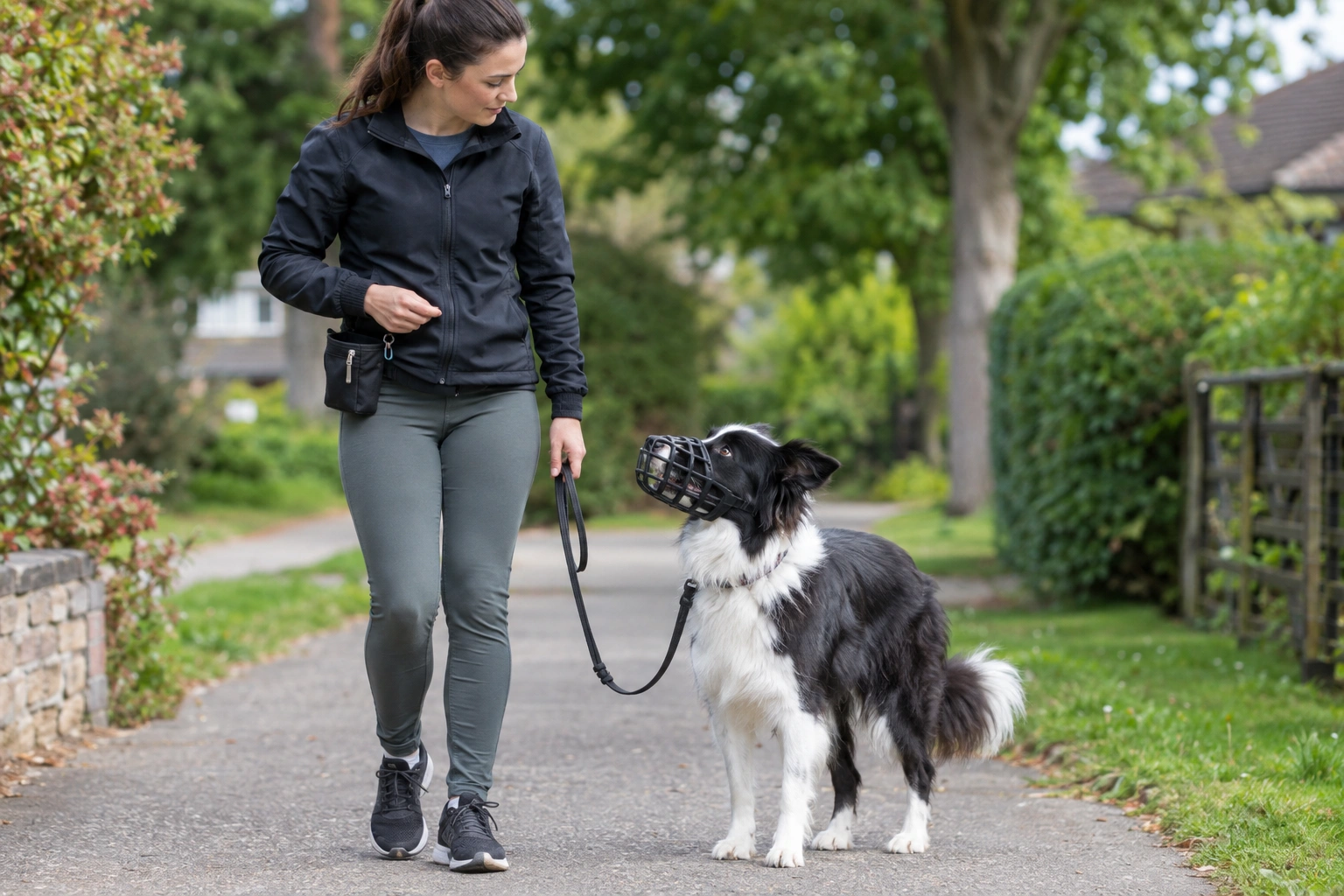
Never use a muzzle as a shortcut without proper fit and acclimation. A poorly introduced muzzle can create more stress, which can make the overall problem harder.
For general muzzle and safety guidance, VCA Hospitals is a solid veterinary reference point.
Puppy vs. Adult Dog: When It’s Normal and When It Isn’t
Puppies explore with their mouths. That includes unpleasant things. A young puppy grabbing stool once or twice is not automatically alarming.
What changes the picture:
– frequent repetition
– intense focus on poop
– behavior that continues well past the early puppy stage
– poop eating paired with other concerning signs
For a puppy, the goal is simple: remove access, supervise closely, and reward the puppy for moving away from waste. For an adult dog, especially one that has suddenly started doing it, I look harder at medical causes and reinforcement history.
Border Collie Considerations: High Drive, Scavenging, and Reinforcement Loops
Border Collies often need more than “more exercise.” They need structured work that uses their brain without feeding frantic, self-directed habits.
A Border Collie that is under-stimulated may become intensely interested in whatever is available, including waste. But a Border Collie that is over-aroused can also make poor choices fast. The fix is usually not endless running. It is:
– clear routines
– impulse-control games
– calm reinforcement for disengaging
– predictable access to enrichment
– fewer opportunities to self-reward
If your Collie keeps returning to poop after you interrupt it, that usually means the behavior has become a strong loop. Break the loop first. Then train the alternative.
What to Do If Your Dog Eats Cat Poop, Rabbit Poop, or Other Dogs’ Poop
Different poop sources create different management problems.
Cat poop
This is often the easiest to prevent and one of the hardest to ignore. The best fix is physical separation: gate the litter box, use a dog-proof location, and clean often. In a multi-pet home, the litter box should be placed where the dog cannot patrol it between cleanings.
Rabbit poop
Rabbit droppings are common on lawns and in outdoor runs. If your dog keeps targeting them, leash management and a basket muzzle outdoors may be the fastest short-term solution. For rabbit areas, block access physically and supervise any shared yard time.
Other dogs’ poop
This is usually a walk or yard issue. Tight leash work, faster cleanup, and a strong leave-it cue matter most here. In shared yards or multi-dog homes, separate dogs during potty breaks if one dog tends to race in and eat fresh stool.
The common thread is simple: if the poop is accessible, the behavior will keep getting rehearsed.
When to See a Veterinarian or Certified Trainer
See a veterinarian if:
– the behavior starts suddenly
– your dog has vomiting, diarrhea, weight loss, lethargy, or a big appetite change
– stool quality is poor
– the habit is intense or escalating
– the behavior is persistent even though your dog otherwise seems fine
See a certified trainer or behavior professional if:
– your dog keeps doing it despite cleanup and management
– you need help with leave-it, recall, or muzzle conditioning
– the dog seems anxious, frantic, or hard to interrupt
– the habit is now part of a larger scavenging pattern
A good trainer should help you build a prevention plan, not just tell you to “correct” the dog. For a behavior like this, prevention and repetition control are usually worth more than force.
FAQ
Is poop eating dangerous?
It can be. Besides the obvious hygiene issue, feces can carry pathogens or parasites. The bigger concern for most owners is that the habit can become very persistent.
Do home remedies really work?
Sometimes, but inconsistently. They are best used as a supporting tool, not the main fix.
Should I punish my dog for eating poop?
No. Punishment often makes the dog more anxious or more secretive and does not address access.
Why does my dog eat only cat poop?
Cat poop is often easy to access, highly rewarding, and hidden in quiet spots. That makes it a management problem as much as a training problem.
Can a puppy grow out of it?
Some puppies do. Others keep doing it if the behavior is repeatedly rewarded. Supervision and early prevention matter.
What if my dog only does it in the yard?
That usually means the yard setup is the weak point. Cleanup and supervision should come before supplements.
Should I try a deterrent supplement?
You can, but think of it as a may-help-a-little option, not a cure. If the dog still has access, the supplement may not change much.
What if my Border Collie is obsessed with it?
Then I would treat it as a pattern that needs structured interruption, better management, and possibly professional help if it persists.
For many dogs, the fastest fix is not a special ingredient. It is a cleaner environment, tighter supervision, and a training plan that makes the right choice easy enough to repeat.
