
Why Is My Dog Coughing and Gagging? A Practical Guide to the Causes, Risks, and Next Steps

If your dog is coughing and gagging, the first job is not to guess the exact disease. It is to decide whether this looks like mild throat irritation, a contagious respiratory problem, or something that needs urgent care.
A useful rule: if your dog is breathing comfortably, has normal gum color, is bright, and can swallow, you may have a short window to monitor. If there is trouble breathing, blue or pale gums, collapse, severe weakness, repeated unproductive gagging, or inability to swallow, treat it as urgent and call an emergency vet.
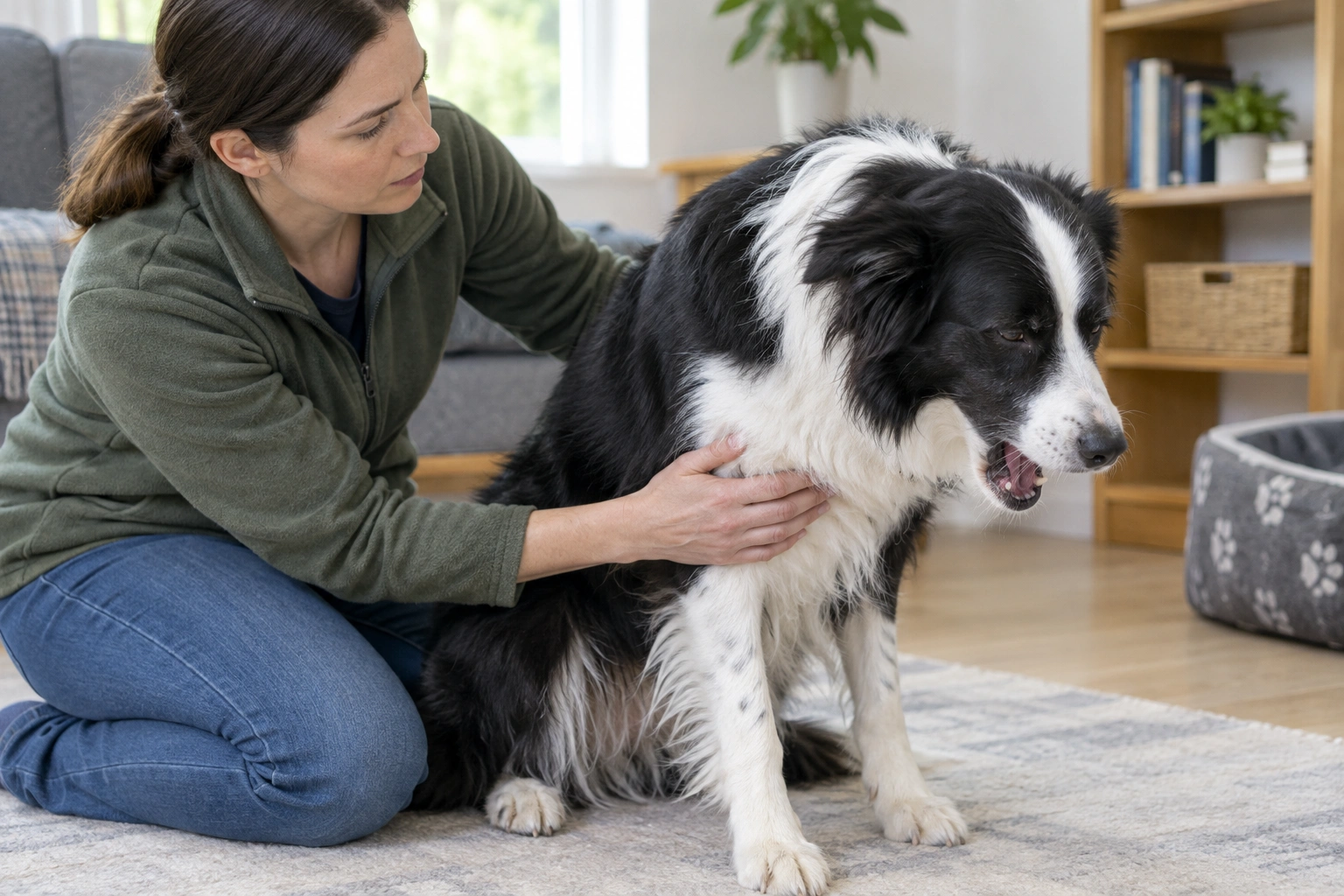
In plain language: coughing is usually a forceful hack from the chest, gagging/retching looks like throat or stomach heaving, and vomiting usually involves abdominal effort and brings up food, fluid, or foam. If you are unsure which one you are seeing, a short video can help your vet sort it out quickly.
Quick triage: mild irritation, same-day vet visit, or emergency?
Use the pattern, not just the sound.
Monitor at home briefly only if:
- Your dog is breathing normally
- Gums are pink
- Swallowing is normal
- Energy is mostly normal
- Appetite and drinking are still okay
- The cough/gagging is mild, occasional, and not getting worse
A simple home check: when your dog is resting or asleep, count the breaths for 30 seconds and multiply by two to get the resting respiratory rate. If it seems clearly higher than usual for your dog, or the breathing looks effortful, do not keep watching at home.
Call your vet today if:
- The cough is persistent
- The gagging keeps coming back
- Your dog seems more tired than usual
- There is nasal discharge
- The cough is worse at night, after exercise, or after pulling on a collar
- Your dog is still functional, but the symptom pattern is not settling
That is the zone where kennel cough, tracheal irritation, heart disease, or a deeper airway issue starts to move higher on the list.
Go to an emergency vet now if:
- Breathing looks hard or fast
- Gums are blue, gray, or very pale
- Your dog collapses
- There is blood
- Gagging is repeated and unproductive
- Your dog cannot swallow
- There is obvious distress or panic
Those signs are not “wait and see” territory. If your dog is actively choking, cannot breathe, or cannot swallow, seek emergency care immediately and do not try to force food, water, or medication.
Coughing, gagging, retching, throat-clearing, or vomiting: what’s actually happening?
Owners often use these words interchangeably, but they point to different problems.
| Symptom | What it usually looks like | What it may suggest |
|---|---|---|
| Coughing | A forceful expulsion of air, often with a dry hack or honk | Kennel cough, tracheal irritation, heart/lung disease |
| Gagging | A retching motion, often as if trying to bring something up | Throat irritation, laryngeal problems, foreign material, kennel cough |
| Retching | Repeated heaving without producing vomit | Nausea, throat irritation, obstruction, more serious illness |
| Throat-clearing | Short, repeated sounds as if trying to dislodge mucus | Upper airway irritation, kennel cough, allergies |
| Vomiting | Abdominal effort, then food, fluid, or foam comes up | Stomach upset, reflux, systemic illness |
A dog can cough hard enough that it briefly gags afterward. That does not mean it is vomiting. The distinction matters because a dog that is actually trying to vomit, or one that cannot swallow normally, needs a different level of concern.
One practical clue: coughing tends to be more chest-driven, while gagging and retching look closer to throat or stomach effort. If you are unsure, record a short video. That is often more useful to a vet than a verbal description.
What causes a dog to cough and gag at the same time?
Several conditions can create this symptom pair. The challenge is that some are mild and some are not.
Kennel cough and other respiratory infections
Kennel cough is a common cause of a harsh, goose-like cough that may end in a gag. It is also contagious and may spread through close contact and shared environments, including settings where dogs spend time together. If your dog has been around daycare, boarding, grooming, training classes, or dog parks, this moves up the list.
A dog may otherwise seem fairly normal at first. That is why people miss it. But if the cough persists, worsens, or comes with lethargy or nasal discharge, it deserves veterinary attention.
Throat or tracheal irritation
A dog that has been pulling hard on a collar, inhaling dust, or exposed to smoke or strong cleaners may cough and gag from irritation alone. Older dogs can be especially sensitive to smoke, household cleaners, dust, and perfumes.
This is one reason a harness is often kinder than a collar for dogs that already have airway sensitivity. It does not solve the cause, but it removes one common trigger.
Foreign body or something stuck in the throat
Repeated gagging, pawing at the mouth, and trouble swallowing raise concern that something is lodged in the throat or upper airway. This is more urgent if your dog cannot drink normally or seems panicked.
A dog with a foreign body may cough, gag, or retch without relief. If the problem is not easing, do not try to “wait it out.”
Heart disease
Heart problems can cause coughing, especially at night or after mild activity. The cough may sound wet or harsh and may come with gagging. This is one of those cases where the dog may still be eating and moving around, which makes owners underestimate it.
If your dog has a soft cough that is becoming more frequent, especially with reduced energy or faster breathing, do not dismiss it.
Pneumonia or deeper lung disease
Pneumonia can begin with cough and gagging, but it usually brings a sicker overall picture as it progresses: more tiredness, less appetite, and harder breathing. It is not something to manage casually at home if symptoms are moving in that direction.
Collapsing trachea and other airway problems
Tracheal problems can create a dry, honking cough and sometimes gagging. The cough may be worse with excitement or pressure on the neck. If the pattern changes with exercise, pulling, or stress, airway disease becomes more plausible.
Allergies, parasites, and acid reflux
Allergies can irritate the airway. Parasites can also contribute to coughing in some dogs. Acid reflux may cause throat irritation, coughing, or gagging, especially if the symptom happens around meals or on waking.
These causes are possible, but they are not safe assumptions. They overlap with more serious disease, so persistence matters more than the first impression.
How to tell kennel cough from something stuck in the throat
This is one of the most useful comparisons.
Kennel cough is more likely when:
- The cough is dry and hacking
- It sounds honking or goose-like
- There was recent exposure to other dogs
- The dog can still drink and swallow
- The dog is otherwise fairly bright
A foreign body is more likely when:
- Gagging is repeated and unproductive
- The dog is pawing at the mouth
- Swallowing seems difficult or impossible
- The dog looks panicked
- Symptoms started suddenly
If the dog cannot swallow normally, or the gagging is relentless, treat that as urgent.
Reverse sneezing versus true coughing
Reverse sneezing gets confused with coughing all the time. It is usually a sudden series of snorting or noisy inhalations, and then the dog seems normal again.
A true cough is more of a forceful outward event. Reverse sneezing sounds dramatic, but it often passes quickly. Coughing that keeps recurring, especially with gagging or distress, deserves more caution.
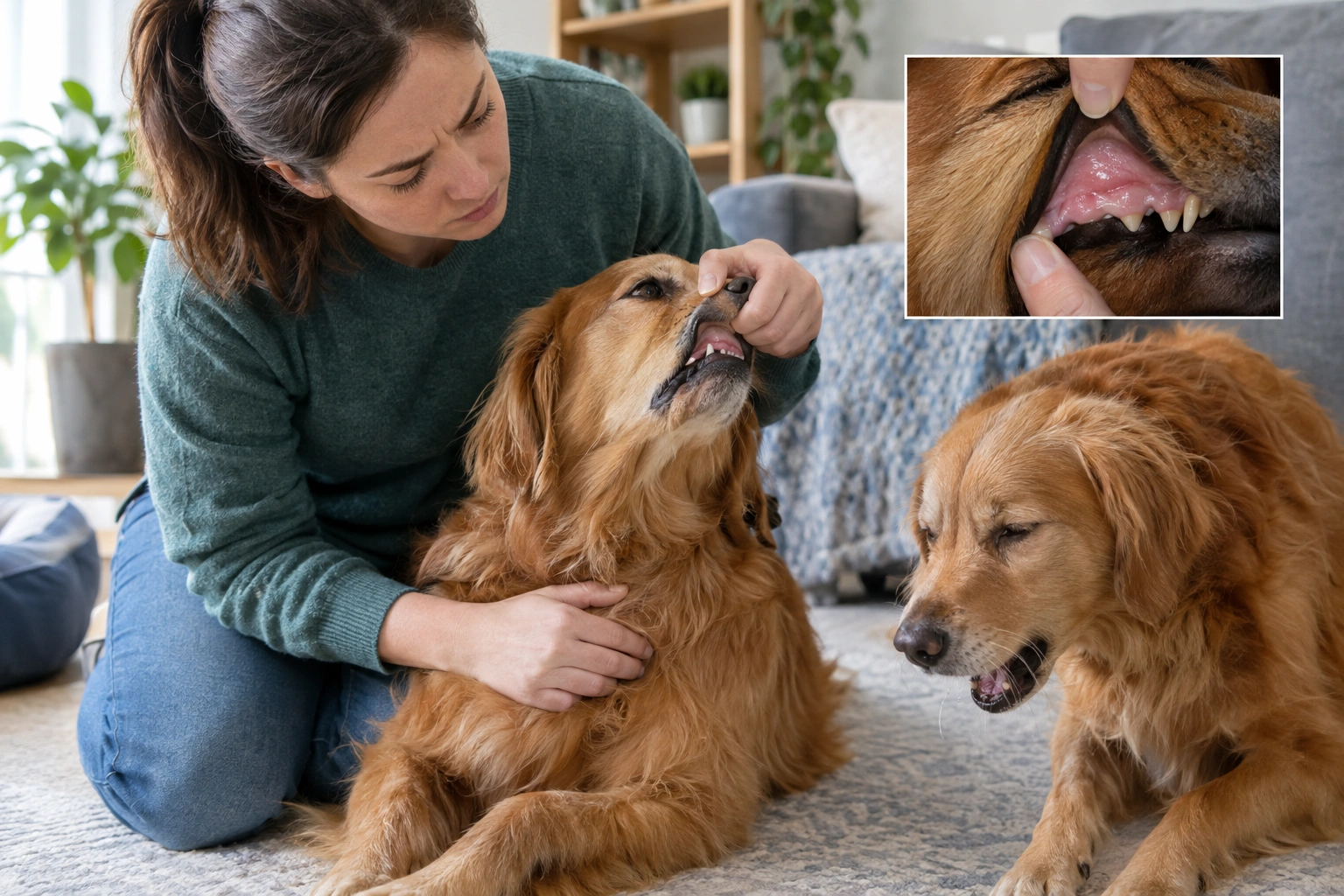
If you are unsure, video helps again. A vet can usually sort out the difference faster from a clip than from a description.
Red flags that mean this is an emergency
Call an emergency vet immediately if you see any of these:
- Difficulty breathing
- Blue, gray, or pale gums
- Collapse
- Severe lethargy
- Coughing up blood
- Persistent gagging or vomiting
- Inability to swallow
- Obvious distress or inability to rest comfortably
Puppies, senior dogs, and dogs with heart or immune-related conditions should be evaluated more promptly when a new cough appears. Their margin for error is smaller.
What to check at home before you call the vet
You do not need to diagnose the problem. You do need to gather useful facts.
Check these points:
- Breathing effort: Is your dog breathing normally, or using extra effort?
- Gum color: Pink is reassuring; pale or blue is not.
- Energy: Is your dog bright, or unusually quiet?
- Appetite and drinking: Can your dog eat and drink normally?
- Nasal discharge: Clear, cloudy, or bloody?
- Swallowing: Does water go down normally, or does it trigger gagging?
- Pattern: Worse after exercise, at night, after collar pressure, or after being around other dogs?
If you can answer those questions clearly, your vet can triage more accurately.
What you can safely do right now
Keep the dog calm and avoid anything that could worsen irritation.
Reasonable supportive steps
- Limit excitement and hard exercise
- Use a harness instead of a collar if the neck seems irritated
- Avoid smoke, strong perfumes, and harsh cleaners
- Keep the dog away from other dogs if a contagious cause is possible
- Record a video of the cough or gagging episode
What not to do
- Do not give human cough medicine unless your vet specifically tells you to
- Do not give OTC cold, decongestant, or pain products made for people
- Do not keep sending a coughing dog to daycare, classes, or dog parks
- Do not assume a dog is fine just because it is still eating
Supportive changes can reduce irritation, but they do not replace diagnosis when symptoms persist.
When to keep the dog away from other dogs
If kennel cough or another contagious respiratory illness is possible, isolation is the cautious choice.
That means no dog parks, daycare, group training, or close contact with unfamiliar dogs until your vet has ruled out a contagious cause or cleared your dog. Reduce shared bowls and toys in a multi-dog household if one dog starts coughing.
When to see a veterinarian or certified trainer
For this symptom, the veterinarian comes first. A trainer can help later if collar pressure, arousal, or leash habits are making an airway problem worse, but training is not the solution to a medical cough.
Book a same-day vet visit if:
– The cough is persistent
– The gagging keeps recurring
– Symptoms are worsening
– There is nasal discharge
– Your dog is older, very young, or already has health issues
Go to emergency care if the dog is struggling to breathe, collapsing, has blue or pale gums, or cannot swallow.
What a veterinarian will likely ask and examine
Expect questions about:
– When the cough started
– Whether it is dry or wet
– Whether it happens at night, after exercise, or after pulling on a collar
– Exposure to other dogs
– Appetite, drinking, energy, and fever-like signs
– Whether the dog can swallow normally
– Vaccination status and any recent boarding, daycare, grooming, or dog-park exposure if kennel cough is suspected
The physical exam usually focuses on the chest, throat, breathing effort, and overall condition. If the vet suspects a deeper issue, they may recommend chest X-rays, a throat exam, parasite testing, a heart evaluation, or other testing based on the findings.
That testing is not overkill. Heart and lung problems can look like “just a cough” early on.
When coughing and gagging should not be ignored even if your dog seems normal
This is the trap many owners fall into. The dog is still eating. The tail is still wagging. The cough is “not that bad.”
But subtle respiratory and cardiac problems often begin that way. A dog can look functional while the underlying issue is building. If the symptom is recurring, changing, or lasting longer than a short irritation should, it is worth checking.
A practical standard: if you are noticing the cough enough to worry about it more than once, your vet should know about it.
FAQ
Is coughing and gagging always kennel cough?
No. Kennel cough is common, especially after exposure to other dogs, but heart disease, tracheal irritation, foreign bodies, pneumonia, allergies, and other problems can look similar.
Can I wait and see if my dog seems fine otherwise?
Only for a short time if breathing is normal, gums are pink, swallowing is normal, and the symptoms are mild. If it persists, worsens, or returns repeatedly, call your vet.
Should I isolate my dog from other dogs?
Yes, if a contagious respiratory illness is possible. That is the safer choice until your vet says otherwise.
What if my dog is gagging but not vomiting?
That can still be serious. Repeated unproductive gagging may point to throat irritation, airway disease, or something stuck.
Is a cough worse at night a concern?
It can be. Nighttime cough may happen with heart problems or airway irritation, so it should not be ignored if it keeps happening.
Can reverse sneezing be mistaken for coughing?
Absolutely. Reverse sneezing often sounds like snorting or noisy inhaling and may end quickly, while coughing is usually a forceful outward event.
Should I give cough medicine?
Not unless your veterinarian tells you to. Human cough products can be unsafe for dogs and can delay proper care.
If you want, I can also turn this into a shorter symptom guide, a vet-visit checklist, or a Border Collie-specific “coughing and gagging” decision chart.