
What Are the Signs of Cancer in a Dog? A Practical Guide for Dog Owners

If you’re asking this question, you’re probably looking at a change in your dog and trying to decide whether it’s “wait and watch” or “book the vet now.” If you’re unsure, a good triage rule is: monitor briefly if a sign is mild and improving, but book the vet now if it is getting worse or showing up with other changes.
Cancer in dogs rarely announces itself with one dramatic, unmistakable symptom. More often, it shows up as a pattern: a lump that changes, weight that drops without a clear reason, a cough that won’t settle, a limp that doesn’t improve, or a dog that simply seems less like themselves. The tricky part is that many of those same signs can also come from infections, arthritis, digestive upset, or normal aging. That’s why timing, progression, and combinations of symptoms matter more than any single sign.
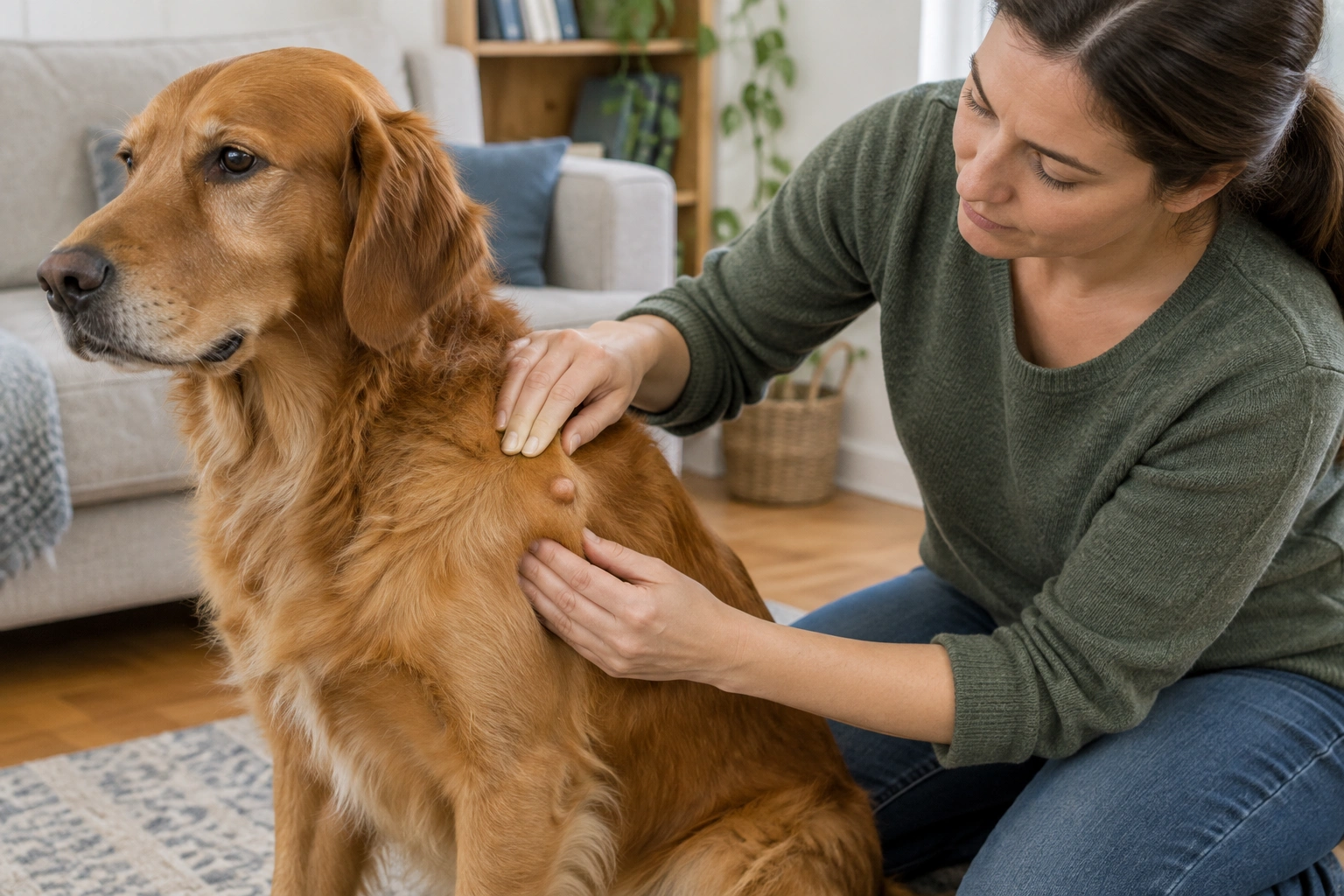
As the AVMA notes about cancer in pets, loss of appetite, unexplained weight loss, abdominal swelling or bloating, and difficulty eating or swallowing can all be warning signs. At the same time, the NC State Veterinary Hospital points out that coughing, breathing changes, lethargy, and decreased energy can also be clues. Those signs are not proof of cancer, but they are strong enough that they should not be brushed off.
For Border Collie owners in particular, this can be easy to miss. A dog that normally runs hard, works hard, and recovers quickly can still be “functional” while quietly declining. A dog that seems only a little tired, a little sore, or a little off may be showing an early warning pattern that deserves attention.
What the warning pattern usually looks like
Cancer signs in dogs are often subtle at first, then gradually more obvious. That slow build is what makes them easy to excuse away. You may notice one small change, then another:
- a new lump
- reduced appetite
- unexplained weight loss
- lower stamina on walks
- a persistent cough
- limping that keeps returning
- vomiting or diarrhea that comes back after seeming to improve
- bleeding, discharge, or a wound that does not heal
The key point is not that each of these means cancer. It’s that persistent or progressive changes deserve a veterinary exam, especially when more than one is happening together. PetMD’s overview of cancer signs in dogs emphasizes that signs can be subtle and vary depending on the type of cancer.
If you’re trying to decide whether a symptom is significant, ask three questions:
- Is it new?
- Is it getting worse?
- Is it happening with anything else?
A single mild symptom that improves is less concerning than a cluster of small changes that keeps building. When several mild signs appear together, it is safer to book the vet now rather than wait to see whether they settle on their own.
Lumps, bumps, and skin changes that should be checked
A lump is one of the most common reasons people worry about cancer, and for good reason. Not every lump is malignant, but no one can tell by look alone whether it is harmless.
A lump deserves a vet visit sooner rather than later if it:
- is growing
- feels firm or fixed in place
- bleeds or ulcerates
- is irritated, red, or painful
- appears suddenly and keeps enlarging
- sits under the skin rather than looking like a tiny surface tag
- changes shape or texture over time
A new lump is not automatically cancer. Dogs get cysts, lipomas, warts, skin tags, abscesses, and other benign growths. The problem is that appearance is a poor filter. A soft lump can still be important, and a hard lump can still be benign. What matters most is change.
This is where many owners lose time. They watch a lump for months because the dog seems fine. That may be reasonable for a tiny, stable bump that has not changed. It is not a good plan for a mass that is growing, becoming sore, or starting to bleed after grooming.
If a lump is changing, don’t wait for it to “declare itself.” A veterinarian can often begin with a fine-needle aspirate, which collects cells for evaluation. In some cases, a biopsy is needed to know what the mass actually is.
Weight loss, appetite changes, and reduced stamina
Unexplained weight loss is one of the more concerning signs because it often reflects a body that is struggling systemically. It can happen even when the dog is still eating, which is why owners sometimes miss it.
Look for:
- ribs becoming more visible without a diet change
- a tuck-up that becomes sharper
- muscle loss over the shoulders or hind end
- a dog finishing meals more slowly
- leaving food behind when that was never normal
- needing more coaxing to go on walks
- tiring sooner on hikes, runs, or training sessions
A gradual change from overeating, reduced exercise, or normal aging is different from a dog who is losing condition despite routine food and activity. That distinction matters.
Loss of appetite is especially important when it appears with other signs such as lethargy, vomiting, abdominal swelling, or difficulty swallowing. The AVMA specifically lists loss of appetite and unexplained weight loss among cancer warning signs in pets. That doesn’t mean every dog with a poor appetite has cancer. It does mean appetite changes should be taken seriously if they are persistent or paired with other symptoms.
For active dogs, a useful rule is this: if your dog is still moving, but their drive, endurance, or recovery is clearly worse for more than a few days, don’t assume it’s just a “lazy week.” Keep a short log of meals, weight, and energy so you can describe the pattern clearly to your vet.
Lameness, swelling, pain, and reluctance to move
Limping is easy to blame on a minor strain or arthritis, especially in older dogs. Sometimes that’s exactly what it is. But persistent limping, especially if it does not improve with rest, needs a closer look.
Be more concerned if you notice:
- a limp that keeps returning
- swelling near a bone or joint
- pain when the area is touched
- reluctance to jump, climb stairs, or get into the car
- a dog that shifts weight off one limb
- worsening stiffness that is not behaving like a normal flare-up
Bone cancer, such as osteosarcoma, can present with lameness and swelling near the limb. But infections, cruciate injuries, and arthritis can look similar at first. That’s why the pattern matters so much. A simple muscle strain usually improves. A cancer-related limp more often lingers, worsens, or becomes more obvious over time.
If the limp is paired with weight loss, reduced appetite, or visible swelling, the threshold for a vet exam should be low. Don’t wait to see whether it “walks off.”
Coughing, vomiting, diarrhea, bleeding, and discharge
Some of the most worrying cancer signs are also the easiest to misread as everyday illness.
Coughing and breathing changes
Coughing, noisy breathing, or difficulty breathing can be warning signs of cancer in pets, according to NC State Veterinary Hospital. These signs can also come from heart disease, kennel cough, or airway irritation, which is exactly why they should be evaluated rather than guessed at.
A cough that lasts more than a few days, worsens, or appears alongside lethargy or exercise intolerance deserves attention.
Vomiting and diarrhea
One upset stomach is not the same as repeated gastrointestinal trouble. Vomiting or diarrhea that keeps coming back, especially when combined with weight loss, lethargy, or reduced appetite, is more concerning than a single short-lived episode.
Bleeding, discharge, and odor
Bleeding from the nose, mouth, skin, or rectum can have many causes, including cancer. So can unusual discharge or a strong odor from a mass or wound. A sore that won’t heal is another red flag. These signs often mean tissue is damaged, inflamed, infected, or growing abnormally, and they should not be ignored.
A useful decision rule: if the symptom is recurring, worsening, or coming from an obvious mass, it needs a vet visit even if your dog still seems “mostly okay.”
Behavior changes that are easy to miss
Some of the earliest signs owners notice are behavioral, not physical. That’s especially true in dogs that normally push through discomfort.
Watch for:
- hiding more than usual
- less enthusiasm for walks or play
- irritability when touched
- reduced jumping or climbing
- sleeping more deeply or for longer periods
- seeming “off” without a clear reason
- not greeting you with the same energy
These changes are easy to dismiss because they can look like mood, age, or a temporary off day. But when they are new and persistent, they often reflect discomfort or fatigue.
A Border Collie that suddenly chooses the couch over the ball is telling you something. One quiet day is not a diagnosis. A change in baseline is worth investigating.
Cancer signs versus normal aging, infection, digestive upset, or arthritis
Here’s the practical comparison that helps most owners decide what to do next.
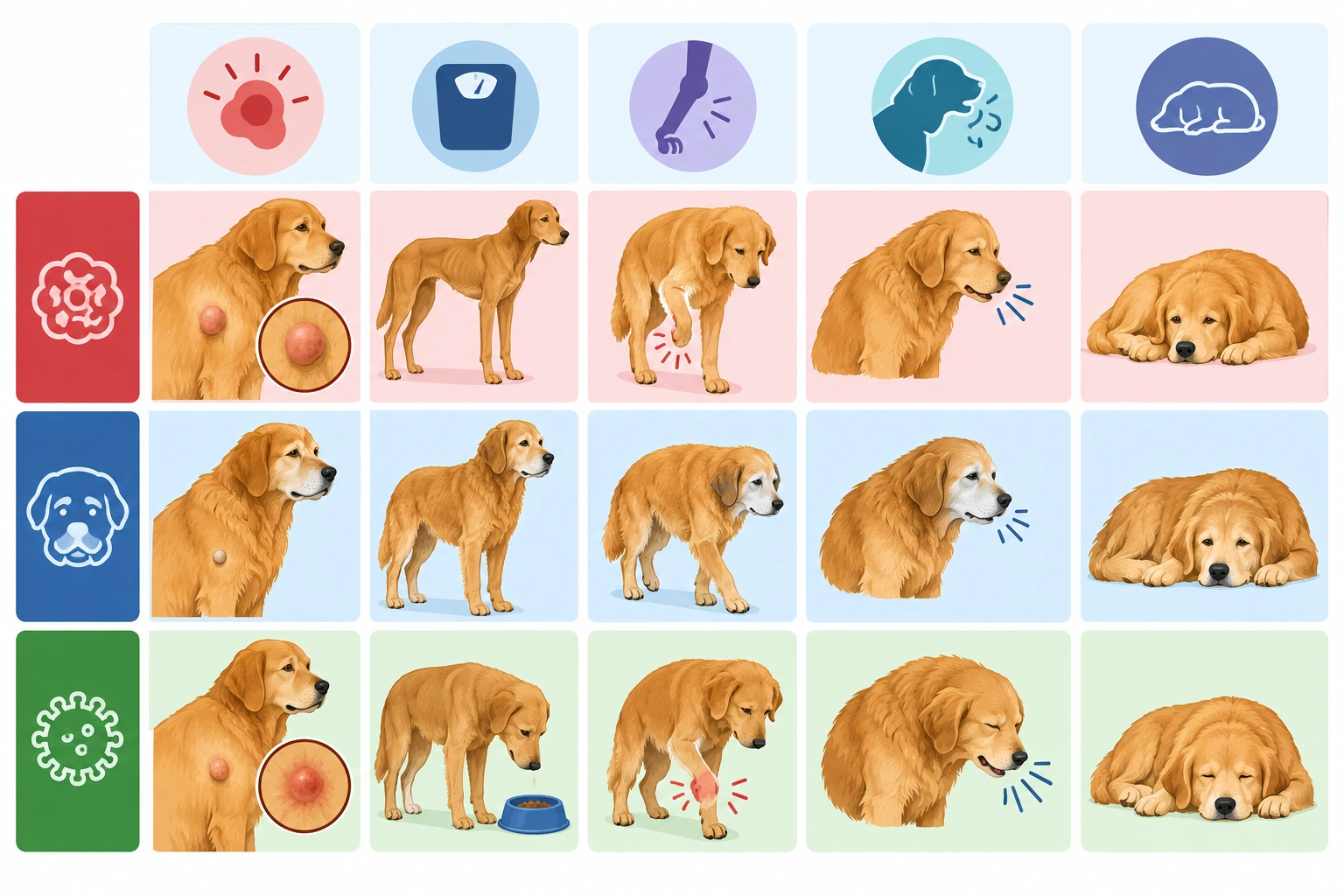
| Pattern | More like normal aging or minor illness | More concerning for cancer or another serious condition |
|---|---|---|
| Energy | Slower but still steady, improves with rest | Progressive fatigue, reduced stamina, not bouncing back |
| Lump | Small, stable, unchanged | Growing, firm, fixed, bleeding, painful, or ulcerated |
| Appetite | Brief dip, then normal again | Ongoing reduced appetite or eating plus weight loss |
| Limp | Improves in a few days | Persists, worsens, or keeps returning |
| Cough/vomiting/diarrhea | Short-lived and resolves | Recurrent, worsening, or paired with weakness/weight loss |
| Behavior | Mild, predictable slowing with age | New hiding, irritability, reluctance to move, or clear change in personality |
This is the decision framework I use: if the sign is sudden, progressive, asymmetric, or repeated, it deserves a veterinary exam. If several small changes are happening together, the concern rises even if each one seems minor on its own.
Infection, arthritis, and digestive upset are common and often treatable. Cancer is only one possibility, but it is one you do not want to miss.
When to call the veterinarian right away
Some signs should move you from “book an appointment” to “call today” or “go now.”
Seek urgent veterinary care if your dog has:
- trouble breathing
- collapse or extreme weakness
- uncontrolled bleeding
- repeated vomiting
- obvious severe pain
- a rapidly enlarging swelling
- a distended abdomen with distress
- a lump that suddenly changes dramatically
These can be cancer-related, but they can also signal other emergencies. Either way, they should not wait.
If the sign is not an emergency but is persistent, worsening, or paired with other symptoms, schedule a veterinary exam as soon as you can. The earlier the problem is assessed, the sooner you can stop guessing.
What a veterinarian will likely do to check for cancer
Symptoms alone cannot confirm cancer. A vet usually works step by step.
Physical exam and lymph node check
The first step is often a full exam, including palpating the abdomen, checking the mouth, listening to the chest, and feeling the lymph nodes. Enlarged lymph nodes can be a clue to lymphoma or other disease processes.
Bloodwork
Bloodwork helps assess overall health and can reveal clues about infection, organ function, anemia, or other changes that support further testing.
Fine-needle aspirate
If there is a lump or enlarged lymph node, a fine-needle aspirate may be used to collect cells. This can sometimes provide a quick answer or point toward the next test.
X-ray and ultrasound
Imaging helps the veterinarian look inside the body. X-rays are useful for bones and the chest. Ultrasound is often used for abdominal organs. Depending on what is found, a vet may recommend more advanced imaging.
Biopsy
A biopsy is often needed when the exact tissue type matters. It gives a more definitive diagnosis than appearance or touch alone.
The point of this process is not to do every test immediately. It is to choose the right test based on the sign you’re seeing. That saves time, money, and guesswork.
What to do before the vet visit
Before your appointment, gather a few useful details:
- when you first noticed the change
- whether it is getting worse, staying stable, or improving
- whether your dog is eating, drinking, and eliminating normally
- photos of any lump or swelling, taken every few days
- your dog’s recent weight, if you have it
- notes on coughing, vomiting, diarrhea, limping, or bleeding
If you can, bring a short timeline rather than a vague summary. “The lump doubled in a month” is much more useful than “it’s been there a while.”
Do not give human medications, and do not squeeze, lance, or massage a suspicious lump. Also, do not wait to see whether a changing lump shrinks on its own.
Do not let watchful waiting drag on if the pattern is worsening. Observation is only useful when it is structured and time-limited.
FAQs
Is a lump on my dog always cancer?
No. Many lumps are benign, but you cannot tell by feel or appearance alone. A lump that grows, bleeds, feels fixed, or changes shape should be checked.
Can cancer in dogs look like aging?
Yes. Reduced stamina, stiffness, and sleeping more can look like normal aging at first. The difference is usually progression. Aging tends to be gradual and predictable; illness often brings a clear change from baseline.
Are coughing and vomiting really cancer signs?
They can be, but they are also common with other illnesses. What makes them more concerning is persistence, recurrence, or appearing alongside weight loss, lethargy, or pain.
How quickly should I see a vet if I find a suspicious lump?
As soon as practical, especially if it is growing or painful. A stable tiny bump can sometimes be watched briefly, but a changing lump should not sit on a “wait and see” list for long.
What if my dog still seems normal otherwise?
That does not rule out cancer. Dogs often hide illness well, and early signs can be subtle. If something has changed and stays changed, it is worth an exam.
Can a vet tell if it is cancer from the first visit?
Sometimes they can strongly suspect it, but symptoms alone usually are not enough. Bloodwork, imaging, fine-needle aspirate, or biopsy may be needed for a real diagnosis.
Final take
If you remember only one thing, make it this: cancer in dogs is often less about one dramatic symptom and more about a pattern that doesn’t make sense. A lump that changes, weight loss without explanation, a cough that lingers, a limp that won’t settle, or a dog that seems quietly less themselves all deserve attention.
When in doubt, trust the trend, not the hope that it will sort itself out.