
How to Tell if Your Dog Has Tooth Pain: Signs, Checks, and When to Call the Vet

If you live with a Border Collie, you already know how easily a small change in behavior can be missed or misread. A dog that is usually keen to eat, train, and engage may suddenly seem “off” for reasons that are not obvious at first. Tooth pain is one of those problems: it can look like pickiness, moodiness, or plain stubbornness.
The tricky part is that dental pain in dogs is often subtle early on. In some dogs it shows up as a clear refusal to chew. In others, it looks more like withdrawal, irritability, or a dog that simply does not want to be touched around the muzzle. That means the best way to tell is not to look for one magic symptom, but to read the whole pattern.
The most reliable signs your dog may have tooth pain
The strongest clue is a change in how your dog eats or chews. If a dog suddenly starts chewing on one side, drops food, or begins eating and then stops, tooth pain moves high on the list. Dogs with oral pain may also spit out food, avoid hard kibble, or act interested in food but back away once chewing starts.
Another high-signal sign is head-shyness. A dog that normally enjoys face rubs but now pulls away when you touch the muzzle, jaw, or cheek may be protecting a painful area. That matters more than a single yelp or one bad meal because it reflects a pattern of avoidance.
Watch for pawing at the mouth, rubbing the face on furniture, or jaw trembling and mouth chattering. Those signs are not proof of a painful tooth on their own, but they are consistent with oral discomfort and deserve attention.
A practical rule: if the behavior change is tied to chewing, mouth handling, or food texture, think dental first. If the dog is otherwise normal but suddenly avoids crunchy treats, that is more suspicious than general fussiness.
Behavior changes that can look like a “bad attitude”
Dental pain does not always look dramatic. Some dogs become snappier, quieter, or less tolerant of handling. A dog that was easygoing yesterday may seem irritable today simply because moving the mouth hurts. Others withdraw, hide, or stop offering their usual enthusiasm for play.
That is especially easy to misread in a Border Collie, because this breed is alert and responsive by nature. A dog that is usually ready to work may instead seem distracted or reluctant to engage. If the change is paired with mouth sensitivity, do not assume it is a training problem.
Here is the useful distinction: behavior-only changes can have many causes, but behavior changes plus eating changes are much more suggestive of pain. A dog that growls when you touch the face, then also chews on one side, is giving you a much clearer picture than a dog that is merely grumpy for no obvious reason.
Mouth, gum, and face clues to look for
Bad breath is a clue, not a diagnosis. Persistent halitosis can be an early sign of infection, but some dogs have smelly breath for other reasons too. It becomes more meaningful when it appears alongside chewing changes, drooling, or visible gum problems.
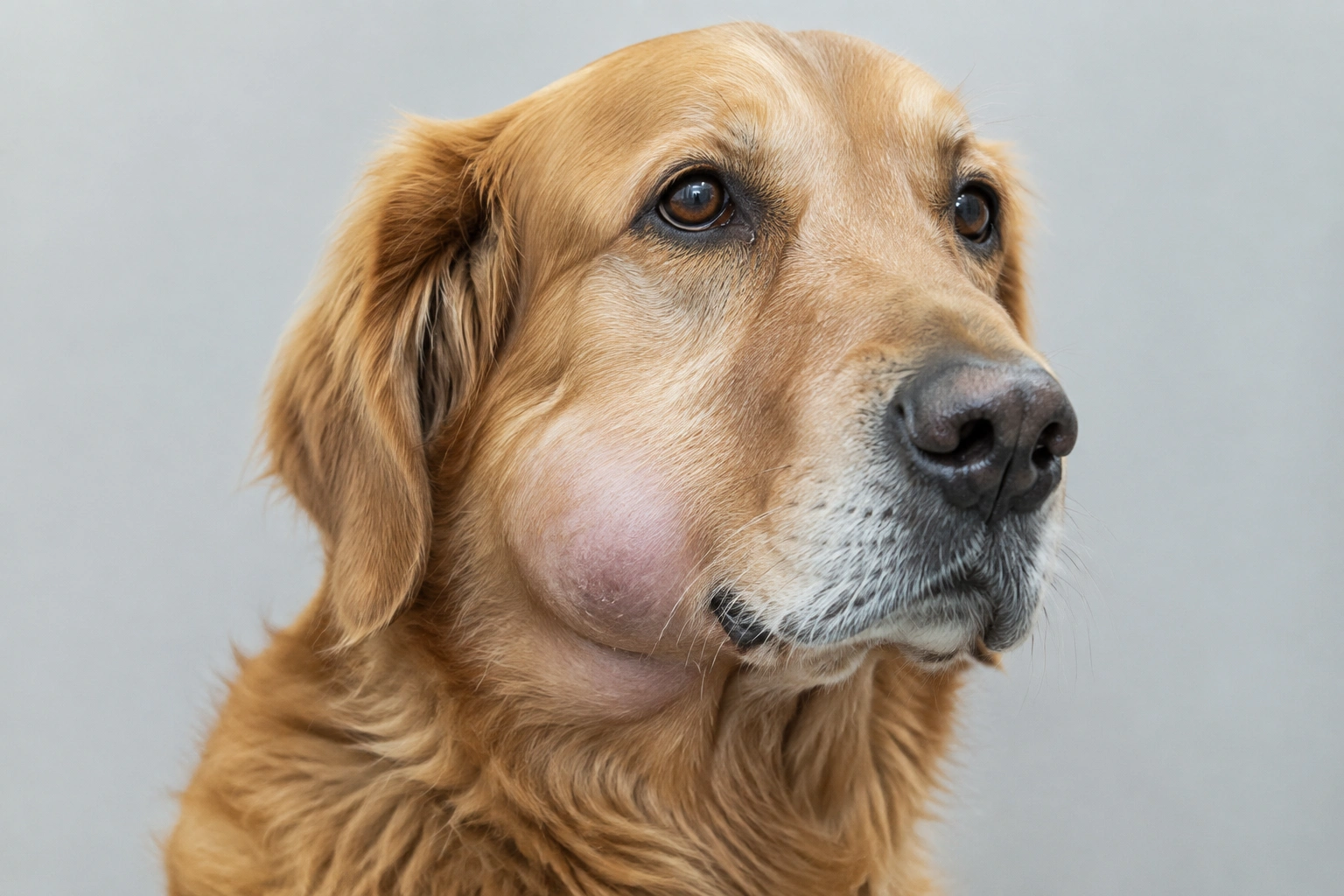
Look for red or swollen gums, bleeding, discharge, or a broken tooth. Facial swelling, especially along the jaw, is a bigger concern because it can suggest infection or an abscess rather than simple irritation. If you see swelling, do not wait and watch for long.
Excessive drooling can also point to oral pain. In some cases it may be tinged with blood. That does not tell you exactly which tooth is involved, but it does tell you the mouth needs prompt attention.
A painful tooth can also be hidden. VCA notes that some dogs show no obvious outward signs at home, and the problem may only become clear on a veterinary dental exam. That is one reason a dog can seem “fine” until the issue is already advanced. For a broader veterinary reference on this point, see VCA’s guide to dental pain in dogs.
Eating, chewing, drinking, and grooming changes that often show up first
The most practical clues are usually found at mealtime. A dog with tooth pain may start eating and then abruptly stop, chew slowly, or act hungry but hesitate when the food is hard. Some dogs suddenly prefer soft food over kibble. Others drop pieces of food, chew only on one side, or avoid chew toys they normally enjoy.
These changes matter because chewing is where tooth pain shows up most clearly. A dog can still be interested in food while trying to protect a painful tooth. That is why “still eating” does not rule out a problem.
Reduced grooming can also be a clue, especially in dogs that usually lick their paws or clean their face regularly. If mouth movement hurts, some dogs simply stop doing it as much. That is not specific to dental disease, but it fits the picture when combined with other signs.
If your dog is still eating but only soft food goes down easily, that is not something to ignore for long. It may be a mild irritation, or it may be the first stage of a more serious dental issue.
What else could cause these signs besides tooth pain?
Not every eating change is dental. A dog that skips a meal once may be dealing with nausea, stress, a routine disruption, or another medical issue. That is why a single sign rarely tells the whole story.
The best clue is the combination. If your dog is eating less, avoiding hard food, and also acting head-shy, the mouth becomes a strong suspect. If the dog is only a little fussy but otherwise bright, energetic, and comfortable being touched around the face, you may be looking at a less urgent issue.
Bad breath alone is also not enough to blame the teeth. It can happen with dental disease, but it does not prove pain. Treat it as a warning light, not a diagnosis.
The same goes for irritability. A dog that snaps once is not automatically in pain. But a dog that is suddenly touchy around the muzzle, avoids chewing, and has bad breath is giving you a much more convincing pattern.
How to check your dog’s mouth safely at home
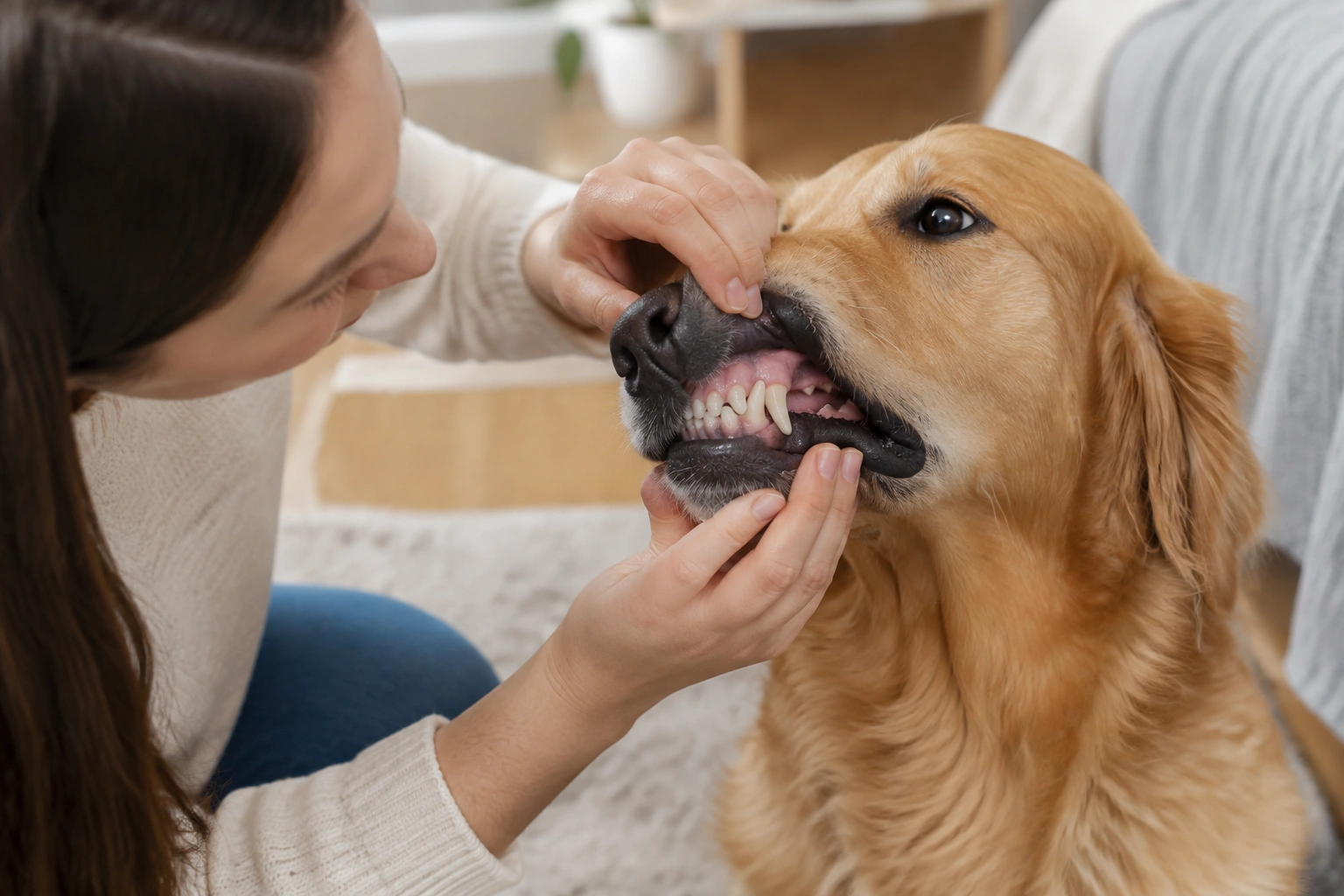
Keep the check brief, calm, and voluntary. Let your dog see and sniff you first. Use a quiet space, good light, and a few seconds of patience. If your dog is tense before you begin, that already tells you something.
Lift the lips gently rather than forcing the mouth open. You are looking for obvious problems: red gums, swelling, a broken tooth, discharge, bleeding, or a bad odor. Stop if your dog pulls away, growls, snaps, or seems highly stressed. A painful mouth can turn even a mild dog defensive.
Do not try to pry the jaws apart or chase the dog around the house for a better look. That can make the dog more fearful and can also get you bitten. A short, low-pressure check is safer and often enough to decide whether a vet visit is needed.
If your dog will not allow even a gentle look, that itself is useful information. It does not prove tooth pain, but it does raise the odds that the mouth is sensitive.
When to see a veterinarian
This is a medical issue first, not a training problem. If the signs are centered on eating, chewing, drooling, swelling, or mouth sensitivity, a veterinarian is the right next step.
Call soon if your dog has persistent bad breath, repeated chewing changes, head-shyness, or mild drooling that is not improving. Seek urgent veterinary care if you see facial swelling, bleeding, pus, a broken tooth, marked pain, or refusal to eat. Sudden appetite changes deserve prompt attention because they can reflect many health problems, not just dental disease.
If your dog is also lethargic, seems generally unwell, or the problem is worsening quickly, do not wait for it to settle on its own. Oral infections and abscesses can become more serious than they first appear.
For general dog-health guidance on oral pain signs, the ASPCA’s pet care resources are a useful starting point.
Common causes of tooth pain in dogs
Gingivitis is one common cause. It means the gums are inflamed, and it can make the mouth sore before the problem becomes obvious from the outside. At home, you may notice mild bad breath, red gums, or reluctance to chew, even before there is obvious swelling.
Periodontal disease is another major cause. This is the more advanced stage of dental disease, where infection and inflammation affect the structures supporting the teeth. It often brings bad breath, gum changes, and discomfort while chewing. Dogs may seem to prefer soft food, chew on one side, or drop kibble.
Broken teeth can be very painful, especially if the tooth is cracked deep enough to expose sensitive tissue. Dogs may chew on one side, avoid hard treats, or show facial sensitivity after biting something hard. A broken tooth is especially likely when the signs start after chewing on something tough.
Tooth abscesses are more urgent. They can cause swelling, pain, and sometimes discharge. At home, the biggest clue is often facial swelling along the jaw or cheek, sometimes with a dog that suddenly does not want to eat. Oral injury from chewing, trauma, or a sharp object can also leave a dog sore even if the tooth itself is not obviously broken.
The reason symptoms vary so much is simple: a little gum irritation and a deeper infection do not feel the same. That is why one dog just eats a bit slower while another develops swelling and stops eating.
What a veterinarian may do to diagnose and treat the problem
A vet will usually start with an oral exam and a history of what you have noticed at home. They may look for broken teeth, inflamed gums, swelling, and areas that seem painful when touched. In some cases, dental X-rays are needed to see what is happening below the gumline.
Treatment depends on the cause. Pain control may be part of the plan. Antibiotics may be used when infection is present and when the vet thinks they are appropriate. Some problems need dental cleaning, extraction, or another dental procedure to remove the source of pain.
Do not expect the diagnosis to be obvious just because the tooth looks “not too bad” from the outside. The part you can see is not always the part causing the pain.
What not to do if you suspect dental pain
Do not give human pain medication or antibiotics unless a veterinarian specifically tells you to. Some common human medicines are dangerous for dogs.
Do not force the mouth open to “check better.” If the dog is guarding the face, the mouth may already hurt enough that forcing it will only make things worse.
Do not try to fix a broken tooth at home. That can delay proper treatment and may worsen pain or infection.
And do not assume the dog is being stubborn if the food change is sudden. A dog that usually eats eagerly but now hesitates is often telling you something useful.
How to reduce the risk of future dental pain
The goal is to catch dental problems before they become painful. Regular veterinary dental checks help with that, especially when paired with attention to small behavior changes at home. Annual dental exams and cleanings are commonly recommended as part of preventive care.
Chewing habits matter too. Hard bones can crack teeth, so they are generally a poor choice when you are trying to protect oral health. Softer chew toys may be a better option for many dogs, and dental chews may help reduce plaque buildup when used appropriately.
The most useful habit is simple: notice change early. If your dog’s eating style, breath, or tolerance for face handling shifts, that is the time to pay attention—not after the problem has been going on for weeks.
For more on keeping a Border Collie healthy and comfortable, you may also find our guides on what to do when a dog has a seizure and how to tell if a Border Collie is happy helpful for reading subtle health and behavior changes.
FAQs
Can a dog have tooth pain without obvious signs?
Yes. Some dogs show very little at home, and the problem may only become clear on a veterinary exam.
Is bad breath always dental disease?
No. Bad breath can be a clue, but it is not proof. It matters more when it appears with chewing changes, drooling, swelling, or sensitivity.
My dog still eats. Could it still be tooth pain?
Yes. Many dogs keep eating even when chewing hurts. They may just eat more slowly, avoid hard food, or chew on one side.
What if my dog won’t let me touch the mouth?
Do not force it. That can mean the area is painful, and it is safer to arrange a veterinary exam than to wrestle for a better look.
When is it urgent?
Facial swelling, bleeding, pus, a broken tooth, refusal to eat, or a dog that seems generally sick should be treated as prompt veterinary concerns.
Can tooth pain make a dog act aggressive?
It can make a dog more irritable or defensive, especially when the face or muzzle is touched. That is often pain, not a behavior problem.