
How to Get Rid of a Dog’s Bad Breath: What Works, What Doesn’t, and When to Worry

If your Border Collie’s breath has gone from “doggy” to downright foul, don’t treat it like a harmless nuisance. Bad breath is often the first clue that plaque, tartar, or gum inflammation is building up. Sometimes it points to something beyond the mouth entirely.
The useful question is not just “How do I make the smell go away?” It’s “What is causing it, and what level of fix does this problem need?” That decision matters because breath mints, sprays, and quick cover-ups do very little if the real issue is dental disease.
For a dog who otherwise seems normal, you can usually begin with home dental care and a product reset. But if the odor is strong, persistent, or paired with pain or systemic signs, a veterinary exam comes first.
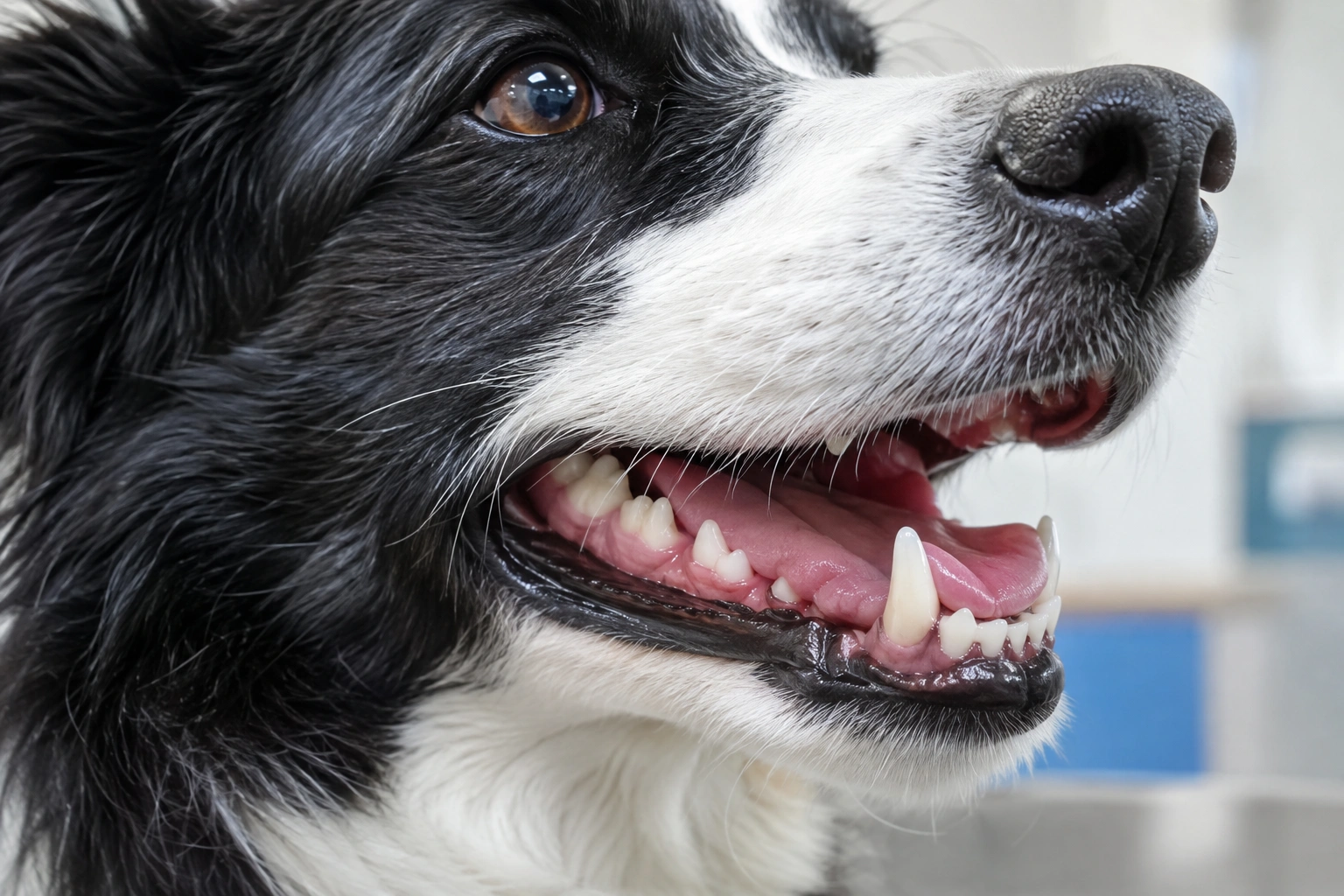
Why Dog Breath Smells Bad: Normal Odor vs. a Problem
A little morning breath is common. A dog who just woke up, licked a bowl clean, or raided the compost may smell temporarily unpleasant and still be perfectly healthy.
Persistent halitosis is different. When the smell hangs around day after day, the mouth is usually telling you something: food debris is sitting on the teeth, bacteria are thriving in plaque, or the gums are inflamed. That is why the first decision is to separate occasional odor from a chronic problem.
A simple rule helps: if the smell improves after eating, drinking, or a good tooth brushing, you’re probably dealing with surface buildup. If it keeps coming back quickly, or your dog’s breath is strong enough to smell across the room, assume there is an underlying issue until proven otherwise.
What the Smell Can Tell You About the Cause
The odor itself won’t diagnose the problem, but it can give you clues.
A rotten, “mouthy” smell often fits dental disease: plaque, tartar, gingivitis, or periodontal disease. That’s the most common pattern. As bacteria collect on the teeth and along the gumline, they release compounds that stink and irritate the tissue.
A sweet or fruity smell can be a warning sign that deserves prompt veterinary attention, especially if your dog also seems unwell. In some cases, it may be associated with diabetes, but the odor alone is not a diagnosis.
A breath that smells like ammonia or urine can also be a clue that something systemic may be going on, including possible kidney problems. Again, the smell by itself is not proof; it’s a reason to get the dog checked, especially if it shows up together with increased thirst, increased urination, vomiting, weight loss, or lethargy.
Other warning signs matter just as much as smell:
– red or bleeding gums
– loose or broken teeth
– pawing at the mouth
– drooling more than usual
– chewing on one side
– reluctance to eat hard food or toys
– facial swelling
If bad breath comes with any of those, it’s no longer a “freshen up the mouth” problem.
The Dental Disease Chain: Plaque, Tartar, and Gum Inflammation
Most chronic dog breath problems follow the same path.
First, plaque forms. Plaque is the soft, sticky film of bacteria and food debris that collects on teeth after eating. If it stays there, it hardens into tartar, which is the rough brown or yellow buildup you can often see near the gumline.
Once tartar is present, the surface becomes even better at trapping bacteria. The gums react by getting inflamed, which is gingivitis. If that process continues, it can progress to periodontal disease, where deeper structures around the tooth are affected.
That chain explains why breath fresheners usually fail. They may mask odor for a short time, but they do not remove plaque or tartar. The source keeps producing stink until the buildup is managed.
At-Home Fixes That Actually Work
The most reliable home fix is regular tooth brushing with a dog-safe toothbrush and toothpaste. Regular brushing helps remove plaque and slow tartar buildup, which is the foundation of better breath.
Veterinary guidance commonly recommends brushing at least three times a week, and daily brushing is even better if your dog tolerates it. The point is consistency. A single deep-clean session does almost nothing long term if the mouth is left alone afterward.
What home care can improve
- mild odor from food residue
- early plaque buildup
- early gum irritation
- breath maintenance after a professional cleaning
What home care usually cannot reverse
- heavy tartar
- painful gum disease
- loose teeth
- infection below the gumline
That distinction matters. If you can see thick tartar, home brushing is still worth doing, but it won’t replace a veterinary cleaning.
How to Brush a Dog’s Teeth Without a Fight
Many owners quit too early because they try to jump straight to a full brushing. That usually backfires. A slower approach works better, especially with clever, sensitive dogs like Border Collies who notice every change.
A practical training sequence
-
Let your dog sniff the toothbrush and toothpaste.
Use a dog toothpaste only. Human toothpaste is not made for dogs and should not be used. -
Touch the lips and front teeth first.
Keep the first sessions short. The goal is comfort, not a perfect cleaning. -
Use a finger brush or gauze if needed.
This can be a useful bridge for dogs that hate a regular brush. -
Move to a soft dog toothbrush.
Focus on the outside surfaces of the teeth, especially the back teeth and the gumline. -
Build toward daily brushing.
Even 30 to 60 seconds done consistently beats an ambitious routine that never happens.
Technique that helps
- lift the lip gently
- angle the brush toward the gumline
- use small, light strokes
- don’t force the mouth open unless your vet has shown you how
- stop before your dog gets overwhelmed
For very reluctant dogs, think in stages rather than trying to “train brushing” all at once. Start with calm handling of the muzzle and lips, then add toothpaste licking, then brief finger contact on the teeth, then a finger brush or gauze, and only after that move to a soft toothbrush. If your dog stays tense, shorten the session and return to the previous step for a few days before progressing again.
For food-motivated dogs, pairing brushing with a predictable reward can help. The reward should come after the brushing, not during it, so the routine stays clear.
Choosing Safe, Effective Dental Products
The dental aisle is full of products that promise fresh breath. The question is which ones actually help oral health.
Dog-safe toothpaste vs. human toothpaste
Dog toothpaste is designed for dogs and is safe to swallow in normal use. Human toothpaste may contain ingredients that are not appropriate for dogs, and it is not the right choice for routine brushing.
Toothbrushes
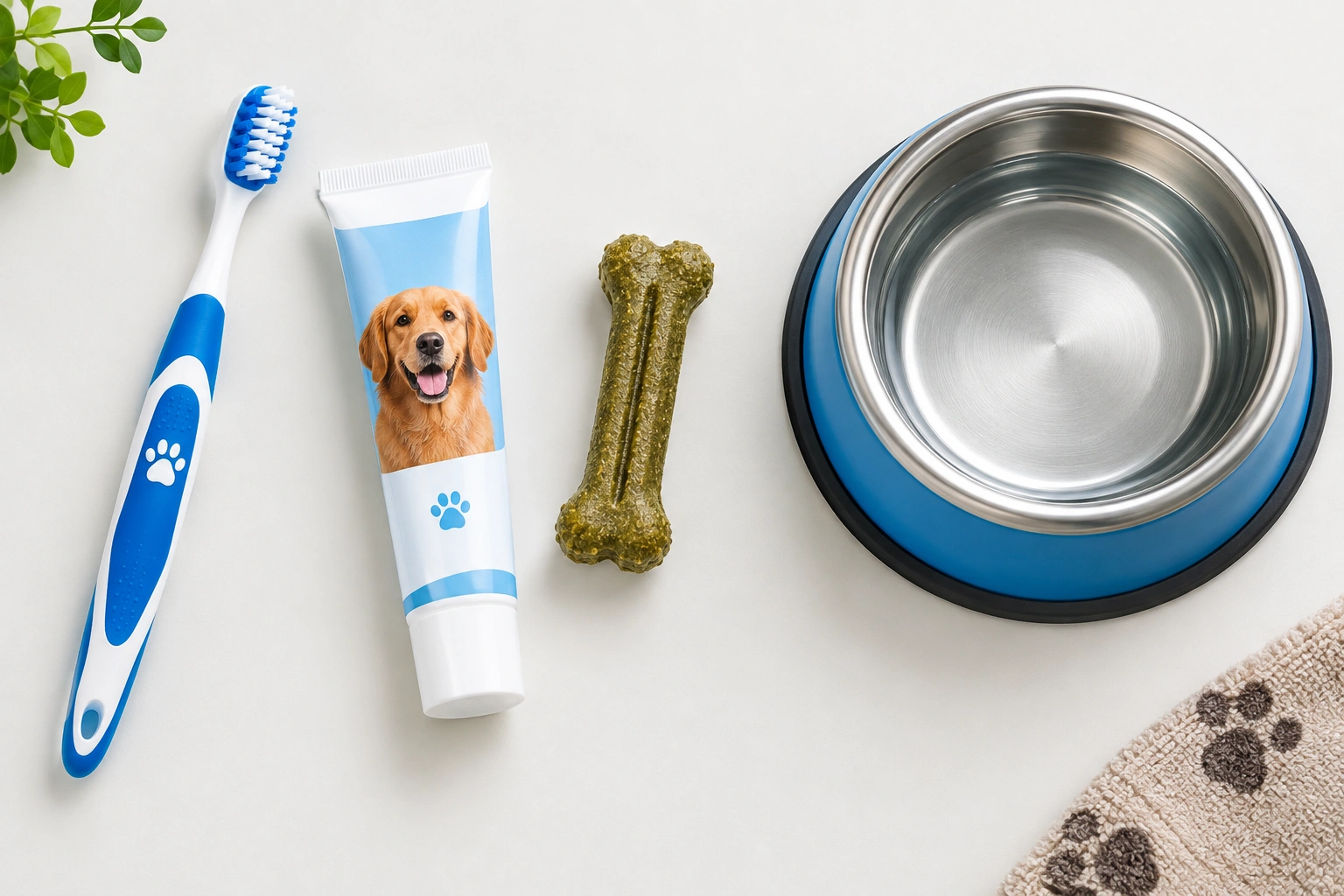
A soft dog toothbrush, a finger brush, or even gauze can work. The best tool is the one you can use consistently without turning every session into a wrestling match.
Dental chews and toys
Dental chews and toys can help reduce plaque and tartar as the dog chews. They are useful, especially for dogs that resist brushing, but they are not as thorough as brushing. Think of them as support, not a replacement.
Water additives
Water additives are easy to use, which makes them appealing for busy households. Their biggest advantage is convenience. Their drawback is that they do not provide the mechanical cleaning action you get from brushing or chewing.
How to judge a product
Look for evidence-based products, ideally with VOHC approval when available. VOHC stands for the Veterinary Oral Health Council. A VOHC seal means the product has met the council’s standards for helping control plaque or tartar, so it’s a useful shortcut when you’re comparing chews, rinses, additives, and other dental products. You can use the VOHC list to narrow your choices to products that have been reviewed for oral-health claims instead of relying on marketing alone.
Brushing vs. Chews vs. Water Additives: What Helps Most?
Here’s the practical comparison most owners need.
| Option | Effectiveness | Ease of Use | Best Use Case | Main Limitation |
|---|---|---|---|---|
| Brushing | Best for plaque control and breath maintenance | Moderate | Owners who can build a routine | Requires training and consistency |
| Dental chews | Helpful for plaque and tartar reduction | Easy to moderate | Dogs that chew well and enjoy treats | Usually less thorough than brushing |
| Water additives | Convenient for daily support | Very easy | Busy households needing a simple add-on | No scrubbing action |
| Professional cleaning | Best for heavy tartar and below-gumline disease | Done by vet | Visible buildup, pain, or persistent odor | Not a home substitute |
Diet and Oral Health: Helpful, But Not a Cure
Diet can influence breath, but it won’t solve dental disease on its own.
A balanced diet and appropriately textured food may help reduce residue and support overall oral health. Some dogs do better with kibble than very sticky or soft foods, though the effect is limited compared with brushing. If you’re choosing dry food with oral health in mind, dental diets made for tartar control are often a better bet than standard kibble, and a larger, specially textured kibble may be more effective than small pieces that disappear quickly.
By contrast, foods that tend to cling to teeth, like sticky treats, soft chews, and frequent table scraps, can leave more residue behind. That doesn’t mean every soft food is bad, but it does mean these foods should not be your main “dental strategy.”
Clean water matters too. Fresh water and clean bowls help reduce odor from old residue and bacterial buildup. Wash food and water bowls regularly so they don’t become part of the smell problem.
When Bad Breath Means Your Dog Needs a Vet
Some cases should go straight to a veterinary exam instead of a home experiment.
Book a vet visit promptly if your dog has:
– strong bad breath that doesn’t improve
– bleeding or swollen gums
– loose teeth
– obvious tartar buildup
– mouth pain or reluctance to chew
– facial swelling
– drooling more than usual
– reduced appetite
– a sweet, fruity, ammonia-like, or urine-like odor
– vomiting, increased thirst, increased urination, lethargy, or weight loss
If the breath is mild but persistent, I still recommend a dental exam. A routine preventive dental checkup is worth scheduling even before the smell becomes severe, especially if your dog is an adult, has a history of tartar buildup, or belongs to a breed or mouth shape that tends to crowd teeth and trap debris. Smaller dogs and dogs with compact muzzles often need closer monitoring, but any dog can develop dental disease.
For broader guidance on oral health and routine pet care, the ASPCA’s pet care resources are a solid place to cross-check basic safety information.
When a Professional Dental Cleaning Is the Right Next Step
Professional cleaning becomes the right move when tartar is already present, the gums are inflamed, or the odor keeps returning despite home care.
A veterinary cleaning goes beyond what you can do at the sink. The visible tartar is only part of the problem. Disease often continues under the gumline where you cannot reach with a brush.
If your dog has a history of periodontal disease, your vet may recommend more frequent cleanings or closer monitoring. That is especially true for dogs that seem to accumulate tartar quickly.
If you want a second trusted source for general dental care basics, VCA Hospitals’ pet dental health guidance is useful for understanding what veterinarians look for during exams and cleanings.
How to Prevent Bad Breath from Coming Back
Once the mouth is under control, prevention is mostly about routine.
A practical maintenance plan looks like this:
– brush regularly, aiming for at least three times a week
– use a dog-safe toothpaste
– keep a dental chew in the routine if your dog tolerates it well
– choose evidence-based products instead of breath-masking gimmicks
– keep water bowls clean
– watch for changes in odor, gum color, appetite, and chewing behavior
The simplest way to think about it is this: brushing maintains the mouth, chews support the routine, and vet cleanings reset the mouth when buildup gets ahead of you.
A Border Collie that gets daily exercise, food rewards, and a predictable routine often does well with dental habits too. These dogs usually learn quickly, but they also notice when a routine changes. Keep the dental habit short, calm, and consistent, and it becomes much easier to maintain.
When to See a Veterinarian or Certified Trainer
If your dog resists mouth handling so strongly that you cannot safely brush, a qualified professional can help you build the behavior step by step. That matters because forcing the issue can make future brushing harder.
If the problem is mainly behavior, a certified trainer can help with desensitization and cooperative handling. If there is bad breath, pain, bleeding, swelling, or any other mouth-related red flag, the veterinarian should examine the mouth first. In many cases, you need both: the vet to assess the mouth, and the trainer to make home care possible.
Frequently Asked Questions
How often should I brush my dog’s teeth?
At least three times a week is commonly recommended, and daily brushing is even better if your dog accepts it.
Can I use human toothpaste on my dog?
No. Use toothpaste made specifically for dogs.
Do dental chews really help?
They can help reduce plaque and tartar and may improve breath, but they work best as part of a larger routine, not as the only strategy.
Will a professional cleaning fix bad breath?
It can make a major difference when tartar and gum disease are the cause, but breath can return if home care stops afterward.
Is bad breath always a dental problem?
No. Persistent bad breath can also point to kidney disease, diabetes, or another medical issue, especially if other symptoms are present.
If you’re dealing with a stubborn case, don’t chase the smell first. Find the cause, treat the cause, and the breath usually follows.