
Why Your Dog Keeps Eating Grass and Vomiting: What It Means and What to Do Next

If your dog keeps eating grass and vomiting, the first job is not to panic — it is to sort harmless grazing from a pattern that points to nausea, stomach upset, or something more serious.
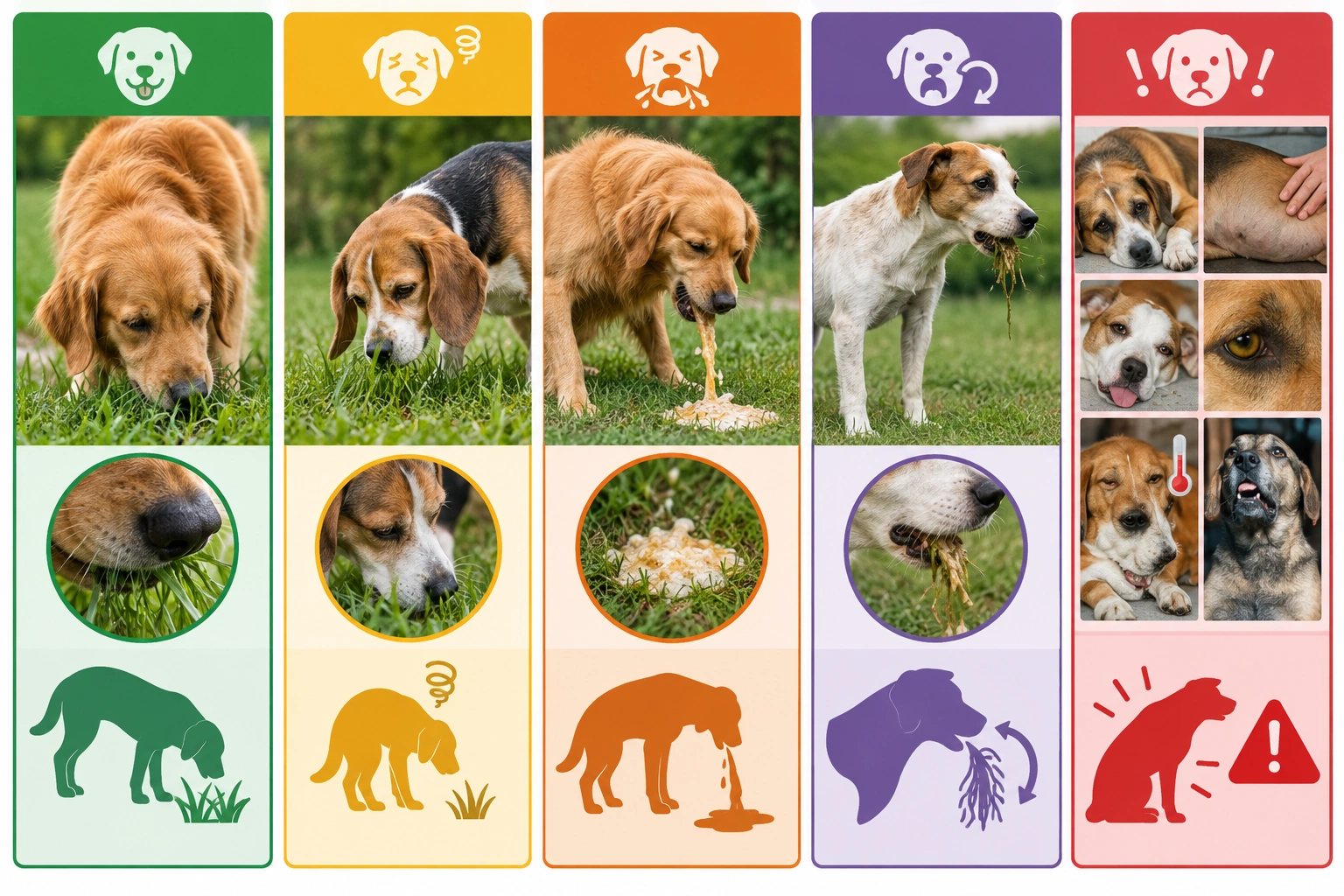
I see this behavior a lot in active dogs, including Border Collies. Sometimes it is brief and self-limited. Sometimes it is the first visible sign that the dog feels unwell. The difference matters because the next step changes: observe, adjust, or call the vet.
Why Dogs Eat Grass in the First Place
Grass-eating is common, and by itself it is not automatically a problem. Dogs may graze for several reasons that have nothing to do with illness:
- curiosity and exploration
- boredom or understimulation
- liking the taste or texture
- routine behavior on walks
- seeking roughage or fiber
- mild self-soothing or habit
Veterinary sources note that most grass-eating dogs are not sick beforehand and do not vomit afterward. One useful data point from VCA is that fewer than 25% of dogs vomit after eating grass, which is a good reminder that grass-eating and vomiting are related in some dogs, but not in most.
That said, “common” does not mean “ignore it forever.” The key question is whether your dog is grazing casually or urgently.
A practical way to think about it
If your dog sniffs, takes a few bites, and then moves on, that looks different from a dog that is frantically tearing at grass, swallowing fast, pacing, lip-licking, or making repeated attempts to eat grass and then soon afterward retching or vomiting. The first pattern is more consistent with harmless grazing. The second pattern fits nausea more often and deserves more attention.
When Grass-Eating Is Linked to Nausea or Stomach Upset
A lot of owners assume the dog eats grass to make itself vomit. That is a popular theory, but it is not well supported. Vetster notes that dogs do not eat grass to intentionally cause themselves to vomit.
A more useful way to look at it is this: some dogs eat grass because they already feel nauseated. Nauseated dogs often look for odd things to lick or chew, including carpet, upholstery, or grass. In that case, the grass is not the root cause — it is a clue that the dog already feels off.
This is where the timing matters. If a dog has an empty stomach and vomits yellow bile after eating grass, the bile may reflect an irritated stomach, but it does not prove the grass was the cause. It often tells you more about the dog’s digestive state than about the grass itself.
Why grass can still trigger vomiting
Even when nausea comes first, grass can make the episode worse. Long strands can irritate the stomach lining and trigger the vomiting reflex. In larger amounts, grass can also contribute to a blockage in the digestive tract, which is a much more serious problem.
So the real question is not “Did grass cause the vomiting?” but “Why did my dog seek grass in the first place, and what else is going on?”
Vomiting vs. Regurgitation: Why the Difference Matters
Owners often use “vomiting” for any food or fluid coming back up, but vomiting and regurgitation are not the same.
| Pattern | What it looks like | What it suggests |
|---|---|---|
| Normal grass-eating | Casual grazing, then normal behavior | Often harmless, especially if it happens rarely |
| Nausea-related grass-eating | Repeated licking, grass seeking, restlessness, then vomiting | The dog may already feel sick |
| Vomiting | Heaving, abdominal effort, bile, food, or foam | A digestive problem or illness more likely |
| Regurgitation | Passive return of food, little effort, often soon after eating | More consistent with esophagus-related issues |
| Urgent warning pattern | Vomiting plus pain, bloating, lethargy, blood, or inability to keep water down | Needs veterinary attention |
This distinction matters because regurgitation can point to a different problem than stomach vomiting. If food seems to come back up without much effort, or almost immediately after eating, that is worth telling your vet.
If your dog is coughing, gagging, or making repeated retching noises, it can also be easy to misread the event. I cover that difference in more detail in my guide to why dogs cough and gag.
Common Causes of Repeated Grass-Eating and Vomiting
When grass-eating and vomiting keep happening together, I think in terms of likely drivers rather than one single explanation. Home clues like timing, appetite, stool quality, and how often it happens can help narrow the possibilities.
1) Mild gastrointestinal upset
A dog with an irritated stomach may graze because it feels nauseated, then vomit because the stomach is already unsettled. This can happen after dietary indiscretion, a sudden food change, or simply eating something that did not agree with them. If the vomiting happens on an empty stomach, or the dog is licking, pacing, or acting unsettled before eating grass, nausea becomes more likely.
2) Dietary intolerance or food sensitivity
If the pattern repeats, especially with loose stool, gas, reduced appetite, or intermittent vomiting, food sensitivity becomes more plausible. That does not mean the dog needs an immediate diet overhaul, but it does mean the pattern is worth tracking. Stool changes after meals can be a helpful clue.
3) Parasites or intestinal infection
Repeated vomiting or vomiting plus diarrhea can point to parasites or a gastrointestinal infection. This is especially important in younger dogs, dogs with inconsistent parasite prevention, or dogs with access to contaminated areas. If the dog also has softer stool, mucus, or a sudden appetite change, this moves higher on the list.
4) Stress, arousal, or boredom
High-drive dogs may graze when mentally underfed or overstimulated. Border Collies are a good example: they are not just “energetic,” they are often intensely pattern-driven. A dog that has not had enough structured activity may start collecting habits that look odd but are really displacement behaviors. Grass-eating can fit that picture, though vomiting still means you should not assume it is only boredom.
5) Foreign body risk
If a dog is swallowing a lot of grass, especially along with sticks, mulch, toys, or other debris, the concern shifts. A foreign body can cause repeated vomiting, abdominal discomfort, and a dog that cannot settle. Repeated attempts to eat grass, followed by little or no appetite and ongoing vomiting, are especially concerning.
6) Other illness patterns
Pancreatitis, more serious gastrointestinal disease, and other systemic problems can also show up with vomiting and appetite changes. You do not need to diagnose those at home. You do need to recognize the pattern that says, “This is no longer a simple grass habit.”
Red Flags That Mean This Is More Than a Harmless Habit
This is the section to pay attention to if you are deciding whether to monitor or call a vet.
Seek veterinary advice promptly if you see any of the following:
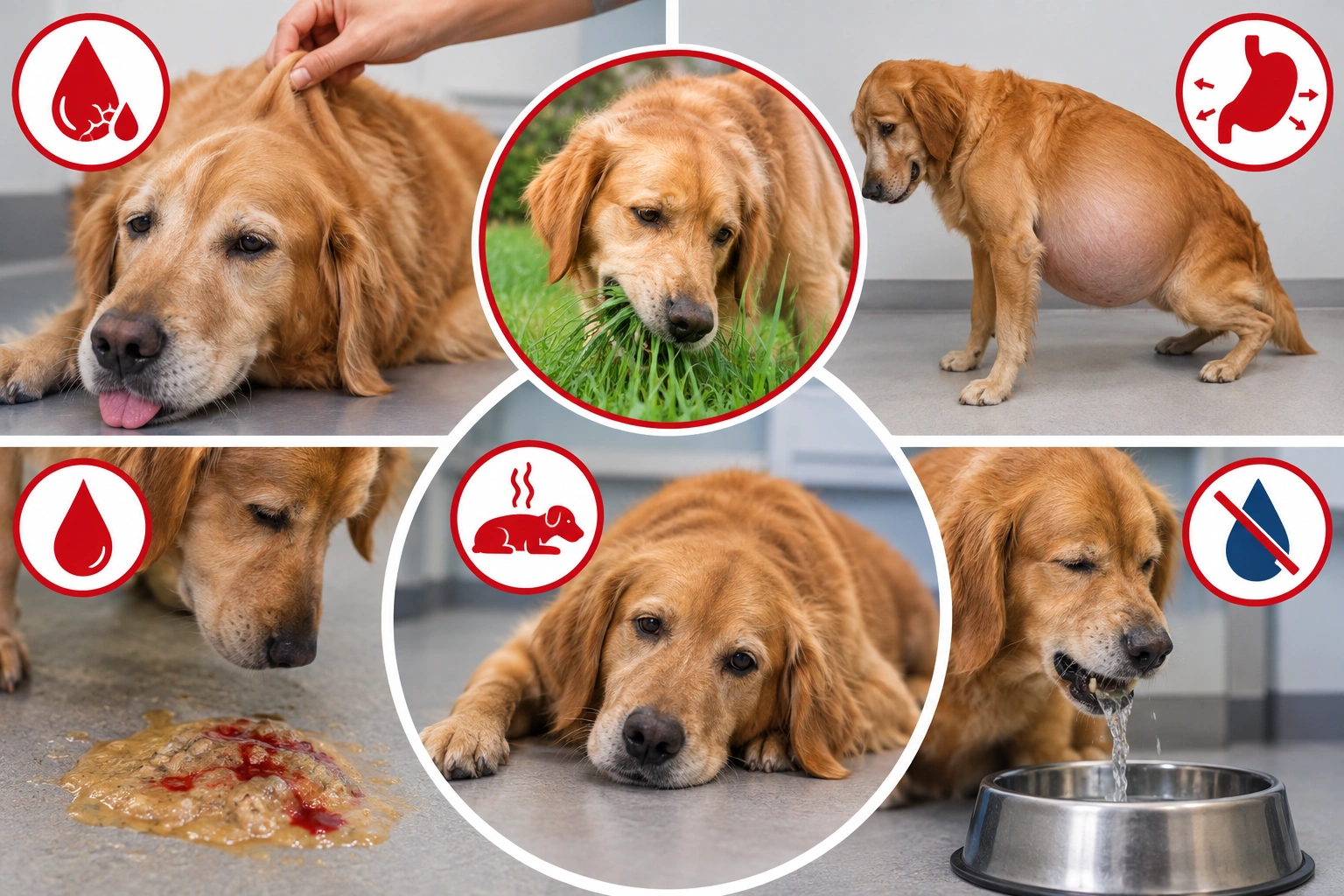
- repeated vomiting, not just one episode
- inability to keep water down
- lethargy or weakness
- abdominal pain or a hunched posture
- bloated or swollen abdomen
- blood in the vomit
- diarrhea plus weakness
- refusal to eat after vomiting
- signs of dehydration, such as tacky gums or marked thirst without improvement
- repeated retching with little or nothing coming up
- a history or suspicion of swallowing a foreign object
Bloat-like signs are especially urgent. A dog that is trying to vomit, looks distressed, and has a swollen abdomen needs immediate care, not observation.
The main decision rule is simple: if the dog looks sick, acts weak, cannot keep fluids down, or the vomiting is repeating, do not wait it out.
What to Do in the First 24 Hours
If your dog vomited once after eating grass, then returned to normal, is bright, and is keeping water down, short-term observation may be reasonable.
Here is the practical approach I use for owners:
1) Pause grass access temporarily
Keep the dog away from the area where the grazing happened, at least for the short term. That does not solve the cause, but it stops the pattern from repeating while you watch for other signs.
2) Watch the next meal, not just the vomit
A dog that wants food, drinks normally, and acts like themselves is different from a dog that refuses meals or seems uncomfortable after eating.
3) Offer water in normal amounts
Do not force large volumes. The goal is to see whether the dog can keep water down. If even small amounts come back up, that changes the urgency.
4) Keep notes
Write down:
– how many times the dog vomited
– what the vomit looked like
– whether there was grass, foam, food, or bile
– whether the dog ate before or after
– stool quality
– energy level
This helps you see whether the episode is isolated or part of a pattern.
5) Avoid making abrupt diet changes on a guess
A sudden diet change can muddy the picture. If the problem keeps happening, a vet-guided plan is better than improvising.
If your dog is a puppy, senior, or has a known medical condition, I would not rely on home observation for long. Even a single vomiting episode can justify calling your veterinarian sooner in those dogs, especially if the dog seems quieter than usual, has diarrhea, or is not interested in food or water.
When You Should Call the Veterinarian
A simple rule works well here:
- Monitor at home if it was a one-off, mild, and your dog is otherwise normal.
- Call the vet sooner if your dog is a puppy, senior, or has a chronic health issue, or if vomiting repeats, appetite drops, or grass-seeking keeps happening.
- Seek urgent care if there are red flags like bloating, blood, pain, repeated retching, weakness, or inability to keep water down.
If you are unsure, use the dog’s overall condition as the tie-breaker. A bright, comfortable dog that vomited once is different from a dog that keeps returning to grass, licking lips, pacing, or acting nauseated.
How to Reduce Recurrence
If the dog recovers and this becomes a recurring pattern, prevention should focus on the likely driver, not just the grass.
Review the feeding routine
Some dogs do worse with long gaps between meals. If vomiting tends to happen when the stomach is empty, talk with your vet about whether meal timing needs adjusting.
Look at diet quality and consistency
Frequent switching between foods, treats, and table scraps makes it harder to spot what is bothering the dog. Consistency is useful when you are trying to identify a trigger.
Keep parasite control current
If grass-eating and vomiting come with loose stool or happen after time outdoors, parasite prevention and fecal testing become more relevant.
Manage stress and under-stimulation
This matters especially for Border Collies and other high-drive dogs. A dog that is mentally underworked may invent habits. That does not mean more exercise alone will cure the issue, but it can reduce the background stress that feeds repetitive behavior.
Restrict access when needed
If your dog rushes to grass and then vomits, temporary management is reasonable while you investigate the cause. That may mean leash walks in grassy areas, supervised potty breaks, or avoiding the specific patch that seems to trigger the pattern.
For dogs with a tendency to eat inappropriate things, my guide on stopping a dog from eating poop covers some useful management principles that also apply here: supervision, access control, and pattern tracking.
Border Collie and Other High-Drive Dog Considerations
Border Collies are quick learners, but they are also quick to form habits. If a Border Collie discovers that grass-eating gets a reaction, breaks up a walk, or happens during arousal spikes, the behavior can repeat even when the original trigger was mild nausea or boredom.
That is why I do not treat this as “just a quirky habit” in a high-drive dog. I look at the whole picture:
- Is the dog overaroused?
- Is the dog under-stimulated?
- Is the dog eating grass only on certain routes or at certain times?
- Is vomiting happening before or after exercise?
- Are there stool changes, appetite shifts, or extra licking and lip-smacking?
Those clues help separate a pattern problem from a medical one.
What Reassurance Is Reasonable, and What Is Not
Reasonable reassurance looks like this: your dog ate a little grass, vomited once, then acted normal, drank water, and kept food down.
That pattern can be monitored.
What is not reasonable is assuming every episode is harmless just because the dog later seems fine. Repeated vomiting, worsening frequency, loss of appetite, diarrhea, weakness, abdominal pain, or an inability to keep water down all move the situation into veterinary territory.
If you want a simple decision rule, use this:
- Monitor at home if it was a one-off, mild, and your dog is otherwise normal.
- Call the vet if the pattern repeats or your dog seems off.
- Seek urgent care if there are red flags like bloating, blood, pain, or repeated retching.
For a broader reference on grass-eating behavior, the VCA Animal Hospitals guide to why dogs eat grass is a solid starting point, and ASPCA’s pet poisoning prevention guidance is worth reviewing if your dog may have accessed treated grass or other environmental toxins. If you want a general behavior perspective, the AKC’s dog health resources are also useful for owners who want a second trusted reference point.
FAQ
Is it normal for dogs to eat grass and vomit?
Occasionally, yes. A single episode can happen without serious illness. Repeated episodes are a different story and should be checked.
Why does my dog keep doing this?
Common reasons include nausea, mild stomach upset, dietary issues, parasites, stress, or simply a learned habit. Repetition is what makes it worth evaluating.
Should I stop my dog from eating grass?
Temporarily, yes, if it is leading to vomiting. Long term, the goal is to find out why the dog wants the grass in the first place.
What if my dog vomits yellow bile?
Yellow bile often shows up when the stomach is empty. It can happen after grass-eating, but it may also mean the dog was already nauseated.
When is this an emergency?
If your dog has a swollen belly, repeated retching, blood in vomit, weakness, or cannot keep water down, treat it as urgent.