
How to Tell If a Dog Is Cold: Signs, Risks, and Safe Ways to Warm Them

If you live with a Border Collie, you already know this breed can look tough in weather that sends other dogs straight back to the door. But “tough” is not the same as comfortable. Dogs often show cold stress in subtle ways long before they look truly unwell, and the job is to catch those clues early.
The fastest way to judge whether your dog is cold is to look at three things at once: body language, movement, and context. A dog that is briefly shivering on a brisk walk may simply need to keep moving or head home. A dog that is shivering, hunched, lifting paws, and trying to find shelter is telling you the cold is becoming a problem. If that same dog becomes weak, confused, or uncoordinated, you are no longer dealing with simple discomfort.
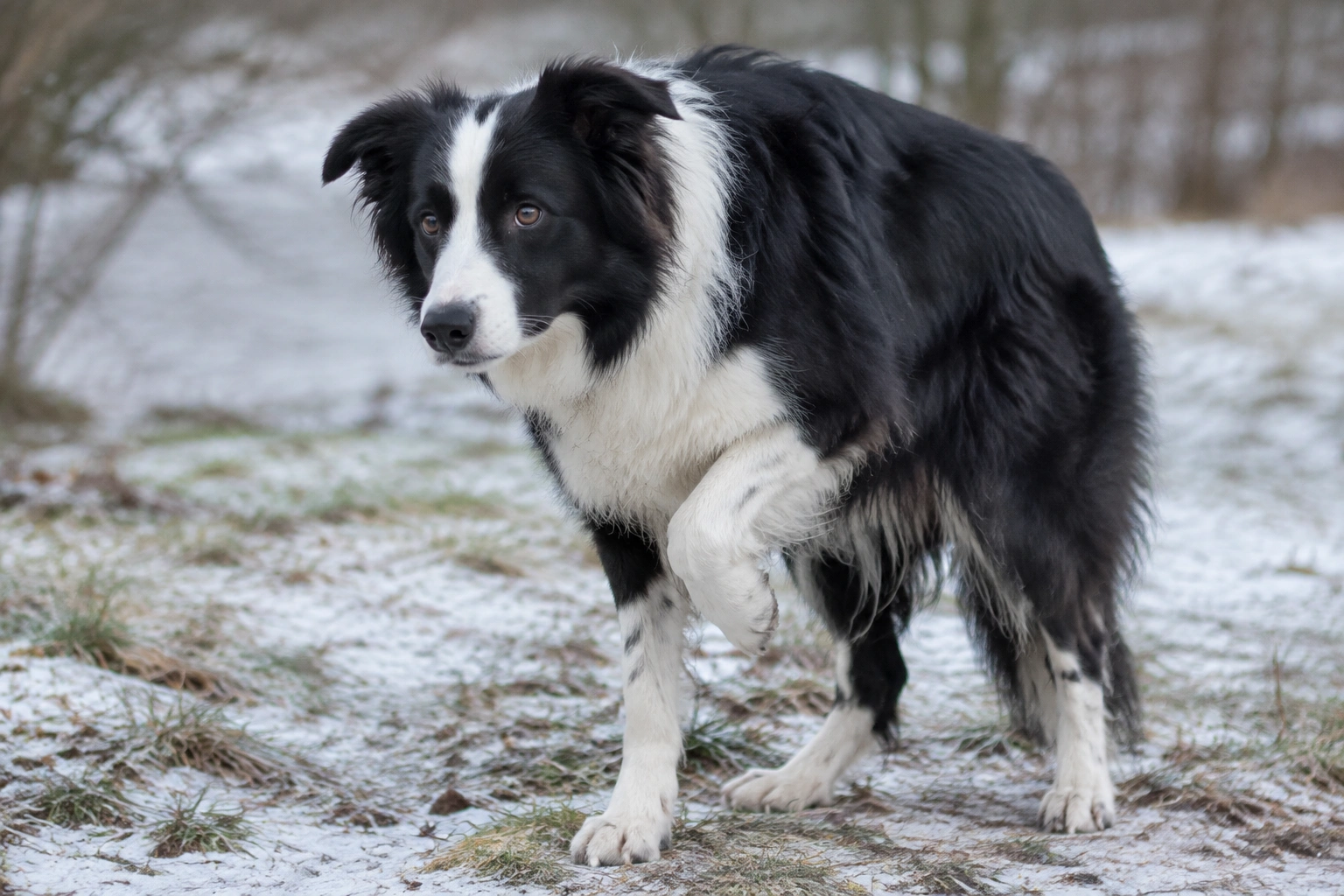
The quickest way to screen a cold dog
When I’m assessing a dog outdoors, I look for a pattern rather than a single sign. One clue by itself can be mild. Several clues together usually mean the dog needs help.
Mild cold discomfort
This often looks like:
– brief shivering or trembling
– a tucked tail
– a slightly hunched posture
– wanting to stand close to you or move toward warmth
– pausing more often on a walk
– lifting one paw, then continuing normally
That pattern usually means, “I’m chilly, but I’m still coping.”
Concerning cold stress
This is more serious and tends to include:
– persistent shivering
– reluctance to keep walking
– repeated paw lifting
– whining or anxious behavior
– curling up tightly or trying to hide
– slowing down in a way that seems out of character
– wet fur plus visible discomfort
At this stage, the dog should come in, dry off, and warm up.
Emergency signs
These are red flags for hypothermia or severe cold injury:
– weakness
– drowsiness or lethargy
– confusion
– poor coordination
– collapse
– pale gums
– loss of consciousness
The RSPCA’s winter guidance lists shivering, drowsiness and confusion, loss of coordination, pale gums, and collapse as signs of hypothermia. If you see those signs, this is not a “wait and see” situation.
When shivering is normal and when it is a warning
Shivering is the body’s way of making heat. That means it can be an early and normal response to cold. But context matters more than the shiver itself.
Shivering that is brief and stops once the dog is moving or sheltered can be a mild cold response. Shivering that keeps going, gets stronger, or comes with hunched posture, paw lifting, or distress is a warning to act.
Think of shivering as a signal with a timer on it. Short-lived shivering can be a warning to monitor. Prolonged shivering is a reason to act.
Signs the cold is becoming dangerous
Cold discomfort and cold injury are not the same thing. Once a dog starts showing systemic signs, you need to think about hypothermia, not just comfort.
Hypothermia warning signs
Hypothermia can develop when a dog loses heat faster than it can make it. Watch for:
– intense or persistent shivering
– lethargy
– confusion
– stumbling or loss of coordination
– slower responses than normal
– pale gums
– weakness
– collapse
The key point is that a dog may stop shivering if it becomes severely cold. That can make things look better when they are actually worse.
Frostbite warning signs
Frostbite risk is highest on exposed areas such as:
– ears
– paws
– tail tip
Look for skin that appears pale, gray, or blue, and for areas that feel unusually cold. Frostbite can be easy to miss at first because the dog may still be walking around. If the dog has been in snow, ice, or freezing wind, check paws and ears carefully when you come back inside.
If you want a second source on the difference between cold discomfort and medical concern, AKC’s winter safety guidance is a useful starting point for general cold-weather dog care, especially for owners deciding when to shorten outdoor time.
Which dogs get cold faster
Some dogs tolerate cold better than others, but no dog is automatically safe just because of breed.
Dogs that often handle cold better
Dogs with thicker coats, more body mass, and an active lifestyle often cope better in chilly weather. Border Collies usually fall closer to this group than to the “needs constant protection” group. Their double coat gives them a useful layer of insulation.
That said, insulation is not armor.
Dogs that lose heat faster
These dogs usually need more caution:
– puppies
– senior dogs
– small dogs
– short-haired breeds
– thin or underweight dogs
– dogs with health problems
– dogs recovering from illness or surgery
– dogs with wet fur
Wet fur is a big one. Once a dog’s coat is soaked, it loses insulating ability and chills much faster. PetMD notes that wind chill can cut through a dog’s coat and dampness can chill a dog quickly even if the air temperature does not seem extreme.
The practical takeaway
A healthy, dry Border Collie in moderate cold may be fine on a brisk walk, but only if the outing is short and conditions are calm. The same dog wet from rain, standing still in wind, or already tired from exercise can get cold much faster. Coat type matters, but so do moisture, wind, age, and energy level.
How weather and exposure change the risk
People often ask for a single temperature cutoff. In real life, that is too simplistic. Two dogs can experience the same temperature very differently depending on wind, dampness, and how long they are outside.
Wind
Wind strips away the warm air trapped in the coat. That means a breezy day can feel much harsher than the thermometer suggests.
Moisture
Rain, sleet, snowmelt, wet grass, and even a swim can make a dog lose heat quickly. A dog that seemed comfortable at the start of the walk may become chilled halfway through once the coat is damp.
Duration
A dog can tolerate a short exposure better than a long one. Five minutes in brisk weather is not the same as forty minutes standing around outside. This is why “my dog was fine earlier” is not a reliable safety rule.
Activity level
A moving dog generates more heat than a dog that is sitting, waiting, or sniffing in one place. That is why a Border Collie may seem fine while running but start shivering the moment the pace slows.
What to do right away if your dog seems cold
The response should be calm and simple.
-
Move the dog to shelter or indoors.
If the dog is shivering persistently, slowing down, or trying to hide, end the outing. -
Dry the coat as soon as you can.
Use a towel first. If the dog is soaked, a second dry towel helps more than one damp one. -
Offer a dry blanket or warm resting spot.
Let the dog settle in a quiet place away from drafts. -
Watch for improvement over the next few minutes.
Mild cold discomfort should start easing once the dog is dry and sheltered. -
Escalate if the dog does not improve.
If the dog stays weak, confused, or unusually quiet, call a veterinarian.
A dog that is simply chilly should look better fairly quickly once it is dry and warm. If it does not, assume the problem is more serious.
If you are considering a rectal temperature, treat that as a vet-level check and do not do it casually unless your veterinarian has already shown you how and told you to use it.
How to warm a cold dog safely
The goal is gradual warming, not sudden heating.
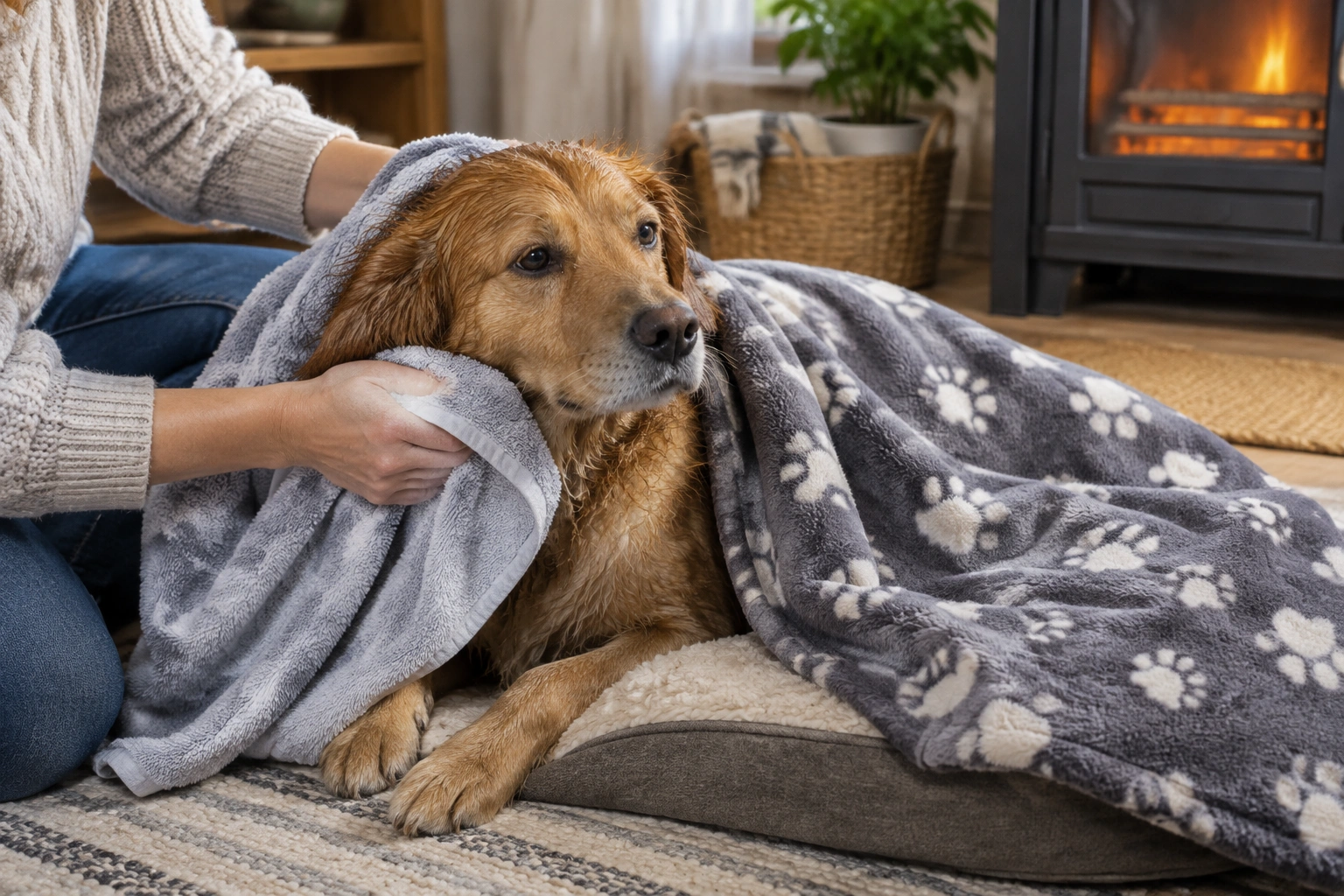
Safer warming methods
- bring the dog indoors
- dry wet fur thoroughly
- use blankets
- let the dog rest in a warm room
- use your body warmth if the dog is small and calm
The RSPCA advises slowly increasing a dog’s temperature if hypothermia signs are present and not heating the dog too quickly or placing anything hot directly against the skin.
What not to do
Avoid:
– heating pads against the skin
– very hot water
– direct contact with a space heater
– wrapping the dog so tightly that you cannot monitor it
– trying to “fix it fast” with aggressive heat
The reason is simple: a cold dog can be injured by rapid or uneven heating, and you also risk missing a worsening medical problem.
If the dog is shivering hard, unable to coordinate, or seems mentally dull, warming is only first aid. It does not replace veterinary care.
Decision rule: if your dog is only mildly cold, dry it, warm it gradually, and monitor for improvement; if it is weak, confused, uncoordinated, collapsing, or has pale gums, skip home care and contact a veterinarian right away.
Do Border Collies get cold easily?
Border Collies often tolerate cold better than short-coated breeds, and many do well in cool weather because of their double coat and athletic build. But that does not mean they are cold-proof.
In practice, Border Collies are more likely to get chilled when:
– they are wet
– they are standing still
– the wind is strong
– they are young or old
– they are underweight
– they are sick or recovering
– the outing is longer than expected
This is where owners can misread the breed. A Border Collie may look energetic and “fine” until the moment it stops moving. Then the cold shows up quickly.
Does my dog need a coat, sweater, or boots?
This is less about breed labels and more about how your dog behaves in the conditions in front of you.
A coat or sweater helps when:
- the dog is short-haired or small
- the weather is cold and windy
- the dog will be outside for more than a quick potty break
- the dog is older, thin, or less active
- the dog tends to shiver before the walk is over
A coat may be unnecessary when:
- the dog has a dense coat and is active
- the weather is cool but dry and calm
- the dog is only outside briefly
- the dog seems comfortable without extra insulation
Boots help when:
- snow, ice, or road salt is irritating the paws
- the dog repeatedly lifts its feet
- the ground is painfully cold
- you need a longer walk in winter conditions
Border Collie rule of thumb
For Border Collies, extra protection is more likely to help when the outing is not an active run but a period of standing, waiting, or slow walking in wet weather or below-freezing wind. If the dog is dry, moving, and the weather is calm, a coat may not be necessary. If the dog will be inactive for a while, the coat or sweater becomes more useful.
Trade-off to keep in mind
Some dogs hate coats and boots enough that they move worse in them. If a dog becomes stiff, distracted, or refuses to walk, gear that was meant to help may be making the outing harder. In that case, shorter outings and better timing may be the better solution.
How to adjust walks and outdoor time in cold weather
The best cold-weather decision is often to change the outing before the dog becomes uncomfortable.
Shorten the walk if:
– shivering starts and does not fade
– the dog keeps lifting paws
– the dog slows down or stops exploring
– the coat becomes wet
– the wind picks up
Stop the walk if:
– the dog is clearly distressed
– the dog is trembling hard
– the dog refuses to continue
– the dog seems weak or unsteady
For Border Collies, this can mean splitting exercise into a few shorter outings instead of one long winter session. You still meet the dog’s need for movement, but you reduce the time spent in the coldest part of the environment.
A useful rule: if your dog is asking to go home before you would have chosen to end the walk, listen.
When to see a veterinarian or certified trainer
For this topic, a veterinarian is the right professional when the concern is physical cold stress, not behavior training.
Call a veterinarian promptly if your dog:
– has persistent shivering that does not ease after warming
– is weak or lethargic
– seems confused or disoriented
– stumbles or cannot coordinate well
– collapses
– has pale gums
– may have frostbite on the ears, paws, or tail
– does not return to normal after coming indoors and drying off
You should also call if you are unsure whether the dog is simply uncomfortable or actually becoming hypothermic. That uncertainty is reason enough.
A simple rule you can use today
If your dog is dry, alert, coordinated, and only briefly shivering, you are probably dealing with mild cold discomfort. If the dog is wet, repeatedly trying to stop, lifting paws, or seeking warmth, it needs to come in. If the dog becomes weak, confused, or uncoordinated, treat it as a medical issue and contact a veterinarian.
That framework works well for Border Collies because it respects what the breed can handle without assuming they are invincible.
Frequently asked questions
How can I tell if my dog is cold inside the house?
Look for shivering, curling tightly, seeking blankets, and reluctance to leave warm spots. If the room feels cool to you and your dog is choosing the warmest place available, that is useful information.
Is shivering always bad?
No. Brief shivering can be a normal response to cold. It becomes concerning when it is prolonged, intense, or paired with weakness, confusion, or poor coordination.
Can a dog get too cold even if it is moving?
Yes. Movement helps, but wind, wet fur, and long exposure can still overwhelm a dog’s ability to stay warm.
Should a Border Collie wear a coat?
Sometimes. Many Border Collies do fine without one in cool, dry weather, but coats help when the dog is wet, the wind is strong, or the outing is long.
When is it an emergency?
When your dog shows weakness, confusion, collapse, poor coordination, or signs of frostbite. Those are not normal cold-weather behaviors.
How fast should a cold dog warm up?
A mildly cold dog should start improving fairly quickly once dry and sheltered. If there is no clear improvement, or the dog seems worse, call a vet.
Do I need to check paws after winter walks?
Yes. Paws are one of the first places to show irritation or cold injury, especially in snow, ice, and salted areas.
What is the safest first step if I suspect my dog is too cold?
Bring the dog inside or to shelter, dry the fur, and assess whether the dog is improving. If not, contact a veterinarian.