
What Kidney Failure in Dogs Looks Like: Signs, Stages, and When to Act

If you’re trying to figure out what kidney failure in dogs looks like, the most useful answer is not a single symptom. It’s a pattern.
A dog with kidney failure often looks “off” in a way that is easy to dismiss at first: drinking more, peeing more, eating less, losing weight slowly, or seeming flatter and less interested in normal life. As the problem progresses, the dog may become nauseated, vomit, look dehydrated, develop bad breath, or seem weak and dull. In more serious cases, the dog can stop drinking, urinate far less, or act suddenly and severely ill.
A sudden change like this is urgent because acute kidney injury can be triggered by things like toxins, certain medications, infections, or a urinary blockage. Sudden vomiting, weakness, or not urinating can mean the kidneys are being affected quickly, but other serious illnesses can look similar too.
For Border Collie owners, this matters because an active dog can sometimes hide illness surprisingly well. A dog that is usually energetic may simply seem a little less keen on fetch, slower to get up, or less food-motivated. That quiet change is often the first clue.
What Kidney Failure in Dogs Usually Looks Like
The first thing many owners notice is not a dramatic collapse. It is a dog that feels subtly “not right.”
A dog with kidney trouble may:
- Visit the water bowl more often
- Ask to go outside more frequently
- Urinate larger amounts, or have accidents indoors
- Lose interest in food or treats
- Seem less playful or less sharp
- Lose weight even though the diet has not changed
That early stage can look a lot like aging, stress, or a mild stomach issue. The difference is the pattern and persistence. When kidney function is declining, the changes tend to hang around or gradually worsen instead of clearing up in a day or two.
In later stages, the dog may look plainly sick: dull eyes, poor appetite, nausea, vomiting, weakness, dehydration, and a rougher, less cared-for appearance. Some dogs also develop a chemical or ammonia-like mouth odor, which can be a possible clue that waste products are building up in the body.
If you want a simple visual rule, this is it: a dog with kidney failure often looks tired, thirsty, and “washed out,” then gradually becomes less stable, less interested in food, and less comfortable overall.
Early Signs: The Changes Owners Notice First
Early kidney disease often announces itself through thirst and urination before it announces itself through vomiting or collapse.
More drinking than usual
A dog that suddenly empties the water bowl faster, asks for refills, or starts drinking from unusual places may be showing one of the earliest warning signs. Increased thirst can happen for several reasons, so it is not proof of kidney failure by itself. But if it is new and persistent, it deserves attention.
More urination, larger urine volume, or accidents
Kidney disease can change how well the kidneys concentrate urine. That often leads to more frequent urination and larger urine output. Some owners first notice puddles by the door, a dog that cannot quite hold it through the night, or a pet that needs to go out far more often than usual.
This is one reason kidney disease can be mistaken for a house-training issue or “old age.” A Border Collie that used to hold urine overnight and suddenly cannot may not be being difficult. It may be sick.
Mild appetite change and slow weight loss
Early kidney disease can make food less appealing before the dog stops eating completely. You may notice:
- Leaving a few bites behind
- Taking treats less eagerly
- Eating, but with less enthusiasm
- Gradual weight loss over weeks
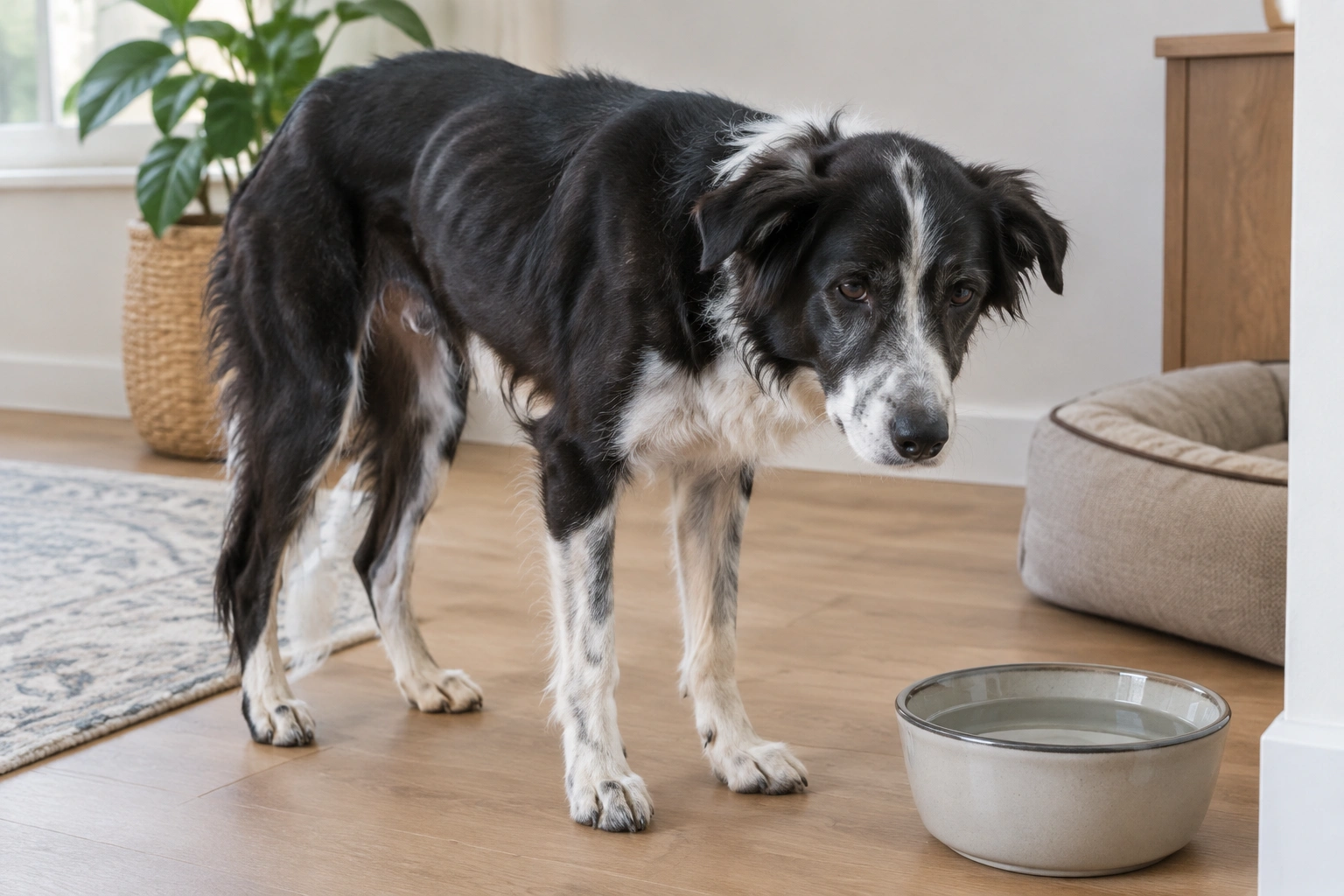
That slow decline matters. Weight loss without an obvious diet change is never something to shrug off, especially if it comes with increased drinking or urination.
Why these signs show up first
The kidneys help regulate water balance and filter waste. When they are not working properly, the body often tries to compensate by making more urine. The dog then drinks more to keep up. That compensation can keep the dog looking “mostly fine” for a while, which is why early kidney disease is easy to miss.
Later Signs: When Kidney Failure Becomes Hard to Miss
As kidney function worsens, waste products and fluid balance problems start to affect the whole body. That is when the dog usually looks obviously unwell.
Nausea and vomiting
A dog may drool, lick its lips, turn away from food, or vomit repeatedly. Some dogs vomit after drinking. Others seem hungry but cannot settle enough to eat. Nausea is often visible before vomiting starts.
Bad breath and mouth discomfort
Kidney failure can cause a strong, unpleasant breath odor. Some dogs may also develop mouth ulcers or appear painful when eating. If a dog wants food but then backs away, chews oddly, or drops kibble, mouth discomfort is worth considering.
Dehydration despite drinking
This confuses many owners. A dog can still be drinking and still be dehydrated. If the kidneys are not holding fluid balance normally, the dog may not be able to keep up. Signs can include tacky gums, sunken eyes, weakness, or a dull coat.
Weakness, dullness, and low energy
A dog that used to greet you at the door may stay curled up. A Border Collie that once chased a ball for hours may lose interest after a few throws or refuse activity altogether. This is not the same as a dog simply being tired after exercise. It is a deeper lack of energy and engagement.
Weight loss and muscle loss
As kidney failure progresses, the dog may become visibly thinner, especially over the back and hindquarters. The body condition can decline even if the dog is still eating some food.
Reduced urination in severe cases
Not every dog with kidney failure urinates less, but a sharp drop in urine output can be a serious sign. In some cases, especially with acute kidney injury, the dog may produce very little urine or none at all. That is an emergency-level concern.
What a Dog With Kidney Failure May Look Like Day to Day
A practical way to think about it is to imagine the dog’s routine becoming smaller and flatter.
A typical day might look like this:
- The dog wakes up but seems slow to get moving
- It drinks from the bowl more often than usual
- It asks to go outside repeatedly, or has accidents
- It sniffs food, eats a little, then walks away
- It lies down more and plays less
- It may seem mildly nauseated or lip-licking
- By evening, it looks more tired than expected
That picture can be easy to confuse with stress, heat, or a minor bug. What makes kidney disease stand out is the combination of drinking/urination changes plus appetite, weight, or energy changes. One sign alone is less convincing than a cluster of signs that continue over days.
For Border Collies especially, watch for a dog that still wants to be near you but has lost its usual drive. These dogs can sometimes seem determined to keep up with routines even when they feel unwell.
Kidney Failure vs Normal Aging, UTI, Diabetes, or Stomach Illness
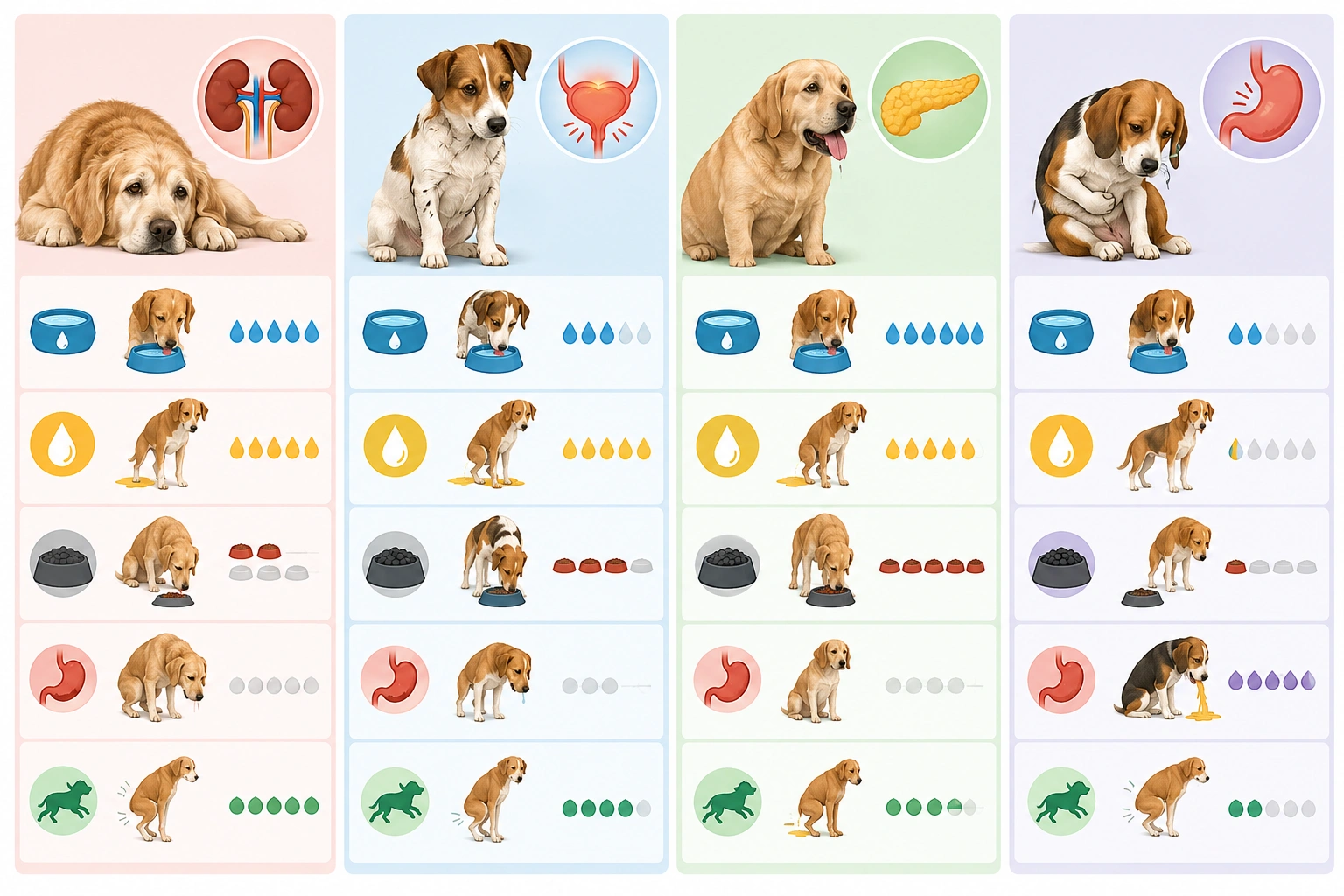
This is where owners often get stuck. Several common problems can look similar at first.
| Condition | What may look similar | Clues that point more strongly in that direction |
|---|---|---|
| Kidney failure | Drinking more, urinating more, weight loss, poor appetite, vomiting, lethargy | Ongoing pattern, dehydration, bad breath, dullness, worsening appetite, possible mouth ulcers |
| Normal aging | Slower movement, less stamina, more sleeping | Usually not a major change in thirst, urine volume, or appetite; should not cause repeated vomiting or marked weight loss |
| UTI | Frequent urination, accidents, discomfort | Often small frequent urinations, straining, or signs of pain; may or may not involve increased thirst |
| Diabetes | Drinking more, urinating more, weight loss, increased appetite at first | Some dogs eat more rather than less early on; can progress to weakness or vomiting if uncontrolled |
| Gastrointestinal illness | Vomiting, poor appetite, lethargy | Often more sudden and may center on the stomach; kidney disease becomes more likely if thirst/urination changes are also present |
A few practical rules help:
- More drinking plus more urination raises concern for kidney disease, diabetes, or another hormone/metabolic problem.
- Vomiting plus bad breath plus weight loss makes kidney disease more plausible.
- Frequent small urinations with straining leans more toward urinary tract disease than kidney failure.
- Sudden vomiting and weakness can be a stomach issue, but it can also be acute kidney injury.
The key point is this: symptoms overlap too much to diagnose by appearance alone. That is why testing matters.
For general dog health guidance from a veterinary source, see VCA Hospitals’ pet care resources.
Acute Kidney Injury vs Chronic Kidney Disease: Why the Pattern Matters
Kidney failure can develop in two very different ways.
Acute kidney injury
This comes on suddenly, sometimes over hours or days. A dog may go from normal to very sick quickly. You may see:
- Sudden vomiting
- Refusal to drink
- Marked weakness
- Rapid decline in alertness
- Reduced or absent urination
Because the change is abrupt, acute kidney injury is often treated as urgent. The dog may need prompt fluids and veterinary stabilization.
Chronic kidney disease
This usually develops gradually. The dog may look “a bit off” for weeks or months before the signs become obvious. Common signs include:
- Slow weight loss
- Increased drinking and urination
- Lower appetite
- More tired behavior
- Intermittent vomiting or nausea
Chronic disease can be easier to miss because the dog may still seem fairly functional at first. That does not make it mild. It means the body has had time to adapt.
Why the distinction matters
A sudden crash usually means you should not wait for a routine appointment. A gradual decline still needs veterinary attention, but the urgency may be different depending on how sick the dog looks right now.
When the Signs Mean Same-Day Vet Care or an Emergency
Seek veterinary help promptly if your dog has kidney-failure-type signs and any of the following:
- Repeated vomiting
- Refusal to eat or drink
- Marked weakness or collapse
- Very dull or confused behavior
- Signs of dehydration
- Little or no urination
- Sudden onset of severe illness
- Inability to keep water down
If the dog is suddenly much worse, seems painful, or is producing very little urine, treat it as urgent. For example, repeated vomiting plus no urination is emergency-level, as is collapse or not being able to keep water down at all. Acute kidney injury can deteriorate quickly, but so can other serious emergencies that look similar at home.
If the symptoms are milder but persistent — for example, increased thirst, more urination, and slow weight loss over a couple of weeks — schedule a veterinary visit soon rather than waiting to “see if it passes.”
What Vets Use to Confirm Kidney Failure
A dog can look suspicious for kidney disease and still need testing to know what is really going on.
Veterinarians commonly use:
- Bloodwork to look at waste products and overall health
- BUN and creatinine to help assess kidney function
- SDMA as an additional kidney marker
- Urinalysis to check urine concentration and look for other clues
- Electrolytes to see whether minerals are out of balance
- Hydration assessment and a physical exam
- Sometimes imaging if the vet needs to look for obstruction or structural disease
These tests matter because kidney failure can resemble diabetes, infection, dehydration, or gastrointestinal disease. A dog may look one way at home and turn out to have a different problem entirely.
What You Can Observe and Record Before the Appointment
Before you go to the vet, gather a few simple details. Keep it brief if the dog is very sick.
Write down:
- When the drinking changes started
- Whether the dog is urinating more, less, or having accidents
- Any vomiting, diarrhea, or drooling
- Appetite changes, including refusal of treats
- Weight loss or visible thinning
- Any sudden behavior change, weakness, or collapse
- Whether the dog is still keeping water down
For the next few hours, a simple checklist can help you stay organized:
– How many times the dog drinks
– Whether it asks to go out more than usual
– Whether urine amount looks larger, smaller, or absent
– Any vomiting episodes and what they look like
– Whether the dog can keep water down
– Whether energy is improving, staying the same, or getting worse
If you can safely do so, note how often the dog is going out and whether urine volume seems larger or smaller than normal. Those details help the veterinarian decide how urgent the case is and what tests to prioritize.
What Treatment Can Change If It’s Caught Early
Early recognition matters because some causes of kidney trouble are more manageable when caught sooner. A veterinarian may use supportive care such as IV or subcutaneous fluids, anti-nausea medication, and treatment for the underlying cause when one is found. In some cases, that can improve comfort quickly and may change the outlook.
The important point for owners is not to guess at treatment at home. It is to get the dog seen before the problem becomes severe enough to cause dehydration, repeated vomiting, or major weakness.
When to See a Veterinarian or Certified Trainer
For suspected kidney failure, this is a veterinary issue, not a training issue. If your dog has increased thirst and urination plus appetite loss, vomiting, weight loss, weakness, or bad breath, arrange a veterinary exam promptly.
If the dog is collapsing, not drinking, vomiting repeatedly, or barely urinating, go to an emergency clinic.
For Border Collie owners, one final caution: a highly active dog can look “fine enough” until it isn’t. If the behavior change is real and persistent, trust the pattern, not just the dog’s willingness to keep going.
FAQs
What are the first signs of kidney failure in dogs?
The earliest signs are often increased drinking, increased urination, mild appetite change, and slow weight loss. Many dogs still seem fairly normal at this stage.
Does kidney failure always cause vomiting?
No. Vomiting is common as the disease progresses, but some dogs show thirst, urination, appetite, or weight changes first.
Can a dog with kidney failure still drink water?
Yes. In fact, many dogs drink more at first. A dog can still be dehydrated even if it is drinking.
Is bad breath a sign of kidney failure?
It can be. A strong, unpleasant breath odor may happen when waste products build up, though dental disease can cause bad breath too.
How do I tell kidney failure from a stomach bug?
A stomach bug usually centers on vomiting or diarrhea and may pass quickly, but some serious gastrointestinal problems can mimic kidney disease. Kidney disease is more likely when vomiting comes with increased thirst, increased urination, weight loss, or ongoing dullness.
Should I wait and watch if my dog is still eating a little?
If the dog is drinking more than usual, losing weight, vomiting, or acting weak, do not rely on waiting. Kidney disease can be serious even before appetite disappears completely.
What tests confirm kidney failure?
Veterinarians usually use bloodwork, urinalysis, electrolyte checks, and sometimes imaging. Appearance alone is not enough to confirm it.
Can kidney failure be treated?
Some causes can be treated or stabilized, especially when found early. The sooner a veterinarian evaluates the dog, the better the chance of helping the dog feel better and preventing further decline.
For broader breed-specific care context, you may also find our guide on what a Border Collie coat looks like useful when you’re learning to notice subtle changes in condition and body appearance over time.