
How to Help a Dog With an Ear Infection Safely and Know When to Call the Vet

Ear problems can go from “a little head shaking” to a miserable, painful mess fast. If your dog is scratching at one ear, shaking their head, or you’ve noticed odor or discharge, the goal is not to guess and treat everything at home. The goal is to reduce irritation safely, avoid making the ear worse, and decide whether this is a vet case now.
Quick decision path: if the ear is only mildly dirty or itchy and your dog is otherwise comfortable, supportive home care may be okay for a short time. If the ear is painful, has foul odor, significant discharge, or symptoms are worsening, avoid cleaning and call the vet. If there is bleeding, a head tilt, balance trouble, or suspicion of a ruptured eardrum, seek veterinary care immediately.
That matters because ear infections in dogs often look similar on the surface even when the cause is different. Bacteria, yeast, ear mites, allergies, trapped debris, and moisture can all create overlapping symptoms. The treatment that helps one problem may do nothing for another.
For Border Collies and other active dogs, the risk often comes from the lifestyle side of the equation: swimming, running through brush, dust, grass seeds, and the occasional allergy flare-up. Border Collies are not the classic “floppy-eared” breed people think of, but they still get ear trouble when the ear canal gets irritated or stays damp.
How to Tell If Your Dog Likely Has an Ear Infection
The most common warning signs are hard to miss once you know what to look for:
- repeated head shaking
- scratching at one or both ears
- redness inside the ear flap or canal
- odor from the ear
- discharge, which may be brown, yellow, or waxy
- pain when the ear is touched
- swelling or obvious sensitivity
A foul smell is one of the clues that pushes the problem beyond simple itchiness. So does a dog that suddenly refuses ear handling or yelps when the ear is brushed against. Mild irritation may make a dog a little itchy and usually improves after the trigger is removed. Infection, by contrast, tends to persist, worsen, or produce odor or discharge.
A useful rule: if the ear problem is getting worse instead of settling down, treat it as more than a minor annoyance.
Signs that suggest it may not be a simple infection
Some ear symptoms point to another cause, or to a problem layered on top of infection:
- very sudden onset after outdoor activity can suggest a foreign object, like a grass seed
- intense itch with little odor may fit ear mites more than a typical yeast or bacterial infection
- ear rubbing plus other allergy signs, such as paw licking or skin itching, may mean the ear is part of a bigger allergy issue
- head tilt, balance trouble, or walking strangely can mean the problem is deeper or more serious
If you’re trying to decide whether this is “wait and watch” or “book the vet,” the presence of pain, smell, discharge, or worsening behavior usually tips the scale toward veterinary care.
Ear Infection vs. Ear Mites, Allergies, or a Foreign Object
This comparison helps because owners often assume every itchy ear is the same thing. It isn’t.
| Possible cause | Clues you may notice | What tends to stand out |
|---|---|---|
| Ear infection | odor, discharge, redness, head shaking, pain | often looks inflamed and uncomfortable |
| Ear mites | intense itch, dark debris, often more scratching than odor | can look like coffee grounds in the ear |
| Allergies | both ears may be affected, recurring itching, other skin signs | often comes and goes with broader allergy flares |
| Foreign object | sudden onset, one ear only, head shaking after outdoor play | may start abruptly after grass, brush, or swimming |
A foreign object is the one I treat with the most caution. If the problem began right after a hike, a run through tall grass, or a swim, and one ear is suddenly much worse than the other, don’t assume infection first. Something may be stuck in the canal, and cleaning blindly can push it deeper.
Ear mites are another common mix-up. They often cause strong itchiness and dark debris, but the smell may not be as obvious as with a bacterial or yeast infection. A veterinarian can sort that out quickly with an ear exam.
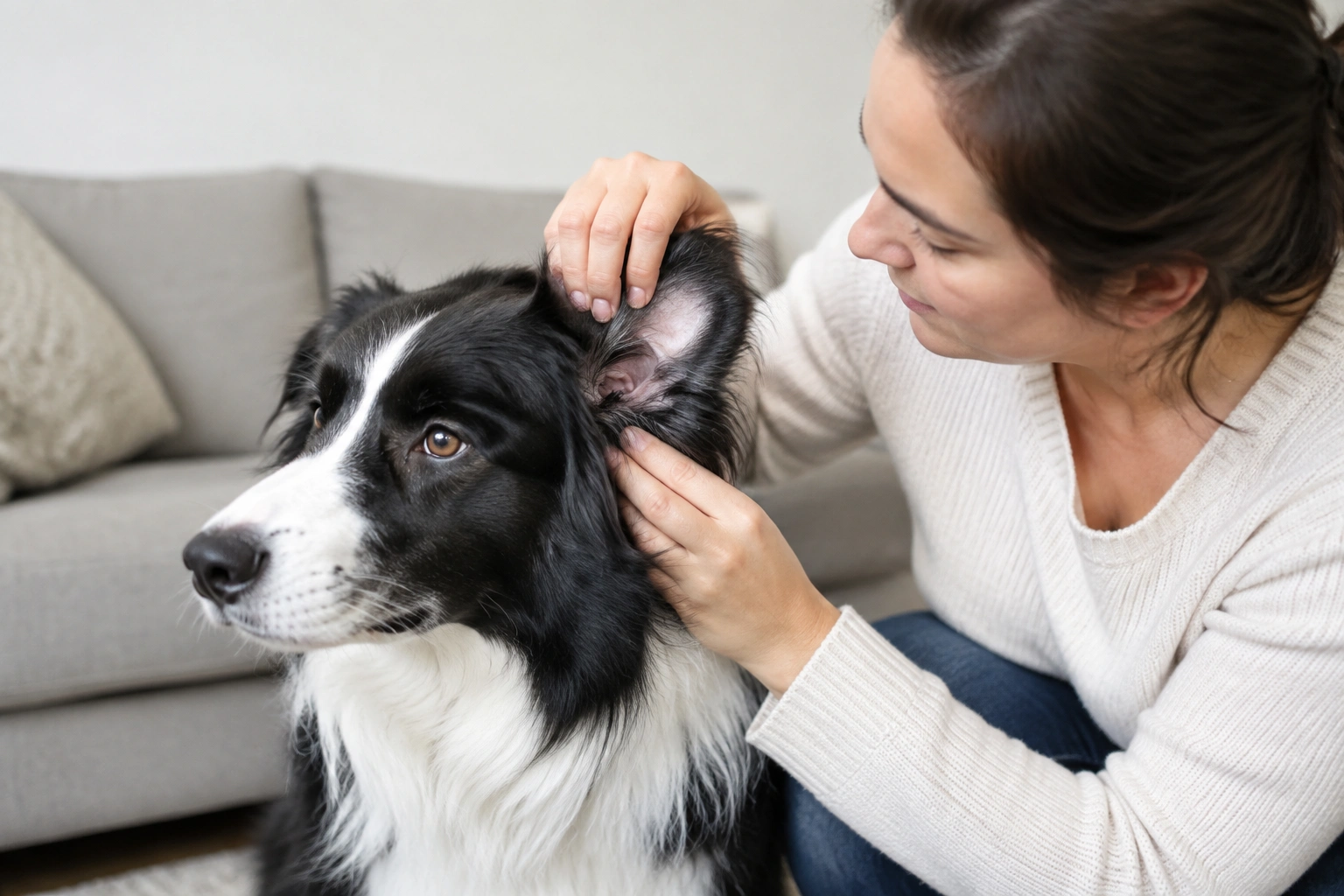
What You Can Safely Do at Home Right Now
If your dog is uncomfortable but not in severe pain, your job at home is simple: keep the ear from getting worse.
Here’s what helps without taking unnecessary risks:
- stop rough ear handling
- prevent more scratching if the dog is tearing at the ear
- keep the ear dry
- avoid swimming or bathing until the ear is checked
- watch for worsening pain, swelling, discharge, or balance changes
If your dog is scratching hard enough to injure the ear flap, an Elizabethan collar may be worth using temporarily. That is not a treatment for the infection itself, but it can reduce self-trauma while you arrange care. Home care is supportive only; it is not a substitute for veterinary treatment when infection is suspected.
What not to do is just as important. Don’t try to “flush it out” with random liquids. Don’t keep probing the ear to see what’s inside. And don’t assume that if the dog is still eating, the ear can wait indefinitely. Ear pain often gets missed because dogs keep functioning.
For a broader overview of safe first steps and common mistakes, see our guide on how to get rid of a dog’s ear infection safely.
When It Is Safe to Clean a Dog’s Ear — and When It Is Not
Cleaning can help in some situations, but it is not the universal answer.
Cleaning may be reasonable when:
– your veterinarian has already shown you how
– the ear is mildly dirty but not severely painful
– the dog is calm and allows handling
– the canal is not swollen shut
– there is no bleeding or strong suspicion of a ruptured eardrum
Do not clean if there is a foul odor plus pain, significant discharge, or any suspicion of a ruptured eardrum unless your veterinarian has instructed you otherwise.
Cleaning is not a good idea when:
– the dog cries, jerks away, or seems in real pain
– the ear is bleeding
– the ear is very swollen
– there is a head tilt or balance problem
– you suspect the eardrum could be damaged
That last point matters. If the eardrum may be compromised, putting the wrong product in the ear can cause more trouble. When in doubt, leave the ear alone until a veterinarian checks it.
How to Clean a Dog’s Ear Correctly If Your Veterinarian Says It’s Okay
If your vet has recommended cleaning, the safest approach is gentle and controlled.
Use a veterinarian-recommended ear cleanser, not a kitchen remedy. Follow the label or your vet’s instructions. In general, the process is:
- Hold the ear flap up.
- Apply the cleanser into the ear canal as directed.
- Massage the base of the ear for a few seconds so the cleaner can loosen debris.
- Let your dog shake.
- Wipe away loosened material from the visible parts of the ear with gauze or cotton pads.
The goal is to remove debris from the ear opening and outer canal, not to “deep clean” the ear.
Two common mistakes make things worse:
– using too much pressure
– going too deep with cotton swabs
Cotton swabs can push debris farther in and irritate the canal. They’re fine for the outer folds if your vet says so, but not for digging around inside the ear.
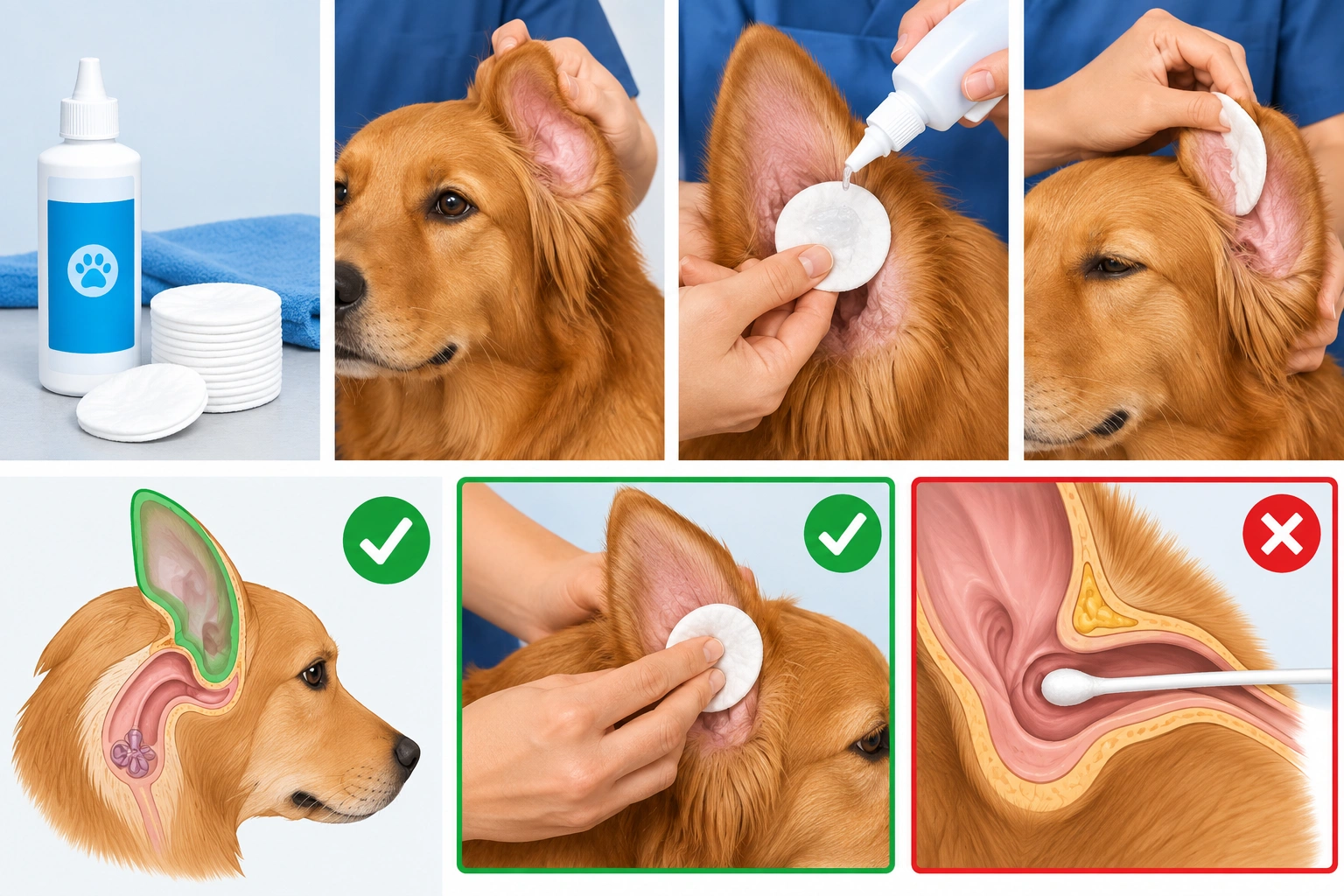
If your dog is already sensitive, a single gentle cleaning may be enough until the vet visit. Repeated cleaning without knowing the cause can inflame the canal further.
What Not to Put in a Dog’s Ear
This is the section that prevents a lot of avoidable damage.
Do not put these in the ear unless a veterinarian specifically tells you to:
- alcohol
- hydrogen peroxide
- vinegar
- essential oils
- human ear drops
- random OTC ear cleaners not meant for the current problem
These can sting, dry out tissue, worsen inflammation, or be unsafe if the eardrum is damaged. Essential oils are especially risky because “natural” does not mean harmless in the ear canal.
Also avoid deep cotton swabs. If you can’t see the material you’re removing, you’re probably too far in.
When an Ear Infection Needs Veterinary Care Now
Some ear problems should not wait.
Get prompt veterinary care if your dog has:
– severe pain
– marked swelling
– bleeding
– pus or heavy discharge
– a head tilt
– loss of balance
– rapid worsening
– sudden one-sided symptoms after outdoor activity
– signs of self-trauma from nonstop scratching
A dog that keeps shaking its head hard enough to bruise the ear flap is also at risk of an aural hematoma, which can become a separate painful problem. That’s another reason not to wait too long.
If the dog seems miserable, the ear is hot and swollen, or the symptoms are spreading rather than improving, book the vet. Ear infections rarely “just clear up” once they’re established, especially when the cause hasn’t been identified.
What a Veterinarian Will Check and Why Prescription Treatment Is Often Needed
A vet visit is not just about getting drops. It’s about finding out what kind of ear problem this actually is.
A veterinarian may check:
– the ear canal with an otoscope
– the type of discharge
– signs of inflammation
– whether the eardrum looks intact
– ear cytology, which helps identify yeast, bacteria, or inflammatory cells
– whether the problem might be linked to allergies or another underlying issue
That matters because treatment is usually targeted. A yeast infection does not always need the same approach as a bacterial one. If the ear is deeply inflamed, very painful, or recurrent, prescription medication is often the fastest path to relief because it addresses the actual cause instead of just calming the surface symptoms.
For a veterinary reference on what ear infections are and how they’re commonly approached, VCA Hospitals’ overview of otitis externa is a useful starting point.
Why Ear Infections Keep Coming Back
Recurring ear infections usually mean something underneath the infection is still active.
Common drivers include:
– allergies
– chronic moisture
– trapped debris
– narrow or hairy ear canals
– incomplete treatment
– not treating the underlying trigger
This is why some dogs seem to improve, then relapse a few weeks or months later. The infection may have been treated, but the ear environment never changed.
A practical example: if a dog keeps getting ear issues after swimming, the problem may not be “bad ears” at all. It may be repeated moisture trapped in the canal. In another dog, the ear infection may be the visible part of an allergy problem that also shows up as paw licking or skin irritation.
If your dog has recurring ear trouble, the real goal is not endless cleaning. It’s finding the pattern.
How to Prevent Future Ear Infections
Prevention should match the cause.
If moisture is the issue:
– dry the ears after swimming or bathing
– avoid leaving the ears damp for long periods
– ask your vet whether routine cleaning is appropriate
If allergies are part of the picture:
– track when flare-ups happen
– note whether ear symptoms come with paw licking, skin itching, or seasonal changes
– work with your vet on the allergy plan rather than treating each ear flare in isolation
If debris is the issue:
– check the ears after hikes, brush runs, or windy days
– look for grass seeds or visible debris near the entrance of the ear
– keep the ear canal clean only as directed by your vet
If your dog is prone to ear problems, a calm weekly ear check is often more useful than waiting for obvious symptoms. You’re looking for odor, redness, discharge, or a change in how the dog reacts when the ear is touched.
The AKC’s dog ear care guidance is also a good general reference for owners who want a broader preventive routine.
When to See a Veterinarian or Certified Trainer
For an ear infection, the veterinarian is the right professional. A certified trainer can help only if the ear pain has led to handling problems, head-shyness, or fear around grooming after the medical issue is addressed.
See a veterinarian promptly if:
– symptoms are persistent
– the ear is painful
– the dog has balance problems
– the ear looks swollen or bloody
– the problem keeps returning
If the dog has become defensive about ear handling, wait until the ear is treated before working on desensitization. Pain changes behavior, and you do not want to train through a medical problem.
FAQs
Can a dog ear infection go away on its own?
Sometimes mild irritation settles down, but a true infection often needs veterinary diagnosis and treatment. Waiting too long can make the ear more painful and harder to treat.
Should I clean my dog’s ear before the vet visit?
Only if the ear is not very painful, swollen, or bleeding, and you already know the vet-approved method. If the ear seems severely inflamed, leave it alone.
How do I tell ear infection from ear mites?
Ear mites usually cause intense itch and dark debris. Ear infections more often bring odor, redness, discharge, and pain. A vet exam is the safest way to tell the difference.
Is one ear worse than both ears a clue?
Yes. One-sided symptoms can point to a foreign object or local irritation, while both ears may suggest allergies or a more generalized issue.
What if my dog keeps shaking his head?
Repeated head shaking can worsen the problem and may lead to self-injury. If it’s persistent, or if there’s pain, odor, or discharge, schedule a vet visit.
Can I use vinegar or hydrogen peroxide?
No. Those can irritate the ear canal and may be unsafe if the eardrum is damaged. Use only products your veterinarian recommends.
How long does treatment usually take?
That depends on the cause and how severe the infection is. Your vet can tell you what to expect and whether follow-up is needed.
