
How Old Is a Dog to Be Considered Senior? A Practical Age Guide for Border Collie Owners

If you want the short answer: most dogs are considered senior somewhere between 6 and 12 years old, but the real cutoff depends heavily on size, breed, and how the dog is aging functionally.
That matters for Border Collie owners because a dog can look energetic and still be entering the senior stage in practical terms. A Border Collie may still want to work, run, and learn at an age when its joints, recovery time, or dental health are already changing. Border Collies typically live around 12 to 15 years, so the 8 to 9 year range often lines up with the breed’s senior discussion.
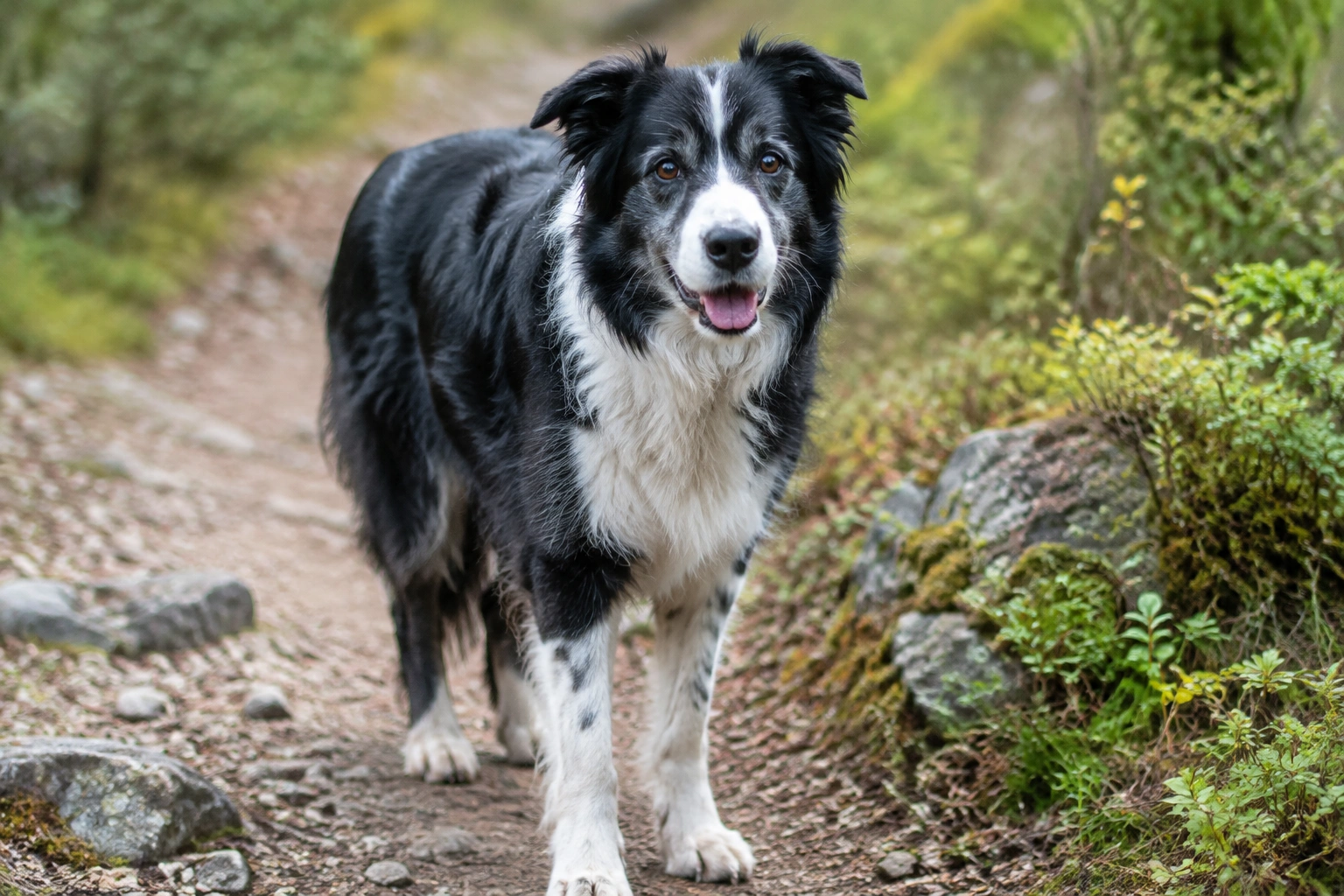
A useful way to think about it is this: senior status is less about a birthday and more about a stage of life. The birthday gives you a starting point. The dog’s stamina, mobility, body condition, and vet findings tell you whether that age is actually showing up in the body yet.
Quick Answer: When Is a Dog Considered Senior?
A dog is usually considered senior when it reaches the later part of its expected lifespan, which varies by breed size. These are general veterinary guidelines, not hard cutoffs. Mixed-breed dogs and dogs with chronic health conditions may fit a different timeline.
Here’s the practical rule I use:
- Small breeds: often senior around 10 to 12 years
- Medium breeds: often senior around 8 to 9 years
- Large breeds: often senior around 6 to 7 years
- Giant breeds: can be senior as early as 5 to 6 years
That range is not arbitrary. It reflects the fact that dogs do not age at the same pace across sizes. Many veterinarians consider senior age to fall somewhere in the 6 to 10 year window depending on the dog.
AVMA senior pet care guidance is a good starting point if you want the broad veterinary view.
A useful distinction: senior vs. geriatric
Some veterinary research separates dogs into age bands rather than one “old dog” category. One study suggested 7 to 11 years as a senior range and 12+ years as geriatric, though that is a research framework rather than a universal clinic rule. In practice, the point is simple: aging is gradual, and the dog may enter the senior stage before obvious illness appears.
Why Senior Age Is Not the Same for Every Dog
The biggest mistake owners make is treating dog aging like a fixed calendar rule. It is not.
Two dogs can both be 9 years old and be in very different places:
- A toy or small dog may still be moving comfortably with few visible changes.
- A large or giant dog may already be dealing with stiffness, reduced endurance, or early arthritis.
- A Border Collie may still look “young” because the breed stays mentally sharp and active, even while aging is happening underneath.
Chronological age vs. functional age
Chronological age is the number on the calendar. Functional age is how the dog is actually performing.
Functional aging shows up in things like:
- slower recovery after exercise
- more stiffness after sleep
- weight gain with the same food
- less tolerance for long hikes or jumping
- more dental disease
- changes in hearing, vision, or cognition
That is why a dog may be “senior” even before an owner would describe it as old. The body often changes before the personality does.
What speeds aging up or slows it down
Body weight, nutrition, environment, and overall health all affect how individual dogs age. That means two Border Collies of the same age can age differently if one is lean, well-conditioned, and regularly exercised while the other carries extra weight or has chronic health issues.
Senior Age by Size: Small, Medium, Large, and Giant Breeds
This table gives the practical comparison most owners need.
| Dog size | Typical senior age | What that often looks like in real life |
|---|---|---|
| Small breeds | 10–12 years | May stay active longer, but still need senior screening once they enter this range |
| Medium breeds | 8–9 years | Often begin showing subtle slowing, stiffness, or weight changes |
| Large breeds | 6–7 years | Earlier joint stress and a shorter runway to senior care |
| Giant breeds | 5–6 years | Senior care often starts surprisingly early because aging arrives sooner |
The reason larger dogs often become senior earlier is not just that they are bigger. They also tend to have shorter lifespans, which compresses the aging timeline. In practical terms, that means a giant breed can be “old” at an age when a small dog is still solidly middle-aged.
Trade-off to understand
Earlier senior status does not mean a dog is fragile overnight. It means you should shift from “react to problems” care to monitoring and prevention sooner.
That approach has a cost: more vet visits and more screening. But the benefit is catching joint, dental, metabolic, or organ changes before they become obvious problems.
Where Border Collies Fit: Is a Border Collie a Senior at the Same Age as Other Medium Dogs?
Border Collies usually fit into the medium-breed category, so a common senior range is around 8 to 9 years old.
That said, Border Collies are not average medium dogs in how they present. They are athletic, alert, and often highly motivated to keep going. So an owner can miss early aging because the dog still looks eager to work.
What this means in practice
A 7-year-old Border Collie may not be “senior” by a strict size-based chart, but it may already be entering the mature-to-senior transition. If that dog:
- takes longer to recover after long runs
- is stiffer after naps
- hesitates on stairs or jumping into the car
- gains weight despite the same routine
- seems less interested in long sessions
then the dog is aging functionally, even if the calendar says “middle-aged.”
Border Collies often age quietly
That is the challenge with this breed. Many Border Collies will keep offering energy long after their bodies would prefer better pacing. Owners sometimes interpret that as “still young.” More often, it means the dog is good at compensating.
Early Signs Your Dog Is Entering the Senior Stage
You do not need to wait for obvious illness to notice aging. The early signs are usually subtle and easy to dismiss.
Physical signs
Look for:
- stiffness after rest
- slower warm-up at the start of walks
- more careful movement on stairs or furniture
- reduced jumping ability
- mild muscle loss, especially along the back or hind legs
- weight gain with no diet change
- more bad breath or visible tartar
- cloudy eyes or reduced night vision
Behavioral signs
Also watch for:
- sleeping more deeply or longer
- less enthusiasm for long play sessions
- shorter attention span during training
- irritability when touched in certain areas
- increased clinginess or, sometimes, more withdrawal
- confusion in familiar spaces
None of these automatically mean disease. But they do mean the dog deserves a senior-style health check and a more careful look at routine.
Normal Aging vs. Illness: Warning Signs That Need a Vet Visit
This is where owners need to be cautious. Some changes are expected with age. Others are not.
Likely aging changes
These often develop gradually:
- slower recovery after exercise
- mild stiffness after sleep
- slight hearing or vision decline
- reduced tolerance for intense activity
- gradual weight gain or muscle loss
Red flags that should not be written off as “just getting old”
Call your veterinarian if you see:
- persistent limping
- sudden or worsening stiffness
- rapid weight loss
- appetite changes
- coughing
- vomiting or diarrhea that keeps returning
- house-soiling that is new
- confusion, pacing, or getting stuck in corners
- sudden fearfulness or disorientation
- a sharp drop in energy
A dog that is “slowing down” and a dog that is sick can look similar at first. The difference is usually speed of change. Gradual change is more consistent with aging. Sudden change deserves a veterinary exam.
When to Start Senior Vet Checkups and Screening Tests
The best time to begin senior care is before the dog seems obviously old.
A practical rule:
- Small breeds: begin senior discussions around 10 years
- Medium breeds, including Border Collies: begin around 8 years
- Large breeds: begin around 6 to 7 years
- Giant breeds: begin around 5 to 6 years
That does not mean every dog needs the same tests on the same schedule. It means the dog should now be treated as a senior candidate for preventive care.
What senior wellness care usually includes
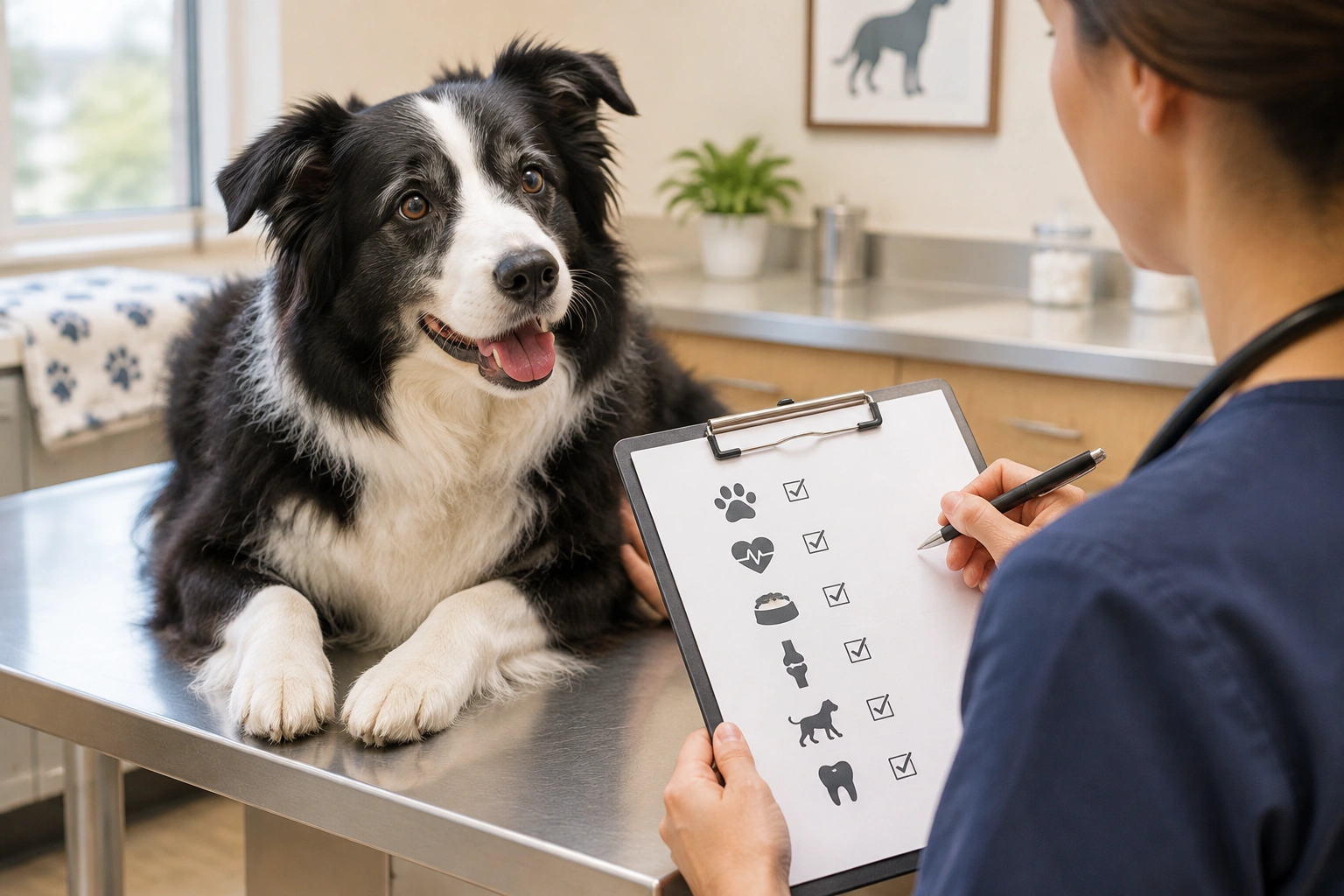
A typical senior exam may include:
- weight and body condition scoring
- muscle condition assessment
- dental evaluation
- joint and mobility check
- bloodwork
- urine testing
- blood pressure assessment in some cases
- discussion of appetite, thirst, bathroom habits, and behavior changes
For many healthy senior dogs, at least annual wellness exams are a minimum, and every 6 months is often reasonable once a dog is clearly in the senior stage. Dogs with known chronic conditions may need more frequent monitoring based on the veterinarian’s plan.
The goal is not to find every possible problem. It is to identify the common age-related ones early enough to manage them well.
Why screening matters even if the dog seems fine
Older dogs can hide disease well. They may continue eating, walking, and acting “normal” while kidney disease, endocrine issues, pain, or dental disease develops quietly. Senior screening gives you a baseline, which makes later changes easier to spot.
Healthy seniors vs. dogs with chronic conditions
A healthy senior dog may only need routine screening and an exam schedule set by age and risk. A dog with arthritis, kidney disease, diabetes, heart disease, or another chronic condition often needs extra monitoring, which your veterinarian may schedule more often than the standard senior checkup cadence.
What Changes to Make in Diet, Exercise, and Daily Care
Senior status should change your management, but not in a dramatic or fearful way.
Diet: watch body condition, not just age
Some senior dogs do fine on their current food. Others need a calorie adjustment, a different protein balance, or a senior formula. The deciding factor is not the label on the bag. It is the dog’s body condition score, muscle mass, and activity level.
If your Border Collie is:
- gaining weight
- losing muscle
- becoming less active
- showing dental issues that make chewing harder
then diet may need to change.
Exercise: keep movement, lower impact if needed
Older dogs still benefit from exercise, but the style of exercise may need to shift.
For a Border Collie, that often means:
- shorter but more frequent walks
- less repetitive jumping or hard turns
- more warm-up time before active work
- more recovery after long outings
- lower-impact enrichment when joints are sore
The trade-off is clear: high-intensity exercise may preserve fitness, but it can also aggravate pain or stiffness. The goal is not to stop moving. It is to keep the dog fit without asking more from the joints than they can comfortably give.
Daily care: small changes matter
Aging dogs often do better with:
- non-slip flooring
- easier access to beds or sofas
- regular nail trims
- dental care
- closer weight monitoring
- predictable routines
These are simple changes, but they reduce strain and make early problems easier to notice.
How to Monitor an Aging Dog at Home Without Overreacting
Owners often swing between two extremes: ignoring changes or worrying about every slow step. A better method is to track trends.
Use a simple monthly check
Watch these five areas:
-
Recovery time
Does your dog bounce back from exercise as quickly as before? -
Mobility
Any stiffness after naps, trouble with stairs, or reluctance to jump? -
Body condition
Is weight creeping up or muscle fading? -
Appetite and thirst
Any noticeable increase or decrease? -
Behavior
Is the dog less engaged, more anxious, or more confused?
If one of these shifts gradually, note it. If several change together, that is a stronger reason to book a vet visit.
Keep the comparison honest
Do not compare your dog to how it acted at age 3. Compare it to how it acted three months ago. Aging is easiest to see when you track small changes over time.
When Senior Status Should Change Your Decisions
Once your dog enters the senior range for its size, a few decisions become easier.
Treat the dog as a senior now if:
- it is in the typical senior age band for its size
- recovery is slower than before
- stiffness is becoming more noticeable
- weight or muscle is changing
- you have not had a recent senior wellness exam
Schedule screening sooner rather than later if:
- the dog is a Border Collie around 8 years old or older
- the dog is a large or giant breed approaching its senior range
- you notice any red flags, even mild ones
- the dog has a chronic condition already
Adjust diet or exercise if:
- body condition is drifting out of range
- the dog seems sore after activity
- endurance is dropping
- dental issues are affecting eating
- the dog is gaining weight because activity is lower
Seek veterinary evaluation promptly if:
- changes are sudden
- pain is obvious
- confusion appears
- bathroom habits change unexpectedly
- appetite drops
- coughing, limping, or lethargy persists
Frequently Asked Questions
Is 7 years old senior for a dog?
Sometimes, but not always. Seven is often a transition age for medium and large dogs, while many small dogs are not senior yet. For Border Collies, 7 can be the point where you start watching more closely even if the dog is not clearly senior by size alone.
Are Border Collies considered senior earlier because they are active?
Not earlier by breed category alone, but their activity can hide aging. A Border Collie may still seem young because it wants to work, even while its body is beginning to slow down.
Should I switch to senior dog food as soon as my dog turns senior?
Not automatically. Some dogs do well on their current diet. Others need fewer calories, different nutrients, or better joint support. Body condition and muscle mass should guide the decision more than age alone.
Can a dog be senior without acting old?
Yes. Many dogs become senior before they look obviously old. That is why age-based screening matters even when the dog still seems lively.
Final Takeaway
If you want a practical answer to how old is a dog to be considered senior, use size as your first guide: around 10–12 years for small breeds, 8–9 for medium breeds, 6–7 for large breeds, and 5–6 for giant breeds. Then adjust for the individual dog.
For Border Collies, the most useful mindset is this: do not wait for obvious slowing before thinking like a senior owner. Once your dog reaches the typical senior window for a medium breed, watch recovery time, mobility, body condition, and behavior more closely, and bring senior screening into the conversation with your vet.
