
How Long Are Golden Retrievers in Heat? A Practical Guide for Owners

If your female Golden Retriever has started swelling, spotting, or acting unusually clingy, the short answer is this: most Golden Retrievers are in heat for about three weeks, though the full cycle can range from about 15 to 28 days. The confusing part is that bleeding does not last the whole time. In many dogs, the visible discharge is only part of the cycle, and pregnancy risk can continue after the bleeding becomes lighter or stops.
That distinction matters. Owners often assume the heat is over once the floor stops showing spots. In reality, the dog may still be fertile, still attracting intact males, and still at risk of an accidental mating.
For a breed as people-focused and active as the Golden Retriever, heat management is mostly about two things: recognizing the cycle early and controlling access. The rest of this guide will help you do both without guesswork.
How Long a Golden Retriever Is Typically in Heat
A typical Golden Retriever heat cycle lasts about three weeks. That lines up with general canine season timing as well: many dogs are in heat for roughly 2 to 3 weeks, and some fall a little outside that range. Breed, age, and whether it is the dog’s first cycle can all affect timing.
A useful rule is to think in ranges, not exact dates. A young Golden Retriever may have a cycle that feels messy and uneven at first. One heat might seem short and obvious; the next may be subtler and last longer. That variation is normal enough that you should track your own dog’s pattern rather than rely on someone else’s timeline.
If you want a simple planning number, use this:
- Expect about 21 days total
- Allow for a normal range of 15 to 28 days
- Do not assume the cycle is over when bleeding slows
A practical way to estimate fertility is to treat the middle portion of that full cycle as the most likely fertile window, while remembering that exact timing varies from dog to dog. Use the full cycle length as a safety buffer so you are not guessing based on a single day of bleeding.
The American Kennel Club notes that timing varies by size and individual dog, and that some dogs can have their first cycle much earlier or later than average. That variability is why your own observations matter so much.
Golden Retriever Heat Cycle Stages
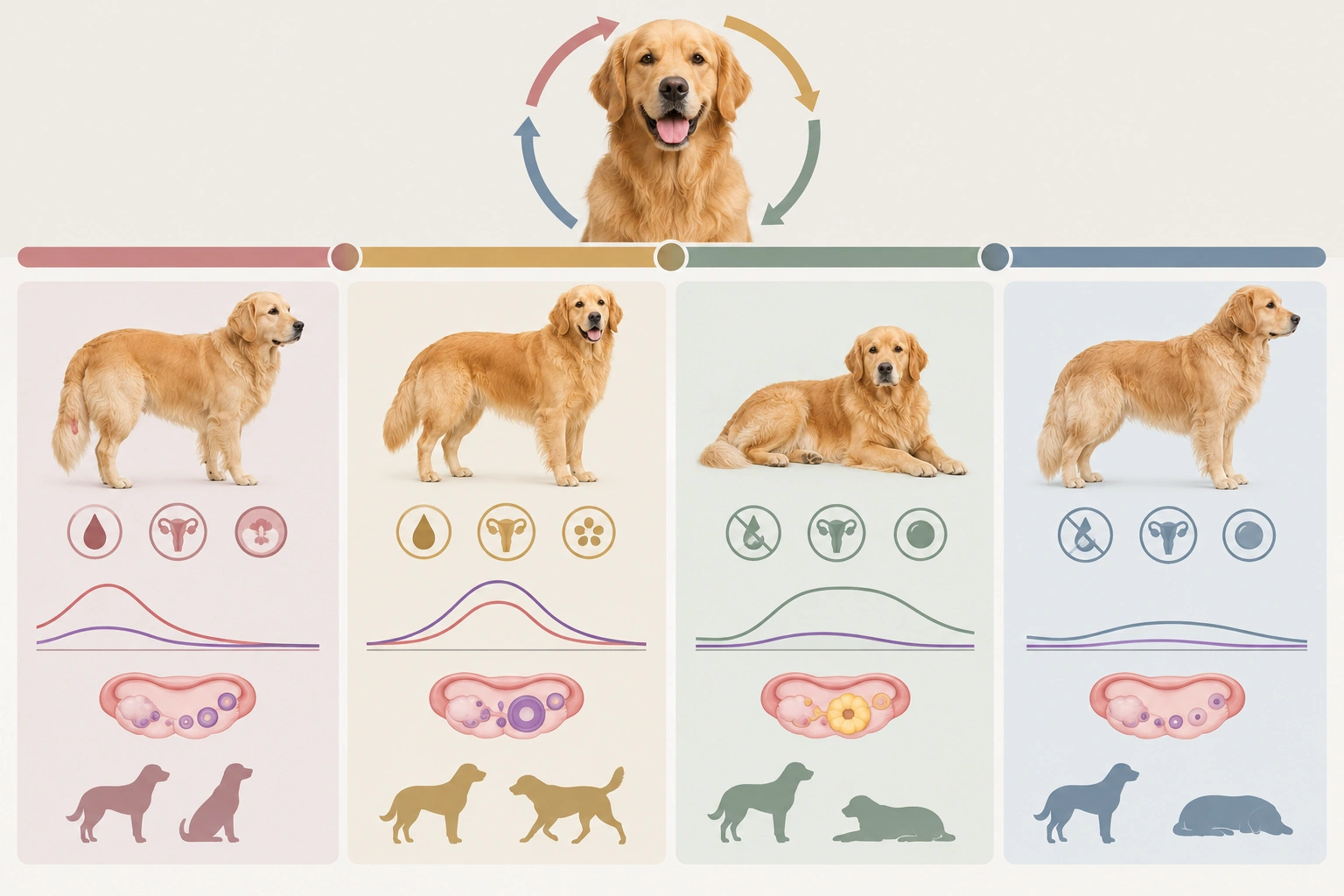
A dog’s heat cycle is usually described in four stages: proestrus, estrus, diestrus, and anestrus. The names sound technical, but the practical value is simple: each stage tells you something different about bleeding, fertility, and behavior.
Here is the clearest way to think about them.
| Stage | Typical duration | Discharge | Fertility | Common signs |
|---|---|---|---|---|
| Proestrus | About 7–10 days, but variable | Bloody discharge often starts here | Not usually ready to mate yet | Swollen vulva, licking, males interested |
| Estrus | About 5–10 days, variable | Often lighter, pinker, or reduced | Fertile window | Flirtier behavior, tail to the side, standing for males |
| Diestrus | Around 2 months | Discharge usually ends | No longer fertile | Hormone levels shift, behavior settles |
| Anestrus | Several months | None | Not fertile | Normal baseline between cycles |
Proestrus: the cycle is starting
This is usually the stage owners notice first. The vulva swells, discharge begins, and male dogs may suddenly pay attention. Your dog may lick herself more, seem restless, or act more affectionate than usual.
She is not always ready to mate yet, even though males may already be interested. That mismatch is one reason accidental breeding can happen: the male may be eager before the female is fully receptive.
Estrus: the fertile period
Estrus is the stage people usually mean when they say a dog is “in heat.” This is the fertile window. Discharge often becomes lighter, and some dogs bleed less during this phase, which leads many owners to think the heat is ending. In fact, this may be the most important part to manage carefully.
A female in estrus may:
- hold her tail to the side
- stand still when approached by a male
- seem more willing to wander or seek attention
- attract males from farther away than usual
If pregnancy is not the goal, this is the period to be most strict about separation.
Diestrus: the fertile period has passed
Diestrus follows estrus. The dog is no longer fertile, and visible signs usually fade. Behavior often settles back toward normal, although some dogs remain a bit moody or tired for a while.
This stage matters because owners sometimes stop management too soon. The dog may look “done,” but if you were not tracking dates carefully, it is safer to keep up precautions a little longer rather than guess.
Anestrus: the resting phase
Anestrus is the quiet period between heat cycles. There is no discharge and no fertility. For most owners, this is just the normal baseline until the next cycle begins.
How Long Bleeding Lasts vs. How Long the Dog Is Fertile
This is the biggest source of confusion, so it deserves a direct answer.
Bleeding usually lasts shorter than the full heat cycle. The visible discharge often appears during proestrus and may lessen during estrus. By the time the discharge fades, the dog may still be in her fertile window or only just leaving it.
That means these two questions are not the same:
- How long is she bleeding?
- How long is she at risk of pregnancy?
A dog can stop spotting and still be fertile. She can also still attract intact males even when the discharge is minimal. If you only use bleeding as your cutoff, you may open the door to an unwanted mating.
A practical way to manage this is to treat the entire cycle as a pregnancy risk period, then keep extra caution for a short buffer after visible signs fade. If you are uncertain, ask your veterinarian how long they recommend maintaining separation for your dog’s specific cycle.
Signs Your Golden Retriever Is in Heat
Most owners notice a combination of physical and behavioral changes rather than one obvious sign.
Physical signs
- swollen vulva
- bloody or pinkish discharge
- more frequent licking of the rear
- a stronger odor that may attract males
Behavioral signs
- restlessness
- clinginess or unusual affection
- irritability with other dogs
- roaming behavior
- lifted tail or “flagging” during estrus
- increased interest from male dogs
The best clue is usually the pattern, not one symptom. A swollen vulva alone could be something else. A little discharge alone could be irritation. But when swelling, spotting, and male attention happen together, heat is the likely explanation.
If you have a first-time female, write down the first day you see discharge, the first day swelling becomes obvious, and when behavior changes. Those dates make it much easier to estimate where she is in the cycle.
How to Tell When the Heat Cycle Is Ending
Owners often want a clean ending point. Dogs rarely make it that neat.
The heat cycle is probably moving out of the fertile phase when:
- discharge becomes very light or stops
- the vulva begins to shrink
- male dogs lose interest
- your dog stops flagging or standing for males
- behavior returns closer to normal
What should not be used as the only cutoff is bleeding stopping. That can happen before the fertile period is fully over.
If you are trying to judge whether the cycle is ending, the most useful question is not “Is she still spotting?” but “Would I feel comfortable leaving her near an intact male right now?” If the answer is no, keep the precautions in place.
How Often Golden Retrievers Go Into Heat
Most female dogs go into heat about twice a year, though the exact schedule varies. Some dogs are very regular; others drift a little from cycle to cycle, especially when they are young.
Golden Retrievers generally follow the same broad pattern as other medium-to-large breeds. First heats often arrive between about six and fifteen months of age, though some dogs mature earlier or later. The Royal Kennel Club notes that seasons usually last about three weeks and can vary from around two to four weeks, which is a helpful reminder not to expect perfect consistency.
If your dog’s cycle comes much sooner, much later, or becomes unusually irregular, that is worth discussing with a veterinarian. One odd cycle may be nothing; a pattern of irregularity is more informative.
How to Manage a Golden Retriever in Heat at Home
Good management is mostly about preventing access, not just cleaning up messes.
Keep her indoors or supervised
Do not leave her outside alone during heat. If she is in the yard, she should be actively supervised the entire time. A quick bathroom break is not the time to multitask or assume she will stay put.
Use leash-only potty breaks
Take her out on leash for bathroom trips, even if you have a fenced yard. Keep the outing short and controlled, then bring her right back inside. This reduces the chance of wandering, fence-line contact, or a surprise encounter.
Separate her from intact males in the home
If you have other dogs in the house, keep her separated from any intact male. Use crate rotation, closed doors, or room separation so they are not sharing free indoor time. If you are unsure whether another dog is intact, treat him as a risk until you confirm otherwise.
Treat doors and yards like escape risks
A dog in heat may suddenly become more determined to slip out of the house, yard, or car. Slow down at doors, use a leash before opening them, and do not assume she will “stay put” the way she normally does.
Avoid dog parks and daycare
Skip dog parks, daycare, and other off-leash group settings until the cycle has fully passed. Even well-run facilities are not a good fit for a dog in heat, and the risk of unwanted attention is simply too high.
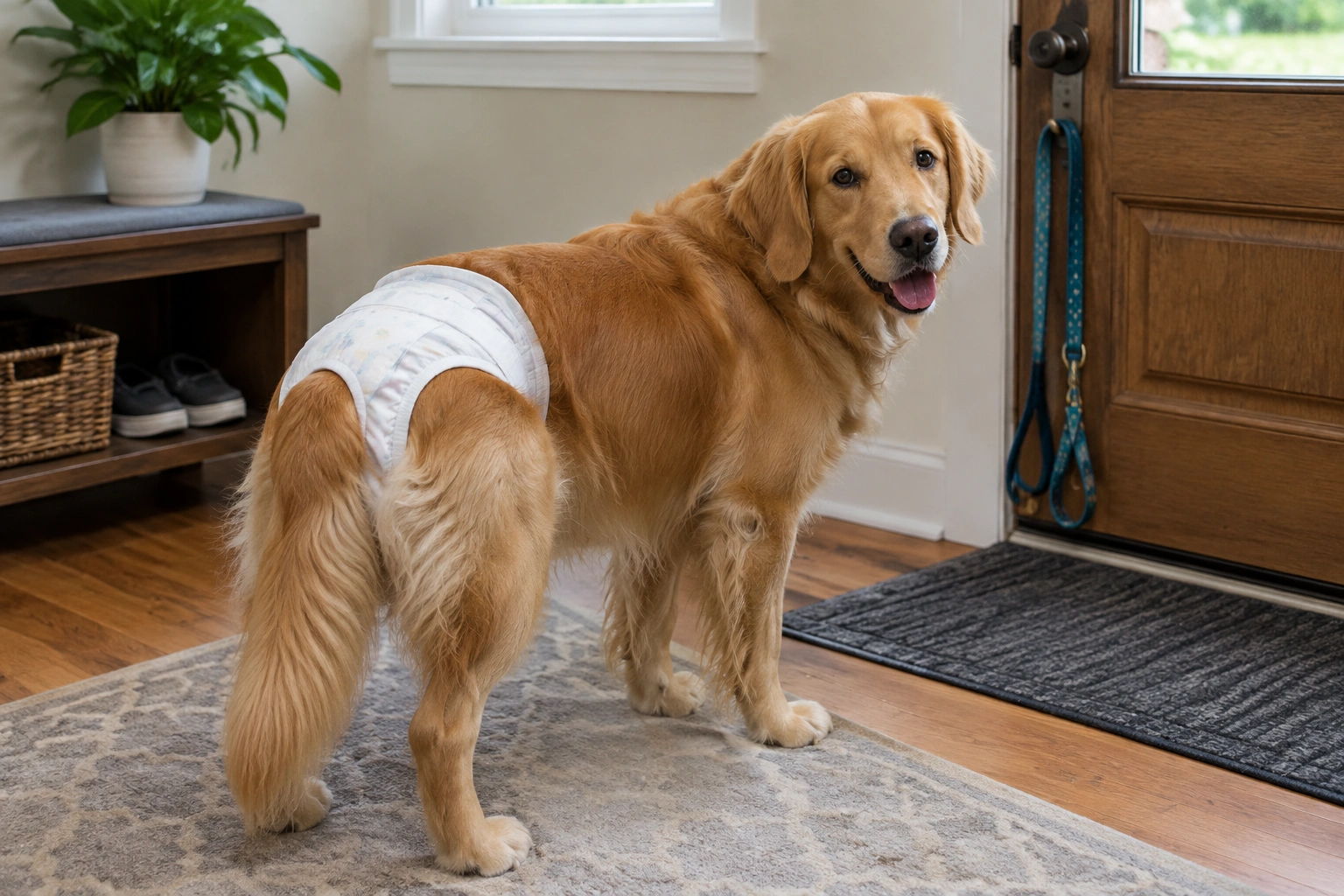
Use diapers for cleanup, not protection
Dog diapers can help with furniture, floors, and bedding, but they do not prevent mating. Think of them as a housekeeping tool, not a safety barrier.
Keep routines calm and controlled
Normal exercise is still useful, but choose lower-risk options. A quiet leash walk is safer than off-leash play near other dogs. If your dog is unusually restless, more mental enrichment indoors can help burn energy without increasing exposure.
Track dates
A simple note in your phone can save you from guessing later. Record:
– first day of discharge
– first day of swelling
– changes in behavior
– when bleeding lightens
– when male interest drops
That record helps you estimate the fertile window next time.
If you suspect an accidental mating has already happened, call your veterinarian promptly. They can help you understand the likely timing and what options may still be available.
When Heat Symptoms Are Normal vs. When to Call the Veterinarian
Some changes are expected. Others are not.
Usually normal during heat
- mild to moderate swelling
- bloody or pink discharge
- licking
- restlessness
- temporary clinginess
- male dogs showing interest
Call a veterinarian if you notice
- very heavy bleeding
- pus-like discharge
- green, brown, or foul-smelling discharge
- signs of pain
- fever
- marked lethargy
- vomiting
- discharge that continues far longer than expected
- sudden behavior changes that seem extreme
The reason to act quickly is simple: not every reproductive problem is a normal heat cycle. If the dog seems systemically ill rather than merely hormonal, contact your veterinarian immediately.
If you want a broader reference on normal cycle timing and related care, VCA Hospitals has helpful educational material on canine reproductive health. For general owner guidance on heat and spaying considerations, ASPCA is also a solid starting point.
Key Takeaways for Preventing Unwanted Pregnancy
If you only remember a few things, make them these:
- Most Golden Retrievers are in heat for about three weeks.
- Bleeding is not the same as the full fertile period.
- A dog may still be at risk after discharge gets lighter or stops.
- Diapers help with cleanup, not pregnancy prevention.
- Strict separation from intact males is the safest approach for the full cycle.
If you are unsure whether the cycle is over, act as though pregnancy is still possible. That caution is far cheaper and less stressful than dealing with an accidental litter.
Frequently Asked Questions
How long do Golden Retrievers bleed when in heat?
Bleeding often lasts for part of the cycle, not the whole thing. Many dogs bleed for several days to about a week or more, but the exact length varies. The full heat cycle is usually longer than the bleeding phase.
What age do Golden Retrievers usually have their first heat?
Many Golden Retrievers have their first heat between about six and fifteen months of age, though some cycle earlier or later.
How often do Golden Retrievers go into heat?
Most go into heat about twice a year, but the timing can vary from dog to dog and may be less predictable in younger dogs.
How do I know when the heat cycle is over?
The cycle is usually winding down when swelling shrinks, discharge stops, and male dogs lose interest. Even then, if you are not sure, keep separation in place a little longer.
Should I use diapers during heat?
Use them if they help keep the house clean, but do not rely on them to prevent mating. A diaper does not stop a determined male dog.
When should I call the vet?
Call if bleeding is very heavy, discharge smells bad, your dog seems painful or feverish, or the cycle seems unusually long or abnormal.
Final practical rule
If your Golden Retriever is in heat, assume pregnancy is possible until your veterinarian or your cycle notes tell you otherwise. That mindset keeps decisions simple and safe.