
How Long to Leave a Dog Alone: A Practical Guide for Border Collie Owners

If you want a simple answer, here it is: most dogs can handle a few hours alone, but the safe limit changes with age, bladder control, training, and temperament. For many adult dogs, 4 to 6 hours is a realistic baseline. Some healthy, well-adjusted dogs can manage a full workday better than others, especially if they have enough room to move around comfortably, but that is not the same as saying every dog should. Older dogs are often best kept closer to 4 to 6 hours as well, depending on mobility, health, and bathroom needs.
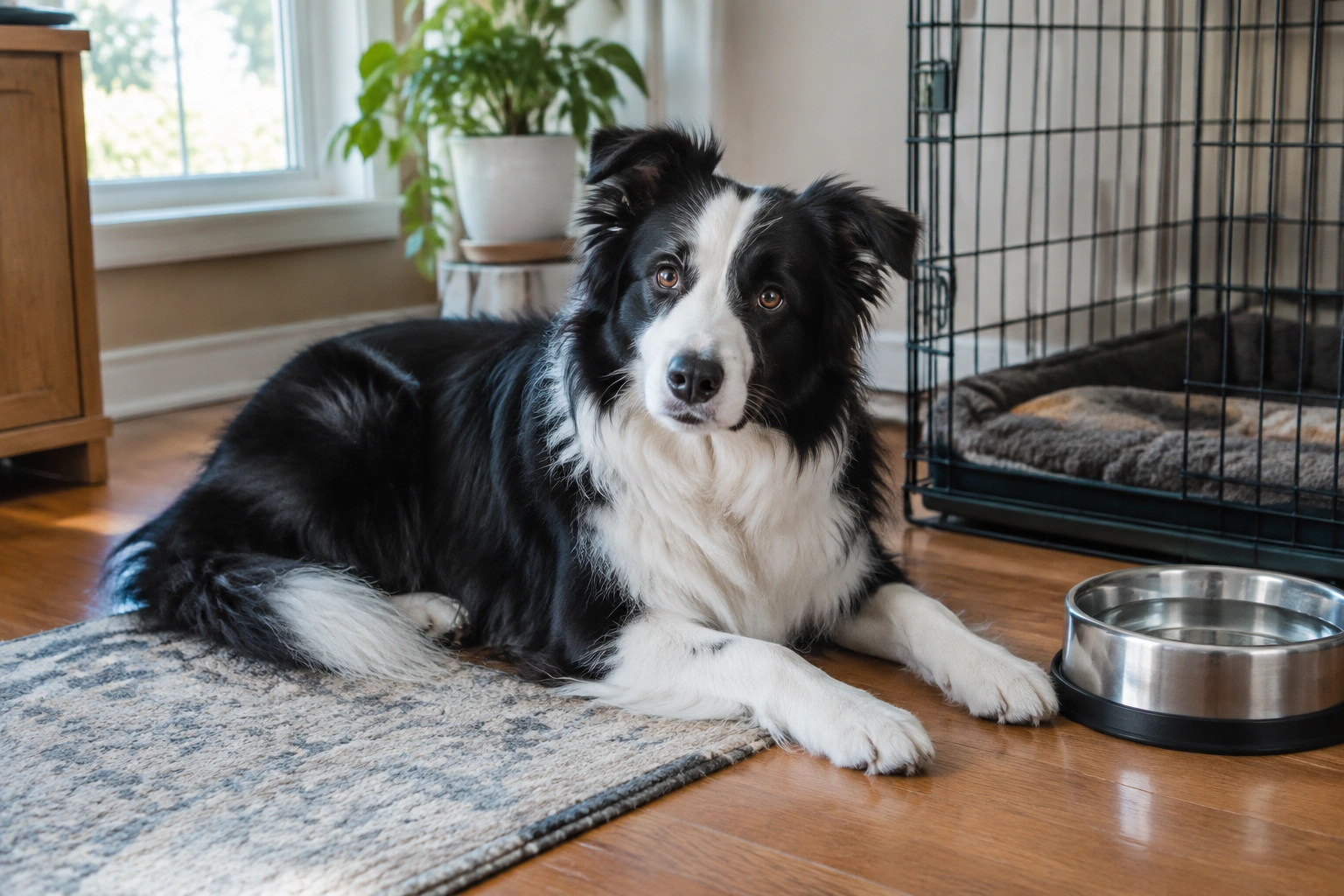
Direct answer for Border Collie owners: yes, many Border Collies can be left alone while you work a standard full-time schedule if they are house-trained, can already settle calmly alone for shorter stretches, have been gradually conditioned to being by themselves, and have enough exercise and mental work before you leave. If your workday is around 8 hours, mid-day help is recommended for puppies, anxious Border Collies, dogs that still struggle to settle, and adults that have not yet proven they can handle that length without stress or accidents. For a calm, well-conditioned adult Border Collie, a mid-day check-in is often helpful but may be optional if the dog has already shown they can cope.
For Border Collies, the question is rarely just “Can my dog physically stay home?” It is also “Will my dog cope well?” A Border Collie that is under-exercised, under-stimulated, or anxious is much more likely to turn alone time into barking, pacing, chewing, or frantic door-watching. So the real decision is not a single number. It is whether your dog can stay calm, safe, and dry for the time you plan to be gone.
The practical rule I use
Use this rule of thumb:
- Puppy: plan around bladder control, not convenience
- Young puppy: expect only very short stretches; a common potty-training rule is roughly one hour per month of age, up to a few hours max, and many very young puppies need breaks much sooner
- Older puppy / adolescent: short to moderate periods, but only if they can already settle without distress
- Adult dog: many do best around 4 to 6 hours
- Long workday: some dogs can adapt to 8 hours or more if their routine, space, and exercise are solid
- Border Collie: assume you may need more structure, more mental work, and possibly midday help
A more concrete way to decide is this: if your dog is still having accidents, cannot settle alone without whining or pacing, or has never practiced being left for shorter periods, do not treat a workday as the starting point. Build up from the longest time your dog can already handle calmly and cleanly.
That last point matters. A Border Collie often needs more than a walk around the block before you leave. Physical exercise helps, but mental stimulation is what usually takes the edge off the “I need a job” mindset. A dog that has been worked mentally is often calmer than a dog that has only been tired out physically.
The main factors that change the answer
Three things usually decide how long a dog can stay alone without problems:
1) Age and bladder control
A young puppy cannot hold it like an adult dog. Even if the puppy seems fine emotionally, the bladder may not be ready. That is why puppy alone-time should be built around potty training, not the owner’s schedule.
2) Training history
A dog that has practiced being alone in short, boring, safe sessions usually handles more time better than a dog that only experiences isolation when the owner suddenly leaves for a full day.
3) Temperament and stress response
Some dogs nap when left alone. Others patrol windows, bark at every sound, or panic the moment the routine changes. The second group needs a shorter limit and more support.
Border Collies often sit closer to the “needs support” end of the spectrum unless they have been carefully conditioned to relax alone.
Alone-time limits by life stage
The table below gives a practical comparison, not a rigid law. These are maximums, not targets.
| Life stage | Typical safe alone-time range | Why the limit looks like that | What helps most |
|---|---|---|---|
| Very young puppy (under about 4 months) | Minutes to a couple of hours at most, often much less | Bladder control and training are still very limited | Frequent potty breaks, confinement to a small safe area, gradual practice |
| Older puppy (about 4 to 6 months) | Short periods, often around 2 to 4 hours depending on the puppy | Better bladder control, but still impulsive and easily bored | Exercise, chew-safe enrichment, short alone-time reps |
| Adolescent / older puppy (about 6 to 12 months) | Moderate periods, often 4 to 6 hours if training is going well | More physical control, but still developing impulse control and routines | Routine, mental work, calm departures, practice alone |
| Adult dog | About 4 to 6 hours is a common baseline | Most adults can settle, but many still need a bathroom break and mental support | Routine, pre-departure exercise, enrichment, calm departures |
| Adult dog with strong training and enough space | Some can adapt to 8 hours | Only if they are comfortable, not anxious, and have room to move | Midday break when possible, reliable routine, monitoring |
| Senior dog | Often 4 to 6 hours, sometimes less | Mobility, discomfort, and bathroom needs may increase | More frequent potty breaks, softer resting areas, shorter absences |
These ranges are best understood as what many dogs can tolerate, not what they should be expected to do every day without a break.
For a Border Collie owner, I would treat 4 to 6 hours as the practical planning range and only stretch beyond that when the dog has already shown they can relax, stay clean, and avoid destructive habits.
What changes the limit for Border Collies and other high-energy dogs
Border Collies are not just energetic. They are typically alert, observant, and quick to notice patterns. That can be a strength in training, but it also means they often notice your departure routine, your return time, and every small change in the house.
A Border Collie may cope with alone time in one of two ways:
- Healthy coping: naps, chews a safe item, settles after the first few minutes
- Unhealthy coping: pacing, barking, window guarding, chewing, digging, or frantic greeting when you return
The difference often comes down to how much mental work the dog got before you left. A 30-minute hard run may not calm a Border Collie if the brain is still buzzing. A shorter physical session plus a few minutes of training, sniffing, or problem-solving often works better than exercise alone.
If you have a Border Collie and a long workday, think in terms of stimulation plus structure, not just “tire the dog out.” A full-time work schedule can be workable for some Border Collies, but the minimum preparation is usually: a real potty break, some physical exercise, a short mental task, water, and a plan for whether the dog will be crated or free-roaming. If your dog is still struggling with stress or accidents, add mid-day help rather than pushing the time longer.
Crated vs. free-roaming: which setup is safer?
This is less about ideology and more about the individual dog.
Crating can help when:
- the dog is still learning house rules
- you need to prevent unsafe chewing
- the dog settles well in a crate
- the crate is used for a limited time and sized properly
Free-roaming can help when:
- the dog is house-trained and calm
- the dog gets anxious in confinement
- the room is dog-proofed
- the dog needs more physical comfort or space
The trade-off is simple. A crate gives you more control and can reduce destruction, but it also reduces freedom and can become a problem if the dog is confined too long. Rocklin Vets advises that a dog should never be crated for more than a few hours at a time. That is a useful warning for puppies and for any dog that is still learning to settle.
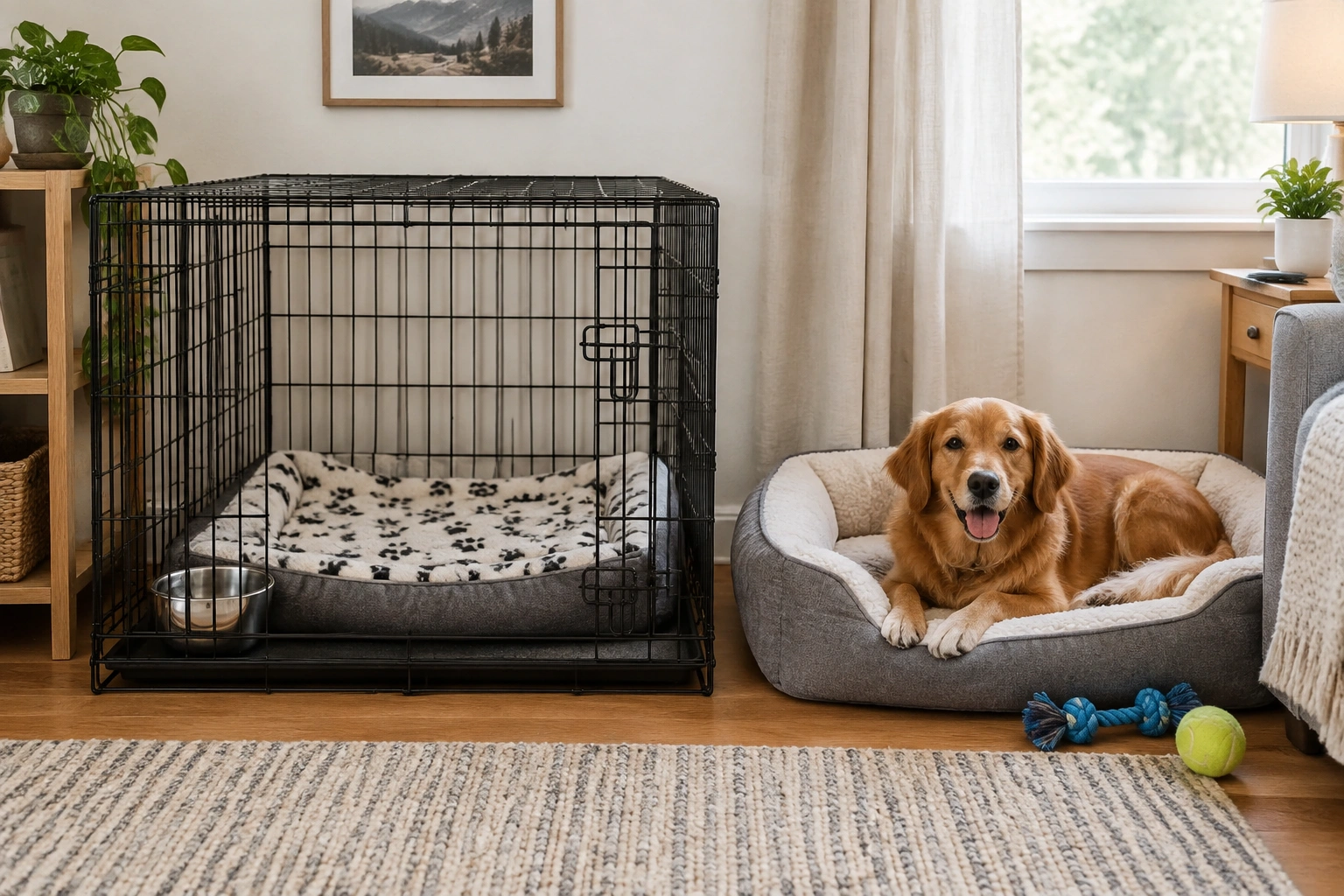
For a puppy, I prefer a smaller safe area or crate-plus-pen setup over full-house access. For an adult Border Collie that handles confinement well, a crate may be fine for shorter periods. For a dog that panics in the crate, forcing the issue usually makes alone time worse, not better.
How to prepare a dog to be alone for longer
If your dog is struggling with alone time, the answer is usually gradual practice, not a sudden leap to a full workday.
Use this progression:
Step 1: Make departures boring
No long goodbye. No emotional buildup. The goal is to teach the dog that your leaving is normal and temporary.
Step 2: Practice tiny absences
Leave for a minute or two, come back calmly, and repeat. The dog should stay under threshold. If the dog is already whining or pacing, the step is too big.
Step 3: Build duration slowly
Increase the time in small jumps only after the dog has handled the current level without stress, accidents, or destructive behavior.
Step 4: Pair alone time with a clear routine
A predictable pattern helps many dogs relax: potty break, short walk or training session, water, safe chew or enrichment item, then departure.
Step 5: Watch the dog’s actual response
Progress is not measured by how long the dog was physically alone. It is measured by whether the dog stayed calm.
For Border Collies, I like to add a short thinking task before departure: a few obedience reps, a food puzzle, or a sniff-based game. That mental “off switch” often matters more than another lap around the yard.
Signs your dog is being left alone too long
The warning signs are usually obvious once you know what to look for:
- pacing or restlessness before you leave
- whining, barking, or howling after departure
- destructive chewing, scratching, or digging
- accidents in a dog that is otherwise house-trained
- drooling, trembling, or frantic behavior
- overexcited, almost desperate greetings when you return
- refusal to settle even after you are home
A single bad day does not prove a problem. A pattern does. If your dog repeatedly has accidents, destroys objects, or seems distressed every time the alone period gets longer, the current limit is too long.
Separation anxiety is one common reason this happens. Dogs with anxiety do not usually “get over it” by being left alone longer. They often get worse. That is why it is worth taking the early signs seriously.
What to do if your workday exceeds your dog’s limit
If your schedule is longer than your dog can comfortably manage, you have three main options.
Dog walker
Best when your dog mainly needs a bathroom break, a short walk, and a reset. This is often the best fit for adult Border Collies that can handle the day if they get a midday interruption, and it is also a good option for dogs that are not social enough for daycare.
Dog daycare
Best when your dog is social, energetic, and enjoys structured activity. This can work for some Border Collies that genuinely enjoy group play and can handle the stimulation, but it is not ideal for dogs that get overstimulated, reactive, or exhausted by constant interaction.
Neighbor or friend check-ins
Best when you need a lower-cost, lower-intensity solution. This is often the best fit for puppies that just need a potty break and a calm reset, and it can also help dogs that do not need a full walk but do need someone to let them out.
For puppies, choose check-ins or a dog walker rather than daycare in most cases. For anxious dogs, choose the calmest option available, usually a trusted walker or neighbor visit rather than a busy daycare. For Border Collies, a dog walker is often the most practical middle ground unless the dog truly loves daycare and handles it well.
Common mistakes that make alone time harder
A few mistakes show up again and again:
Relying on exercise alone
A tired body does not always equal a calm mind, especially in a Border Collie.
Skipping gradual training
If the dog only practices being alone when a full workday happens, you are asking for failure.
Expecting a puppy to act like an adult
Puppies need shorter absences because of bladder control and training stage.
Overusing the crate
A crate is a tool, not a way to “solve” the problem of a long absence.
Ignoring early stress signals
Pacing, whining, and accidents are not minor annoyances. They are feedback.
If you correct these mistakes early, you usually need less intervention later.
When to see a veterinarian or certified trainer
Get help if your dog shows any of the following:
- panic when you prepare to leave
- repeated destructive behavior despite proper exercise and routine
- house-training regressions
- inability to settle even after gradual training
- signs of pain, stiffness, or mobility trouble in a senior dog
- behavior that gets worse instead of better as you practice
A veterinarian can rule out medical causes for accidents or restlessness. A certified trainer or behavior professional can help you build a step-by-step alone-time plan that fits your dog’s temperament.
For further reading, the American Kennel Club’s guidance on puppy care is useful for understanding developmental expectations, and the ASPCA’s separation anxiety resources are a solid starting point if your dog struggles when you leave. If you want a broader behavior overview from a veterinary source, VCA Hospitals also has practical owner-focused articles.
A realistic way to decide your dog’s limit
Use this quick test:
- Can your dog hold their bladder for the planned time?
- Has your dog practiced being alone at shorter intervals?
- Does your dog stay calm, or does stress build as time passes?
- Will the dog have enough space, water, and a safe resting setup?
- If the answer to any of those is “no,” add help or shorten the absence.
That is the cleanest way to think about how long to leave a dog alone. The right answer is the longest time your dog can handle without stress, accidents, or unsafe behavior. For many Border Collies, that means building a routine around a few hours at a time, then stretching only when the dog has clearly earned it.