
What Is This Bump on My Dog? A Practical Guide to Knowing What Matters

You spot a new bump while brushing your Border Collie, or maybe your dog flinches when you run a hand over a spot that was never there before. That moment can send your mind in two directions at once: maybe it is nothing, or maybe it is something you should not ignore.
The hard part is that a bump on a dog can be many different things. Some are harmless, some are irritated skin problems, and some need veterinary attention sooner rather than later. The look of the bump helps, but it does not tell the full story. A lump that seems soft and ordinary can still deserve a closer look, and a small, ugly-looking bump may turn out to be minor.
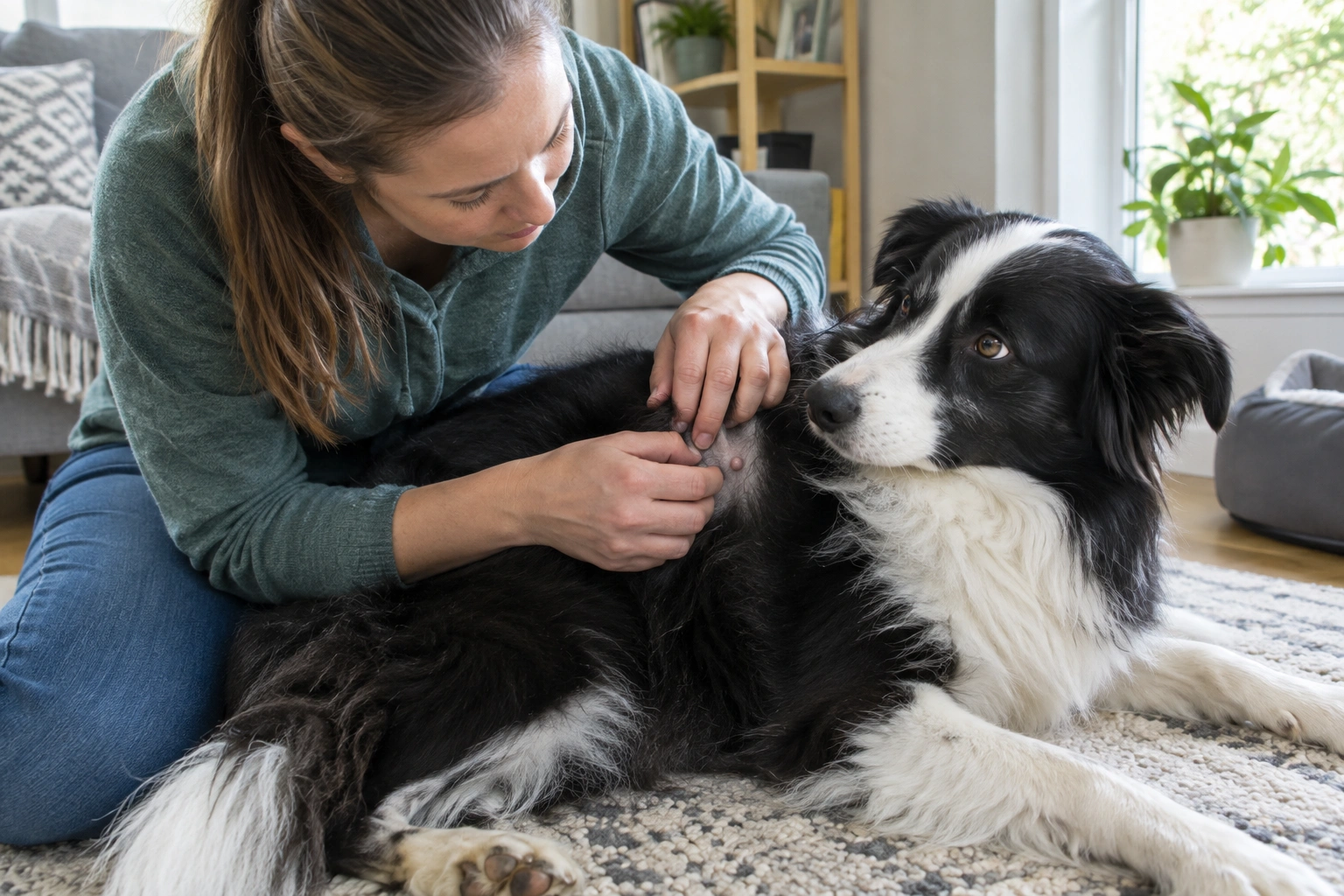
If the bump is rapidly swelling, bleeding heavily, or affecting breathing or swallowing, treat it as an emergency and go to a veterinarian right away. If it is painful, red, draining, or growing quickly but your dog is otherwise stable, same-day veterinary care is usually the safer next step.
For a Border Collie owner, the practical goal is not to guess the exact diagnosis at home. It is to decide the next step: monitor, book a routine exam, or seek urgent care.
What a New Bump on Your Dog Could Be
A new bump may be a cyst, wart, lipoma, abscess, insect bite, inflamed skin mass, or a tumor. That list is broad for a reason: dogs develop skin masses for many different reasons, and several of them can look similar from the outside. Veterinary sources commonly note that skin masses are frequent in dogs and that many are benign, but some can be malignant and aggressive, which is why a vet check is often worth the trip.
The key point is this: appearance alone cannot reliably tell you whether a bump is harmless or serious. A lump that is smooth, round, or movable under the skin might be a lipoma, but it could also be something else. A wart-like growth may be benign, but not every rough bump is a simple wart. A red swollen spot may be irritation, but it may also be infection or a skin tumor.
That uncertainty is frustrating, but it is also useful. It keeps you from overreacting to every tiny bump while still taking the suspicious ones seriously.
When a Dog Bump Is an Emergency or Same-Day Vet Problem
Some bumps can wait a few days. Others should not. Use the symptoms around the bump, not just the bump itself, to decide how fast you need help.
Seek same-day veterinary care if the bump is:
- rapidly enlarging
- painful to the touch
- hot, red, or purple
- bleeding or ulcerated
- oozing pus or foul-smelling fluid
- on the face and causing visible swelling
- near the eye, mouth, or throat
- causing your dog to scratch, chew, or lick nonstop
Go to an emergency veterinarian now if the bump is:
- making it hard for your dog to breathe or swallow
- bleeding heavily or not stopping
- swelling very quickly, especially on the face or neck
- paired with collapse, severe lethargy, vomiting, or other sudden illness
Go urgently if the bump comes with systemic signs such as vomiting, lethargy, collapse, or breathing trouble. Facial swelling after a suspected insect sting or bite also deserves prompt attention, especially if the swelling is spreading.
A practical rule: if the bump is changing quickly over hours or a couple of days, or your dog seems unwell, do not wait for a “watch and see” approach to sort itself out. The risk is not only missing a serious mass; it is also missing infection or inflammation that can worsen quickly.
Common Harmless or Less Serious Causes of Dog Bumps
Some bumps are less alarming, but “less serious” does not always mean “ignore it forever.” It usually means “this may be stable, but a vet should still confirm what it is.”
Lipomas
Lipomas are fatty lumps under the skin and are often soft and movable. A typical example is a soft bump along the ribs or chest that has stayed the same size for months and does not bother the dog.
The trade-off with lipomas is simple: many can be monitored, but you should not assume every soft lump is a lipoma without an exam. Some other masses can feel deceptively similar.
Cysts
Sebaceous cysts form when an oil gland is blocked. They can look like a pimple or a small, round bump in the skin. If the cyst ruptures or becomes irritated, it may look red or inflamed.
A cyst is often more of a skin problem than a deep tissue mass, but it can still become infected. If it starts swelling, draining, or smelling bad, it no longer belongs in the “just watch it casually” category.
Warts
Warts are small bumps that may have a cauliflower-like texture. They can show up as rough, irregular growths on the skin. Some are harmless, but a wart-like surface does not guarantee that the growth is a wart.
That is why visual similarity is helpful for narrowing possibilities, but not enough for diagnosis.
Histiocytomas
A histiocytoma is a benign skin growth that usually occurs in dogs under 2 years old. They are often found on the front half of the body, especially the head or legs. They are typically pink and fleshy, and they may get bigger and look more irritated before improving.
That last part matters because owners often panic when a bump seems to worsen before it gets better. With histiocytomas, that pattern can happen. Still, only a veterinarian can confirm that a young dog’s pink bump is actually a histiocytoma.
Insect bites and local inflammation
A sudden small bump may be a bite, sting, or localized skin reaction. These often appear quickly and may be itchy or mildly swollen. If the swelling is significant, spreading, or affecting the face, treat it as a vet issue rather than assuming it will settle on its own.
Serious Causes That Need Veterinary Evaluation
Some bumps are not emergencies in the “right this second” sense, but they still need a vet exam because delay can matter.
Abscesses
An abscess is an infected pocket of fluid or pus. It may feel warm, painful, and swollen, and it can appear after a bite, scratch, or puncture wound. The skin may look red, and the bump may leak fluid.
An abscess is not something to squeeze at home. Pushing on it can worsen pain, spread infection, or cause the skin to rupture in a messy way that still leaves the underlying problem untreated.
Mast cell tumors and other skin tumors
Some skin tumors can look like innocent bumps, and some can change in size or appearance over time. Mast cell tumors are one example that veterinarians take seriously because they can be unpredictable. The important lesson is not to try to identify a tumor by appearance alone.
A lump that changes color from skin-colored to red, purple, or black should be checked by a veterinarian. That color change can suggest bruising, inflammation, or another concerning process.
Malignant masses
Cancerous masses are not always large, ugly, or obviously dangerous. Some start small. Some feel like ordinary skin lumps. Some do not bother the dog at first. That is why a stable-looking bump still deserves attention if it is new, changing, or in a sensitive location.
If your dog has a lump that is firm, fixed in place, growing, or ulcerated, treat that as a reason to book an exam sooner rather than later.
Clues From Location, Texture, Mobility, and Skin Changes
These clues do not diagnose the bump, but they help you decide how worried to be.
Texture and feel
- Soft and movable: often seen with lipomas, but not proof of one
- Firm or fixed: more concerning than a soft, freely movable lump
- Fluid-like or squishy: may suggest a cyst, abscess, or swelling
- Rough or cauliflower-like: may fit a wart, though not always
Skin changes
Look for redness, heat, crusting, ulceration, discharge, or odor. Those changes point away from a quiet, stable lump and toward irritation, infection, or a mass that needs checking.
Location
A bump near the eye, mouth, paw, groin, or under the leg deserves more attention because it is easier for the dog to irritate and harder for you to monitor accurately. A hidden bump on the inside of the leg or in the armpit area can also go unnoticed until it becomes larger.
Mobility
A lump that moves freely under the skin is often less worrying than one that seems anchored in place. But again, “more reassuring” is not the same as “safe to ignore.”
Cyst vs Abscess vs Lipoma vs Wart vs Tumor
This comparison can help you think clearly before the vet visit.
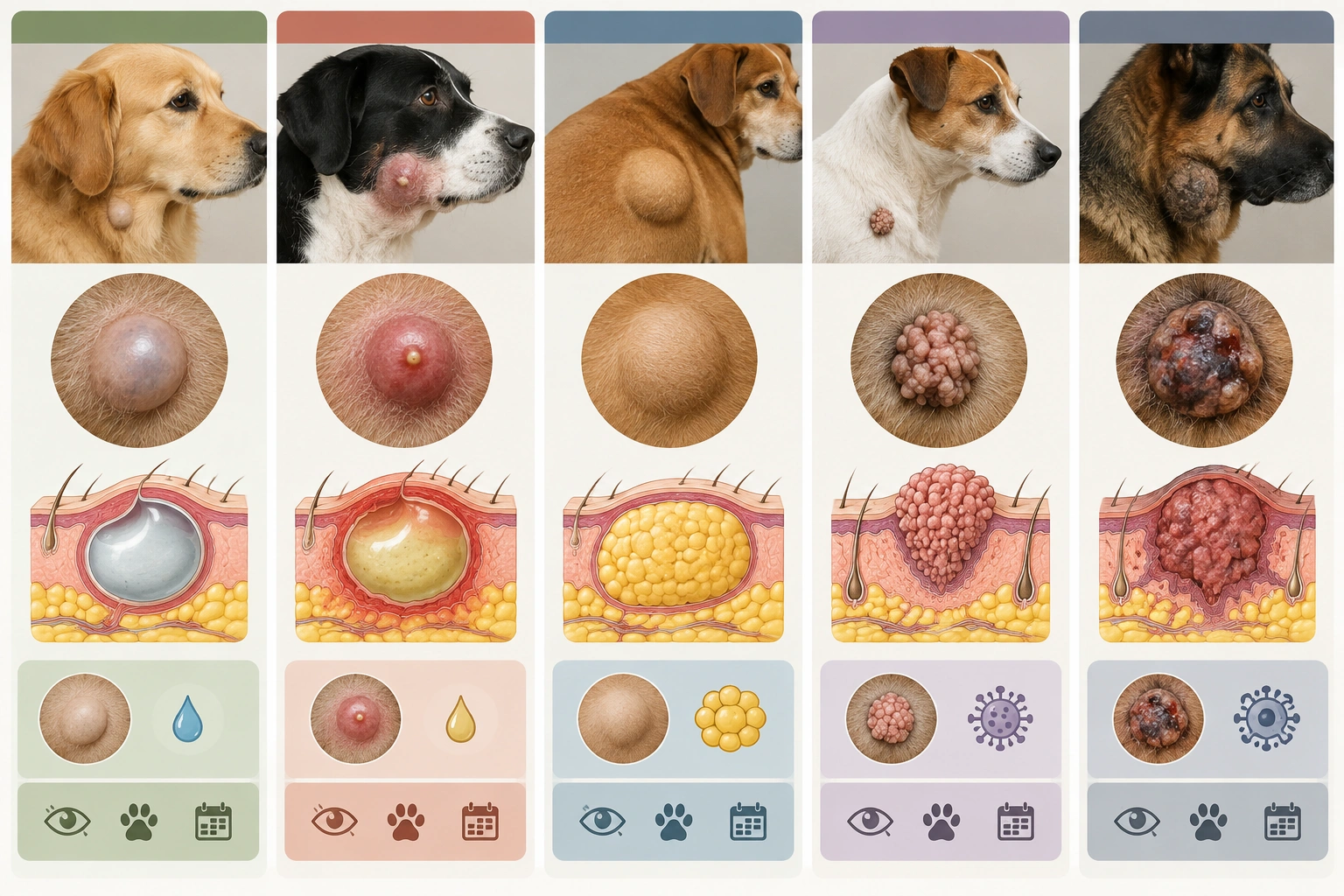
| Possible bump | Common feel/look | What makes it more concerning | Typical next step |
|---|---|---|---|
| Cyst | Round, skin-level, sometimes pimple-like | Redness, rupture, odor, drainage | Vet exam if changing or irritated |
| Abscess | Painful, warm, swollen, may leak pus | Fever, lethargy, rapid swelling | Prompt veterinary care |
| Lipoma | Soft, movable, under the skin | Rapid growth, firmness, pain | Vet confirmation; may be monitored |
| Wart | Small, rough, cauliflower-like | Bleeding, growth, irritation | Vet check if uncertain |
| Tumor | Variable; can mimic other bumps | Firmness, fixation, color change, ulceration, fast growth | Vet diagnostics |
The trade-off here is simple: the more a bump behaves like an ordinary, stable skin change, the more reasonable monitoring becomes. The more it changes, hurts, leaks, or seems attached to deeper tissue, the more you should lean toward veterinary evaluation.
What You Should Not Do at Home
Do not squeeze, pop, lance, cut, or drain a bump yourself. Do not use human creams, ointments, or acne treatments unless a veterinarian specifically tells you to. Do not give pain relievers or antibiotics without veterinary direction. Do not try to “dry it out” with random home remedies.
Those shortcuts can backfire in several ways. They can spread infection, make pain worse, irritate the skin, and interfere with diagnostic testing later. If the bump is a mass that needs sampling, squeezing or applying topical products can also muddy the picture for your vet.
If the dog is licking or scratching the area, use an e-collar or another vet-approved barrier only if needed to prevent self-trauma while you arrange the appointment.
What to Track Before the Vet Visit
If the bump is not an emergency, gather useful information before the appointment. That can help the vet narrow down the next step.
Record:
- When you first noticed it
- Whether it has grown
- Approximate size in millimeters or centimeters
- Exact location on the body
- Color and whether it has changed
- Texture: soft, firm, smooth, rough, fluid-like
- Pain level when touched
- Any discharge, bleeding, odor, or crusting
- Whether your dog is licking, scratching, or chewing it
- Any behavior changes such as lethargy, reduced appetite, vomiting, or restlessness
A photo with a coin or ruler beside the bump is often more useful than a verbal description. If the lump is small and stable, taking a photo every few days can show whether it is truly changing or just drawing more attention now that you have found it.
How Veterinarians Diagnose a Dog Bump
A veterinarian will usually begin with a physical exam and a history of how the bump has changed. From there, the next step may be a fine-needle aspirate, where a small needle is used to collect cells for examination. This is often one of the first tests because it can help distinguish whether the bump looks inflammatory, infectious, or neoplastic before the vet decides on biopsy or removal.
If the aspirate does not give enough information, the vet may recommend a biopsy. A biopsy samples tissue more fully and can provide a clearer diagnosis. In some cases, surgical removal is part of the plan, especially if the mass needs to come out anyway or if testing suggests it is necessary.
The main reason vets do not rely on appearance alone is that many bumps overlap visually. A benign cyst, a lipoma, and a tumor can all look like “just a lump” to an owner, especially early on.
For a broader owner-friendly overview of skin masses in dogs, the AKC’s general health guidance is a helpful starting point, while VCA Hospitals has practical veterinary articles that explain common diagnostic steps in plain language.
How to Decide: Monitor, Book a Routine Exam, or Go Now
Use this simple decision framework.
Monitor at home for now if:
- the bump is small
- it is not painful
- it is not red, hot, or leaking
- your dog is acting normal
- it has not changed size over the past couple of weeks
Even then, plan a routine vet visit if it is new and you do not know what it is.
Book a routine vet exam if:
- the bump is new but stable
- you are not sure what type it is
- it is in a spot your dog can lick or scratch
- it has changed slowly
- it feels firm, but your dog otherwise seems well
Go sooner, same day if:
- it is rapidly growing
- it is painful
- it bleeds, drains, or smells bad
- it is red, purple, or black
- your dog seems sick
- it is on the face or near the eye
Go to an emergency veterinarian now if:
- your dog is having trouble breathing or swallowing
- the swelling is spreading quickly
- there is heavy bleeding
- your dog collapses, vomits repeatedly, or becomes suddenly weak
If you are debating between “wait and see” and “book the visit,” the safer choice is usually the exam. Missing an infection or a mass that should not be left alone can create a bigger problem later.
Frequently Asked Questions
Can I tell if my dog’s lump is cancerous?
Not reliably. Some cancerous masses look small, soft, or harmless at first, and some benign bumps can look alarming. A veterinarian may use a fine-needle aspirate or biopsy to sort that out.
Should I wait or call the vet now?
If the bump is changing quickly, painful, bleeding, draining, or making your dog unwell, call now. If your dog is breathing or swallowing poorly, go to emergency care right away. If the bump is stable and your dog feels normal, book a routine exam.
Can a mast cell tumor look like a harmless bump?
Yes. Mast cell tumors can mimic other skin lumps, which is one reason vets often recommend checking new or changing masses rather than watching them for too long.
Can I use antibiotic ointment or pain medicine at home?
Not without veterinary direction. Human products and leftover medications can be unsafe for dogs or can interfere with diagnosis.
Breed-Related and Location-Specific Considerations
Border Collies are not known for one single classic lump problem that overrides everything else. That is actually useful to know, because it keeps you from assuming breed alone explains the bump. Location and behavior matter more than breed stereotypes.
Still, active dogs like Border Collies are prone to bumps that come from outdoor life: insect bites, minor trauma, scrapes, and irritated skin from running, scratching, or contact with rough ground. A bump that appears after field work, rough play, or a suspected sting may be inflammatory, but it still needs attention if it swells quickly or your dog seems uncomfortable.
Bumps on the head, legs, paw, ear, or groin often get noticed later because dogs do not always tolerate being handled there. That delay is one reason to make a habit of checking your dog during grooming or after hikes.
Key Takeaways for Worried Dog Owners
A new bump on your dog is not automatically an emergency, but it is also not something to dismiss by appearance alone.
The safest approach is to ask three questions:
- Is it changing quickly?
- Is it painful, red, hot, bleeding, or draining?
- Is my dog acting normal?
If the answer to any of those is yes, call a veterinarian. If the bump is stable, painless, and your dog feels well, you can usually monitor briefly while arranging a routine exam. Take photos, measure it, and avoid home treatments that could make things worse.
If you are ever stuck between “probably nothing” and “I should have this checked,” choose the check.