
Is It Too Late to Socialize Your Dog? A Practical Guide for Adult, Rescue, and Border Collie Owners

If you’re asking, “is it too late to socialize my dog,” the short answer is no — not for most dogs. Adult dogs, adolescent dogs, and even older dogs can still learn to feel safer and more comfortable in the world. What changes is the goal and the pace.
With puppies, socialization is about building a broad, positive foundation while the brain is especially open to new experiences. With an older dog, the work is usually more targeted. You’re not trying to make every dog outgoing, friendly with everyone, or happy in every setting. You’re trying to build calm, neutral, predictable behavior around the things that currently feel hard.
That distinction matters. If you chase “friendliness” too aggressively, you can make fear worse. If you aim for comfort, neutrality, and confidence, you give the dog a better chance to succeed.
For Border Collies especially, this often shows up as a dog that is intelligent and observant but easily overwhelmed by too much novelty, too much motion, or too much pressure. That does not mean the dog is broken. It means the plan has to be precise.
What Dog Socialization Actually Means
Socialization is not the same as “meeting lots of dogs” or “being friendly with strangers.” At its core, it means helping a dog learn that new people, places, sounds, surfaces, handling, and other dogs are safe enough to ignore or approach calmly.
That emotional learning is the real target.
A dog can know “sit,” “stay,” and “leave it” and still panic at a skateboard, freeze when a visitor enters, or bark at another dog on leash. Obedience can help you manage those moments, but it does not replace socialization. Socialization changes how the dog feels; obedience changes what the dog does.
It also should not be forced. A dog does not have to greet strangers, play with unfamiliar dogs, or tolerate close contact to be well socialized. In many cases, avoiding pressure is part of the process. If a dog is worried, the goal is to give them enough space to notice the trigger, recover, and choose calm behavior on their own.
This is why forcing interaction usually backfires. If a dog is worried and you make them endure a crowded park, a face-to-face greeting, or repeated handling, they may not learn “this is fine.” They may learn “I had no control, and my warning signs were ignored.”
A better goal is emotional safety. The dog should be able to notice something new and stay under threshold — alert, but still able to eat, look around, recover, and continue.
For a practical overview of puppy socialization as exposure to people, places, sounds, and surfaces, AKC’s socialization guidance is a useful reference point. The same principle still applies later in life, even though the pace changes.
Puppy Socialization Window vs. Later-Life Socialization
The puppy window matters because it is a sensitive period. Many puppies are especially open to new experiences in early life, but the exact age range varies by dog and source. A practical way to think about it is that puppies usually benefit from broad, positive exposure early on, and socialization should continue through the first year of life.
That does not mean the door closes at a certain birthday.
It means the learning process gets slower, more deliberate, and more dependent on the dog’s history. Puppies often bounce back quickly from mild novelty. Adult dogs usually need more repetition and more control over distance and intensity.
Here is the trade-off:
- Puppy socialization: faster progress, wider flexibility, easier generalization.
- Adult-dog socialization: slower progress, more management, but still very real improvement.
If you adopted a 2-year-old rescue who has never seen much of the world, you are not “too late.” You are just starting from a different place. The first win may be walking past a stroller without barking, not greeting the stroller owner.
That is still progress.
Can Age, Breed, Genetics, or Past Experience Change the Outcome?
Yes — and this is where realistic expectations save a lot of frustration.
A dog’s past experience matters. A dog that was underexposed as a puppy may be cautious simply because the world is unfamiliar. A dog that had frightening experiences may be fearful of specific triggers. A dog with repeated bad leash encounters may become reactive around other dogs even if they are otherwise social at home.
Temperament matters too. Some dogs are naturally more cautious. Some are bolder. Some recover quickly after a surprise; others need time and distance.
Breed tendencies can shape the challenge. Border Collies often notice everything. That sensitivity is useful in training, but it can also make them quicker to react to movement, noise, and pressure. They may not need “more exposure” in the abstract. They often need better-controlled exposure, lower arousal, and clearer structure.
The practical question is not “Can this dog be socialized?” It is “What kind of socialization will this dog tolerate well enough to learn from?”
If your dog is already overwhelmed by a new environment, adding more stimuli will not speed things up. It usually does the opposite.
Shy, Fearful, or Reactive: How to Tell What You’re Dealing With
These labels are not just semantics. They change the plan.
Shy
A shy dog is cautious but still functional. They may hang back, watch quietly, and warm up slowly. They can often learn with patient, low-pressure exposure.
Fearful
A fearful dog is doing more than hesitating. They may try to leave, hide, freeze, tremble, pant, or refuse food. Their body is telling you the situation is too intense. Fear needs distance, predictability, and careful pacing.
Reactive
A reactive dog has a bigger outward response — barking, lunging, spinning, or hard staring. Reactivity can come from fear, frustration, overarousal, or a mix of all three. The visible behavior may look “aggressive,” but the root cause is often emotional overload.
A simple decision rule helps here:
- If the dog can observe and recover, you may be dealing with shyness or mild caution.
- If the dog cannot settle, eat, or disengage, fear is probably driving the behavior.
- If the dog explodes at the trigger, especially on leash, reactivity is likely part of the picture.
You do not need to diagnose every detail before you begin. But you do need to know whether the dog is calm enough to learn.
If a dog is showing intense fear across many settings, refusing food, shutting down, or escalating quickly, that can warrant prompt professional evaluation rather than a DIY approach.
Signs Your Dog Is Too Stressed to Keep Going
This is the section many owners skip, and it is the one that prevents the most mistakes.
Stop the session if you see any of these:
- Freezing or hard staring
- Repeated lip licking or yawning in context
- Turning away, hiding, or trying to increase distance
- Refusing food they normally like
- Pacing, panting, trembling, or a tucked tail
- Sudden barking, lunging, or snapping
- Shutdown behavior: flat posture, low movement, “checked out” expression
The key is not whether the dog “made it through.” The key is whether the dog stayed under threshold long enough to learn something useful.
A dog that is pushed too far often needs recovery time before the next session. If you keep repeating the same mistake, you teach the dog that the trigger predicts overwhelm.
That is why shorter, easier sessions usually beat long, ambitious ones.
Safe Socialization Basics: Desensitization and Counterconditioning
For older or under-socialized dogs, the core tools are desensitization and counterconditioning.
Desensitization means exposing the dog to a milder version of the trigger — far enough away, quiet enough, or brief enough that the dog can stay calm.
Counterconditioning means pairing the trigger with something the dog loves, so the emotional meaning changes over time.
Example: if your dog sees a stranger across the street and gets a piece of chicken every time, the stranger may begin to predict good things instead of danger.
The reason this works is simple: the dog is learning below threshold. If the trigger is too intense, the dog cannot absorb the new association. The brain is too busy reacting.
This is why flooding is such a bad shortcut. Flooding means overwhelming the dog with the full trigger and hoping they “get used to it.” Some dogs shut down. Others escalate. Few truly relax.
For a general framework on socialization and positive exposure, the Animal Humane Society’s guidance is a solid reference.
How to Socialize an Adult Dog Step by Step
Think in categories, not chaos.
1) People
Begin with people at a distance. The dog does not need to greet anyone yet. They only need to notice a person and stay calm.
For many wary dogs, start far enough away that the dog can still take treats, look back at you, and move normally. The right distance depends on the dog, the trigger, and the environment. In a quiet park, that might be a long distance; in a busier area, it may need to be much farther.
Keep the first sessions short — often just a few minutes of calm observation, then a break. If the dog stiffens, stops eating, or keeps scanning the person instead of relaxing, increase distance.
2) Dogs
Do not start with direct greetings. Start with parallel movement at a safe distance. The goal is for your dog to see another dog and remain composed.
For a leash-reactive dog, a calm parallel walk across a large parking lot is often more useful than a nose-to-nose introduction. Start with enough distance that your dog can notice the other dog and still respond to you. If your dog tenses up, the distance is too close.
3) Places
New environments should be quiet first. Empty parking lots, calm sidewalks, or a park at low-traffic times are often better than busy streets, pet stores, or dog parks.
Let the dog sniff, watch, and leave. Exploration is part of the lesson.
4) Sounds
Use low-volume versions of the sound first. A recording of traffic, a vacuum in another room, or a distant thunder sound can all be introduced gradually, with food and distance.
5) Handling
If grooming or vet handling is difficult, break it into tiny steps. Show the brush, reward. Touch the shoulder, reward. Lift the paw for one second, reward. The dog should be able to predict what happens next.
Here is the rule I use: one trigger, one session. Don’t try to fix people, dogs, sounds, and handling all at once.
What to Prioritize First: People, Dogs, Environments, or Handling
Not every dog needs the same starting point.
Prioritize handling first if the dog struggles with grooming, nail trims, collar grabs, or vet-style restraint. That kind of fear can turn everyday care into a fight.
Prioritize dogs first if the dog is mostly reactive on leash but otherwise relaxed with people at home.
Prioritize people first if the dog hides from visitors, startles easily, or has never learned that strangers can be neutral.
Prioritize environments first if the dog panics in new places but is okay with familiar people and dogs.
If you are unsure, begin with the trigger that causes the strongest emotional response. That usually gives you the biggest safety payoff.
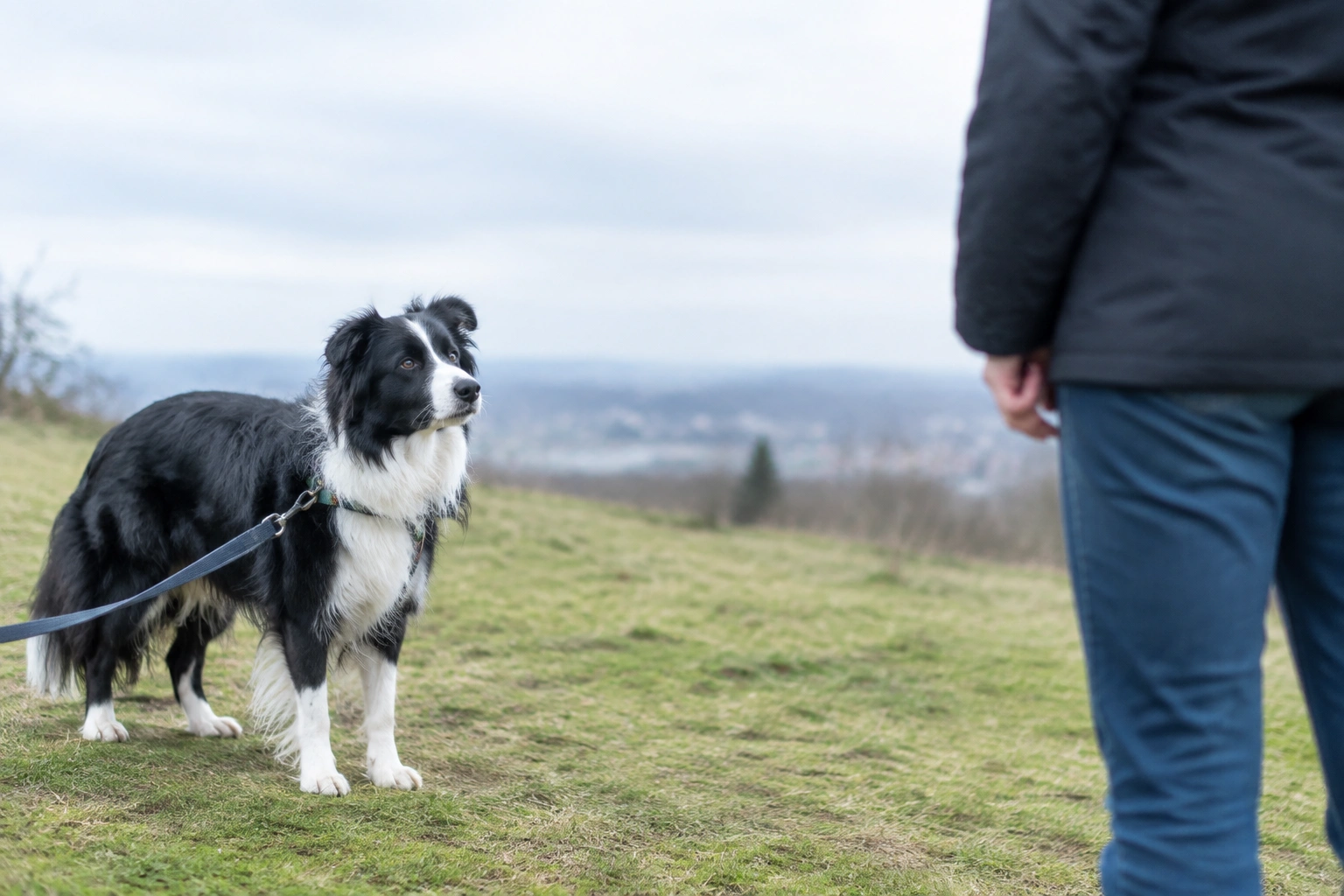
For example, a Border Collie that loves family but barks at strangers may not need more dog introductions. They may need controlled practice with unfamiliar people at a distance, paired with calm reinforcement.
How Fast Should You Progress?
Slower than most owners want, faster than doing nothing.
Progress should be measured by recovery, not just exposure. A dog that can see a trigger, take food, and settle faster over time is improving. A dog that looks fine during the session but becomes more tense afterward is not ready to move up.
For an adult dog or rescue dog, a realistic expectation is often measured in weeks to months, not days. Some dogs show small improvements in a few sessions, but steadier progress usually means repeating easy wins until the behavior becomes predictable. For a dog with a stronger fear history, meaningful confidence-building may take several months of consistent work.
Use milestone-based progress instead of a calendar deadline:
- First milestone: the dog can notice the trigger at a safe distance and still eat.
- Second milestone: the dog recovers more quickly after seeing the trigger.
- Third milestone: the dog can stay calm with a slightly shorter distance, quieter environment, or slightly longer exposure.
- Fourth milestone: the dog can generalize the skill to a new but similar setting.
Use this simple progression rule:
- Increase only one variable at a time.
- Change distance before changing intensity.
- Change duration before changing proximity.
- Repeat the same easy version until it looks boring.
A realistic session for an adult dog may be just a few minutes of exposure, followed by a break. The exact length matters less than the dog’s ability to stay calm and finish successfully.
If you move too quickly after one good session, you often lose the progress you just earned.
Common Mistakes That Make Socialization Worse
The biggest mistakes are usually well-meant.
Dog parks are not a default solution for an under-socialized dog. They are unpredictable, crowded, and too fast for many fearful dogs.
Forced greetings can teach a dog that they have no control. That often increases caution next time.
Flooding can create shutdown, panic, or stronger avoidance.
Punishment for barking, growling, or backing away can suppress warning signs without changing the underlying fear.
Too many triggers at once makes it impossible to know what the dog actually learned.
If you want durable progress, reduce pressure before you increase challenge.
When Unfamiliar-Dog Exposure or Crowded Environments Are Safe — and When to Avoid Them
This is where many owners get stuck, because “more exposure” is not always better.
Avoid unfamiliar-dog exposure when your dog is still:
- barking or lunging at a distance
- unable to take treats near other dogs
- stiff, fixated, or scanning constantly
- recovering slowly after seeing a dog
- already overwhelmed in daily walks
Avoid crowded environments when your dog:
- startles easily
- cannot focus long enough to learn
- shuts down in busy places
- has a history of fear, reactivity, or escape attempts
- cannot leave the situation if needed
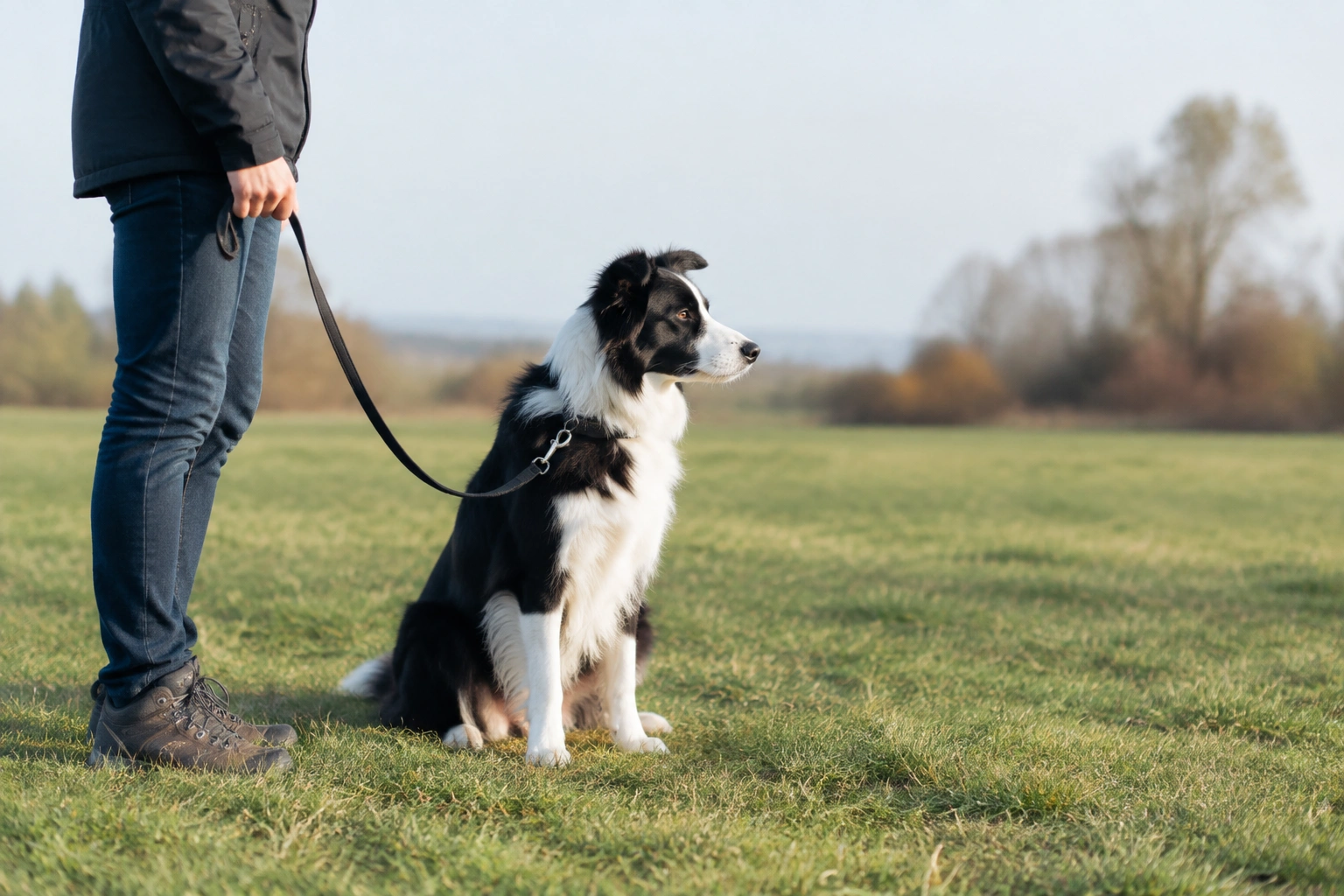
These settings can be introduced safely only when the dog can stay under threshold. That usually means starting with much more space, much less noise, and a clear exit plan. A quiet park edge, a low-traffic sidewalk, or a calm parking lot is often a better starting point than a pet store, festival, or dog park.
If the dog cannot observe, eat, and recover, the setting is too hard.
When to See a Veterinarian or Certified Trainer
DIY work is often enough when the dog is mildly cautious, can recover quickly, and still learns from short, easy sessions.
Get professional help sooner if the dog:
- Cannot relax around common triggers
- Lunges, snaps, or bites
- Shuts down completely
- Shows fear in many settings, not just one
- Gets worse instead of better with careful practice
- Becomes dangerous during handling or dog encounters
A certified professional dog trainer (CPDT) can help you build a behavior plan and manage training mechanics. A veterinary behaviorist is the better first call when the behavior is severe, the dog may need medication support, the fear is spreading across multiple situations, or there is any bite risk or major safety concern.
That is not an overreaction. It is a faster route to a safer plan.
If you want a broad overview of socialization and training support, ASPCA’s dog behavior resources are worth bookmarking as a starting point.
Border Collie Considerations: Sensitivity, Intensity, and Overarousal
Border Collies often bring extra intensity to the socialization puzzle.
They are quick to notice movement, patterns, and changes in the environment. That can make them excellent learners, but also easier to overarouse. Once aroused, they may spin, bark, fixate, or struggle to settle.
For this breed, the goal is often not “more stimulation.” It is better regulation.
That means:
- keeping sessions calm and predictable
- avoiding busy, chaotic environments early on
- rewarding calm observation, not just brave approach
- building recovery skills between exposures
- watching for frustration as carefully as fear
A Border Collie that looks “fine” but is mentally wound up may still be over threshold. In practice, that dog needs structure, not more pressure.
Bottom Line: What Success Looks Like for an Older Dog
Success is not always a dog who loves everybody and wants to greet every dog in sight.
Success is a dog who can move through the world with less fear, fewer big reactions, and faster recovery. It is a dog that can handle normal life more comfortably: a visitor at the door, a walk past another dog, a new room, a grooming session, a vet visit.
That is a meaningful change.
So, is it too late to socialize your dog? In most cases, no. It may be too late to get the kind of effortless puppy socialization you wish had happened earlier. But it is not too late to build comfort, confidence, and better behavior at any age.
The work just needs to match the dog in front of you.
FAQ
Can adult dogs still be socialized safely?
Yes, many adult dogs can make real progress with careful desensitization, counterconditioning, and enough distance from triggers.
Should I take a fearful dog to a dog park to socialize them?
Usually no. Dog parks are often too crowded, unpredictable, and fast-paced for a fearful or reactive dog.
How long does socialization take for a rescue dog?
It depends on the dog’s history and the trigger, but progress is often measured in weeks to months rather than days.
Is socialization the same as obedience training?
No. Socialization changes how a dog feels about the world; obedience training teaches behaviors like sit, stay, and leave it.