
What to Do If Your Dog Ate Drugs: A Calm, Step-by-Step Emergency Guide

If your dog may have swallowed a human medication, recreational drug, or an unknown pill, treat it as urgent until a veterinarian or poison hotline tells you otherwise. The first few minutes matter because the safest response depends on what was eaten, how much, when, and your dog’s body weight.
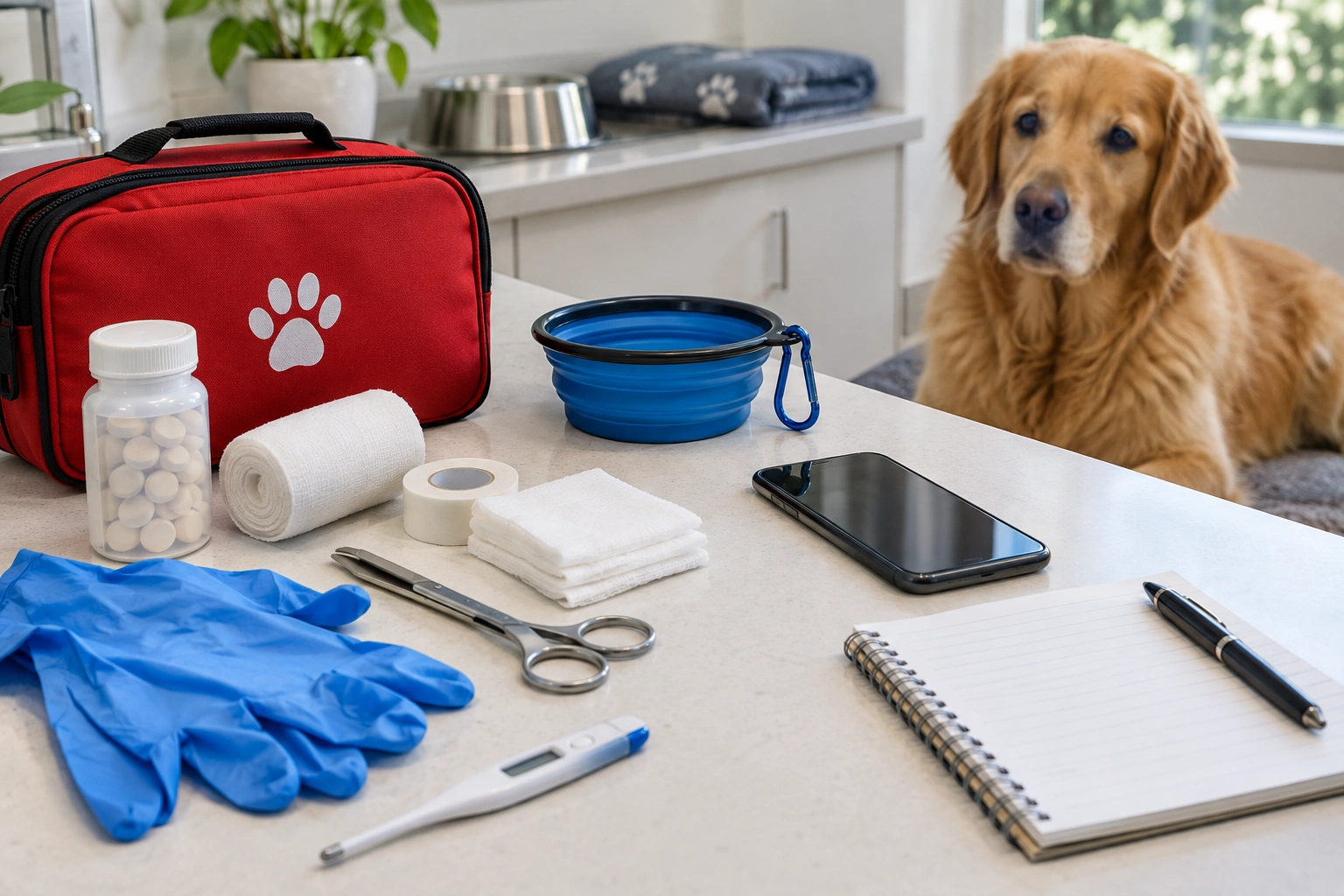
Keep your dog calm and prevent any further access while you call for help.
What to do in the first 5 to 10 minutes
Your goal is not to “fix it” at home. Your goal is to stop the situation from getting worse and get the right professional advice fast.
1) Remove access immediately
Take the medication, wrapper, bottle, edible, or bag away from the dog. If there are scattered pills, gather them so you can estimate how many are missing. If the dog is still chewing something, do not fight for it if that could trigger biting or swallowing more.
2) Check the dog’s condition right now
Look for:
– vomiting
– wobbliness
– trembling
– agitation
– unusual sleepiness
– fast breathing
– collapse
– seizures
If any of those are present, skip the “wait and see” approach and go straight to emergency care.
3) Identify the substance
Read the label, take a photo, or bring the container with you. If it is an unknown pill, even a tiny one, treat it as potentially dangerous. A sidewalk pill or loose tablet is not something to “guess” about.
4) Call for guidance immediately
If the dog is stable, call your veterinarian or a pet poison hotline right away. If the dog is already showing serious symptoms, head to the emergency clinic while someone else calls.
5) Do not give a home remedy while you are deciding
No salt, milk, oil, bread, or random “detox” tricks. Those can delay proper treatment or make things worse.
A useful rule: if you are unsure whether the dog is safe to manage at home, assume it is not safe until a professional says so.
Do not give these home remedies
This is the part where a lot of well-meaning owners accidentally make the problem harder to treat.
Do not induce vomiting on your own
Veterinary-guided vomiting can sometimes help if the ingestion was recent, but it is not a DIY step. The wrong drug, the wrong timing, or the wrong dog can turn vomiting into a bigger risk.
Timing for induced vomiting varies by the substance and the veterinarian’s guidance. In some cases it may be helpful soon after ingestion; in others it may not be recommended at all. PetMD on drug poisoning in dogs
Do not use salt, milk, or food to “neutralize” the drug
Salt can be dangerous in its own right. Milk does not cancel out most medications. Food may slow absorption in some situations, but it can also interfere with treatment decisions and is not a substitute for proper triage.
Do not give activated charcoal unless a professional tells you to
Activated charcoal can be useful in some poisonings, but it is not automatically appropriate. It depends on the drug, the timing, and whether the dog is alert enough to swallow safely. A dog that is drowsy, vomiting, or neurologically abnormal should not be given anything by mouth without veterinary direction.
Do not force water, peroxide, or “detox” products
Hydrogen peroxide is often discussed online, but that does not make it safe to use casually. If a vet or poison hotline does not explicitly instruct you to use it, do not.
How to judge urgency: substance, dose, weight, and time matter
The word “drugs” is too broad to be useful. The real question is: what drug, how much, in what size dog, and how long ago?
Substance
Some medications are much more dangerous to dogs than others. A single pill of one drug may be an emergency, while a small exposure to another may be less serious. Unknown pills should be treated as high risk until identified.
Dose
A half tablet, one tablet, or one gummy can mean very different things depending on the product strength. A dog chewing a pill bottle may also have swallowed more than the owner initially sees.
Body weight
A 10-pound dog and a 50-pound dog do not face the same risk from the same amount. Smaller dogs can be affected by lower doses, so weight matters a lot.
Time since ingestion
Time changes the options. Early action may allow your vet to recommend vomiting or decontamination. Delays often mean the focus shifts to monitoring, supportive care, or emergency treatment.
Symptoms
Symptoms often tell you more than the label on the bottle. A dog with tremors, agitation, repeated vomiting, or collapse needs immediate in-person care even if the exact drug is unknown.
When to call poison control, your vet, or an emergency clinic
Here is the practical triage rule.
| Situation | Best first call | Why |
|---|---|---|
| Dog is alert, breathing normally, and you know what was eaten | Your vet or pet poison hotline | They can help decide whether vomiting, monitoring, or a clinic visit makes sense |
| Dog is already vomiting, trembling, very sleepy, agitated, or unsteady | Emergency vet now | These are red-flag symptoms that need immediate assessment |
| Dog swallowed an unknown pill | Poison hotline or vet right away | Identification and dose assessment matter before any home action |
| Dog may have eaten a recreational drug | Emergency vet now | Illicit drugs can cause severe neurologic and cardiovascular signs quickly |
| Dog seems normal, but you are unsure of the amount | Vet or poison hotline | A normal appearance does not rule out a dangerous exposure |
Poison control can help with guidance, but it is not a substitute for immediate ER care when red-flag symptoms are present or the exposure is known to be high risk. If the dog has active symptoms or the drug is known to be dangerous, go to the emergency clinic first.
For owners who want a poison-control resource, the two names most often used in the U.S. are the ASPCA Animal Poison Control Center and Pet Poison Helpline. Either can help with triage, but neither replaces emergency care when symptoms are severe.
Symptoms that mean this is an emergency right now
Get to an emergency veterinarian immediately if your dog has any of these:
– seizures
– collapse or inability to stand
– trouble breathing
– extreme agitation or panic
– severe lethargy or hard-to-wake sleepiness
– repeated vomiting
– tremors or muscle twitching
– disorientation
– abnormal heart rate if you can tell it is racing or unusually slow
– blue, pale, or gray gums
These signs suggest the dog may need oxygen, IV fluids, temperature control, seizure medication, or other monitoring that cannot be safely done at home.
Which drugs are especially dangerous for dogs
Some exposures deserve extra concern because they can become serious fast.
Prescription stimulants and ADHD medications
Drugs in this group can cause agitation, tremors, elevated heart rate, seizures, and dangerous overheating. Even a small amount can be a problem, especially in a smaller dog.
Amphetamines and methamphetamine
These are high-risk exposures. Veterinary sources note that dogs may need IV fluids, sedatives, anticonvulsants, and cooling if body temperature rises too high. If the dog just ate it and is still ambulatory and not seizing, a vet may consider vomiting under supervision; that is not a home decision. PetMD on amphetamine poisoning in dogs
A case report of methamphetamine intoxication in a dog described treatment that included IV sodium bicarbonate for base deficit correction, intermittent IV glucose for mild hypoglycemia, and subcutaneous amoxicillin-clavulanate. That is a reminder that treatment can become complex quickly once a dog is in the hospital. Methamphetamine intoxication case report
Acetaminophen
This is one of the drugs owners most often underestimate. Even one dose can be dangerous for some dogs, depending on size and amount.
Ibuprofen and other NSAIDs
These are common, and that is part of the problem. People assume they are mild because they are over the counter. Dogs do not process them safely the way humans do.
Opioids
These can cause sedation, slowed breathing, wobbliness, and pinpoint pupils. Severe overdose can be life-threatening.
Cannabis and THC edibles
Edibles are especially tricky because they often contain concentrated THC and may also include chocolate, xylitol, or other ingredients that create extra risk. Dogs may look “drunk,” vomit, wobble, or become very quiet.
Cocaine and other recreational drugs
These can trigger severe agitation, tremors, seizures, and dangerous heart effects. Do not try to manage these at home.
What information to have ready before you call
A short, organized call saves time. Keep this checklist in front of you:
- dog’s weight
- age
- breed
- exact product name, if known
- strength on the label
- how much may be missing
- when the ingestion likely happened
- whether the dog has vomited
- current symptoms
- whether the dog has any other health problems
- a photo of the pill, bottle, wrapper, or edible packaging
A simple call script works well:
“My dog weighs about 32 pounds. I think he may have eaten a human medication about 20 minutes ago. The bottle is [name/strength], and two pills may be missing. He is [symptom status]. Should I come in immediately, and should I try anything before I leave?”
That script gives the professional the information they need without making you guess at the rest.
What a veterinarian may recommend or do next
Treatment depends on the drug and the dog’s condition, but common next steps include:
Veterinary-guided vomiting
If the exposure was recent and the dog is stable, the vet may recommend vomiting under controlled conditions. This is different from trying it at home because the vet is checking whether it is safe in the first place.
Activated charcoal
A vet may use activated charcoal for some toxins to reduce absorption. It is not a universal answer, and it is not appropriate in every case.
Antidotes when available
Some drugs have specific antidotes or reversal agents, and a veterinarian may use those when appropriate. Not every exposure has one, but when an antidote exists it can be an important part of treatment.
IV fluids and monitoring
Dogs may need hospitalization with IV fluids and ongoing observation. PetMD notes that dogs will often need IV fluids and other supportive care to help flush the toxin from the system. PetMD on drug poisoning in dogs
Temperature control, seizure control, and sedation
With stimulant exposures, the vet may use sedatives, anticonvulsants, and cooling measures if the dog is overheating. That is especially important because seizures and high body temperature can become dangerous quickly.
Bloodwork or other diagnostics
Depending on the drug, the vet may check glucose, electrolytes, liver values, or heart rhythm. That helps guide treatment and tells the team whether the dog is worsening.
If the exact drug or amount is unknown
This is common. A dog grabs a dropped pill, chews a baggie, or finds a loose tablet on a walk. You may never know the exact amount.
In that situation, do not wait for certainty. Treat it as a potentially toxic exposure and call for guidance immediately. If the dog is normal, that does not automatically make the situation safe. Some drugs cause delayed symptoms, and some exposures become more serious after absorption.
If you have the packaging but not the exact count, say so. If you have neither the packaging nor the count, say that too. Partial information is still useful.
Common real-world scenarios and how to think about them
A dog ate a dropped ADHD pill
This is a “call now” situation. If it was recent and the dog is stable, a vet may discuss whether vomiting is appropriate. If the dog is already jittery, vomiting, or overheating, head to the ER.
A dog may have eaten an ibuprofen tablet
Do not assume “just one” is harmless. Call immediately with the strength and the dog’s weight.
A dog got into a THC edible
Check the package for THC amount and any other ingredients. If the dog is wobbly, very sleepy, or vomiting, get veterinary help quickly.
A dog swallowed a mystery pill on the sidewalk
Treat it as toxic until identified. Unknown pills are not a wait-and-see problem.
The dog seems normal an hour later
That does not close the case. Some drugs still need professional guidance even when early signs are absent.
A practical decision rule you can trust
If you remember nothing else, remember this:
Unknown pill, serious symptoms, or recreational drug = emergency vet now.
Known medication, no symptoms, and recent ingestion = call vet or poison hotline immediately for instructions.
Never guess on vomiting or home treatment.
When to See a Veterinarian or Certified Trainer
For this topic, the professional is a veterinarian or emergency clinic, not a trainer. If you suspect drug ingestion, the question is medical triage, not behavior management. Call a vet, an ER clinic, or a poison hotline first.
Trust your observation if your dog suddenly seems off, but don’t use “watch and wait” for a high-risk drug or an unknown amount. If a professional says home monitoring is reasonable, follow their instructions closely and go back in if symptoms appear or worsen.
FAQs
Should I make my dog vomit after eating drugs?
Not without veterinary instruction. Vomiting can help in some cases, but it can also be unsafe or ineffective depending on the drug, timing, and the dog’s condition.
Can I give activated charcoal at home?
Only if a veterinarian tells you to. It is not appropriate for every drug and should not be given to a dog that cannot swallow safely.
How fast do drug poisoning symptoms appear?
Sometimes quickly, sometimes later. That is why a normal appearance does not rule out a problem.
What if I do not know what pill my dog ate?
Treat it as an unknown toxic exposure and call for help right away. Bring the pill, bottle, wrapper, or a photo if you have it.
Is a small amount ever safe?
Sometimes, but you cannot know that reliably without identifying the substance, dose, and dog’s weight. Guessing is the mistake to avoid.
Should I call my regular vet or go straight to the ER?
If the dog is symptomatic, go to the ER. If the dog is stable and you have details about the substance, your vet or a poison hotline can help you decide the next step.
What should I bring with me?
Bring the medication container, any remaining pills, packaging, photos, and a note of when the ingestion likely happened.
Can a dog recover after eating drugs?
Many dogs do recover with prompt treatment, especially when help is sought early. Some exposures may also have specific antidotes or reversal agents, depending on the drug.