
Why Is My Puppy’s Eye Red? A Practical Guide to Causes, Urgency, and Next Steps

A red eye in a puppy ranges from a minor irritation to a problem that needs same-day veterinary care. The challenge is that redness alone does not tell you which one you’re dealing with. What matters most is the pattern around it: one eye or both, whether the puppy is squinting, whether there is discharge, and whether the eye looks cloudy or painful.
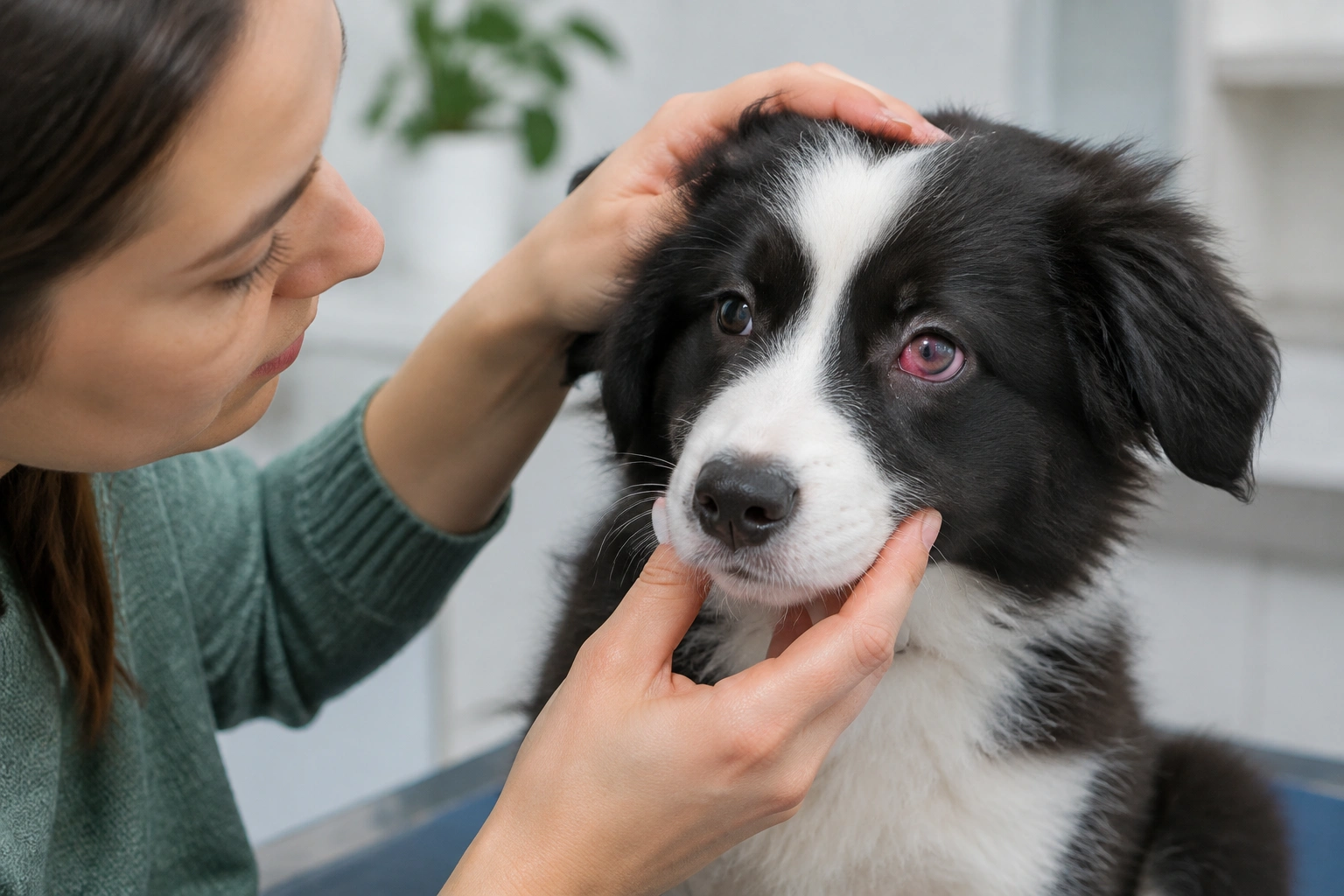
Puppies are active, curious, and quick to get into grass, dust, branches, and rough play. That can make simple irritation more likely, but it also raises the odds of scratches, foreign bodies, and other injuries that should not be watched too long.
If your puppy’s eye is red, your first job is not to diagnose it at home. Your first job is to decide how urgent it is.
Quick Triage: Is a Red Puppy Eye an Emergency?
Treat the eye as urgent if you see any of these:
- squinting or keeping the eye closed
- pawing at the eye or rubbing the face on furniture
- thick yellow, green, or bloody discharge
- cloudiness on the surface of the eye
- swelling around the eye
- a pupil that looks different from the other eye
- obvious light sensitivity
- any sign the puppy sees poorly or is bumping into things
- redness that appeared after rough play, a fall, or contact with grass, sticks, or debris
Those signs matter because they point beyond simple surface irritation. A corneal scratch, ulcer, foreign body, glaucoma, or uveitis can all start with redness, and some of those conditions can threaten vision if treatment is delayed.
If the eye is red and the puppy shows any pain signs, treat it as a same-day veterinary problem rather than something to watch at home. Pain signs include squinting, keeping the eye closed, pawing, rubbing, or obvious light sensitivity.
If the eye is red but the puppy is comfortable, blinking normally, eating, and acting like itself, a brief watch period may be reasonable while you arrange veterinary advice. “Brief” means hours, not days. If the redness is not clearly improving, or if any pain or discharge appears, move to a vet visit.
For general guidance on eye warning signs in dogs, the VCA Hospitals eye care guidance is a useful starting point.
Why a Puppy’s Eye Turns Red: The Most Likely Causes
Redness usually means the blood vessels on the eye surface or around it are enlarged or inflamed. That can happen for several different reasons, and the treatment depends on which one is actually present.
1. Simple irritation
Dust, wind, grass seeds, shampoo, or a bit of dirt can irritate the eye surface and make it red and watery. This is often the mildest explanation, especially if the puppy is otherwise comfortable and the redness settles quickly.
The trade-off here is time. Mild irritation may improve on its own, but if something is still trapped under the eyelid, the eye can stay inflamed and become scratched.
2. Foreign body
A hair, blade of grass, or tiny piece of debris can lodge in or under the eyelid and keep scraping the eye. That usually causes redness, tearing, blinking, and discomfort until the object is removed.
This is one of the reasons one red eye deserves attention. A foreign body often affects just one eye, not both.
3. Allergies
Allergies can cause red, watery eyes, often with itchiness and sometimes sneezing or redness of the skin around the eyes. Allergies usually affect both eyes, though one eye can look worse than the other. The key clue is that the puppy seems itchy more than painful.
4. Conjunctivitis
Conjunctivitis, or pink eye, is inflammation of the tissues around the eye and eyelids. It can be caused by allergies, infections, or irritants. It often produces redness, tearing, and sometimes discharge.
Conjunctivitis is common, but “common” does not mean harmless. If discharge becomes thick, the eye becomes painful, or the redness persists, the cause may be deeper than surface inflammation.
5. Infection
Infections can produce red eyes with discharge and irritation. In puppies, infection may occur on its own or after the eye has been irritated or scratched first. The important point is that infection and injury can look similar at first, which is why a red eye with discharge should not be assumed to be “just pink eye.”
6. Corneal scratch or ulcer
A scratch on the cornea, the clear surface of the eye, can make the eye red, painful, and watery. A corneal ulcer is a deeper defect on that surface. These are especially important because they can worsen if the puppy rubs the eye or if the wrong drops are used.
A puppy with a corneal ulcer may squint, avoid light, or keep the eye partly shut. That is not a “wait and see” problem.
7. Trauma
Eye injury or trauma can range from mild to very serious. A puppy can injure an eye in rough play, by running into something, or by getting hit by a branch or toy. Trauma can cause redness, swelling, tearing, cloudiness, or bleeding.
This is the situation where owners most often underestimate the problem because the puppy “seems okay otherwise.” Eye injuries often hurt more than they look.
8. Glaucoma or uveitis
These are less common but more serious causes of redness. Glaucoma involves increased pressure in the eye. Uveitis is inflammation inside the eye. Both can be painful and can threaten vision.
Clues that push concern higher include a cloudy eye, a dilated or unusual pupil, light sensitivity, and obvious pain. These need prompt veterinary assessment.
One Red Eye vs. Both Eyes: What That Pattern Suggests
The number of red eyes gives you a useful clue, even though it does not give you a diagnosis.
| Pattern | More likely possibilities | Clues that fit | Urgency |
|---|---|---|---|
| One red eye | Foreign body, scratch, trauma, corneal ulcer, localized infection | Squinting, pawing, discharge, cloudiness, recent rough play or debris exposure | Often same-day, sometimes urgent |
| Both eyes red | Allergies, irritation from wind/dust, conjunctivitis | Watery discharge, itchiness, redness around both eyes | Often vet visit soon; urgent if painful or worsening |
| One eye much worse than the other | Injury, ulcer, foreign body, glaucoma, uveitis | Pain, light sensitivity, cloudy cornea, unequal pupils | Same-day or emergency depending on severity |
| Both eyes with thick discharge | Infection or significant conjunctivitis | Sticky lids, repeated wiping, worsening redness | Vet visit soon |
A practical rule: one red eye makes me think “something local happened to that eye.” Two red eyes make me think “something is affecting the whole surface or both sides,” such as allergies or irritation. That is not absolute, but it helps you decide how hard to worry.
What Other Symptoms Matter Most
Some signs change the urgency more than the redness itself.
Pain signs
A puppy that squints, keeps blinking, paws at the eye, or turns away from light is telling you the eye hurts. Pain is one of the strongest reasons to stop home monitoring and call a vet.
Discharge
Clear tearing can happen with irritation or allergies. Thick yellow-green discharge suggests infection or more significant inflammation. Bloody discharge is more concerning and should be assessed promptly.
Cloudiness
A cloudy cornea is not a normal “red eye” detail. It can indicate corneal damage, ulceration, or deeper inflammation. Cloudiness plus redness should be treated as urgent.
Vision changes
If the puppy bumps into objects, hesitates on stairs, or seems less confident moving around, treat that as a red flag. Vision changes are not something to watch casually.
Swelling and pupil changes
Swelling around the eye, a pupil that looks larger or smaller than the other, or a pupil that does not react normally to light can point to glaucoma or uveitis. Those need prompt evaluation.
What You Can Safely Do at Home While Waiting for Veterinary Advice
If the eye is mildly red, the puppy is comfortable, and there are no red flags, these steps are reasonable while you arrange veterinary guidance:
- stop the puppy from rubbing the eye
- use an e-collar if you have one, or physically block access to the eye if the puppy keeps pawing at it
- keep the environment calm and avoid dusty, windy exposure
- gently wipe away discharge from the fur around the eye with clean gauze or a soft damp cloth
- watch the eye closely for worsening redness, squinting, cloudiness, or discharge
A sterile saline rinse may be appropriate in some situations, but only if the eye does not look injured and your vet has not told you to avoid flushing. If the eye seems painful, cloudy, or deeply irritated, do not keep manipulating it.
A useful decision rule: if the eye looks mildly irritated and the puppy acts normal, short-term monitoring is reasonable. If the eye looks painful, cloudy, or increasingly red, home care stops there.
What Not to Do With a Puppy’s Red Eye
Some common mistakes make eye problems worse fast:
- do not use human eye drops
- do not use leftover prescription drops from another pet
- do not use steroid drops unless a vet specifically prescribed them for this eye problem
- do not force the eyelids open if the puppy resists
- do not try to remove a foreign body with tweezers, cotton swabs, or your fingers
- do not keep flushing the eye repeatedly if it seems painful or the redness is getting worse
The main danger is that a scratched cornea or ulcer can be made worse by the wrong medication or by rubbing and manipulation. Steroid drops are especially risky if an ulcer is present.
How Vets Diagnose the Cause of a Red Eye
A vet will usually start with a close look at the eye surface, eyelids, and third eyelid. From there, the exam often includes a few practical tests:
- Fluorescein stain: used to check for scratches, ulcers, or other surface damage
- Tear testing: measures tear production when dry eye is a concern
- Pressure testing: helps assess for glaucoma or other pressure-related problems
- Eyelid and under-lid check: looks for foreign bodies, hairs, or debris
- Vision and pupil assessment: helps judge whether the eye is functioning normally
If the problem is severe, unclear, or not improving as expected, the vet may refer you to a veterinary ophthalmologist. That is especially sensible when the eye is painful, cloudy, or vision seems affected.
For more on how eye pressure and corneal staining are used in practice, this dog eye exam guide from Good Dog Veterinary Care explains the basics clearly.
How Treatment Differs by Cause
Treatment depends on what the vet finds, not just on the redness.
- Mild irritation or allergy-related redness may be managed with supportive care and, if needed, prescribed medication
- Conjunctivitis may require prescription drops or ointment, depending on whether the cause is allergic, bacterial, or irritant-based
- Foreign bodies need removal and often follow-up medication if the surface was scratched
- Corneal scratches or ulcers commonly need prescription treatment and close rechecks
- Painful inflammatory conditions such as uveitis may need anti-inflammatory and pain control prescribed by a vet
- Glaucoma needs urgent pressure-lowering treatment
The important trade-off is speed versus certainty. Mild cases may look simple, but if the eye is actually ulcerated or inflamed internally, delaying proper treatment can cost vision.
When to Monitor Briefly Versus Seek Same-Day or Emergency Care
Use this decision framework.
Monitor briefly at home if:
- redness is mild
- the puppy is not squinting
- there is no cloudiness
- discharge is clear and minimal
- the puppy is acting normal
- the redness is already improving
Even then, keep the watch period short and book a vet call if it does not clearly settle.
Book a same-day vet visit if:
- one eye is red and the puppy is blinking more than usual
- there is yellow or green discharge
- the redness appeared after play, grass exposure, or possible trauma
- the puppy keeps pawing at the eye
- the eye looks irritated but not severely painful
Seek urgent or emergency care if:
- the eye is cloudy
- the puppy keeps the eye closed
- the pupil looks abnormal
- the puppy seems to see poorly
- there is obvious swelling or significant pain
- the redness is rapidly worsening
If you are unsure which bucket fits, assume the higher one. Eyes are not the place to “wait and see” for long.
Preventing Recurrence and Watching for Worsening Signs
For active puppies, prevention is mostly about reducing avoidable irritation and catching repeat problems early.
Keep an eye on patterns. If redness happens after windy walks, tall grass, or rough play, that points toward irritation or trauma. If it shows up repeatedly with itchiness, sneezing, or redness around both eyes, allergies move higher on the list. If the same eye keeps flaring, a foreign body, eyelid issue, or scratch-prone surface problem may be involved.
Repeated redness deserves a recheck, even if it seems to improve each time. Recurring eye irritation is one of the clearest signs that the underlying cause has not been solved.
For a broader dog-eye reference, the ASPCA pet health resources and AKC health guidance are good general references, but a puppy’s red eye still needs a vet’s hands-on exam when pain, discharge, cloudiness, or vision changes are present.
FAQ: Puppy Red Eye Questions Owners Ask Most
Can a red eye go away on its own?
Sometimes mild irritation does, but not safely enough to assume. If the redness is not clearly improving within a short window, or if any pain or discharge appears, the puppy should be seen.
Is one red eye worse than both eyes?
Not always, but one red eye more often suggests a local problem like a scratch, foreign body, or trauma. Both eyes more often point to allergies or environmental irritation.
Should I flush my puppy’s eye?
Only if your vet has told you it is appropriate and the eye does not look severely painful or injured. If the eye is cloudy, very painful, or the puppy resists strongly, stop and call the vet.
Can I use human eye drops?
No. Human drops can be wrong for the cause and may make some eye problems worse, especially if a corneal ulcer is present.
How fast should a corneal ulcer be treated?
Promptly. Corneal ulcers are painful and can worsen if ignored, so they should not be managed with casual home care.
Does redness around the eye skin mean the same thing as a red eyeball?
Not necessarily. Red skin around the eye can come from allergies, insect bites, parasites, or other skin and systemic issues. It still deserves attention if it persists or is paired with eye symptoms.
Final Takeaway
A puppy’s red eye is a symptom, not a diagnosis. Mild, watery redness can come from simple irritation or allergies. But redness with squinting, discharge, cloudiness, swelling, or vision changes needs prompt veterinary attention because scratches, ulcers, glaucoma, and uveitis can all start this way.
If you remember only one rule, make it this: red eye plus pain, cloudiness, or discharge is not a watch-and-wait problem.