
What to Do If Your Dog Is Attacked: A Calm, Practical Guide for the First Minutes, Hours, and Days

If your dog is being attacked, your job is simple in theory and hard in practice: get both dogs safe without becoming the second victim. Once the dogs are separated, the priority shifts fast to hidden injuries, shock, infection risk, and the emotional fallout that can follow even a short scuffle.
Border Collies often look “fine” for a few minutes after a frightening event. They are alert, driven, and good at pushing through discomfort. That can work against you here. A dog that is standing and wagging may still have punctures, bruising, or internal pain that needs prompt veterinary care.
What to do in the first 60 seconds after a dog attack
Your first goal is to avoid putting your hands near either dog’s mouth. If the dogs are already tangled, the safest order is usually: create distance first, use a barrier if you can reach one without entering the bite zone, then use a leash only if it lets you pull back from a safe position. If the situation is severe or people are at risk, call for help immediately.
PDSA advises against shouting, hitting, or trying to move the dog with your hands because that can escalate the fight.
If you see the attack happen, use this sequence:
- Call for help immediately if people are at risk or the attack is severe.
- Do not grab collars or reach between the dogs. Hands and forearms are the most common place to get bitten in the panic.
- Get distance first. Step back, stay out of the bite zone, and avoid leaning over the dogs.
- If a barrier is available, use it. A gate, board, trash can lid, stroller, or even a sturdy object can help separate the dogs without hand contact.
- If your dog is already leashed, use the leash only if it lets you keep distance. Do not wrap yourself in the leash or pull from close range.
- If the attacking dog can be covered safely, throw a jacket, scarf, or blanket over it. Covering the dog may interrupt the attack long enough to break focus.
The hard truth: there is no perfectly safe method once a bite is underway. The best choice is the one that stops the attack while keeping your body out of the bite zone. If you have any doubt, get distance and call for help rather than trying a dramatic rescue move.
What to do if your dog is attacked is not just about bravery. It is about making the least dangerous decision in a few seconds.
How to separate dogs without making the situation worse
There are three broad ways people try to interrupt a dog attack: physical separation, distraction, and barrier use. Each has trade-offs.
Physical separation
This is the most direct option, but also the riskiest. PDSA warns against pulling the dog away by hand. The reason is practical: pulling can make the dog grip harder, worsen tearing, or redirect the bite toward you.
Use physical separation only if you can do it without reaching into the fight. A leash, a gate, or a solid object gives you a buffer. If you are alone and the dogs are locked together, your safest move may be to create space and wait for help rather than forcing a close intervention.
Water or loud interruption
A hose or water bottle may startle dogs apart in some situations. That is not a guarantee, and it is not a magic fix. It is simply one tool that may work when you are already at a distance and cannot safely touch the dogs.
Loud noise is less reliable than people expect. Yelling often adds chaos without stopping the bite. PDSA specifically advises not to yell, hit, or kick the attacking dog because those actions may raise arousal.
Blanket, jacket, or scarf
Covering the attacking dog can work because it interrupts vision and may break the dog’s focus. It is not always practical outdoors, in wind, or when the dogs are moving fast. Use it only if you can throw it from a safe distance.
The decision rule is simple: if the method requires you to enter the bite zone, it is too risky.
Immediate checks to perform once your dog is safe
After separation, do not assume the danger is over because the dog is standing. Take 30 to 60 seconds to scan for the problems that can be missed in adrenaline.
Look at:
- Breathing: Is it normal, fast, shallow, or labored?
- Gum color: Healthy gums are usually pink. Pale, white, gray, or blue gums are a red flag.
- Bleeding: Is there active bleeding, a slow ooze, or a tiny spot that could hide a deeper puncture?
- Movement: Is your dog limping, hunched, unwilling to sit, or guarding one side of the body?
- Pain response: Does the dog flinch, yelp, freeze, or resist being touched?
- Responsiveness: Is your dog alert, confused, trembling, or unusually quiet?
A dog that suddenly goes very still after an attack is not “being good.” That can be shock, pain, or shutdown.
A quick reality check
A wound that looks small can still be serious. Punctures often seal over on the surface while deeper tissue is damaged underneath. That is why the size of the skin opening tells you less than the dog’s behavior and body language.
How to tell whether the injuries are minor, serious, or an emergency
This is the decision point that matters most after the attack. Use the table below to sort the situation quickly.
| What you see | What it may mean | What to do |
|---|---|---|
| Superficial scratch, dog bright and moving normally | Likely minor surface injury | Clean gently and arrange vet advice if unsure |
| Tiny puncture, swelling later, tenderness, licking, or limping | Possible deeper tissue damage | Same-day vet visit |
| Deep tear, multiple punctures, heavy bleeding, severe pain | Higher risk of infection, tissue damage, or shock | Emergency vet care |
| Pale gums, collapse, weakness, fast breathing, disorientation | Possible shock or internal injury | Emergency vet care immediately |
| Trouble breathing, uncontrolled bleeding, loss of consciousness | Medical emergency | Emergency veterinary help now |
Treat puncture wounds seriously even when they look small. That is the trap. The entry point can be tiny while the damage below the skin is much larger.
Signs that mean “do not wait”
Seek urgent veterinary care if your dog has any of the following:
- Bleeding that will not stop
- Deep punctures or tears
- Limping or inability to bear weight
- Rapid swelling
- Pale gums
- Trouble breathing
- Weakness, collapse, or unresponsiveness
- Obvious abdominal, chest, neck, or face wounds
- Severe pain or panic when moved
If your dog seems “okay” but is quiet, trembling, or hiding, that still counts. Dogs often mask pain well.
First aid for bite wounds and bleeding before you reach the vet
If the wound is bleeding lightly and your dog is stable, your job is to reduce contamination and control blood loss without making the injury worse. Any puncture wound, even a tiny one, should be treated as needing same-day veterinary assessment unless a vet has already ruled it superficial.
What you can do safely
- Apply gentle pressure with a clean cloth or gauze if bleeding is active.
- Rinse superficial contamination with clean water or saline if that can be done calmly.
- Keep the dog quiet and warm during transport.
- Use a leash and move slowly.
What not to do
- Do not scrub the wound hard.
- Do not pour harsh chemicals into the bite.
- Do not apply a tight bandage unless a vet has shown you how.
- Do not keep pressing and probing to “see how deep it is.”
If the wound is on the chest, neck, belly, or near the eye, skip home treatment and get veterinary help quickly. Those locations are harder to assess and easier to complicate.
The reason to be conservative is simple: bite wounds are high-risk wounds. Even when the skin opening looks minor, infection can develop later. A vet can decide whether the wound needs flushing, pain relief, antibiotics, or further imaging.
For general wound care principles, the AKC’s dog first aid guidance is a useful baseline, but an actual bite wound should still be assessed by a veterinarian.
When to call the emergency vet versus seeing your regular vet the same day
Use urgency, not optimism, to decide.
Emergency vet now
Choose emergency care if your dog has:
– Uncontrolled bleeding
– Collapse or near-collapse
– Pale gums
– Trouble breathing
– Severe swelling
– Deep punctures in a dangerous location
– Signs of shock
– Suspected internal injury
– Extreme pain
A health-system source notes that deeper or more serious dog-bite wounds should be treated immediately and that emergency help is needed if bleeding is uncontrollable or the person loses consciousness. The same logic applies to a dog in distress: do not wait for next-day convenience if the dog is unstable.
Same-day regular vet visit
Choose same-day veterinary care if your dog:
– Has any bite wound, even a small one
– Is limping
– Is sore or guarding a body area
– Has swelling that is starting to build
– Is acting off, quiet, or reluctant to move
– Needs a wound check, antibiotics, or pain control
Home monitoring only
Home observation is reasonable only when:
– A vet has already confirmed the injury is superficial, or
– The dog has no visible wound, is bright, moving normally, and you are still watching closely for delayed signs
If you are undecided, default to a vet visit. Bite wounds can change quickly over the next several hours.
What to do in the next 24 to 72 hours
The first day or two after an attack is when hidden problems often show up.
Watch for:
– Swelling around punctures
– Heat, redness, or discharge
– Licking or chewing at the wound
– Reduced appetite
– Hiding or unusual quietness
– Limping
– Stiffness when getting up
– Feverish behavior or lethargy
Keep activity low. That means no rough play, no off-leash running, and no dog park visits until your vet says the dog is stable. Movement can worsen tissue damage and make pain harder to judge.
If your dog was prescribed medication, give it exactly as directed. If the wound starts to smell, swell, drain, or your dog becomes more withdrawn, call the vet again rather than waiting to “see if it settles.”
What information to document and collect after the attack
Once your dog is safe, document before memory gets fuzzy.
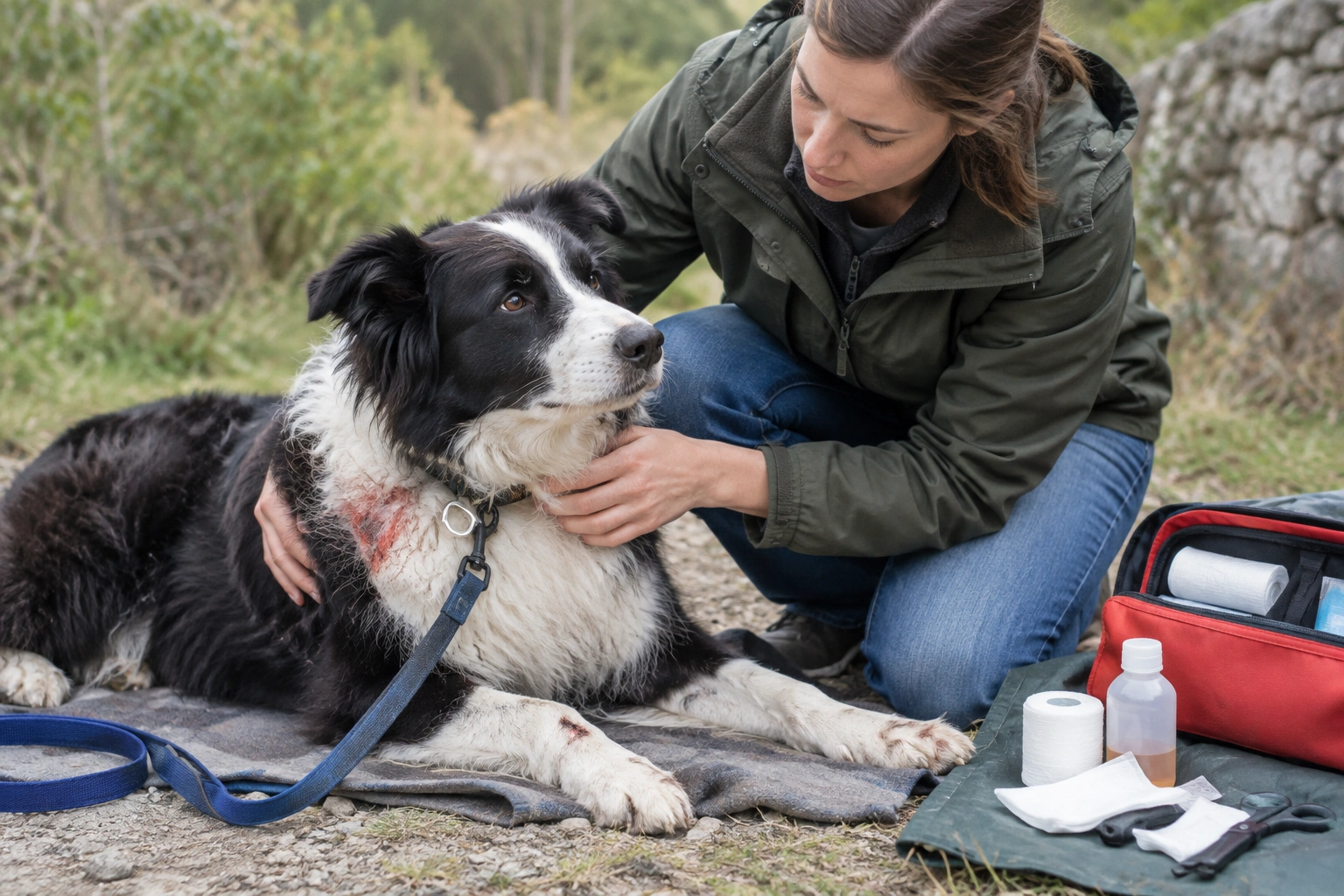
Record:
– Date, time, and location
– Photos of injuries from several angles
– Photos of the scene if relevant
– The other dog’s description
– The other owner’s name and contact details
– Witness names and numbers
– Whether the other dog was leashed or contained
– Any vaccination information you were given
If there is a report, insurance claim, or follow-up with animal control, this record matters. It also helps your vet understand what happened and how likely deeper trauma may be.
If the other owner is cooperative, ask for vaccination status calmly and directly. Do not turn the exchange into an argument on the spot. The goal is useful information, not a courtroom speech.
Whether to report the attack to animal control or another authority
Reporting is worth considering when the attack involved:
– An unrestrained dog
– Serious injury
– Repeated aggression
– A child or vulnerable person
– Unclear vaccination status
– A situation that could affect other dogs in the area
Rules vary by location, but official sources do provide a path for reporting. New South Wales guidance says a dog attack can be reported and notes that if it happens outside council hours, local police may be called because police officers are authorised officers under the Companion Animals Act 1998. Victoria’s government guidance says attacks on a person or pet can be reported to the local council.
If you are unsure whether to report, ask one question: would a record of this incident help protect your dog or another dog later? If the answer is yes, reporting is usually sensible.
How to support your dog’s emotional recovery after an attack
Physical wounds are only part of the story. Some dogs become fearful of the area, the route, the other dog’s breed, or even the harness they were wearing that day.
Watch for:
– Avoiding walks
– Freezing or scanning the environment
– Barking or lunging at dogs that were previously fine
– Clinging more than usual
– Hiding
– Refusing food
– Startling easily
– Shutdown behavior, where the dog looks quiet but not relaxed
A short stress response is normal. A dog that is wary for a few days is not necessarily traumatized. But if fear or reactivity persists, the problem is no longer just recovery; it is behavior support.
Keep the routine predictable. Use shorter, quieter walks. Avoid immediate “face your fear” setups with other dogs. Give the dog room to process.
When to see a veterinarian or certified trainer
See a veterinarian if:
– Any wound was missed at first
– Pain, swelling, or limping appears later
– Appetite drops
– Your dog seems dull, weak, or off
– You need help deciding whether the recovery is on track
See a certified trainer or behavior professional if:
– Fear lasts beyond the initial recovery period
– Your dog starts reacting to other dogs on walks
– Shutdown, avoidance, or hypervigilance continues
– The attack seems to have changed your dog’s confidence in public
A behavior professional is not there to “fix” your dog for being scared. They are there to help you rebuild safe associations and prevent the fear from hardening into a long-term pattern.
Final thought
After a dog attack, the best owners do not try to be heroic. They stay practical. They separate safely, check for hidden injury, get the right level of veterinary care, document what happened, and watch the emotional fallout as carefully as the physical wound.
That calm sequence gives your dog the best chance of healing well—and gives you a plan you can trust the next time your stomach drops and everything happens too fast.