
How to Tell If Dogs Are Bonded: Clear Signs of a Real Dog-to-Dog Relationship

If you live with more than one dog, it’s easy to confuse “they get along” with “they’re bonded.” Those are not the same thing.
A bonded pair is more than two dogs sharing space. They have a relationship that shows up in how they choose proximity, how they settle, how they play, and how they respond when the other dog disappears from view. Sometimes that relationship is warm and stable. Sometimes it looks close on the surface but is really dependency, habit, or stress.
For Border Collie owners, this question comes up a lot. Border Collies are observant, socially tuned-in, and often intense about their people and housemates. That can make them look deeply attached to another dog when what you’re really seeing is herding-driven shadowing, fixation, or anxiety. The trick is not to look for one cute behavior. You need to read the pattern.
What “bonded” actually means
In practical terms, bonded dogs are two dogs that have formed a close social relationship and rely on each other in a healthy way. A quick test is this: if the dogs can choose each other, relax together, and still tolerate brief separation, you’re likely seeing a real bond rather than simple cohabitation.
That can mean they seek each other out, rest near each other, and show comfort in each other’s presence.
It does not mean:
- they never separate
- they always play
- they never argue
- they sleep touching every night
- one dog follows the other everywhere
Those things can happen in bonded pairs, but none of them proves bonding on its own.
A better definition is this: bonded dogs show mutual, voluntary closeness without obvious tension. They choose each other, but they can also relax as individuals. That distinction matters because dogs can live together for years and still be little more than polite housemates.
History can add context in shelter or rescue settings, especially if dogs came from the same home or were known to live together through a stressful period. That’s useful background, but history alone still isn’t enough. The relationship itself has to look stable in day-to-day life.
For more on reading body language in multi-dog homes, the AKC’s guidance on canine body language is a helpful companion read.
The clearest signs two dogs are bonded
If you want the strongest clues, look for these patterns together rather than one behavior in isolation.
They choose each other voluntarily
Bonded dogs tend to seek each other out on their own. One dog may get up and move to the room where the other is resting. They may drift back together after exploring separately. The key word is choose.
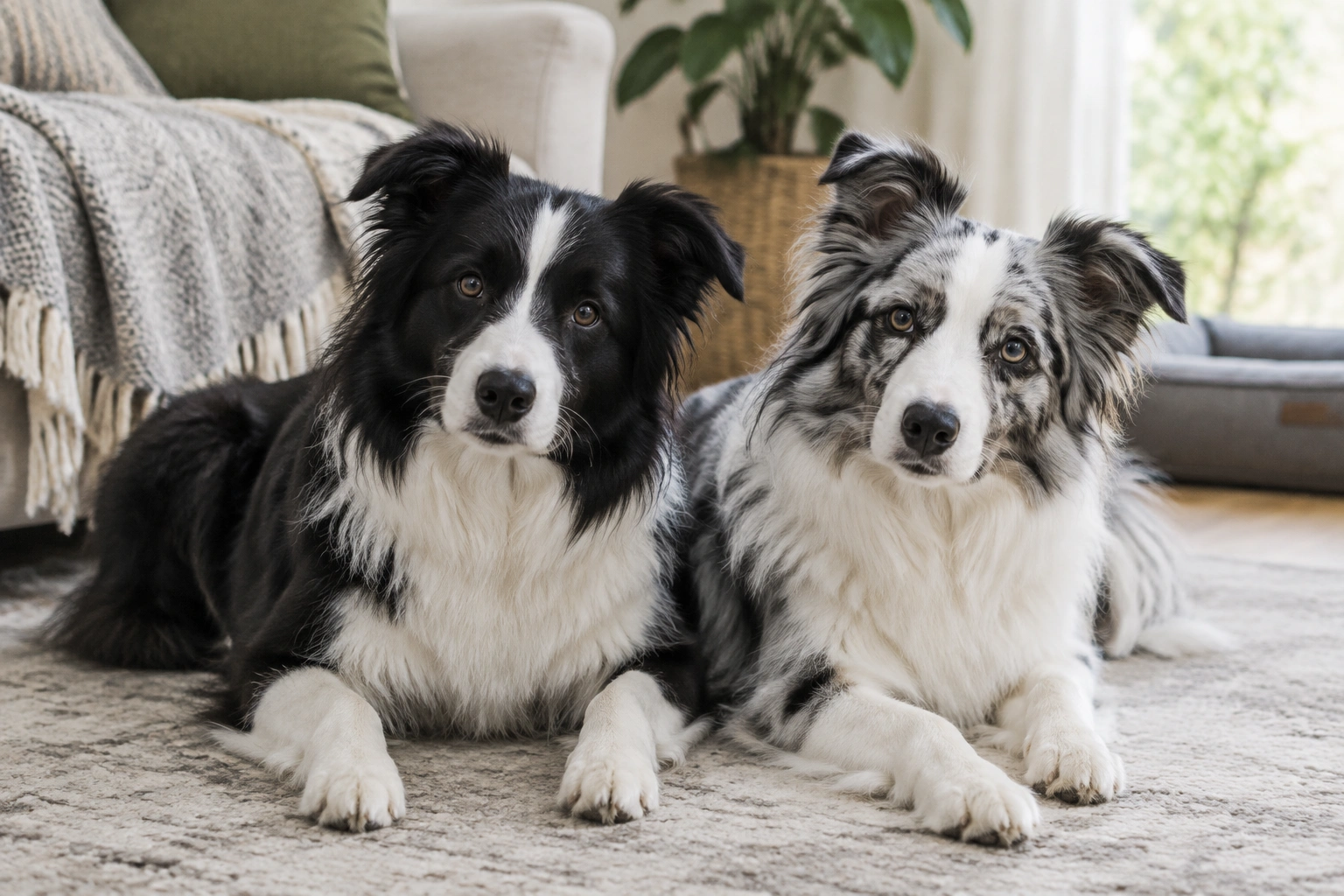
That choice matters more than physical closeness alone. A dog can stay near another dog because the environment is boring, because they feel insecure, or because they’ve learned to trail the other dog out of habit. Bonding is more convincing when the closeness looks relaxed and mutual, not sticky or forced.
They rest near each other with loose bodies
Sleeping or resting next to each other is one of the clearest signs that two dogs may be bonded. Watch the posture while they rest. Good signs include:
- soft faces
- loose limbs
- normal breathing
- no constant repositioning
- no guarding of space
If one dog keeps inching away, freezing, or waking up every time the other shifts, that’s not the same thing as relaxed companionship.
Their play is balanced
Healthy bonded dogs often play in a way that looks reciprocal. One dog chases, then the other does. One wrestles, then both pause. They take turns. They break off and re-enter without drama.
That balance is important. Intense play can still be healthy, but it should not look one-sided. If one dog is always the pursuer and the other is always trying to escape, that’s not bonding; that’s pressure.
They show social comfort in small ways
Bonding often shows up in subtle, ordinary moments:
- soft greetings after time apart
- leaning or resting against each other
- brief nose touches without tension
- settling in the same room without conflict
- moving through the house in a calm rhythm
These little behaviors matter because they happen when nobody is “performing.” They’re the day-to-day proof that the relationship is comfortable.
They look for each other when separated
This is another strong clue. If one dog scans the room, goes to the door, or settles more easily once the other returns, that may indicate attachment.
Again, context matters. Looking for the other dog once or twice is normal. Panic, barking, pacing, or refusal to settle is a different issue and may point to separation distress.
How to read body language: comfort vs. tension
A lot of owners miss the real story because they focus on closeness and ignore the body language around it.
Signs the dogs are comfortable
Relaxed dogs usually show:
- loose, wiggly movement
- soft eyes and face
- open or neutral mouth
- curved rather than stiff posture
- easy give-and-take during play
- quick recovery after a brief interruption
You want to see a relationship that looks easy. The dogs should seem like they can be near each other without managing every second of the interaction.
Signs the dogs are tense
Tension can be subtle. Look for:
- stiffness
- repeated lip licking in context
- yawning when not tired
- turning away or avoiding
- freezing before contact
- whale eye
- tucked tail
- hovering without settling
- one dog repeatedly trying to disengage
A pair can look “close” and still be uncomfortable. For example, one dog may lean in and follow every step while the other keeps turning its head away or shifting its body to create space. That is very different from two dogs choosing to lie side by side, both loose and settled.
A useful rule
If you’re unsure, ask this: Do both dogs look more relaxed when they are together, or is one dog doing the work of managing the relationship?
That question usually exposes the truth quickly.
What bonded behavior looks like in real homes
Bonding is easiest to understand when you watch ordinary routines instead of isolated cute moments.
Morning and evening routines
A bonded pair may greet each other calmly, do a quick sniff check, and then move on with their day. Or one may wait near the kitchen while the other eats and then they switch positions later. The routine is not the point. The lack of friction is.
Around the house
You may notice one dog following the other from room to room. If both dogs do this at times, and both can also split off and relax alone, that’s usually healthy social closeness.
If only one dog shadows while the other repeatedly leaves, avoids, or seems irritated, the relationship is imbalanced.
After excitement
A good test is what happens after a walk, visitor arrival, or play burst. Bonded dogs often settle back down together without escalating each other. They can come down from arousal and rest in the same space.
That ability to settle is more telling than the excitement itself.
Bonded vs. merely familiar, codependent, or one-sided
Here’s the comparison that helps most owners make sense of what they’re seeing.
| Relationship type | What it looks like | What it usually means |
|---|---|---|
| Bonded | Mutual closeness, relaxed resting, balanced play, easy recovery after separation | Healthy social attachment |
| Merely familiar | Peaceful coexistence, little interaction, no tension | Shared space without strong social connection |
| Codependent | Constant togetherness, distress when apart, poor independence | Attachment that may be driven by anxiety |
| One-sided attachment | One dog shadows or clings; the other avoids or tolerates | Imbalanced relationship |
| Healthy playmates | Frequent play, but not much resting or emotional reliance | Compatibility, but not necessarily a deep bond |
This table matters because many owners see “they’re always together” and assume that means a strong bond. Sometimes it does. Sometimes it means one dog has learned not to leave the other alone.
Does following, shadowing, or sleeping together prove a bond?
Not by itself.
Following and shadowing
Following can be affection, habit, herding drive, insecurity, or boredom. Border Collies in particular can become highly focused on movement and proximity. What looks like devotion may be a working-breed tendency to track motion and keep tabs on the household.
If the following dog can also choose to disengage, rest elsewhere, and tolerate brief separation, the behavior is more likely to be healthy closeness. If not, it may be fixation.
Sleeping together
Sleeping near each other is a strong sign of comfort, but it is not proof on its own. Some dogs sleep close because the house is quiet and the bed is soft. Others do it because they feel safer with the other dog nearby.
Use the whole picture: do they sleep together and interact calmly and separate without distress? That combination is far more meaningful.
Mutual grooming
Gentle licking or grooming can be a sign of social comfort. But it can also be brief, situational, or even a little annoying to the recipient. Watch whether both dogs accept it easily and whether it happens in a relaxed context.
Can dogs be bonded if they roughhouse or occasionally argue?
Yes. Bonded dogs are not robots.
Healthy pairs may wrestle, chase, or have short disagreements. That does not automatically mean the relationship is unstable. The question is how the interaction unfolds.
Healthy rough play usually has:
- role switching
- pauses
- loose bodies
- self-handicapping
- quick recovery after a break
Concerning play or conflict usually has:
- repeated pinning without relief
- one dog trying to leave and being followed
- snapping that escalates
- stiff posture
- no pause or reset
- one dog looking worried rather than engaged
A little friction can be normal. Repeated tension is not.
What changes bonding in puppies, adults, and rescue dogs
Age and history shape how fast dogs bond and what that bond looks like.
Puppies
Young dogs often attach quickly because they are still learning social rules and seeking security. That can look like a strong bond, but it can also fade or shift as maturity changes the relationship.
Adult dogs
Adult dogs may bond more slowly, especially if they already have established routines or stronger preferences for space. A slower bond is not a weaker one. It just tends to be more deliberate.
Rescue dogs
Rescue pairs can look bonded because they share a history, especially if they came through stress or trauma together. Shared experience can matter, but it does not automatically mean the dogs are emotionally dependent on each other.
That said, rescue dogs can also appear fused early on because they’re uncertain, not because they are deeply attached. Give new placements time before making big assumptions.
Border Collie-specific clues: when closeness is really fixation
Border Collies are often intense about their social environment. In a multi-dog home, that can create a false impression of bonding.
A Border Collie may:
- shadow another dog as if “working” them
- monitor every movement
- struggle to disengage
- become frustrated when the other dog moves away
- treat the other dog like a point of focus rather than a companion
That is not the same as reciprocal attachment.
The best test is independence. If the Border Collie can rest alone, explore alone, and tolerate short separations without panic, the closeness is more likely to be social. If not, the behavior may be driven by herding instinct, habit, or anxiety.
When closeness becomes a problem
This is where owners need to be honest.
Closeness is no longer healthy if you see:
- panic when one dog leaves
- persistent following with no ability to settle apart
- guarding of food, beds, or toys
- one dog avoiding the other
- stiff, watchful body language
- escalating play that never cools down
- repeated conflict over space or access
If one dog cannot function without the other, that is not a secure bond. It is a dependency problem.
How to decide whether the dogs are truly bonded
Use this simple decision framework.
Ask four questions:
-
Is the closeness mutual?
Both dogs should choose each other at least some of the time. -
Do they look relaxed together?
Calm resting and loose movement matter more than constant contact. -
Can they separate without distress?
Brief separation should be manageable, even if they prefer being together. -
Is the relationship stable across normal routines?
Look at meals, rest, play, visitors, and quiet time—not just one good moment.
If you answer “yes” to most of those, you’re probably looking at a real bond. If the relationship is mostly one-sided, tense, or panic-driven, it needs management rather than celebration.
Should bonded dogs be separated for training, travel, or rehoming?
Sometimes yes, sometimes no.
Keep them together when:
- one dog is newly adopted and the other is clearly a stabilizing presence
- separation would trigger panic, nonstop vocalizing, or inability to settle
- rehoming would split a pair that shows clear mutual comfort and low conflict
- travel or boarding is short-term and the pair does better together
Practice short separations when:
- the dogs are overly fused and cannot relax apart
- one dog follows the other constantly and never chooses independence
- training is stalled because they only function as a unit
- one dog’s anxiety seems to intensify the other’s stress
- you need to build flexibility for vet visits, grooming, boarding, or emergency situations
A good rule is to avoid sudden, prolonged separation if the dogs are clearly distressed. But if the pair is healthy and simply very attached, short planned separations can help prevent overdependence and make future transitions easier. Start small, keep it calm, and stop if either dog begins to panic.
When to see a veterinarian or certified trainer
Get help if:
- one dog panics when the other leaves
- the pair shows repeated guarding or conflict
- play regularly turns into stress
- one dog cannot settle alone at all
- the relationship seems to be getting tighter and more anxious over time
- you’re unsure whether the behavior is social, fearful, or compulsive
A certified trainer or veterinary behaviorist can help you sort out whether you’re seeing healthy attachment, separation distress, or a deeper behavior issue. That’s especially useful in Border Collies, where intensity can be normal but still needs structure.
FAQs
How long does it take for dogs to bond?
There is no fixed timeline. Some dogs connect quickly, while others need weeks or months. Shared history, temperament, age, and environment all affect the pace.
Can dogs be bonded if they don’t play much?
Yes. Some bonded dogs are calm companions rather than playful partners. Quiet resting and easy cohabitation can be just as meaningful as play.
Is it bad if one dog is more attached than the other?
Not automatically, but it can become a problem if the attachment is one-sided and the less-attached dog shows avoidance, stress, or irritation.
Should bonded dogs always stay together?
No. Healthy bonded dogs should still be able to tolerate short separations. Constant togetherness can make anxiety worse, not better.
Can rescue dogs be bonded even if they’re not related?
Absolutely. Bonding has to do with relationship, not genetics.
What if my dogs sleep together but argue sometimes?
That can still be normal. Look at the overall pattern: mutual comfort, balanced interaction, and recovery after disagreements matter more than a single argument.
Can Border Collies get overly attached to another dog?
Yes. Their focus and herding tendency can make them shadow another dog intensely. That behavior needs careful reading so you don’t mistake fixation for healthy bonding.
What’s the fastest way to tell if two dogs are bonded?
Watch what happens when they are apart and when they reunite. Calm searching, relaxed reunion, and easy settling together are stronger clues than cuddling alone.
Can bonded dogs be adopted together?
Often yes, especially if their history and behavior show they rely on each other in a healthy way. Shelter staff should look at the full picture, not just whether they seem affectionate.
What if I still can’t tell?
If the relationship looks tense, anxious, or hard to read, bring in a qualified professional. Multi-dog dynamics are easy to misjudge from the outside.