
What Is Considered Old for a Dog? A Practical Age Guide for Border Collie Owners

If you are trying to figure out what is considered old for a dog, the short answer is this: there is no single age that fits every dog. Size matters, breed matters, and health matters.
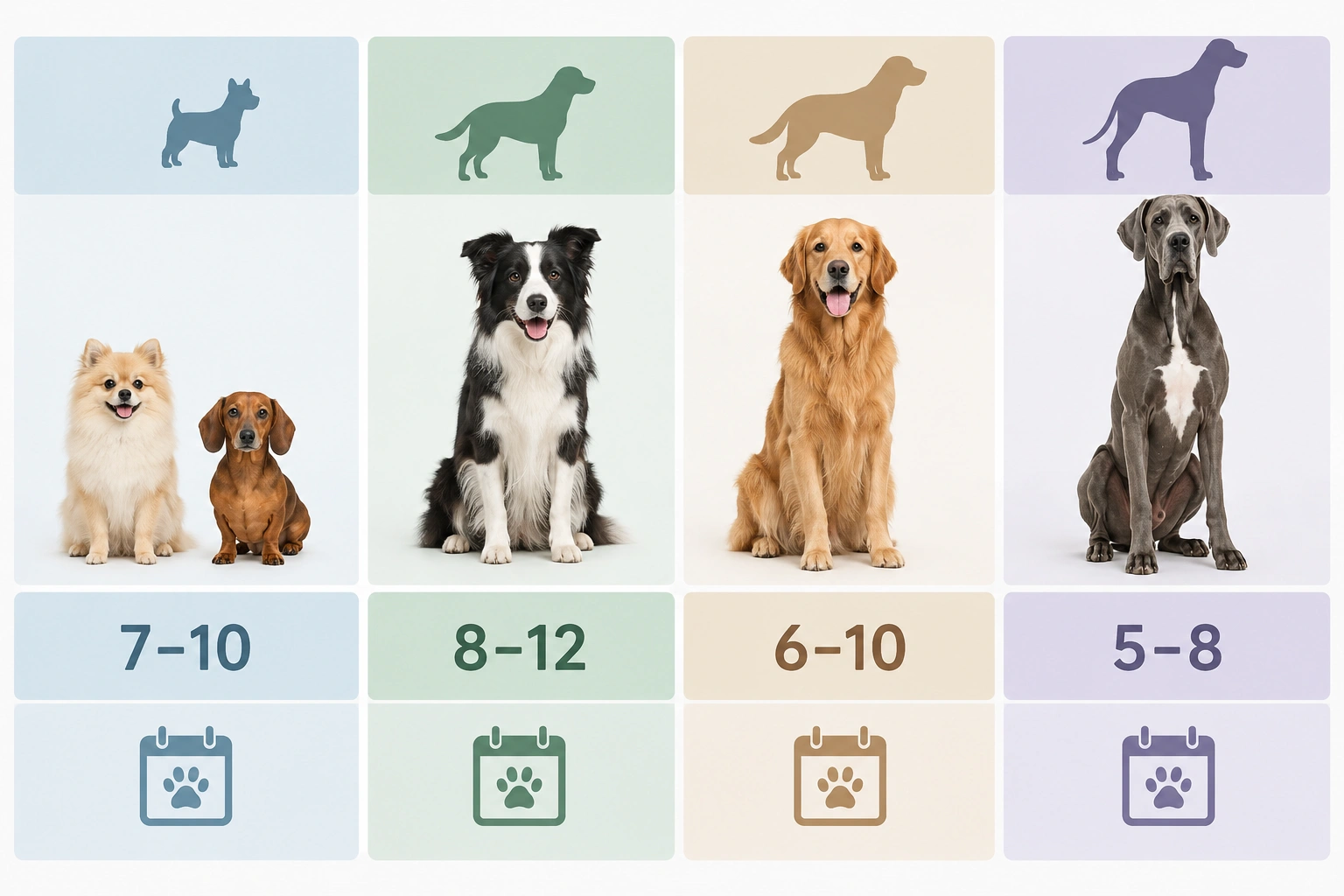
A small dog may not be considered senior until around 10 to 12 years old, while a medium dog often reaches that stage around 8 to 9 years old. Large and giant breeds can be considered senior much earlier, sometimes around 6 to 7 years old. That range is a practical starting point, not a hard rule. A fit, active Border Collie may still seem youthful in daily life, but the age at which it is considered senior depends more on size, body condition, and how well it is functioning than on one exact birthday.
For owners, the useful question is not just “How old is my dog?” but “Is my dog starting to age in a way that changes care?” That is the point where senior feeding, joint support, and more regular vet checks become worth discussing.
| Dog size / type | Common senior age range | What that usually means in practice |
|---|---|---|
| Small breeds | 10–12 years | Often slower aging, later senior care |
| Medium breeds | 8–9 years | Senior care usually starts earlier than many owners expect |
| Large breeds | 6–8 years | Earlier screening and mobility monitoring matter |
| Giant breeds | 6–7 years | Senior status can arrive surprisingly early |
| Border Collie | Often around 8–10 years, depending on health and condition | May still look active while aging is already underway |
That table gives you the broad picture. The rest of this guide helps you decide what to do with it in real life.
Why the “7 dog years = 1 human year” rule is too simple
The old seven-to-one rule is popular because it is easy to remember. The problem is that it treats every dog as if it ages at the same speed from puppyhood to old age. That is not how dogs work.
A dog’s aging curve is uneven. Dogs mature quickly in the first few years, then age at different rates depending on size, breed, and overall health. A large dog may be “older” much sooner than a small dog, even if both are the same chronological age.
That is why a 7-year-old Great Dane and a 7-year-old Pomeranian are not in the same place in life. The Great Dane may already need senior screening, while the Pomeranian may still be in its adult middle years.
A better way to think about age is this:
- Chronological age tells you how many birthdays your dog has had.
- Functional age tells you how the dog is actually moving, recovering, and behaving.
Functional age is more useful. A dog that stiffens after exercise, sleeps more, or recovers slowly may be aging faster than its calendar age suggests.
Veterinary sources also vary a bit on exactly when “senior” begins. Some use fixed age ranges by size, while others define senior status as the last quarter of a dog’s expected lifespan. In practice, those approaches usually point to the same takeaway: small dogs tend to enter senior years later, while medium, large, and giant breeds do so earlier. You can read one example of that guidance in VCA Animal Hospitals’ age comparison guide.
How dog aging differs by size and breed
Size is one of the strongest predictors of when a dog is considered old.
Small dogs
Small dogs generally age more slowly. Many do not enter senior years until around 10 to 12. That does not mean you can ignore early warning signs, but it does mean a small dog may stay physically capable for longer.
Medium dogs
Medium dogs often become seniors around 8 to 9. That is where many Border Collies fit in practice. They are not giant dogs, but they are also not tiny, and their athletic build can make aging easier to miss because they may still move well even as recovery slows. That is one reason Border Collies often fall into the 8–10 year senior window: they are a medium breed with a lot of drive, so changes in stamina or joint comfort may show up gradually rather than all at once.
Large and giant dogs
Large and giant breeds tend to age faster. Their joints, heart, and overall wear-and-tear often justify senior care earlier. Many will benefit from senior screening before they look obviously “old.”
This is one reason breed size matters more than most owners realize. A dog can still act playful and enthusiastic while its body is already entering a different life stage.
The American Animal Hospital Association’s lifestage guidance, summarized in a peer-reviewed review, supports this idea by framing senior status as the last 25% of a dog’s estimated lifespan. That is a useful concept because it shifts the focus from a fixed birthday to the dog’s expected lifespan and breed profile.
Senior vs. geriatric: where the line really is
“Senior” and “geriatric” are not the same thing.
A senior dog is usually in the later part of adult life. This is the stage where you begin to watch more closely for stiffness, weight changes, dental disease, and reduced stamina. Many senior dogs still feel good and function well with only modest adjustments.
A geriatric dog is further along. This stage usually comes with more obvious physical limitations, higher medical risk, and a stronger need for individualized care. A geriatric dog may need help with mobility, more frequent vet visits, and more careful management of pain, appetite, or cognitive changes.
The practical difference is this:
- Senior means “monitor and adjust.”
- Geriatric means “manage more actively and assume nothing is normal just because it is age-related.”
That distinction matters because owners sometimes wait too long. They assume a slowing dog is simply “getting old,” when in fact the dog may be in pain or developing a medical issue that deserves treatment.
Signs your dog is becoming a senior
Age is useful, but signs matter more. Some dogs look older at 7. Others seem remarkably youthful at 11. Watch for the changes that affect daily function.
Physical signs
Common physical signs include:
- stiffness after rest or after exercise
- slower movement on walks
- reluctance to jump into the car or onto furniture
- trouble with stairs
- longer recovery after activity
- weight gain from reduced activity, or weight loss from muscle loss
- dental tartar, bad breath, or chewing changes
A dog that used to bounce back quickly after a long walk but now lies down for hours afterward is telling you something. That is often one of the earliest signs that the body is aging, even if the dog still looks fit.
Behavioral signs
Behavioral changes can be just as important:
- sleeping more
- reduced interest in intense play
- being less tolerant of long outings
- seeming confused in familiar places
- clinginess or irritability
- slower response to cues the dog used to know well
Do not dismiss these changes as “personality.” Pain, hearing loss, vision changes, and cognitive decline can all show up as behavior changes.
What matters most
The clearest aging signal is usually not one dramatic event. It is a pattern:
- the dog takes longer to warm up
- the dog recovers more slowly
- the dog avoids movements it used to do easily
- the dog’s daily rhythm changes
That pattern deserves attention even if the dog still looks bright and energetic.
When to start senior care, diet changes, and vet screenings
A good rule is to begin senior care when your dog enters the age range for its size, even if it still seems healthy. Waiting for obvious decline is usually the slower and more expensive path.
For a medium-sized dog, that often means discussing senior care around 8 or 9. For a Border Collie, that conversation is often reasonable by the time the dog reaches the late adult to early senior years, especially if there are any mobility changes.
Senior care does not have to mean a complete lifestyle overhaul. It usually means three practical steps:
1. Increase the value of routine vet visits
Ask your vet whether your dog should move to twice-yearly wellness exams once it enters the senior range, especially if you are seeing early stiffness, weight changes, or slower recovery. Many veterinarians also recommend senior bloodwork at the start of the senior stage so changes in kidney function, liver values, thyroid status, or other health markers can be caught earlier.
2. Recheck diet before the dog loses muscle or gains fat
Older dogs often need diets that better match their activity level and body condition. The right food depends on the dog’s weight, muscle mass, dental status, and any medical concerns. If your dog is losing muscle, gaining weight, or eating less enthusiastically, that is the time to review the diet with your vet.
3. Watch body condition, not just appetite
Some older dogs keep eating well but still lose muscle. Others eat less because chewing is uncomfortable. Either way, body condition tells you more than a full bowl.
If your dog is already in the senior age range, do not wait for a crisis to make these adjustments.
How to adjust exercise and daily routines for an older dog
Older dogs usually benefit from more consistent, lower-impact activity, not from being switched abruptly to near-inactivity.
That trade-off matters. Too much high-impact exercise can irritate joints. Too little activity can lead to stiffness, muscle loss, and weight gain. The goal is controlled movement.
What to change
For many senior dogs:
- keep walks regular, but shorten the longest outings if recovery is slow
- use more frequent, moderate walks instead of one big burst of exercise
- reduce repetitive jumping or hard stops on slippery floors
- add rest after exercise instead of stacking activity all day
- watch for next-day stiffness, not just how the dog looks during the walk
What not to do
Do not slash exercise suddenly unless a veterinarian tells you to. A dog that has been active for years usually does better with gradual adjustment. Sudden inactivity often makes mobility worse, not better.
A practical test
After a walk or play session, ask:
- Is my dog moving normally later that day?
- Is there stiffness the next morning?
- Is the dog choosing to lie down earlier than usual?
- Does it hesitate at steps or in the car?
If the answer is yes to several of those, the routine is probably too demanding for the dog’s current stage.
Border Collie aging: what to expect in an active medium-sized breed
Border Collies can be tricky to read because they often keep working long after the body has started aging.
A dog with a strong herding drive may still chase, fetch, and patrol the house with enthusiasm even while joints, muscles, or teeth are changing. That is why Border Collie owners sometimes miss the first signs of aging. The dog still wants to go; it just does not recover the way it used to.
You may notice:
- slower warm-up time
- more stiffness after sleep
- less explosive jumping
- a shorter tolerance for long, intense sessions
- more interest in sniffing and pacing than sprinting
That does not mean the dog is “done.” It means the work now is about preserving function.
For active medium-sized dogs like Border Collies, the best approach is usually to keep the dog engaged while reducing wear and tear. Shorter training sessions, more warm-up time, and lower-impact play can preserve mobility without stripping away the mental stimulation these dogs need.
For more on senior transitions in Border Collies, see this practical Border Collie senior guide and our age guide for senior dogs by size.
When aging signs warrant a veterinary visit
Some age-related changes are expected. Others should not be brushed off.
See a veterinarian sooner rather than later if your older dog has:
- new or worsening limping
- obvious stiffness that lasts beyond a brief warm-up
- weight loss
- reduced appetite
- coughing
- repeated vomiting or diarrhea
- confusion, disorientation, or house-training regression
- a sudden drop in energy
- trouble rising, climbing stairs, or getting into the car
A slow decline over months can still be medical. Arthritis, dental disease, heart issues, and cognitive decline can all look like “just getting old” at first.
If your dog is in the senior age range and you are seeing more than one of these signs, that is a good point to book an exam rather than wait for the next annual visit.
A simple decision framework you can use today
If you are unsure whether your dog is old yet, use this three-part check:
1. Age
Is your dog in the senior range for its size?
- small: around 10–12
- medium: around 8–9
- large: around 6–8
- giant: around 6–7
2. Function
Has anything changed in movement, stamina, recovery, sleep, or behavior?
3. Risk
Would you be surprised if a vet found arthritis, dental disease, weight change, or another age-related issue?
If the answer to any of those is yes, treat the dog like a senior in practical terms even if it still acts young.
That usually means better observation, more careful exercise choices, and a conversation with your vet about screening.
When to See a Veterinarian or Certified Trainer
If your dog is stiff, limping, losing weight, eating less, coughing, or seeming confused, schedule a veterinary visit. If the issue is more about activity tolerance, reactivity, or adjusting exercise without creating new behavior problems, a certified trainer can help you reshape the routine safely. For Border Collies, that can be especially useful because a dog’s drive can hide discomfort until the problem is already advanced.
FAQ
What age is a dog considered old?
There is no single universal age. Small dogs are often considered senior around 10 to 12 years old, medium dogs around 8 to 9, and large or giant breeds around 6 to 7.
Is a 7-year-old dog old?
It depends on the dog. A 7-year-old giant breed may already be senior, while a small dog may still be solidly adult. For a medium breed, 7 is often the point where you should start watching more closely.
Are Border Collies considered old at 8 or 9?
Often, yes, that is when many Border Collies begin entering senior years. Some will show aging signs earlier; others stay active longer. Watch function, not just the number.
What are the first signs a dog is aging?
Stiffness after rest, slower recovery, reduced stamina, sleeping more, reluctance to jump or climb stairs, and changes in weight or appetite are common early signs.
Should I change my dog’s food when it becomes senior?
Not automatically. Food changes should be based on body condition, muscle mass, appetite, dental health, and any medical issues. A vet can help you decide whether a senior diet is appropriate.
How often should senior dogs see the vet?
That depends on the dog’s health, but senior dogs often benefit from twice-yearly wellness exams rather than one annual visit. Ask your vet whether senior bloodwork makes sense once your dog enters the senior range.
What is the difference between senior and geriatric?
A senior dog is in the later adult stage and may only need monitoring and small adjustments. A geriatric dog usually has more obvious age-related limitations and needs more active medical management.
Can a dog act young but still be old?
Yes. Many dogs, especially active breeds, stay playful and energetic while their bodies are already aging. That is why mobility, recovery, and routine changes matter more than appearance alone.
Does a Border Collie age differently from other dogs?
Compared with many breeds, Border Collies often sit in the middle: not as slow-aging as small toy breeds, but not as fast-aging as giant breeds. Their high drive can also hide early aging signs.
What should I do first if I think my dog is getting old?
Check the dog’s age range for its size, watch for changes in movement or recovery, and book a vet visit if you notice stiffness, weight change, appetite changes, or any sudden decline.