
Why Dogs Rub Their Butt on the Floor: Causes, Warning Signs, and What to Do Next

If your dog is scooting, dragging, or rubbing their rear on the floor, they are usually trying to relieve discomfort back there. That discomfort can be minor and temporary, or it can point to a problem that needs veterinary care.
The key is not to treat scooting as a diagnosis. It is a symptom. The job is to figure out whether you are dealing with a one-off irritation, an anal gland issue, parasites, stool-related irritation, or something more serious.
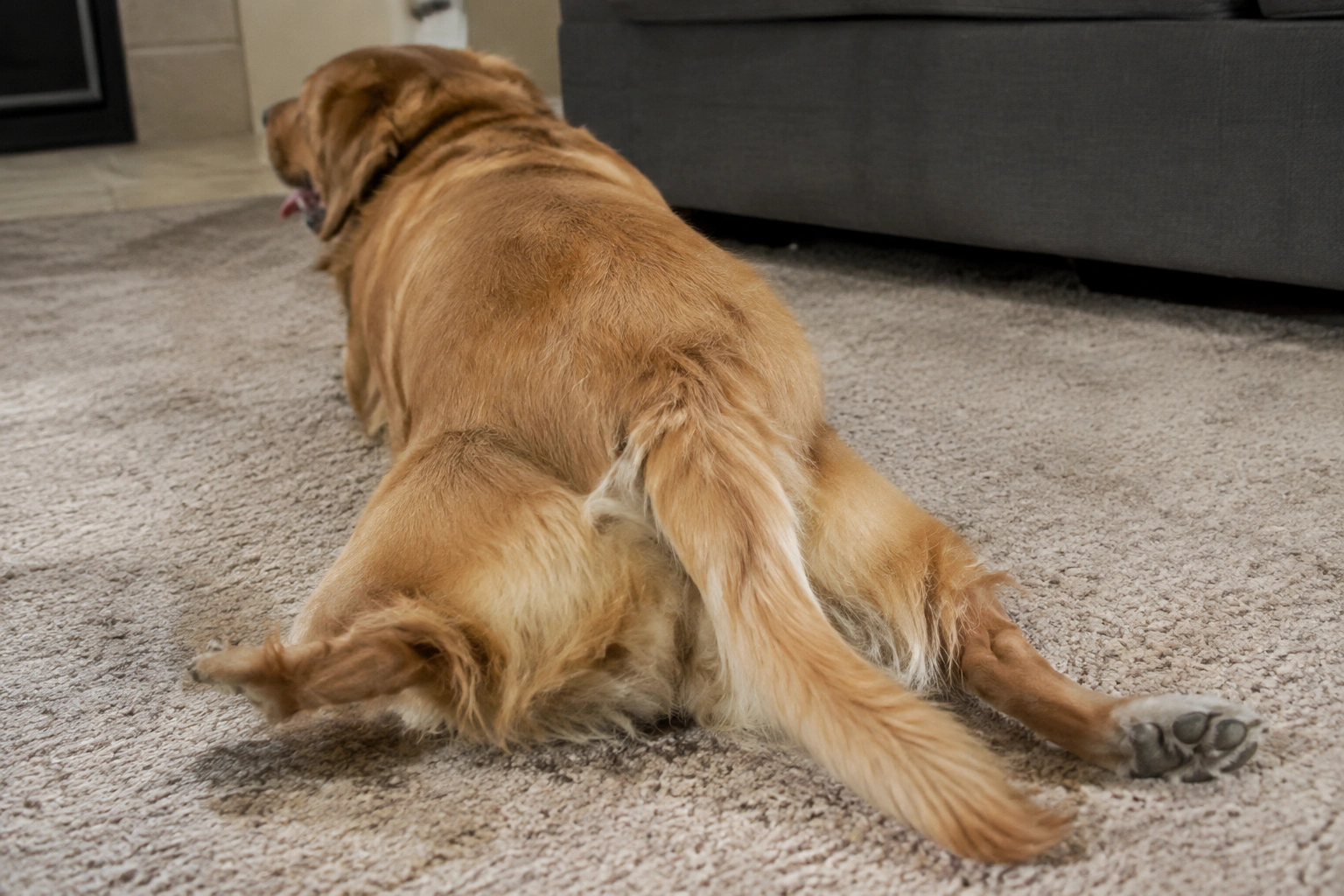
For Border Collie owners, the same rule applies. This breed is not uniquely prone to butt-rubbing, but active dogs can still pick up debris, develop soft stool after diet changes, or show the same anal gland and skin problems as any other dog.
What butt-rubbing actually means
A dog rubs their butt because something in that area feels wrong. That “wrong” feeling may be itching, pressure, pain, irritation, or a dirty or sticky coat around the anus.
The movement itself is the dog’s attempt to scratch, relieve pressure, or wipe the area. That is why scooting can show up after diarrhea, after a messy bowel movement, or when anal sacs are full. It can also happen with worms, allergies, or skin irritation.
A single scoot is not automatically a problem. If your dog rubbed once after a messy bowel movement and then acted normal, that can be a one-off cleanup behavior. Repeated dragging, licking, or obvious discomfort is different and deserves a closer look.
The most common causes, from most likely to more concerning
1) Anal gland problems
Anal glands sit on either side of the anus and normally empty small amounts of scent-marking fluid during bowel movements. When they do not empty well, they can become full, uncomfortable, impacted, or infected.
That discomfort often leads to scooting. Dogs may also lick the rear end, sit awkwardly, or seem reluctant to settle. If the glands are infected, the area may look swollen, red, or painful.
A strong fishy or unusually foul odor can happen with anal gland issues, but odor alone is not enough to diagnose the problem. What matters more is the full pattern: repeated scooting, licking, swelling, or pain.
2) Parasites, including tapeworms
Parasites can irritate the rear end directly or cause itching that makes a dog rub. Tapeworms are a common example because segments can sometimes be seen near the anus or in the stool.
Those segments can look like grains of rice. If you notice that, the next step is a veterinary visit for a stool check and proper treatment. Parasites need the right medication, and the cause should be confirmed whenever possible.
3) Soft stool or diarrhea
Loose stool can leave residue around the anus and make the area sore. It can also interfere with normal anal gland emptying, which may lead to a second problem on top of the first.
This is one reason a dog may scoot after a bout of digestive upset. If the stool has been soft for more than a day or two, the butt-rubbing may be part of a larger gut issue rather than a simple skin problem.
4) Allergies and skin irritation
Allergies can make dogs itch in several places, including the rear end. If your dog also licks their paws, scratches often, or has recurring skin flare-ups, the scooting may be part of a broader allergy pattern.
This matters because treating only the rear end may not solve the real problem. If the skin keeps getting inflamed, the behavior can keep coming back.
5) Debris, matted fur, or something stuck near the anus
Longer hair around the rear can trap stool, grass seed, mud, or other debris. That can create irritation fast, especially after a wet walk or a messy bowel movement.
This is one of the easiest causes to miss because the dog may otherwise seem fine. A quick visual check often tells you more than guessing does.
6) Perianal pain, injury, or infection
Less common, but more concerning, are injuries, abscesses, or infections around the anus. These problems tend to look painful rather than just itchy.
If your dog cries when sitting, guards the area, or seems unable to get comfortable, do not assume it is “just scooting.” That is a vet problem until proven otherwise.
How to tell anal gland trouble from other causes
Use the pattern, not one sign.
| Likely cause | Common clues | Urgency | Best next step |
|---|---|---|---|
| Anal gland issue | Repeated scooting, licking, discomfort when sitting, possible odor | Soon if frequent or painful | Vet exam; possible gland evaluation or expression |
| Tapeworms or parasites | Rice-like segments, rear itching, stool changes | Soon | Fecal exam and deworming from a vet |
| Soft stool or diarrhea | Recent loose stool, residue, mild irritation | Monitor briefly if dog otherwise well | Clean gently, watch stool, call vet if it continues |
| Allergies | Itching elsewhere, paw licking, recurring skin issues | Non-urgent unless severe | Vet evaluation if it keeps returning |
| Debris or matted fur | Visible dirt, hair mat, grass, stool stuck to coat | Usually low urgency | Gentle cleaning and grooming |
| Infection or injury | Swelling, bleeding, pus, pain, foul smell, trouble sitting | Prompt or urgent | Vet visit |
A useful rule: anal gland problems often create repeated pressure or discomfort, while parasites are more likely if you see worm segments, ongoing itching, or stool changes. If you notice rice-like pieces, book a vet visit for testing and treatment. If the pattern is repeated scooting with no obvious debris, anal gland evaluation is the more likely next step.
When butt-rubbing is normal, and when it is not
A single scoot does not automatically mean disease. If your dog rubbed once after a messy bowel movement and then acted normal, you can usually watch for a short period.
The situation changes when the behavior becomes frequent, persistent, or paired with other symptoms. Repeated scooting means the dog is trying to relieve something that has not resolved.
Treat these as more concerning:
– scooting several times in a day
– licking the rear end repeatedly
– trouble sitting comfortably
– visible redness or swelling
– soft stool or diarrhea that keeps happening
– signs of worms or debris
– a dog who seems restless, painful, or “off”
If the behavior keeps showing up after you clean the area and the stool returns to normal, that is a clue that the cause is deeper than simple dirt.
Red flags that mean your dog needs a vet soon
Some signs suggest infection, significant inflammation, or another problem that should not wait.
Call your veterinarian promptly if you see:
– bleeding around the anus
– bruising
– pus or discharge
– marked swelling
– a strong, unusual odor with pain
– your dog crying when sitting or being touched
– lethargy
– fever
– repeated scooting that does not settle
That is exactly the kind of situation where waiting and watching can cost time.
Safe at-home checks and hygiene steps
You can do a few low-risk checks without making the problem worse.
-
Look at the area.
Check for redness, swelling, debris, matted fur, or visible worm segments. You are looking, not squeezing. -
Clean gently if needed.
Use plain lukewarm water or a vet-approved pet wipe. Avoid human creams, scented wipes, alcohol-based products, or anything that stings. -
Check the stool.
Note whether it is firm, soft, or watery. Stool quality gives you a major clue about whether this is a gut issue, a gland issue, or both. -
Keep the rear area clean and dry.
If your dog has long hair around the back end, careful trimming may help reduce trapped debris and irritation. Regular brushing and bathing can also help reduce irritation and infection risk. -
Watch for parasite clues.
Rice-like pieces near the anus or in the stool should trigger a vet call for testing and treatment.
What not to do: do not attempt to express anal glands yourself unless a veterinarian has shown you how and told you it is appropriate. If the area is painful or infected, squeezing can make things worse.
What a veterinarian may do
A vet visit does not always mean a big treatment plan. Often it begins with a physical exam and a close look at the rear end.
Depending on what they find, the vet may recommend:
– anal gland evaluation or expression
– a fecal exam to look for parasites
– deworming if worms are suspected or confirmed
– treatment for skin irritation or infection
– guidance on stool quality, diet, or grooming
If the problem seems to be anal gland-related, a trained professional can handle evaluation more safely than a guess-and-hope approach at home. If parasites are suspected, testing matters because the right treatment depends on the parasite involved. If stool has been soft or diarrhea has been recurring, the vet may also focus on the gut, not just the rear end.
For general guidance on dog health and parasite prevention, the American Kennel Club has useful owner-focused resources, and VCA Hospitals offers practical veterinary education on common symptoms and next steps.
How to help prevent scooting from coming back
Prevention depends on the cause, but a few habits reduce recurrence risk.
Keep stool firm and regular
Firm stools help some dogs empty their anal glands more naturally during bowel movements. If soft stool or repeated gland trouble is part of the pattern, talk with your veterinarian about whether a diet adjustment or added fiber might help. That is not a universal fix, but it can be useful in some cases.
Keep the rear area clean
Regular brushing and bathing, plus trimming around the anus when needed, can reduce trapped debris and irritation. This is especially useful for dogs with longer coats or dogs that often get muddy.
Stay ahead of parasites
Routine parasite prevention and prompt fecal testing matter more than people often realize. A dog with tapeworms or other parasites may keep scooting until the real cause is treated.
Watch for recurring allergies
If scooting keeps returning along with paw licking, ear problems, or general itching, the rear end may be just one part of a wider allergy problem. In that case, prevention means addressing the skin issue, not just wiping the area.
Border Collies and other active dogs: any special considerations?
Border Collies are not a special case medically, but their habits can make certain causes easier to miss.
They run hard, roll in grass, pick up burrs, and get dirty in ways that can leave debris near the rear end. That means a quick post-walk check can catch simple irritation before it becomes a bigger problem.
Their activity level also means stool changes can be overlooked if the dog is otherwise bright and energetic. A Border Collie may still be uncomfortable even while trying to work, play, or stay busy. Do not let energy fool you into ignoring repeated scooting.
When recurring scooting suggests a chronic issue
If butt-rubbing keeps coming back, think beyond the symptom.
Recurring episodes often point to one of these:
– ongoing anal gland dysfunction
– chronic soft stool
– repeated parasite exposure
– allergies or skin inflammation
– a grooming issue that keeps trapping debris
At that point, the threshold for action is lower. You are no longer asking, “What was that one-time rub?” You are asking, “Why does this keep happening?”
That is the point where a vet exam, stool testing, and a review of diet, grooming, and parasite prevention make sense together. Repeated scooting is usually a clue, not a coincidence.
When to see a veterinarian or certified trainer
For scooting, the professional you need is usually a veterinarian, not a trainer.
See a vet soon if the behavior is frequent, painful, persistent, or paired with swelling, bleeding, pus, diarrhea, or parasite signs. If the dog seems otherwise well but the behavior keeps returning, book the appointment anyway. Recurrence changes the picture.
A certified trainer can help only if the behavior is actually a stress-related displacement habit after the medical causes have been ruled out. Even then, the medical check comes first.
Frequently asked questions
Is occasional scooting normal?
Occasional scooting can happen after a messy bowel movement or a brief bit of debris around the rear end. One isolated episode is more likely to be simple cleanup behavior. Repeated scooting, or scooting that comes with licking, pain, swelling, diarrhea, or worm signs, is not something to ignore.
Why does my dog scoot but seem fine otherwise?
Some dogs stay bright and active even when they are uncomfortable. Mild anal gland trouble, debris, or early irritation can still cause scooting before other symptoms show up. If it keeps happening, it is worth a vet check.
Should I express my dog’s anal glands at home?
Not unless a veterinarian has shown you how and said it is appropriate. If the glands are painful, infected, or not actually the problem, squeezing them can make things worse.
Do tapeworms always cause scooting?
No. Some dogs with tapeworms scoot, but others do not. Rice-like segments near the anus or in the stool are a stronger clue than scooting alone.
Can diet changes help?
Sometimes, but the right change depends on the cause. If soft stool or recurring anal gland trouble is part of the pattern, ask your veterinarian whether a diet adjustment or added fiber makes sense for your dog.
Bottom line
If you are wondering why dogs rub their butt, the answer is usually that something back there is irritating, painful, or uncomfortable. Anal gland trouble is a common cause, but parasites, soft stool, allergies, debris, and infection can all do it too.
The best approach is simple: check the area, note the stool, watch the pattern, and call your vet if the scooting is frequent, persistent, or comes with red flags. That gives you the fastest path from guesswork to a real answer.