
How to Discipline a Dog Without Punishment: A Practical Guide to Better Behavior

If you’re searching for how to punish a dog, the more useful question is usually: how do I stop the behavior without making things worse? In most homes, punishment is the wrong tool for the job. It may interrupt a behavior for a moment, but it often fails to teach the dog what to do instead.
That matters even more when the dog is highly alert, easily distracted, or quick to repeat habits that get a payoff. If your response is confusing, harsh, or inconsistent, you can end up with a dog that is more anxious, more reactive, or simply better at misbehaving when you are not looking.
The goal is not to “let the dog get away with it.” The goal is to teach a replacement behavior, prevent rehearsal, and keep trust intact.
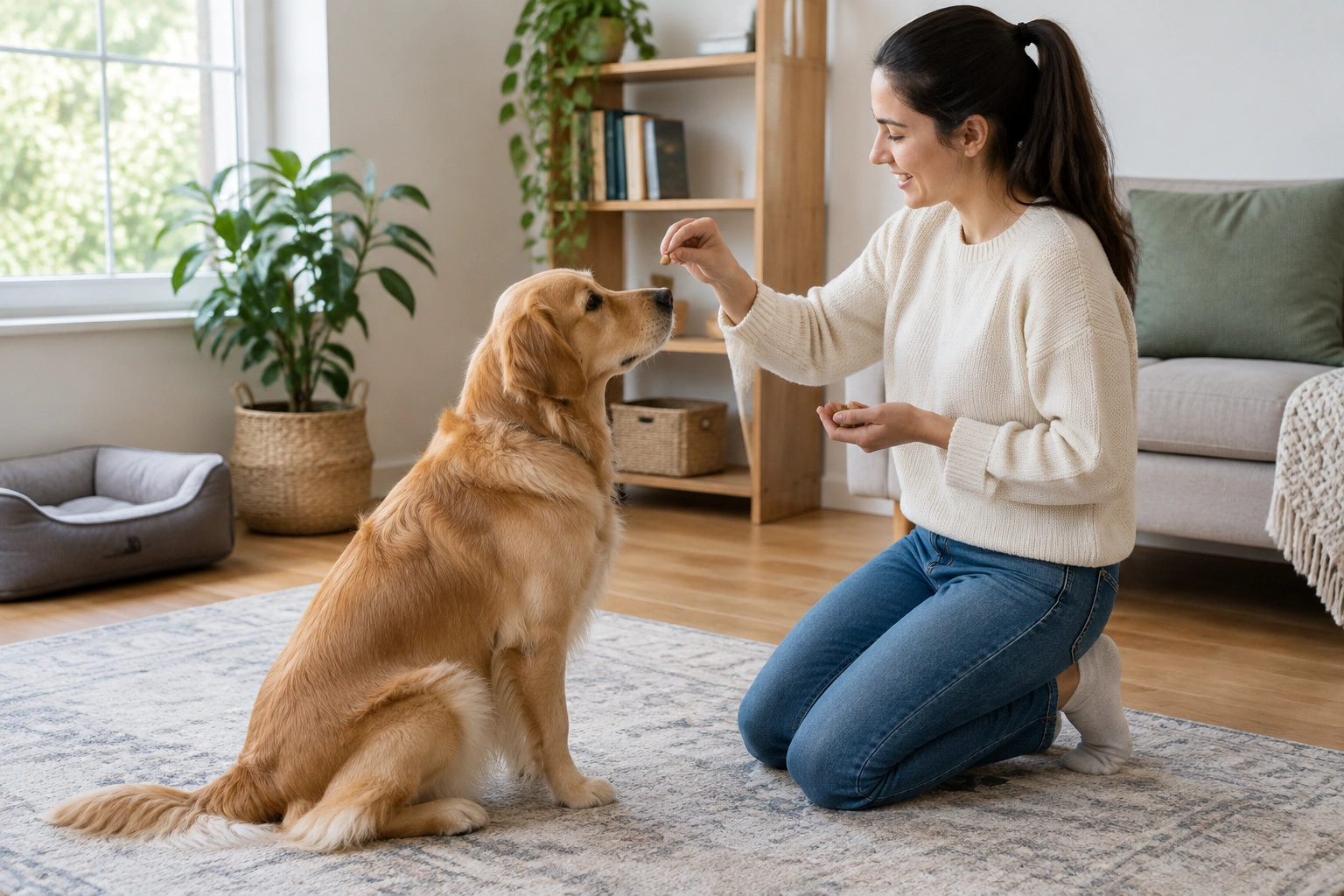
What People Mean by “Punish” vs. “Discipline” a Dog
These words get mixed together, but they are not the same.
Punishment means something that is meant to make a behavior happen less often. In dog training, that can include yelling, leash jerks, hitting, intimidating, startling, or taking away something the dog wants.
Discipline is broader. It can mean structure, boundaries, consistency, and teaching the dog what to do instead. A dog can be “disciplined” without being punished.
People often confuse the two because they want the behavior to stop right now, and “discipline” sounds calmer or more responsible than “punishment.” But in practice, what they usually need is correction plus teaching: a brief interruption, followed by a clear alternative the dog can succeed with.
That distinction matters because many owners say they want discipline when they really want one of three things:
- An immediate stop to a behavior
- A safer setup so the behavior can’t happen
- A better habit replacing the bad one
Those are training problems, not just punishment problems.
A humane correction can be as simple as calmly blocking access to a shoe, closing the door, or asking for a sit before greeting. That is very different from trying to scare the dog into compliance.
What Counts as Discipline vs. Abuse?
A fair correction is brief, predictable, and safe. It changes the dog’s access to attention, space, or rewards without causing fear or pain.
Examples of humane correction:
– Calmly removing the dog from a situation
– Ending play for a moment
– Blocking access to a doorway or object
– Asking for an easier behavior and rewarding it
– Using a short time-out to lower arousal
What crosses the line into abuse:
– Hitting, kicking, or shaking
– Yanking hard enough to cause pain or injury
– Using fear, intimidation, or threats as the main tool
– Throwing objects at the dog
– Prolonged confinement as a punishment
– Any correction that leaves the dog frightened, panicked, or physically harmed
If a method relies on pain or fear to work, it is not a humane correction.
For a general welfare perspective, positive reinforcement and humane training focus on teaching, managing, and rewarding the behavior you want.
Should You Punish a Dog? The Short Answer for Most Behavior Problems
For most common behavior issues, no—punishment is not the best first response.
If a dog is jumping, barking, chewing, stealing food, or ignoring a cue, the real question is usually:
- Does the dog know what to do instead?
- Is the environment making the behavior too easy to repeat?
- Is the dog overexcited, anxious, undertrained, or uncomfortable?
If the answer to any of those is yes, punishment is likely to be weak, messy, or counterproductive.
The clearest rule is this: if you have not taught and rewarded an alternative behavior, punishment alone is usually just suppression. It may stop the visible behavior, but it does not build a new habit.
There are limited situations where a mild interruption can be useful, such as a brief verbal cue to break a dog’s focus or a time-out to lower arousal. But even then, the interruption is only the first step. The real training happens in what follows.
Why Punishment Often Backfires: Trust, Fear, and Hidden Side Effects
Punishment can work in the narrowest sense: the dog may stop doing the thing in front of you. The problem is what it may teach instead.
1. It can create fear, not understanding
A dog may learn that your approach, voice, hands, or presence predicts something unpleasant. That can reduce trust and make the dog more avoidant or defensive.
2. It can suppress warning signals
Dogs often show stress before they escalate: lip licking, whale eye, freezing, turning away, cowering, tucked tail, or sudden stillness. If punishment is heavy-handed, you may not get a cleaner dog—you may get a dog that stops warning and starts reacting.
3. It can accidentally reward the wrong thing
If you yell and the dog thinks you are joining the game, you may reinforce the behavior. If you chase a dog for stealing socks, the chase itself can become part of the reward.
4. Timing is hard
Punishment only has a chance of being connected to the behavior if it happens immediately and consistently. In real life, that is difficult. If the dog cannot connect the consequence to the exact behavior, the lesson becomes random.
5. It does not teach a replacement
A dog that is punished for jumping still does not know whether to sit, lie down, move away, or wait. That is why the behavior often returns.
What to Do Instead: Management, Redirection, and Reinforcement
This is the framework I use most often because it is practical and repeatable.
1. Manage the environment
Management prevents the dog from practicing the wrong behavior.
Examples:
– Put shoes away if your dog chews them.
– Use a baby gate if guests at the door trigger jumping.
– Close curtains if window barking is rehearsed every afternoon.
– Use a crate or pen for unsupervised downtime if your dog is not ready for free roam.
Management is not “giving up.” It is how you stop the dog from rehearsing a habit while you build a better one.
2. Redirect immediately
Once you interrupt the behavior, give the dog something acceptable to do.
Examples:
– Mouth on your hand? Offer a chew toy.
– Charging the door? Ask for a sit and reward it.
– Barking at the window? Call away, then reward quiet attention.
– Grabbing clothing? Swap for a tug toy or chew.
The key is that the replacement must be easier and more rewarding than the unwanted behavior.
3. Reinforce the behavior you want
Reward the moment the dog does the right thing.
That can mean:
– Food
– Praise
– Play
– Access to the thing they want
– Release to a toy or sniffing break
If the dog sits instead of jumping, the sit should pay. If the dog comes when called, coming should be the best choice in the room.
How to Choose the Right Response in the Moment
Here is the decision process I use when a dog is doing something you do not want.
| Problem Type | Best Immediate Response | Why It Fits | Main Risk if You Use Punishment |
|---|---|---|---|
| Attention-seeking behavior | Ignore, withdraw attention, or brief time-out | Removes the payoff | The dog may become noisier or more frustrated |
| Overarousal | Calm interruption, then a break | Lowers intensity before training resumes | Harsh correction can escalate the dog |
| Unsafe behavior | Management first, then training | Prevents injury and rehearsal | Punishment can make the dog avoid you or react defensively |
| Undertrained behavior | Teach and reward a replacement | Builds the skill the dog is missing | Punishment may suppress the behavior without teaching anything |
| Habitual nuisance behavior | Redirection plus consistency | Replaces the habit with a better one | Inconsistent correction confuses the dog |
A useful rule: if the dog can succeed with a better option right now, redirect and reward. If the dog is too excited or the setup is poor, manage the environment first.
Here are a few concrete examples:
- If your dog is mid-jump on a guest: turn your body away, ask the guest not to pet, wait for all four paws on the floor, then reward and allow the greeting.
- If your dog is mid-bark at the window: calmly guide the dog away from the trigger, close the blinds or block the view, then reward quiet behavior the moment the dog pauses.
- If your dog is ignoring “come”: do not keep repeating it. Move closer, crouch down, use a better reward, and call once. If the dog still does not respond, shorten the distance and practice later at an easier level.
How to Handle Common Problem Behaviors Without Punishment
Biting or nipping
With puppies, biting is often a mix of teething, excitement, and poor impulse control. With older dogs, biting can signal stress, frustration, pain, or lack of training.
What to do:
– Stop play immediately.
– Remove your hands and clothing from reach.
– Offer a chew toy or tug toy.
– Resume only when the dog is calmer.
For puppies, the lesson is: teeth on skin ends the fun, but toys keep the game going.
For adult dogs, especially if the biting is hard, sudden, or escalating, do not assume it is just “bad manners.” Check for pain, stress, or fear, and get help if needed.
Jumping on people
Jumping usually works because it gets attention.
What to do:
– Use a leash at the door if needed.
– Ask for a sit before greetings.
– Reward four feet on the floor.
– Have guests ignore jumping and reward calm behavior instead.
Do not push the dog down. That can turn greetings into a wrestling match.
Barking
Barking has many causes: alerting, boredom, frustration, anxiety, or habit.
What to do:
– Identify the trigger.
– Reduce access to the trigger if possible.
– Interrupt the barking calmly.
– Reward quiet behavior the moment it appears.
If your dog is already mid-bark, do not start by yelling over the noise. Instead:
1. Create distance from the trigger if possible.
2. Use a calm cue or movement to break focus.
3. The instant the dog pauses, mark and reward quiet.
4. Then change the setup so the barking is less likely to restart.
If your dog barks at the window, closing blinds or moving the dog away from the view can be more effective than repeated verbal scolding.
Chewing
Chewing is normal. Chewing your shoes is not.
What to do:
– Remove tempting items.
– Provide legal chew options.
– Supervise or confine when you cannot supervise.
– Praise the dog for choosing the right item.
If a dog keeps chewing when left alone, the solution is usually better management, not stronger punishment.
Ignoring commands
If your dog “knows” a cue but ignores it, the problem may be distraction, weak reinforcement history, or poor timing.
What to do:
– Practice in easier settings.
– Use better rewards.
– Shorten the distance and duration.
– Make the cue worth listening to.
If recall is unreliable, do not keep repeating the cue. Repeating it teaches the dog that the first three times are optional.
In the moment, if your dog ignores a command:
– Stop repeating yourself.
– Reduce the difficulty immediately.
– Show the dog how to succeed, such as moving closer or lowering distractions.
– Reward the first correct response generously.
– Save longer practice for a calmer time.
Timing, Consistency, and Reward Quality: Why Small Training Details Matter
Training succeeds or fails on details.
Timing
The reward or interruption must happen while the dog is still connecting it to the behavior. If you wait too long, the dog may learn the wrong lesson.
Consistency
If one family member rewards jumping and another corrects it, the dog learns that behavior depends on the person, not the rule.
Reward quality
Some dogs may ignore low-value praise in a distracting setting. In that case, use better rewards: tiny food pieces, a toy, movement, or access to a favorite activity.
Difficulty level
Do not train the hardest version of the behavior first. Build it in a quiet room, then add distraction, distance, and duration gradually.
This is where a lot of “punishment” problems begin. The dog is not being stubborn; the task is too hard, the reward is too weak, or the setup is too chaotic.
When the Behavior May Be Medical, Anxiety-Related, or a Sign of Pain
If a behavior appears suddenly, gets worse quickly, or looks unusual for your dog, rule out health issues first.
Examples:
– A dog that suddenly growls when touched may be in pain.
– A dog that becomes clingy, restless, or destructive may be anxious.
– A dog that starts guarding food or objects more intensely may need medical or behavioral evaluation.
Pain, illness, and anxiety can all change behavior. Punishment in those cases can make things worse because it ignores the cause.
If the behavior change is new, persistent, or severe, schedule a veterinary check before assuming it is a training issue.
When to See a Veterinarian or Certified Trainer
Get help sooner rather than later if you see:
– Aggression toward people or other animals
– Resource guarding that is escalating
– Repeated biting
– Fearful shutdown or panic
– Behavior that is worsening despite consistent training
– Sudden changes in temperament or tolerance
A certified trainer can help with structure, timing, and behavior plans. A veterinary behaviorist is the better choice when fear, anxiety, aggression, or medical factors are involved.
For behavior problems that are already affecting safety, this is not the place to “wait and see.”
What Humane Discipline Looks Like in Practice
Humane discipline is not softness without boundaries. It is clear rules, fair consequences, and teaching that the dog can understand.
In practice, that means:
– Prevent the mistake when you can.
– Interrupt calmly when needed.
– Redirect to a legal behavior.
– Reward the behavior you want.
– Raise the difficulty gradually.
– Get help when the problem is bigger than basic training.
That approach is slower than yelling once and hoping for the best. But it is far more reliable, and it protects the relationship you need for the long term.
If you want a dog that listens because he understands, not because he is afraid, the answer to “how to punish a dog” is usually to stop thinking in terms of punishment at all.
FAQs
Is punishment ever okay for a dog?
Only in very limited, carefully considered forms such as brief interruption or removal of access, and even then it should be paired with teaching and reinforcement. Harsh or fear-based punishment is not a good default.
What is the best way to discipline a dog?
Teach the replacement behavior, manage the environment, and reward the right choice. That is usually more effective than trying to suppress the wrong one.
Should I yell at my dog?
Usually no. Yelling can add stress, confuse the dog, or accidentally become attention. A calm interruption is more useful.
What should I do if my dog bites?
End the interaction, remove access to skin or clothing, and redirect to an appropriate chew or toy. If biting is persistent or severe, get professional help.
Does a dog understand punishment?
Sometimes a dog notices that something unpleasant happened, but that is not the same as understanding exactly which behavior caused it. Timing and context are often too messy for punishment to be fair or effective.
When should I call a trainer or behaviorist?
If the behavior involves aggression, fear, resource guarding, repeated biting, or is getting worse despite your efforts, bring in a professional.
Can time-outs help?
Yes, if used correctly. A time-out can lower arousal or remove attention, but it should be brief, consistent, and paired with teaching the desired behavior.
How do I stop my dog from repeating bad behavior?
Stop rehearsal, reward the replacement, and make the right choice easier than the wrong one. Dogs learn fast, but they also repeat what works.