
Why Does My Dog Pee on Other Dogs? Causes, Clues, and What to Do

If your dog pees on other dogs, the behavior usually falls into one of four buckets: marking, excitement, fear/submission, or a medical problem. The job is to figure out which bucket fits your dog before you try to fix it. That matters because the solution for a social, overexcited Border Collie at the park is very different from the solution for a dog with a urinary tract issue.
In practice, I look at four things first: how much urine comes out, when it happens, what the dog’s body language looks like, and whether this is a new change. Those clues usually tell you whether you need a vet visit, a training plan, or both.
Why dogs pee on other dogs: the main causes
Dogs do not pee on other dogs for just one reason. The same behavior can come from very different motivations, and the context matters more than the label.
1) Urine marking
Marking is usually a small amount of urine used as scent communication. Dogs use urine to leave information for other dogs, and one way to think about it is as a scent message. Some dogs seem especially drawn to fresh urine or to spots where another dog has already marked, then add their own scent on top or beside it. That is why people sometimes describe it as “pee mail.”
Marking often shows up during walks, around new dogs, or in places with lots of canine traffic. It can also happen when a dog is excited, uncertain, or trying to make sense of a new social situation. The point is not always “dominance” in the simplistic sense people use online. More often, it is communication, habit, arousal, or a mix of all three.
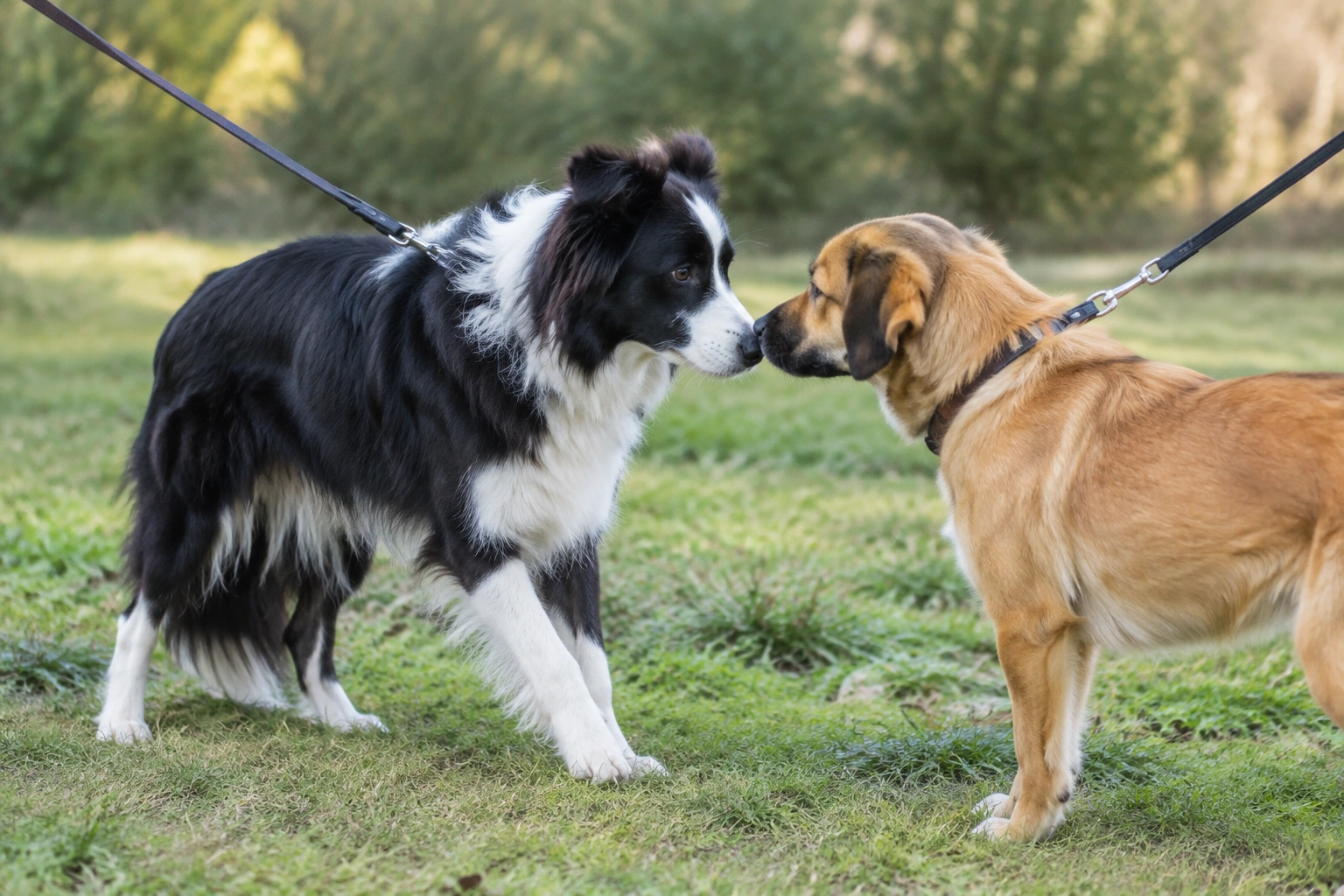
Intact dogs may be more likely to mark in some situations, and neutered or spayed dogs can still mark too.
2) Excitement or overstimulation
Some dogs pee on other dogs when greetings get too intense. This is common in young, social, energetic dogs that rush into face-to-face meetings with a lot of bounce and noise. A Border Collie that is highly aroused may sometimes lose bladder control when the greeting energy spikes.
This is especially likely when the dog has been waiting too long, has just arrived somewhere stimulating, or has been allowed to build toward the greeting without a pause. In those moments, peeing is often a pressure-release response, not a deliberate choice to annoy you.
3) Fear, appeasement, or submissive urination
A dog that feels socially pressured may urinate when another dog approaches. This can happen with shy dogs, rescue dogs, or puppies that are still unsure about canine interactions. The dog may crouch, avoid eye contact, roll partially sideways, tuck the tail, or freeze before urinating.
The important thing here is that the dog is not being “bad” or “dominant.” The dog is often overwhelmed. If you see that pattern, pushing more greetings usually makes things worse.
4) Medical causes
If the peeing is new, frequent, hard to control, or happening in unusual amounts, do not assume it is behavioral. Urinary tract problems, incontinence, hormonal disorders, kidney disease, diabetes, pain, and some toxins can all change how and when a dog urinates. A dog that suddenly starts peeing on other dogs after never doing it before deserves a veterinary look.
Medical causes are more likely when the dog seems unable to control the release, leaks urine, or makes repeated attempts with discomfort, straining, or urgency. If your dog is also straining, licking the genital area, leaking urine, drinking more, or producing blood-tinged urine, treat that as a health issue first.
Marking vs. full urination: how to tell the difference
A quick comparison can save a lot of guesswork.
| Clue | More likely marking | More likely medical or full urination |
|---|---|---|
| Amount | Small squirt, brief release | Larger volume, repeated emptying |
| Posture | Leg lift, quick aim, brief pause | Squat, prolonged stream, urgency |
| Context | Greeting, scent-heavy area, new dog | Random times, after drinking, indoors, or sudden change |
| Repetition | May happen on top of another dog’s scent | May happen even without other dogs present |
| Dog’s state | Alert, curious, keyed up | Restless, uncomfortable, licking, straining, or acting “off” |
A Border Collie that lifts a leg once beside another dog’s mark is telling a different story than a dog that empties its bladder during a greeting. The first is usually social marking. The second may be excitement, anxiety, or a bladder problem.
One useful rule: if the dog seems to be “adding a little message,” think marking. If the dog seems unable to hold it, think medical or emotional overflow.
Excitement, overstimulation, and greeting-related peeing
Fast greetings are one of the most common triggers I see. Two dogs rush toward each other, the energy jumps, the leash tightens, the dog’s breathing changes, and then urine appears. That sequence matters.
Border Collies are especially prone to this pattern because they are quick, observant, and highly responsive to movement. They often do everything intensely: watching, greeting, herding, and reacting. That intensity is useful in training, but it also means their arousal can climb faster than an owner expects.
What usually helps
The goal is not to “teach the dog not to feel excited.” The goal is to keep the dog below the tipping point where bladder control and judgment both start to fray.
Use these adjustments:
- greet after a short walk first, not at the car door
- keep the first meeting on loose leash and at a slight angle, not nose-to-nose
- let dogs sniff in short bursts, then call them away
- end the greeting before the dog starts bouncing, vocalizing, or spinning
- skip greetings entirely if your dog is already over threshold
What to do right now
If peeing starts during a greeting or walk, stay calm and interrupt the interaction immediately:
- Say a neutral cue like “let’s go” and move your dog away.
- Create space by calmly turning and walking off, or stepping behind a barrier if one is nearby.
- End the greeting for now instead of trying to “finish the introduction.”
- Clean up without fuss so the moment does not become a big emotional event.
- Revisit the setup later at a lower intensity, or skip that greeting if your dog was already too excited.
Parallel walks are often better than direct introductions. Start with enough distance that both dogs can notice each other without pulling hard or fixating — often several body lengths apart, or more if either dog is tense. Walk in the same direction, then gradually close the gap only if both dogs stay loose and calm. For many dogs, that one change reduces the urge to mark or pee during the meeting.
Submissive or fear-related urination
A dog that pees because it feels socially unsafe needs a different response from a dog that is simply overexcited. The body language usually gives you the clue.
Look for:
- lowered body posture
- ears pinned back
- tail tucked or held very low
- avoiding direct approach
- licking lips or yawning in a tense way
- freezing before the urine release
These dogs often do worse when another dog comes straight at them. They may do better with more space, slower introductions, and predictable routines. If you keep forcing close greetings, you are rehearsing the exact emotional state that triggers the peeing.
The trade-off here is simple: more social freedom can be nice, but if the dog is repeatedly leaking or urinating from pressure, freedom is too expensive. Calm, controlled exposure is the better deal.
When to suspect a medical problem
A vet visit should move to the top of the list if any of these apply:
- the behavior is new or suddenly worse
- the dog pees more often overall
- there is straining or discomfort
- you see blood in the urine
- the dog leaks when resting or sleeping
- the dog seems thirsty, tired, or unwell
- the urination happens outside social situations too
Frequent urination can come from medical conditions, behavioral factors, or environmental changes, but you do not want to guess when the pattern has changed. A dog that suddenly starts peeing on other dogs after months of normal behavior is not the same as a puppy who has always been overexcited around playmates.
If you also notice frequent small amounts versus large-volume urination, that distinction can help your veterinarian narrow the possibilities. Small, repeated attempts can point toward urinary tract irritation, while large-volume urination can point toward broader systemic issues.
For a deeper look at the health side of the problem, see why your dog may be peeing so much. Keep in mind that frequent urination can have many possible causes, so a veterinarian still needs to diagnose the reason rather than assuming it is one specific issue.
For general veterinary guidance on urinary trouble, VCA Hospitals’ pet health resources are a solid starting point, and PetMD’s overview of frequent urination in dogs explains why medical causes should not be ignored.
Why puppies, adolescents, and energetic dogs do this more often
Young dogs are still learning bladder control, social timing, and impulse control. That combination makes them more likely to pee during greetings, especially if the other dog is highly stimulating.
Adolescents are a special case. They often have enough confidence to rush into interactions, but not enough self-regulation to stay calm once they get there. That is the age where you see a lot of “I was fine until the second I wasn’t” behavior.
Energy matters too. A dog that spends the first ten minutes of every outing at a nine out of ten on the excitement scale is more likely to mark, leak, or overreact in social situations. Border Collies can be brilliant and responsive, but that same responsiveness can turn into overarousal fast.
The practical takeaway: if your dog is young and social, do not flood it with dog-dog greetings and expect maturity to solve the problem. Structure usually beats repetition.
How to prevent it during greetings, walks, and playdates
Prevention works best when you reduce rehearsals of the behavior. Every successful pee-on-another-dog episode can make the pattern easier to repeat, especially if the dog gets relief, distance, or extra stimulation afterward.
Greetings: stage them before contact
Start with a calm setup, not a rush toward each other.
- Arrive with your dog already somewhat settled, not bursting out of the car.
- Ask for a sit, hand target, or a short check-in before the dogs meet.
- Keep the first approach curved rather than straight-on.
- Allow a brief sniff, then call the dogs apart before either one gets wound up.
- If your dog starts bouncing, staring hard, or pulling, end the greeting early.
A good rule is to stop while the dogs are still doing well. Waiting until one dog is frantic usually means you waited too long.
Walks: use parallel walking before direct greetings
Parallel walking is often the safest way to start.
- Begin with enough distance that both dogs can walk without hard pulling or stiff staring.
- Walk in the same direction for a few minutes.
- If both dogs stay loose, close the gap a little.
- If either dog fixates, vocalizes, or surges forward, increase distance again.
- Save nose-to-nose contact for the end, and only if both dogs still look calm.
For some dogs, “parallel” means 20 or 30 feet apart at first. For others, it may need to be much farther. The right distance is the one where your dog can still think.
Playdates: keep them short and structured
A long, unstructured playdate can turn into overarousal fast.
- Start with a neutral walk or sniff in a yard before opening the gate to full play.
- Limit the first play burst to a few minutes, then call both dogs away.
- Use water breaks, sniff breaks, or leash breaks to reset the energy.
- End the session before the dogs start getting mouthy, frantic, or pushy.
- If peeing happens, pause the playdate and lower the intensity before trying again.
Reinforce the calm version
Pay your dog for the behavior you want: loose leash, quick check-ins, soft body language, and walking past another dog without rushing in. Positive reinforcement works best when it is tied to the exact moment the dog is making a better choice.
For a related behavior issue, my guide on stopping resource guarding with other dogs can help if the peeing happens alongside tension over space or proximity.
Training and management that actually help
Training should make the behavior less likely, not just hope the dog “outgrows it.”
Use a simple plan:
- Lower arousal before greetings. A calmer dog is easier to teach.
- Keep exposures short. One good five-second greeting is worth more than ten messy ones.
- Reward disengagement. If your dog can look away from another dog and reorient to you, pay that behavior.
- Practice in easier settings first. Quiet sidewalks beat crowded parks.
- Repeat the calm pattern often. Dogs learn from repetition, not one perfect outing.
Management matters because it stops the dog from practicing the problem. A dog that marks repeatedly each week can be strengthening the pattern. A dog that only gets controlled, calm exposures has a much better chance of changing.
What not to do
Do not scold, physically correct, or punish the dog after it pees on another dog. That usually does one of two things: it increases anxiety, or it makes the dog more secretive and harder to read next time.
Do not force close greetings to “get it over with.” If the dog is already overexcited or worried, more exposure without structure is just more rehearsal.
Do not assume dominance and try to “correct the top dog” theory out of the dog. That framing often leads people to miss the real issue, which is usually arousal, stress, or communication.
When to See a Veterinarian or Certified Trainer
See a veterinarian first if the behavior is sudden, frequent, painful, or paired with other urinary changes. That is the fastest way to rule out a medical problem. If your dog is having new or painful urination, pause training work until the vet has examined the dog and given the all-clear.
Work with a certified trainer or behavior professional if:
- your dog pees on other dogs repeatedly despite management
- the behavior happens with fear, freezing, or panic
- greetings are escalating into barking, lunging, or avoidance
- you need help setting up controlled social exposure
- your dog is young, intense, and hard to settle around other dogs
If the pattern is mostly social and excitement-based, a trainer can help you build calmer routines. If fear-based behavior is involved, a behavior professional is often the better fit because the plan needs to be more careful and individualized. If the vet rules out medical causes, then training work can move forward with more confidence.
FAQ
Is it normal for dogs to pee on other dogs?
It can happen, and the most common explanations are marking, excitement, fear, or a medical issue. “Normal” is less useful than “what is driving it in this dog?”
Why does my puppy do this more than my adult dog?
Puppies have weaker bladder control and less social self-regulation. They also get overstimulated faster, especially during fast greetings.
Does peeing on another dog mean my dog is dominant?
Not necessarily. That explanation is often overstated. Marking, uncertainty, arousal, and social communication are usually more useful ways to think about it.
How do I stop it on walks?
Avoid rushed greetings, keep your dog below its excitement threshold, and interrupt the moment before it escalates. Parallel walking and brief sniff breaks usually work better than face-to-face introductions.
When should I call the vet?
Call the vet if the behavior is new, frequent, painful, or paired with blood, straining, leaking, or other changes in urination.
Can a trainer fix this?
A good trainer can help if the cause is mostly excitement, habit, or poor greeting skills. If fear or medical signs are involved, start with a vet and then bring in behavior support if needed.