
How to Stop Your Dog From Resource Guarding You: A Safe, Practical Guide

When a dog guards you, it can feel confusing and hurtful. One moment they seem glued to your side; the next, they stiffen, growl, block someone’s path, or snap when another person or pet comes near. That behavior is not just “clingy.” It’s a safety issue.
Person-directed resource guarding is a form of resource guarding where the “resource” is you: your lap, your attention, your space, or even access to you on the couch or in bed. The dog is not necessarily trying to be dominant or “protective.” More often, they are worried about losing something they value. That worry can show up as hovering, body-blocking, staring, or escalating to growling and biting.
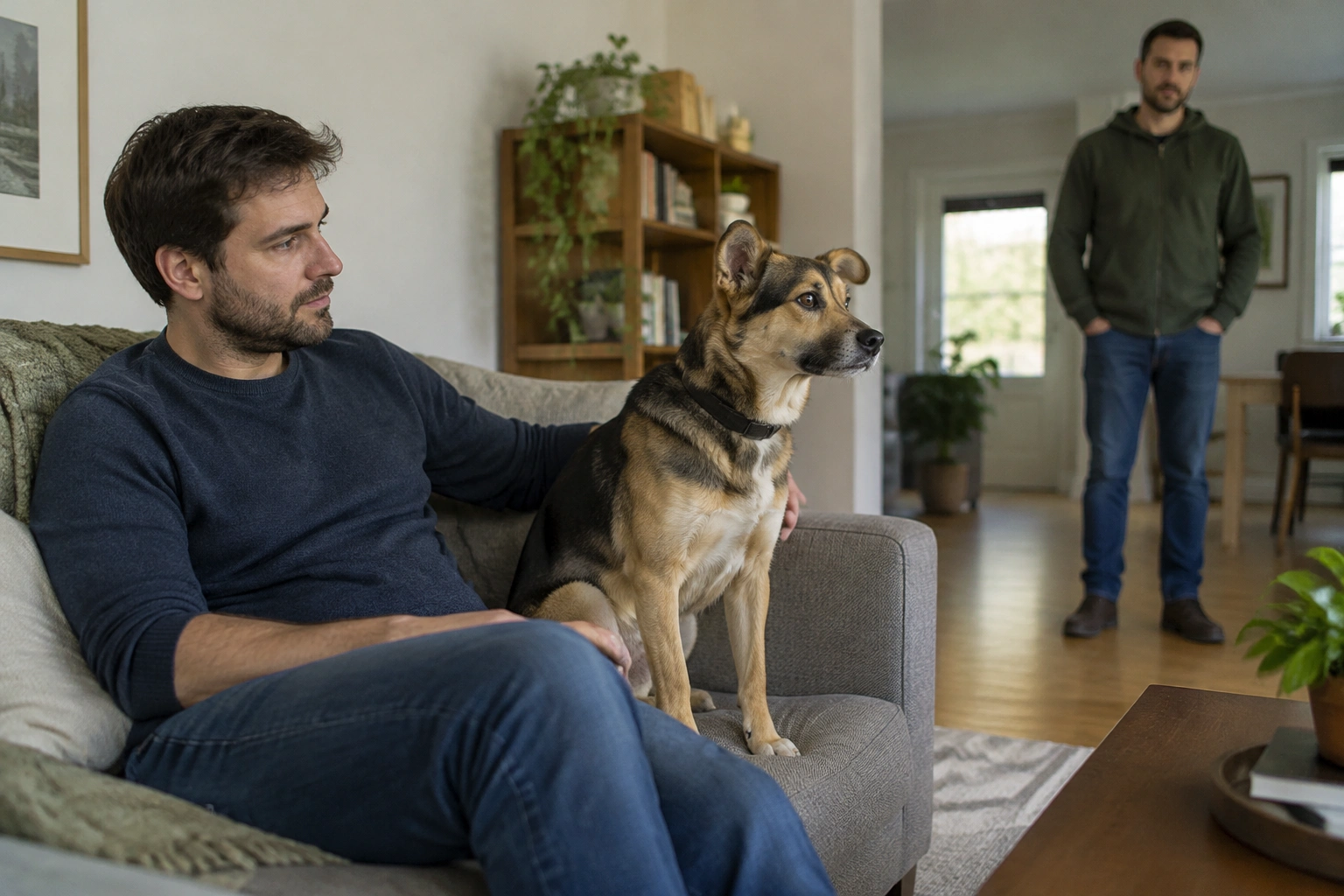
The good news is that this behavior can often improve with the right plan. The key is to manage the situation first so the dog stops rehearsing the guarding, then change how they feel about the trigger through desensitization and counterconditioning. If the guarding is intense, sudden, or tied to pain, get veterinary help early.
What It Means When a Dog Guards You
A dog that guards you is usually treating you like a valuable resource. That can happen with a favorite person, but it can also happen with a chair, a bed, the couch, or a spot beside you.
In practical terms, the dog may:
– wedge between you and another person
– stare hard at someone approaching
– lean into you when another dog comes near
– growl when a child tries to sit beside you
– snap or lunge if someone reaches toward you
This matters because the behavior can escalate quickly if people keep approaching despite the warning signs. A growl is useful communication. If punishment makes the dog stop growling, you may lose the warning and keep the risk.
A useful way to think about it: the dog is not being “bad,” but they are practicing a strategy that works for them. If moving closer makes the other person back off, the guarding gets reinforced.
How to Tell Resource Guarding Apart From Protectiveness, Jealousy, or Anxiety
These behaviors can look similar, but the reason behind them changes what you should do next.
| Behavior | What it often looks like | What it usually means | Best next step |
|---|---|---|---|
| Resource guarding | Blocking, stiffening, staring, growling, snapping when someone approaches you | The dog fears losing access to you or another valued resource | Manage distance and begin behavior modification |
| Protective behavior | Alerting to a real or perceived threat, then settling when the situation changes | The dog is responding to something outside the social circle | Reduce arousal and avoid rewarding overreaction |
| Jealousy/attention-seeking | Pushing in, pawing, interrupting, vocalizing when attention shifts | The dog wants access to your attention | Teach alternate behaviors and prevent rehearsal |
| Separation anxiety | Distress when you leave: panic, vocalizing, destruction, elimination | The dog struggles with being alone | Treat as an anxiety problem, not guarding |
| Fear-based aggression | Defensive behavior around a person, dog, or situation the dog finds scary | The dog is trying to increase distance | Increase safety and work at lower intensity |
A simple decision cue helps: if the dog mainly reacts when someone gets near you, touches you, or tries to take your place, guarding is likely part of the picture. If the dog panics when you leave, that points more toward separation anxiety. If the dog is tense around a stranger but not focused on access to you, fear may be the bigger driver.
Concrete examples can help:
– Guarding you: your dog growls when your partner walks toward you on the couch.
– Guarding the space around you: your dog guards the couch itself, your bed, or your lap and snaps when someone tries to sit there, even if they are not trying to touch you.
– Protectiveness: your dog barks at a delivery person at the door, then relaxes once the person leaves.
– Jealousy/attention-seeking: your dog nudges between you and your phone, but does not stiffen or threaten.
– Anxiety: your dog paces, pants, or destroys items when you leave the house.
Signs Your Dog Is Escalating Toward a Bite
Watch for the earliest changes, not just the growl or snap. The earlier you notice them, the easier it is to interrupt the pattern safely.
Common warning signs include:
– freezing or going very still
– hard staring
– stiff posture
– leaning over you or pressing in
– hovering between you and another person
– lip lifting
– low growling
– whale eye or a tense face
– snapping the head toward someone without fully committing
– moving faster to block access
These signs matter because a dog that is already stiff and staring has moved beyond simple discomfort. If you wait for the bite, you are waiting too long. In households with children, that delay is especially risky because kids often move quickly and miss subtle body language.
Common Triggers for Guarding a Person
The trigger is not always another dog. Often it is a specific context that makes access to you feel uncertain.
Common triggers include:
– visitors entering the home
– another pet approaching while you’re seated
– someone reaching to pet you
– children climbing onto the couch beside you
– hugs, leaning, or lap-sitting
– food, chews, or high-value toys nearby
– bedtime, couch time, or other “claimed” spots
– attention shifting from the dog to someone else
A dog may be calm most of the day and then become possessive during one predictable routine, such as evening TV time or when guests arrive. That pattern is useful. It tells you where to focus management first.
One important trade-off: avoiding the trigger can feel like “giving in,” but it is often the safest way to stop rehearsal while you build a training plan. Repetition strengthens the habit; prevention weakens it.
What to Do Right Now to Keep Everyone Safe
If your dog has already snapped, lunged, or blocked people from approaching you, treat the situation as a safety issue today.
Do this now:
– create distance between the dog and people who trigger them
– use baby gates, closed doors, or an exercise pen to control access
– keep the dog on leash indoors during high-risk times if needed
– do not allow children to climb over or crowd the dog
– stop hugging, reaching over, or cornering the dog near you
– separate the dog during meals, chews, and high-value resting times
– give the dog a predictable place to settle away from visitors
If the dog guards you around guests, the safest plan is often to give the dog a separate room or gated area before people enter. That is not a failure. It is management.
For households with children, the rule should be simple: keep kids away from the dog during trigger situations, and do not ask them to test the dog’s reaction. Children should never be asked to approach a guarding dog to prove the dog is “fine.”
How to Prevent the Behavior From Getting Worse
The main goal is to stop the dog from practicing guarding. Every successful block, growl that sends someone away, or snap that makes a person retreat can strengthen the habit.
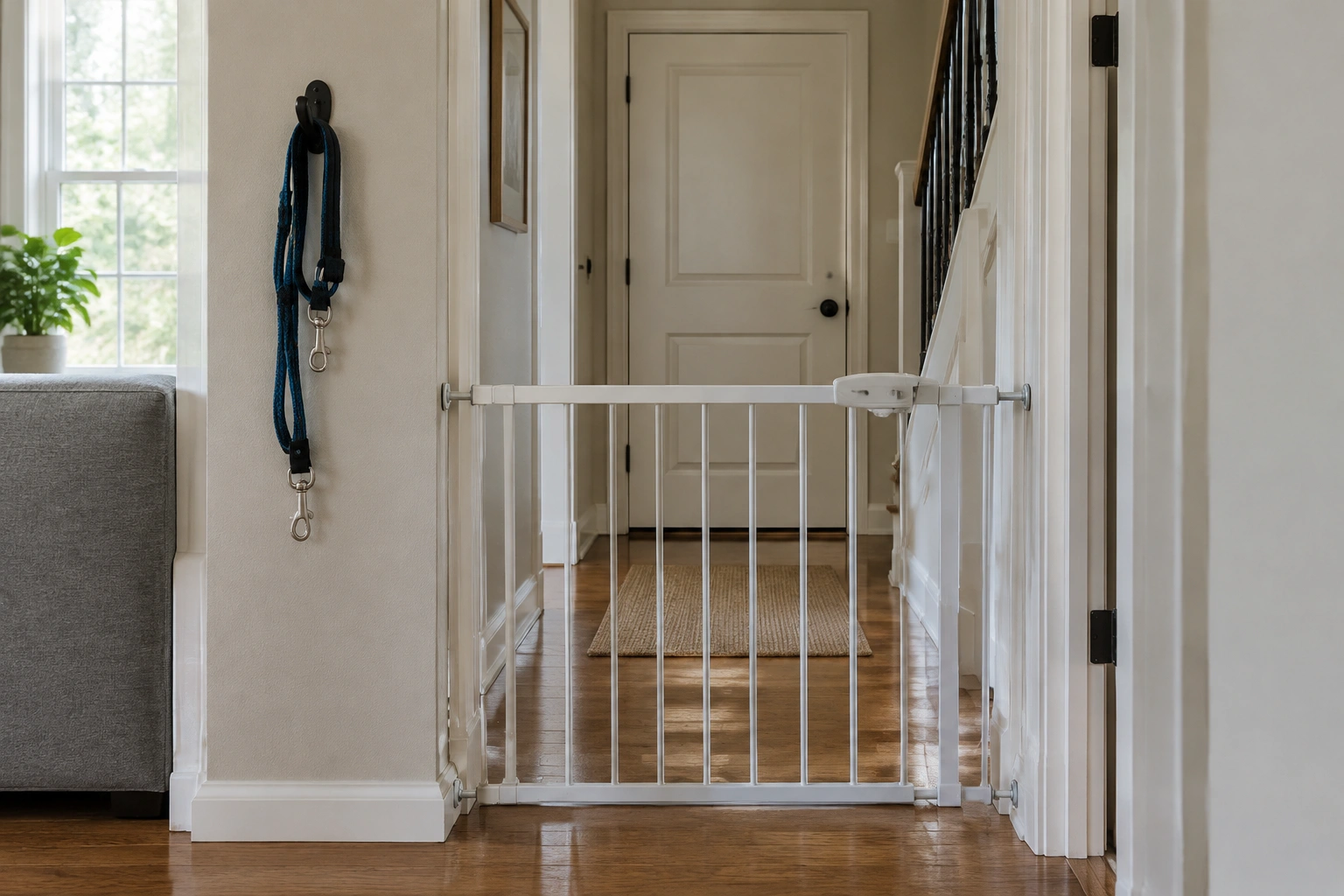
Management ideas that help:
– remove access to trigger spots like the couch or bed during training
– keep chews, bones, and prized toys out of circulation if they trigger guarding
– feed dogs separately in multi-dog homes
– use barriers instead of direct confrontation
– set up a “safe station” where the dog can relax without guarding opportunities
This is especially important in multi-pet homes, where competition can make guarding more intense. A calm environment with enough resources, space, and predictability lowers pressure.
A practical rule: if you cannot supervise the situation closely, manage it so the dog cannot rehearse the behavior. That may mean more baby gates and fewer spontaneous interactions for a while.
Training That Actually Helps: Desensitization and Counterconditioning
The goal is not to force the dog to “accept” people near you. The goal is to change the dog’s emotional response so the trigger stops predicting loss or conflict.
Desensitization
This means exposing the dog to the trigger at a level they can handle. If the dog reacts when someone stands one foot away from you, start with the person much farther away.
Counterconditioning
Pair the trigger with something the dog loves, such as very tasty treats. Over time, the dog learns that the approach of another person predicts good things instead of competition.
A simple example:
1. A visitor enters and stays far enough away that the dog notices but does not stiffen.
2. The visitor tosses a treat away from the dog.
3. The dog relaxes, then gets another treat.
4. The visitor leaves before the dog becomes tense.
That distance matters. If you move too quickly, you may trigger guarding and make the pattern stronger. Progress usually looks boring at first: more space, fewer reactions, and short sessions.
A short practice session can be useful, but the exact frequency should depend on the dog’s comfort level and how well they stay under threshold. The important part is that sessions stay easy enough for the dog to remain relaxed. You can read one example approach in this resource guarding exercise guide.
What Not to Do
Some common “fixes” make guarding worse.
Avoid:
– punishing growling
– alpha rolls or physical corrections
– forcing someone to pet, hug, or take the dog’s place
– dragging the dog off the couch while someone approaches
– cornering the dog to “show who’s boss”
– repeatedly exposing the dog to the trigger at full intensity
Punishment can suppress warnings without changing the emotion underneath. That is dangerous because the dog may stop growling but still feel the same level of threat. Forced confrontation can also teach the dog that people approaching you really do lead to conflict.
How to Safely Introduce People or Pets Around a Guarding Dog
If you need to bring someone into the dog’s space, control the setup carefully.
For a low-risk visitor introduction, try this simple setup:
1. Put the dog on leash or behind a gate before the visitor enters.
2. Have the visitor come in calmly and ignore the dog at first.
3. Keep the dog far enough away that they can stay loose, eat, or look around.
4. Reward calm behavior with treats tossed away from the visitor.
5. Let the dog watch for a short time, then end the session before tension rises.
Use these rules:
– begin at a distance where the dog can stay loose
– keep greetings short
– let the dog choose whether to approach
– reward calm behavior, not pushy behavior
– end the session before the dog becomes tense
With another pet, do not force close contact around you. Use gates, parallel movement, and structured separation before trying shared space. If guarding is already intense, skip introductions and keep the dog separated until you have professional guidance.
Leash use can help in controlled setups, but only if the leash is loose and the dog has room to move away. A tight leash can increase frustration, so it should support safety, not create pressure.
When Home Training Is Enough and When to Get Professional Help
Mild guarding may be manageable at home if:
– the dog has never bitten
– warning signs are clear and easy to interrupt
– you can reliably control access to triggers
– the dog can stay calm at a safe distance
– everyone in the home can follow the plan consistently
You should get professional help sooner if:
– the dog has bitten or attempted to bite
– the guarding is getting more frequent or more intense
– snapping is repeated, stronger, or harder to interrupt
– the guarding spreads to more situations, people, or locations
– children or vulnerable adults are in the home
– the dog guards multiple resources, not just you
– you cannot safely manage visitors or other pets
A certified dog trainer with behavior experience or a veterinary behaviorist can help you build a safer plan. If the case feels unpredictable, do not wait for it to become more serious.
Could Pain, Illness, or Anxiety Be Causing the Guarding?
Yes. Sudden guarding, especially if it appears out of nowhere or worsens quickly, deserves a veterinary exam. Pain lowers tolerance. A dog with arthritis, skin discomfort, dental pain, or another medical issue may be less willing to be approached or moved.
Anxiety can also raise the dog’s baseline stress, making guarding more likely. A dog that already feels insecure may cling harder to the person they see as their safest point of access.
If the behavior changed after an injury, a move, a new pet, a household conflict, or a change in routine, that context matters. Tell your veterinarian when the behavior started, what triggers it, and whether it happens in specific places like the couch, bed, or doorway.
For broader context on guarding as a fear-driven response, this veterinary explanation of resource guarding is helpful.
What Progress Usually Looks Like
Progress is usually gradual, not dramatic. A good sign is that the dog notices a trigger and stays loose enough to eat, look away, or settle.
Early progress may look like:
– less stiffening
– fewer blocks or cut-offs
– shorter recovery after a trigger
– calmer behavior at a greater distance
– fewer incidents overall
Setbacks are normal if the dog is pushed too close, too soon. That does not mean the plan failed. It usually means the distance, timing, or difficulty level needs adjusting.
A realistic timeline depends on severity, consistency, and how well the environment is managed. Mild cases may improve in small but noticeable ways over weeks. More serious guarding can take longer and may need ongoing management even after training starts working.
A Calm, Safer Plan Is Usually the Fastest Way Forward
If you’re asking how to stop my dog from resource guarding me, the safest answer is: manage first, train second, and do not rely on punishment. Keep people at a distance the dog can handle, stop rehearsals, and use counterconditioning to change the emotional pattern underneath the behavior.
If the dog has bitten, the guarding is escalating, or you suspect pain or illness, bring in your veterinarian and a qualified behavior professional now. That is not overreacting. It is the most efficient way to protect everyone and give your dog a better chance to improve.
FAQ
Why does my dog guard me but not other people?
Some dogs form a stronger attachment to one person or associate that person with access to comfort, attention, or preferred resting spots. The guarding may show up only around that person because that is where the dog expects to lose something valuable.
Is my dog being protective or resource guarding?
Protective behavior is usually about a perceived outside threat. Resource guarding is about access to something valuable, such as you, your lap, the couch, or your bed. If the dog blocks others from getting near you or the space around you, guarding is more likely.
Should I let my child pet a dog that guards me?
Not during trigger situations. Keep children away from the dog when guarding is likely, and do not ask them to test the dog’s reaction. If kids are in the home, safety and management come first.
Can I fix this without a trainer?
Mild cases may improve with careful management and low-intensity training, but any bite history, repeated snapping, or worsening behavior is a good reason to get professional help.
Does leash use help with introductions?
It can, if it is loose and used to create control and space, not pressure. For some dogs, a leash helps prevent rushing; for others, it can increase frustration. Use it as part of a controlled setup, not as a way to force closeness.