
Why Your Puppy’s Eyes Are Watering: Causes, Warning Signs, and What to Do

A watery eye in a puppy can be nothing more than a brief irritation from dust, wind, or shampoo. It can also be the first visible sign of a scratch, infection, blocked tear duct, or something stuck on the eye’s surface. The useful question is not simply “why is this happening?” but “does this look mild, or does it need a vet today?”
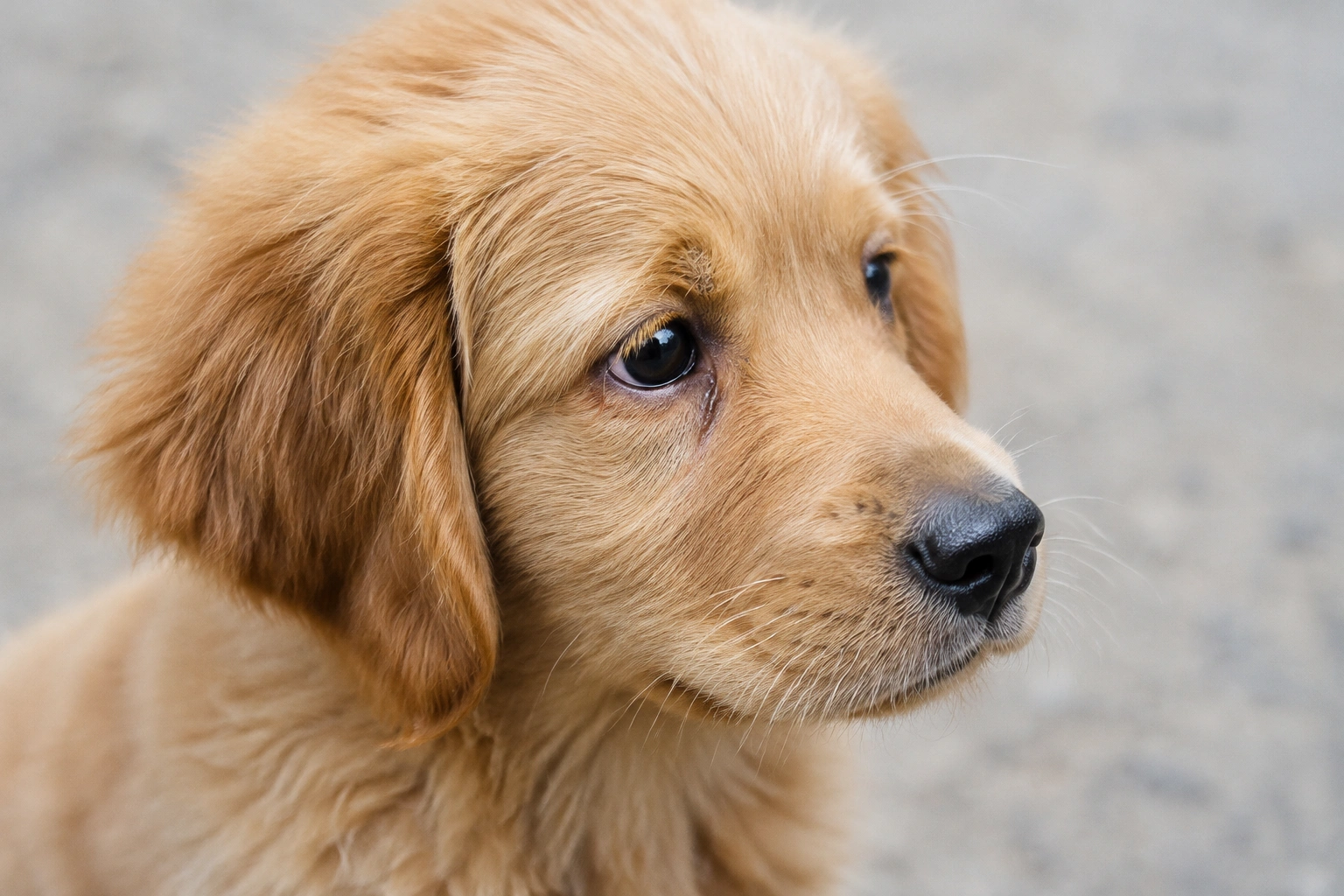
That distinction matters because puppy eyes can worsen quickly. A small foreign body or corneal scratch may look like simple tearing at first, then progress to squinting, redness, and pain. On the other hand, clear tears with no discomfort may settle once the irritation is gone.
Active puppies that spend time outdoors are more likely to pick up dust, grass, wind, and small bits of debris around the eyes. That doesn’t mean every watery eye is serious, but it does mean it is worth checking carefully rather than assuming it will pass.
What watery eyes in puppies can mean
A puppy’s eye waters when the eye is trying to protect itself. Tears help flush away irritants and keep the surface moist. The key difference is this: brief, clear tearing in a comfortable puppy is often less concerning, while ongoing tearing or tearing with discomfort is not.
A practical way to judge severity is to ask three questions:
- Is it one eye or both?
- Is the discharge clear, or thick and colored?
- Does the puppy seem uncomfortable?
Clear tearing with a bright, comfortable puppy is often less urgent than watery eyes paired with squinting, redness, swelling, or discharge. Tear staining alone is not the same as active watery discharge, and it is not always an emergency.
Common reasons a puppy’s eyes water
Several everyday issues can cause tearing in puppies, and they range from mild to more serious.
Mild irritation from the environment
Dust, wind, grass, pollen, shampoo, and even a bit of debris can irritate the eye surface. In those cases, the tearing may be temporary and the puppy may otherwise act normal. If the eye looks mildly wet but not red, and the puppy is not rubbing at it, this is one of the more reassuring patterns.
Allergies
If both eyes are watering, especially with sneezing, itchy skin, or seasonal flare-ups, allergies become more likely. Allergies usually affect both eyes because the trigger is environmental rather than a problem in one specific eye. That said, “both eyes” does not automatically mean harmless. Persistent watering still deserves attention if it does not settle.
Foreign body
A tiny bit of grass, dust, or dirt can sit under the eyelid and keep the eye watering. This is one of the reasons puppies may suddenly start tearing after playing outside. A foreign body often causes one eye to water more than the other, and the puppy may paw at the face or blink a lot.
Corneal scratch or surface injury
The cornea is the clear front surface of the eye. If it gets scratched, the eye can water heavily, and the puppy may squint or keep the eye partly closed. A scratch can also become irritated or infected, which is why these cases should be checked promptly rather than watched for long.
Infection or conjunctivitis
If watery eyes come with yellow, green, or crusty discharge, redness, or swelling, infection becomes more likely. Conjunctivitis can make the eye look red and sticky, especially after sleep. This is not something to monitor for long if the discharge is thick or the eye looks painful.
Blocked tear duct
Some puppies tear because their tears are not draining normally. A blocked tear duct can lead to overflow tearing without obvious infection. You may notice a wet face or tear staining, especially if the problem keeps happening in the same eye. This is a “needs a vet check” issue, even if the eye does not look dramatic.
One eye or both eyes: a clue that helps narrow it down
The number of eyes involved gives you a useful first clue.
One eye watering
One watery eye often points to a local issue:
– a scratch
– a foreign body
– a blocked tear duct
– something irritating that eye specifically
If the puppy keeps pawing at one side, blinking hard, or tilting the head, treat that as more concerning than simple tearing.
Both eyes watering
Both eyes watering can fit:
– allergies
– general irritation from wind, smoke, dust, or shampoo
– a more widespread eye issue
The trade-off here is easy to miss: both eyes sounding “less specific” can make people think the problem is milder, but bilateral symptoms can still be significant. If the puppy is uncomfortable, the eye surfaces look red, or the tearing persists, both-eye involvement does not rule out a vet visit.
What eye discharge color and texture can tell you
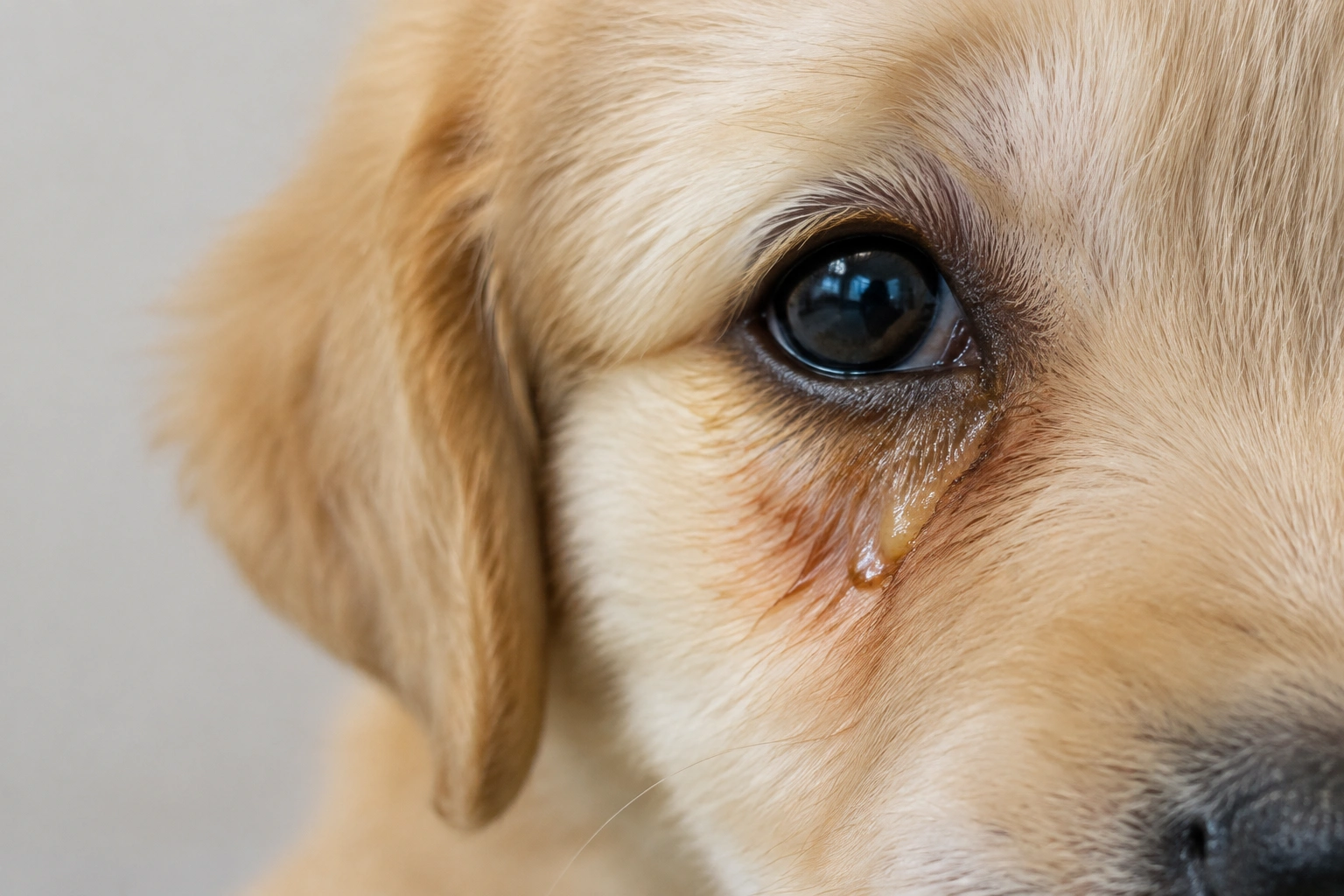
The look of the discharge is often more helpful than the amount of tearing.
| What you see | What it may suggest | How concerning? |
|---|---|---|
| Clear, watery tears | Mild irritation, wind, dust, or early allergy | Often monitor if puppy is comfortable |
| Slightly sticky clear tears | Irritation or mild inflammation | Monitor closely |
| Yellow or green discharge | Infection more likely | Vet visit recommended |
| Crusty buildup that returns | Ongoing inflammation or infection | Vet visit recommended |
| Smelly discharge | More concerning infection or debris | Vet visit recommended |
| Thick “goop” with redness | Eye condition that needs attention | Usually not for home treatment |
A simple rule helps here: clear tears without pain are more reassuring; thick, colored, or smelly discharge is not.
If the eyelids are stuck together after sleep, that can happen with infection or significant irritation. Don’t force them open. Use gentle cleaning only if the puppy is comfortable, and arrange a vet exam if the discharge returns.
Red-flag symptoms that mean your puppy needs a vet
Some signs move a watery eye from “watch and clean” into “book a vet visit now.”
Seek veterinary care promptly if you notice:
– squinting
– keeping the eye closed
– pawing or rubbing at the eye
– redness
– swelling around the eye
– cloudiness on the eye surface
– thick yellow, green, or smelly discharge
– obvious pain
– sudden worsening
– a possible injury or trauma
– a visible object stuck in or near the eye
– a change in vision or the puppy bumping into things
These symptoms matter because they suggest the eye is more than mildly irritated. A scratch, infection, or foreign body can worsen if the puppy keeps rubbing the area. If the eye looks cloudy or the puppy is very uncomfortable, treat it as urgent.
What to do right now if you suspect a scratch or foreign body
If your puppy may have something in the eye or may have scratched it, do this before the vet visit:
- Prevent rubbing. Use an e-collar if you have one.
- Avoid touching or pressing on the eye.
- Contact your veterinarian promptly for advice and an exam.
If the eye is clearly injured, do not try to dig anything out. Avoid flushing the eye if that seems likely to cause more pain or if the eye is obviously damaged.
What you can safely do at home for mild tearing
Home care has a place, but only when the signs are mild and the puppy seems comfortable.
Safe first steps
If the tearing is clear and there is no redness, swelling, or squinting, you can:
– gently wipe away tears with clean gauze or a soft, lint-free pad
– use sterile saline to moisten the pad and wipe from the inner corner outward
– use a fresh pad for each wipe
– keep the puppy away from dusty play areas for a day or two
– monitor whether the tearing improves, stays the same, or spreads to the other eye
A practical example: if your puppy came in from a windy walk with one watery eye, no redness, and no pawing, gentle cleaning and observation may be enough for the moment.
What not to do
Do not:
– use human eye drops unless a veterinarian tells you to
– use leftover prescription drops
– rub the eye hard
– use cotton swabs near the eyeball
– keep trying home care if the eye becomes red, painful, cloudy, or sticky
The biggest risk with “just home care” is missing an injury or infection that needs proper treatment.
When not to self-treat
Self-treating becomes risky when the cause is not clearly mild. That includes:
– suspected infection
– possible corneal scratch
– a foreign body you cannot remove easily
– swelling or cloudiness
– ongoing discharge that keeps coming back
If the puppy is squinting or closing the eye, that is not the time for trial-and-error. The eye surface is delicate, and rough handling can make the problem worse. This is also why leftover medications are a bad idea: the wrong product can delay treatment or cause harm.
What a veterinarian may check and treat
A vet visit is usually straightforward and focused. The veterinarian may:
– look closely at the eyelids and eyelashes
– check whether the eyelids roll inward or the eyelashes are rubbing the eye
– use fluorescein stain to look for corneal scratches or ulcers
– check tear production if dry eye or abnormal tearing is suspected
– examine the discharge and surrounding tissue
– check whether tear drainage seems normal
– decide whether infection, irritation, allergy, trauma, or a foreign body is most likely
Treatment depends on the cause. A mild irritation may only need cleaning and monitoring. A scratch, infection, or foreign body may need prescription medication or other targeted care. If a blocked tear duct is suspected, the vet may want to investigate why tears are not draining properly.
The value of the exam is not just treatment; it is avoiding the wrong treatment. Eye problems can look similar from the outside, but they do not all respond to the same approach.
How to monitor the eye and help prevent repeat problems
If the eye is only mildly watery and your vet agrees it can be watched, track three things over the next day or two:
- Is the tearing improving?
- Is the discharge changing color or thickness?
- Is the puppy acting more uncomfortable?
A simple home log can help: note which eye is affected, what the discharge looks like, and whether the puppy is squinting or pawing. If symptoms spread to the other eye, become thicker, or last more than a short period, that is useful information for your vet.
To reduce repeat irritation:
– rinse off dust or pollen after outdoor play if your vet recommends it
– keep hair around the eyes trimmed only if safe and done carefully
– avoid letting the puppy run through known irritants when possible
– watch closely after windy walks, grooming, or bath time
Prevention here is mostly about reducing exposure and catching changes early. You cannot prevent every watery eye, but you can make it easier to spot the difference between a brief irritation and a real problem.
When to Call Your Veterinarian
Call your veterinarian the same day if the watery eye is paired with redness, squinting, pawing, swelling, or thick discharge. Call urgently if the puppy keeps the eye closed, seems painful, has cloudiness, or may have something stuck in the eye.
If you are unsure, err on the side of a checkup. Eye problems are one of those situations where waiting for “one more day” can be the difference between a simple fix and a more complicated one.
FAQ
Is it normal for a puppy’s eyes to water?
Sometimes, yes. Mild clear tearing can happen from wind, dust, shampoo, or brief irritation. It becomes less normal when it keeps happening, affects only one eye, or comes with redness or discomfort.
What does yellow or green eye discharge mean?
Yellow or green discharge is more concerning than clear tears and can suggest infection. If it is thick, sticky, or keeps returning, your puppy should be examined by a veterinarian.
Why is only one eye watering?
One eye often points to a local problem such as a scratch, foreign body, or blocked tear duct. That pattern deserves closer attention than both eyes watering from a mild environmental trigger.
Can I use saline or eye drops from home?
Sterile saline may be appropriate for gentle cleaning in mild cases if your veterinarian has advised it. Human eye drops and leftover medications should not be used unless your vet specifically tells you to.
How fast should I see a vet?
Same day is best if your puppy is squinting, pawing at the eye, has swelling, cloudiness, pain, or thick discharge. If the eye is only mildly watery and the puppy seems comfortable, you may be able to monitor briefly, but any worsening should trigger a vet visit.
Could watery eyes be allergies?
Yes, especially if both eyes are watery and the puppy also has sneezing or itchy skin. Allergies are only one possibility, though, so persistent symptoms still need attention.