
What to Do If Your Dog Is Allergic to Grass: A Practical Guide for Dog Owners

If your dog comes back from the yard rubbing their face, licking their paws, or scratching like something is crawling on them, grass could be part of the problem. The tricky part is that “grass allergy” is often shorthand for a few different issues: grass pollen, contact irritation from the plant itself, or a broader environmental allergy pattern that happens to flare after time outside.
The good news is that you do not have to guess blindly. Once you know what a grass-related reaction usually looks like, you can reduce exposure, calm the skin, and decide when the problem is simple enough for home care versus when it needs veterinary treatment.
How to tell whether grass is the likely trigger
Dogs are not typically reacting to “grass” in the abstract. More often, the trigger is grass pollen, which is why symptoms may be worse in certain seasons or on windy days when pollen spreads more easily. That matters because it changes your strategy: you are not trying to eliminate every blade of grass forever, but to reduce the amount of pollen and plant material that stays on your dog’s skin and coat.
The pattern that points toward grass is usually tied to outdoor exposure. A dog may seem fine indoors, then start licking paws after a walk, rubbing the muzzle after lying in the lawn, or scratching the belly after rolling in the yard. Seasonal flare-ups are another clue. If the itching gets noticeably worse during periods when pollen is high, grass becomes a stronger suspect.
Common signs that fit a grass reaction
The most common signs are:
– itching and scratching, especially after being outside
– paw licking or chewing
– redness between the toes, on the belly, or around the groin
– face rubbing or rubbing the muzzle on carpet
– small bumps, rash, or irritated skin
– ear scratching in dogs with broader allergy patterns
A dog that lies on grass and later develops a red, irritated stomach is a classic example. So is a dog that is calm on pavement but starts gnawing at the paws after every trip through tall grass.
Grass allergy versus flea allergy, food allergy, or skin infection
A lot of dogs with itchy skin do not have just one problem. Fleas, food sensitivities, grass pollen, and skin infections can overlap, and the symptoms can look similar from the outside. Here is a practical way to sort them out.
| Possible cause | Clues that make it more likely | What usually stands out |
|---|---|---|
| Grass or environmental allergy | Itching after outdoor time, seasonal flare-ups, paw licking, belly redness | Symptoms often worsen after yard exposure or during pollen-heavy periods |
| Flea allergy | Itching that concentrates near the tail base, hindquarters, or back; possible flea dirt | Even one or two bites can trigger strong itching in sensitive dogs |
| Food allergy/sensitivity | Ongoing itchiness that does not clearly track with outdoor exposure | Symptoms may be year-round and can include ears, paws, and skin |
| Skin infection | Redness, odor, scabs, oozing, pain, or hot spots | Infection may develop after repeated scratching or licking |
The biggest mistake is assuming every itchy dog has a grass allergy. If your dog is scratching constantly even when they have not been outside much, or if the skin smells bad, looks greasy, or has open sores, infection or another allergy may be involved.
What to do right away after your dog has been in grass
When a dog is itchy after outdoor time, the first goal is to remove as much pollen and plant debris as you reasonably can without irritating the skin more. Wiping paws and legs after playtime outside can help remove irritating allergens, and that simple habit is often the easiest place to start.
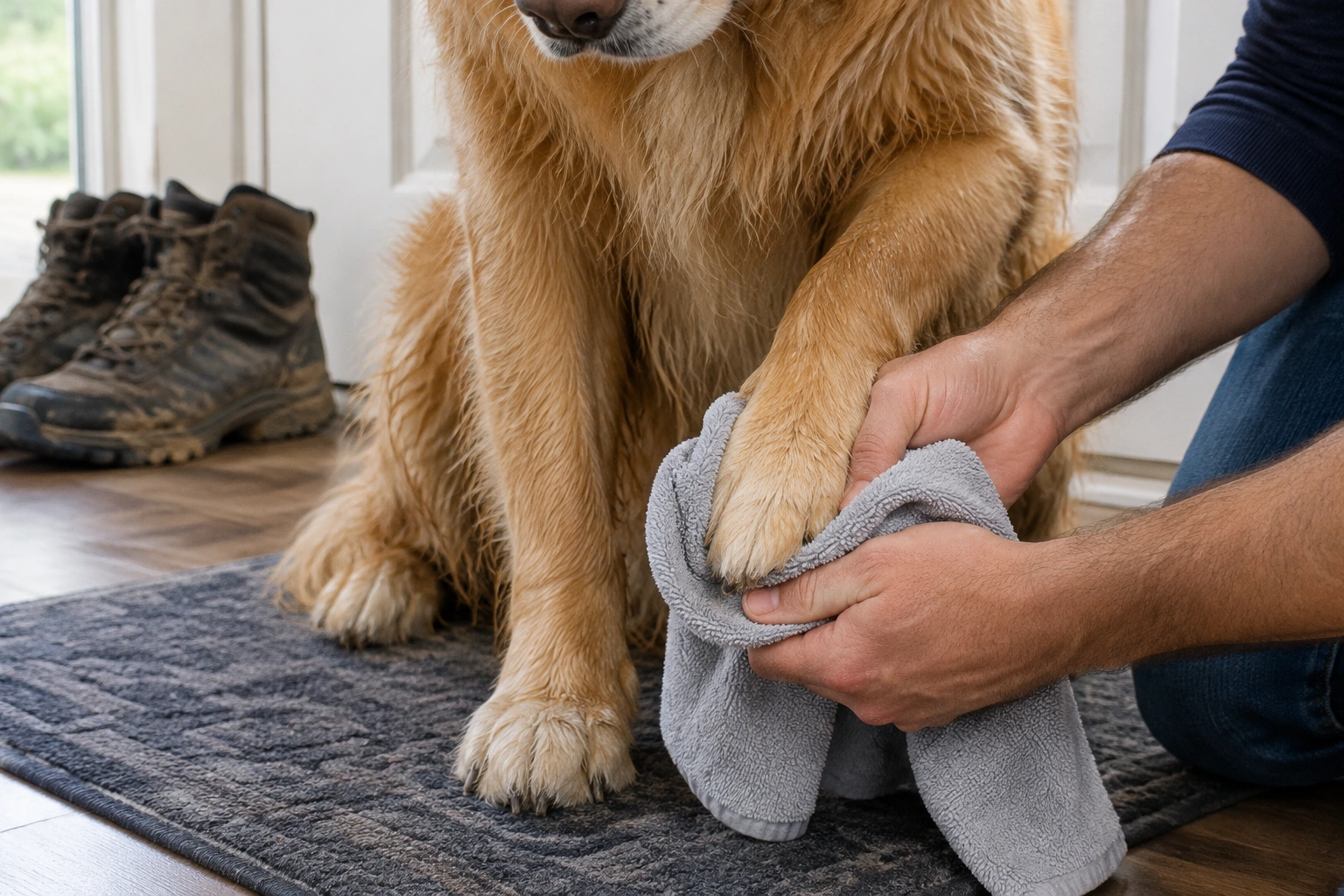
A quick cleanup routine works well after light exposure:
1. Wipe the paws, lower legs, belly, and muzzle with a dog-safe hypoallergenic wipe or a damp cloth.
2. Dry the areas gently so moisture does not linger between the toes.
3. Check for redness, bumps, or debris stuck in the coat.
4. Keep the dog from licking immediately afterward if the skin is already irritated.
If your dog has been rolling in grass, lying in a lawn for a long time, or came home visibly dusty with pollen, a rinse or bath may help more than a wipe-down. The trade-off is that baths remove more residue, but too-frequent bathing can dry the skin and make irritation worse. For that reason, a full bath is best reserved for heavier exposure or when the coat clearly has pollen buildup.
A simple decision rule: wipe, rinse, or bathe?
Use this as a practical guide:
– Wipe after a short walk or light yard time.
– Rinse if your dog spent more time in grass and has pollen on the coat.
– Bathe if the exposure was heavy, the dog rolled in grass, or symptoms are flaring and the skin can tolerate a gentle wash.
A gentle bath with a dog-safe shampoo may help, but harsh human shampoos can strip the skin barrier and backfire. If your dog’s skin is already inflamed, less friction is better, not more.
Safe at-home relief options and what to avoid
At-home care can make a real difference when symptoms are mild. The aim is not to “treat the allergy” on your own, but to reduce irritation while you watch for signs that the problem is escalating.
Reasonable home steps include:
– cleaning paws and belly after outdoor time
– using a gentle, dog-safe shampoo if a bath is needed
– keeping bedding clean and comfortable
– reducing pollen tracked into sleeping areas
– limiting rough play in tall, dry grass during flare-ups
Keeping your dog’s resting and sleeping area clean matters more than many owners realize, because it reduces the amount of allergen your dog keeps re-exposing themselves to indoors. During high-pollen periods, using air conditioning or considering an air purifier may also help lower indoor exposure.
What not to do without veterinary guidance
Do not give human antihistamines, pain relievers, or skin products unless your veterinarian has told you exactly what is appropriate. Dosing for dogs is not interchangeable with human dosing, and some products that seem harmless can cause serious problems. A vet exam is especially important if your dog has other health conditions or is already taking medication, because even common OTC products may not be safe for every dog.
Avoid:
– human allergy medicines unless prescribed or approved by your vet
– fragranced or harsh shampoos
– essential oils on irritated skin
– over-washing in an attempt to “scrub off” the allergy
– letting the dog lick hot, red, or broken skin
If you are deciding between home care and a vet visit, the key question is whether the skin is simply itchy or whether it is becoming damaged. Once the skin barrier breaks down, secondary infection becomes much more likely.
When to call your veterinarian
A mild, short-lived flare that improves after cleaning may be reasonable to monitor at home. But recurring itching, worsening redness, or any sign that the skin is getting raw deserves a veterinary exam.
Call your veterinarian if:
– the itching keeps coming back after every walk or yard session
– your dog is chewing paws until they are red or swollen
– you see hot spots, open sores, scabs, or pus
– there is a bad smell from the skin or ears
– the dog seems painful when touched
– symptoms are spreading rather than settling down
– you suspect fleas, infection, or more than one allergy trigger
Seek urgent veterinary care if your dog has severe swelling, trouble breathing, repeated vomiting, or sudden collapse. Those signs are not typical of a simple grass allergy and need prompt attention.
How veterinarians diagnose grass allergies
Diagnosis usually starts with the story you bring in. Your veterinarian will ask when the itching happens, which body areas are affected, whether symptoms are seasonal, and whether fleas, food changes, or new products could be involved. They will also examine the skin and coat for redness, lesions, hair loss, or signs of infection.
In many cases, the first step is to rule out the common look-alikes: fleas, skin infection, and food allergy. That may involve a flea check and parasite control review, skin cytology or other tests to look for yeast or bacteria, and a diet trial if food allergy is on the table. This stepwise approach is often more useful than trying to jump straight to one definitive test.
If those causes are not explaining the problem, the vet may then consider environmental allergy testing. That testing can help identify likely triggers for allergy management, but it does not by itself confirm that grass is the only cause of the itching. In other words, allergy testing is one piece of the puzzle, not a stand-alone diagnosis.
This is one of the places where patience pays off. A dog that seems to “just be allergic to grass” may actually have grass exposure plus a yeast or bacterial infection, and the infection is what is keeping the skin angry.
Treatment options a veterinarian may recommend
Treatment depends on how severe the symptoms are and whether the skin has already been damaged. Vets may recommend topical therapies, medications, or immunotherapy depending on the dog’s needs.
Common treatment categories include:
– medicated shampoos and wipes to calm irritated skin, clean away allergens, and help manage secondary infection
– topical therapies for localized irritation
– antihistamines used under veterinary guidance
– prescription therapies for dogs with more persistent or severe allergic dermatitis
– immunotherapy in cases where long-term allergy management is appropriate
The trade-off between topical care and prescription treatment is usually about reach and consistency. Topicals can help with surface irritation and cleanup, but they may not be enough if the dog is constantly reacting. Prescription approaches are more involved, but they can be more useful when flare-ups are frequent or hard to control.
If your dog keeps relapsing despite careful home cleaning, that is a sign the problem is bigger than a simple pollen rinse.
How to reduce future flare-ups without keeping your dog indoors
You usually do not need to ban grass entirely. The goal is to reduce exposure in a way that still lets your dog exercise, sniff, and enjoy normal life.
Practical prevention steps:
– walk on paths, sidewalks, or shorter grass when possible
– avoid long sessions in tall, dry grass during high-pollen periods
– be extra careful on windy days, when pollen spreads more easily
– wipe paws and legs after every outdoor session
– rinse the coat after heavy exposure
– keep bedding and resting spots clean
– use indoor cooling or air filtration during flare-up seasons if needed
If you have a yard, you may not be able to make it allergen-free, but you can make it less irritating. Shorter play sessions, cleaner resting spots, and a consistent cleanup routine often do more than one big “deep clean” after symptoms are already bad.
A realistic example
Imagine two dogs with similar symptoms. One gets a quick paw wipe after each walk and only scratches mildly in spring. The other lies in tall grass for an hour, comes inside without being cleaned, and then chews the feet raw by evening. Both may have grass-related allergies, but the second dog is much more likely to need veterinary treatment because the exposure is heavier and the skin damage is worse.
That kind of pattern matters. It helps you decide whether your current routine is enough or whether you need a stronger plan.
Practical examples of grass-allergy situations
A Border Collie that starts licking the front paws after every game of fetch in the yard may be reacting to pollen tracked into the coat and between the toes. In that case, a wipe-down and shorter grass exposure may be enough to reduce symptoms.
A dog that develops a red belly after lying in the lawn may be dealing with contact irritation plus pollen exposure. A rinse or bath after that kind of contact often helps more than paw cleaning alone.
A dog with recurring ear scratching, paw chewing, and red skin that never fully settles may have a broader allergy pattern or a secondary skin infection. That dog should be seen by a vet rather than managed only at home.
What matters most
If your dog seems allergic to grass, think in terms of patterns, not guesses. Look at when the itching starts, which body areas are involved, and whether the skin improves after cleanup. Mild cases may respond well to wiping, rinsing, and better exposure control. Persistent, painful, or infected skin needs veterinary care.
The safest plan is usually the simplest one that still protects the skin: clean off pollen, reduce heavy exposure, and get help early if the problem keeps returning.
Frequently Asked Questions
Can a dog be allergic to grass and still go outside?
Yes. Most dogs do better with reduced exposure, not total avoidance. Shorter outings, cleaner paws, and avoiding heavy pollen periods can make outdoor time more manageable.
Should I bathe my dog after being outside?
Sometimes. A bath is more useful after heavy grass contact or visible pollen buildup. For light exposure, wiping paws and legs is often enough and less drying.
Are wipes safe for dogs with grass allergies?
Dog-safe hypoallergenic wipes are often a practical choice for quick cleanup. Avoid scented or harsh products, and stop if the skin becomes more irritated.
How do I know if it is grass allergy or fleas?
Flea allergy often causes intense itching near the tail base, back, and hindquarters, while grass-related reactions often show up on the paws, belly, and face after outdoor exposure. A vet can help rule out both.
When should I stop trying home care?
If the itching keeps returning, the skin is getting red or raw, or you notice odor, discharge, scabs, or hot spots, it is time for a veterinary exam.
Do dogs usually react to the grass itself or the pollen?
Dogs are not typically allergic to the grass itself, but to the pollen. That is why symptoms often worsen during flowering periods and on windy days.
Can air conditioning or an air purifier help?
They can help reduce indoor exposure during high-pollen periods, especially when combined with wiping paws and cleaning resting areas.