
What to Do With a New Puppy: A Practical First-Weeks Guide for Dog Owners

Bringing a puppy home is exciting, but the first few days can feel messy and surprisingly intense. The goal is not to “do everything” right away. The goal is to help your puppy feel safe, learn the routine, and avoid the mistakes that make house training, sleep, and behavior harder later.
If you want a simple rule to follow, use this: keep the puppy close, keep the routine predictable, and keep expectations age-appropriate. That approach supports training, protects the puppy’s health, and lowers stress for everyone in the house.
What to do first when you bring a puppy home
Your first job is to make the puppy’s arrival calm, not exciting. A puppy does not need a full tour of the house, a stream of visitors, or a long play session on day one. What they need is water, a potty break, a safe resting area, and a quiet introduction to the home.
A simple first-24-hours checklist
Use this order:
- Take the puppy outside or to the potty area right away.
- Offer water.
- Give a small meal if it fits the puppy’s normal feeding schedule.
- Show the puppy where they can rest safely.
- Keep introductions low-key and limited.
- Begin the potty routine immediately after waking, eating, drinking, and play.
A practical first-day routine might look like this:
- Wake up / arrival: potty break
- After settling: water and a small meal
- 10–15 minutes later: potty break again
- Short calm time: rest in the crate, pen, or bed area
- After play or handling: potty break
- Evening: another calm meal, potty break, and early bedtime
A calm first day matters because puppies are already processing a huge change. New smells, new people, a new sleep space, and a new routine can all be overwhelming. Keeping the environment simple helps the puppy settle faster and makes accidents and overexcitement less likely.
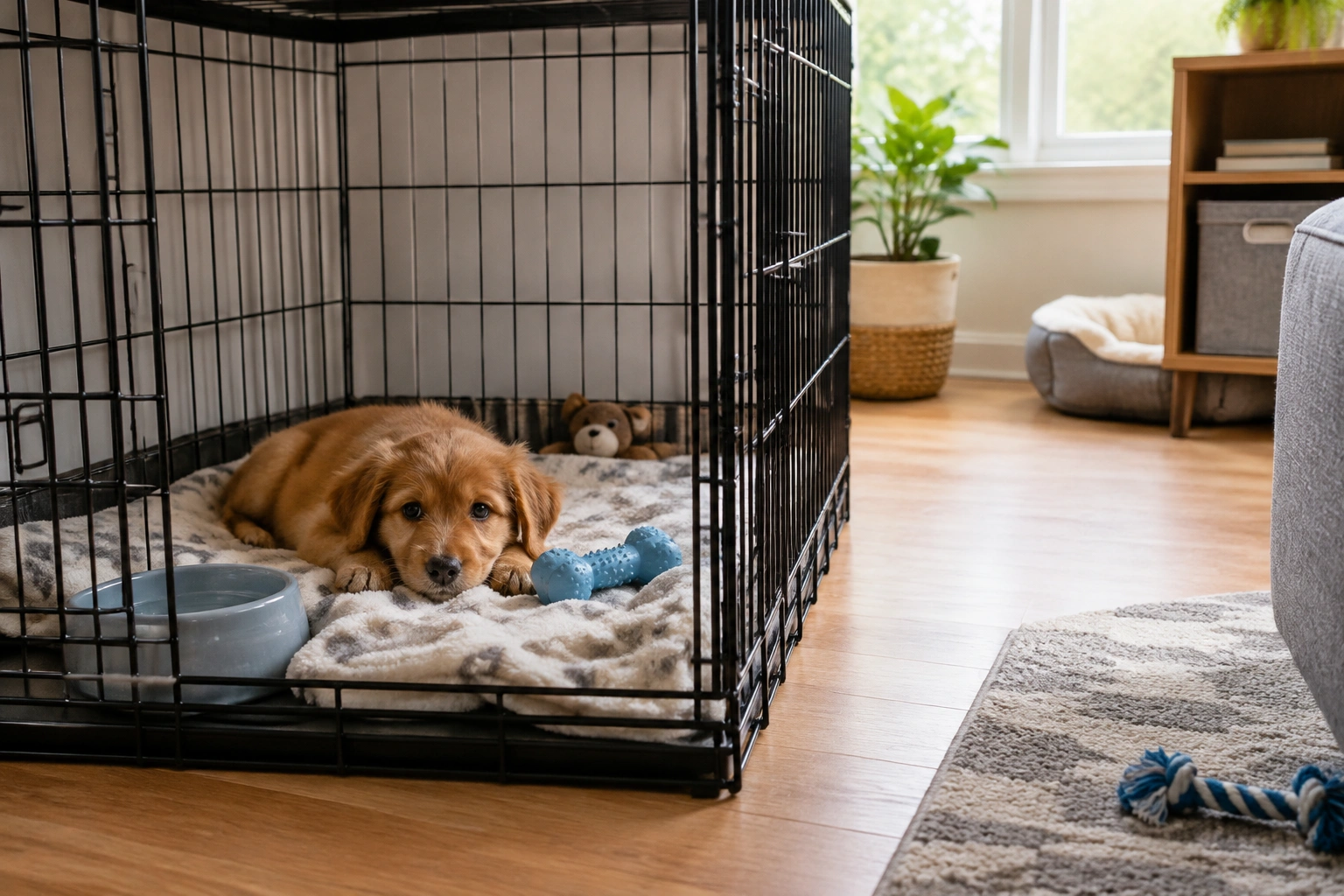
A useful early habit is to pair activity with a potty break. After a short interaction, give the puppy another bathroom break and then time in a secure area nearby while you do normal tasks. That rhythm helps the puppy learn that being alone for short periods is normal, not scary.
Set up a safe puppy area and puppy-proof the house
Before the puppy explores, make the home safe enough that you do not need to say “no” every few minutes. Puppies investigate with their mouths, and that means cords, shoes, trash, medications, and tiny objects all become hazards fast.
What to remove or secure
Focus first on anything the puppy could chew, swallow, or knock over:
- electrical cords and charger cables
- medications and cleaning products
- houseplants you are unsure about
- remote controls, socks, kids’ toys, and small objects
- food left on low tables or counters
- anything fragile, sharp, or easy to tip
A good rule of thumb is to remove anything toxic and anything you would not want chewed, and to keep the puppy’s access limited until you know their habits. A puppy-proofed space is not about perfection; it is about reducing the number of chances for trouble.
Create one “yes” space
Instead of giving the puppy access to the whole house, set up a small area where everything is safe to explore. A playpen, gated room, or crate-plus-pen setup can work well. This gives the puppy freedom without giving them access to danger.
That “yes” space should include:
- water
- a bed or crate
- safe chew toys
- a washable floor surface if possible
- easy access to the potty route
This setup is especially helpful when you cannot watch the puppy every second. Supervision gaps are where accidents, chewing, and unsafe behavior usually begin.
Where should the puppy sleep: crate, bed, or pen?
This is one of the first decisions new owners face, and it affects sleep, house training, and how easy the first weeks feel. There is no single perfect answer, but there are clear trade-offs.
| Choice | Best for | Trade-off | Practical use |
|---|---|---|---|
| Crate | House training, overnight safety, routine | Needs gradual introduction | Good for sleep and short supervised rests |
| Bed in a secure room | Puppies already calm and settled | Less help with house training | Works if the room is fully puppy-proofed |
| Pen | More movement while still contained | Easier to have accidents than in a crate | Useful for daytime management and nearby supervision |
| Puppy pads | Limited outdoor access or temporary bridge | Can slow outdoor house training | Best used carefully, not as the long-term plan |
Crate training vs puppy pads
If your main goal is faster house training and better supervision, a crate usually gives you more structure. Many puppies are less likely to soil a properly sized crate when the schedule is consistent, but that is a tendency rather than a guarantee. The crate is most useful for naps, bedtime, and short quiet periods.
Puppy pads can help in specific situations, such as apartment living with limited access or during a temporary transition. The trade-off is that pads can blur the lesson that pottying belongs outside, so they are usually best as a short-term tool rather than the main plan.
A practical sleep setup
Many puppies do well with a crate or bed in a quiet, draught-free place where they can rest undisturbed. The RSPCA also notes that a blanket from the puppy’s first home can help because it smells familiar and comforting. That small detail can make the first nights easier.
If you use a crate, make it feel safe, not punitive. Feed meals nearby, place a soft blanket inside if the puppy is not chewing bedding, and keep the first sessions short. The crate should predict sleep and calm, not isolation.
What to feed a puppy and how often to feed
A puppy’s food choice should be based on age, size, and your veterinarian’s guidance, especially if the breeder or rescue has already started the puppy on a specific diet. Consistency matters because sudden food changes can upset digestion and make routine harder.
How to choose a complete puppy food
Look for a food labeled as complete and balanced for growth or for puppies. That wording helps indicate the food is intended to meet a puppy’s nutritional needs rather than just being a treat, topper, or adult maintenance diet. If the label is unclear, ask your veterinarian which food is appropriate for your puppy’s age and breed size.
If your puppy is very young, small, or has a sensitive stomach, your vet may recommend staying with the current food for a little while before making any changes. When you do switch foods, do it gradually unless your vet says otherwise.
Dry food vs wet food for puppies
| Food type | Pros | Cons | When it makes sense |
|---|---|---|---|
| Dry food | Easy to portion, convenient, often simpler for routine | Less palatable for some puppies | Good for predictable daily feeding |
| Wet food | Often more appealing, useful for picky eaters | Messier, less convenient, can be harder to manage | Helpful if appetite is a concern or your vet recommends it |
Dry food is usually easier for routine and training because it stores well and portions cleanly. Wet food can be useful if a puppy is reluctant to eat, but it is less convenient for everyday management. Many owners end up using one main food and reserving treats or a small amount of the same food for training.
How often to feed
Feeding frequency changes as puppies grow, so follow the feeding instructions on the food and your vet’s advice. As a general guide:
- 8–12 weeks: usually 4 meals a day
- 3–6 months: usually 3 meals a day
- 6 months and older: often 2 meals a day
The exact schedule depends on age, breed, and body condition. Some smaller puppies may need more frequent meals for a time, while some older puppies do well on fewer meals sooner. Your veterinarian can help you adjust the plan if your puppy is growing quickly or seems too thin or too round.
A good practical rule is to feed at the same times each day. Predictable meals help with potty training because eating tends to create a bathroom need soon after. They also make it easier to notice if the puppy suddenly eats less, which can be an early sign something is off.
How to start potty training right away
House training works best when it begins on day one. The puppy is not being stubborn if they have accidents. They simply do not yet understand where they are supposed to go, and their bladder control is still developing.
The basic house-training rhythm
Take the puppy out:
- after waking up
- after eating
- after drinking
- after play
- after training
- after being carried around or handled for a while
- before bed
If the puppy has just done something active or exciting, assume a potty break is needed soon. Puppies often need to go right after they wake from a nap, which is why watching their sleep pattern helps so much.
A simple age-based potty-training guide
- 8–10 weeks: expect very frequent trips outside or to the potty area, often every 1–2 hours when awake, plus after meals, naps, and play.
- 3–4 months: many puppies can begin stretching the interval a little, but they still need regular breaks and close supervision.
- Older puppies: the schedule can usually become more predictable, but accidents can still happen if the routine changes.
Use the puppy’s age and behavior as your guide rather than trying to force longer gaps too early. If in doubt, go out sooner.
What to do after accidents
If you catch the puppy in the act, interrupt gently, take them to the right potty spot, and praise them if they finish there. If you discover the accident later, clean it thoroughly and move on. Punishment does not teach a puppy where to go; it usually teaches them to hide from you.
This is one reason crates and close supervision help so much. They reduce the number of chances for accidents and make it easier to notice patterns in timing.
A note on holding the bladder
People often ask how long a puppy can hold it, but that answer varies with age and the individual puppy. Rather than trying to stretch time, build the habit of frequent breaks. If you are wondering whether you waited too long, you probably did.
How much sleep and rest a puppy needs
Puppies need a lot of sleep, and overtired puppies often look wild rather than sleepy. They may bite harder, zoom around, ignore cues, or struggle to settle. That is one reason rest is part of training, not separate from it.
A calm puppy schedule usually includes:
- short awake periods
- potty break
- a little training or play
- another potty break
- a nap
For many young puppies, a useful target is several naps across the day with only short wake windows in between. If your puppy is becoming frantic, mouthy, or unable to focus, they may need rest rather than more stimulation.
A simple sample day for a young puppy might look like this:
- wake up
- potty break
- breakfast
- potty break
- 5–10 minutes of training or calm play
- nap
- potty break after waking
- short social exposure or quiet handling
- another nap
- evening meal
- potty break
- bedtime
The reason this works is simple: puppies learn poorly when they are exhausted. A tired puppy is not a better-behaved puppy; often, they are a more chaotic one.
Keep the bedtime routine early and predictable. Dim the lights, reduce excitement, take the puppy out to potty, then settle them in their safe sleep space. The goal is to teach the body that nighttime means rest.
How much exercise and play is safe for a puppy?
Puppies need movement, but not the kind of long, intense exercise that strains growing bodies. The safest approach is to mix short, structured activity with plenty of rest.
Free play vs structured exercise
| Activity type | Benefit | Risk | Best use |
|---|---|---|---|
| Free play | Burns energy, feels natural | Can become rough or overstimulating | Short bursts in a safe area |
| Structured exercise | Easier to control and teach good habits | Too much can tire a puppy out | Leash walks, simple games, brief training play |
Free play is useful, but it can quickly turn into frantic zoomies or rough behavior. Structured exercise gives you more control and helps the puppy learn to move calmly beside you.
For young puppies, think in short sessions rather than long outings. A slow sniffy walk, a few minutes of tug, or a simple fetch-and-return game can be enough. What matters most is that the session ends before the puppy becomes overtired.
A helpful example is this: after a potty break, let the puppy sniff around the living room or take a slow yard walk, then settle them again. That kind of low-pressure movement can help them relax without overstimulating them.
When to start training and socialization
Training should begin immediately, but it should stay simple. Socialization should also begin early, but it needs to be gradual and controlled.
Training at home
The first lessons are tiny:
- name recognition
- coming when called at close range
- following you for a treat
- sitting for a reward
- handling paws, ears, mouth, and collar gently
Use positive reinforcement. Reward the behavior you want instead of correcting every mistake. Short sessions with a clear reward tend to work well for many puppies, especially when you keep the goal very small and end before they lose focus.
Home training is flexible and low-cost, while puppy classes add structure and planned social exposure. Many families use both. If you choose classes, look for a puppy-safe setting that keeps interactions controlled rather than chaotic.
Socialization without overwhelm
Good socialization is not “meet everyone immediately.” It is steady exposure to safe, new experiences in a way the puppy can handle.
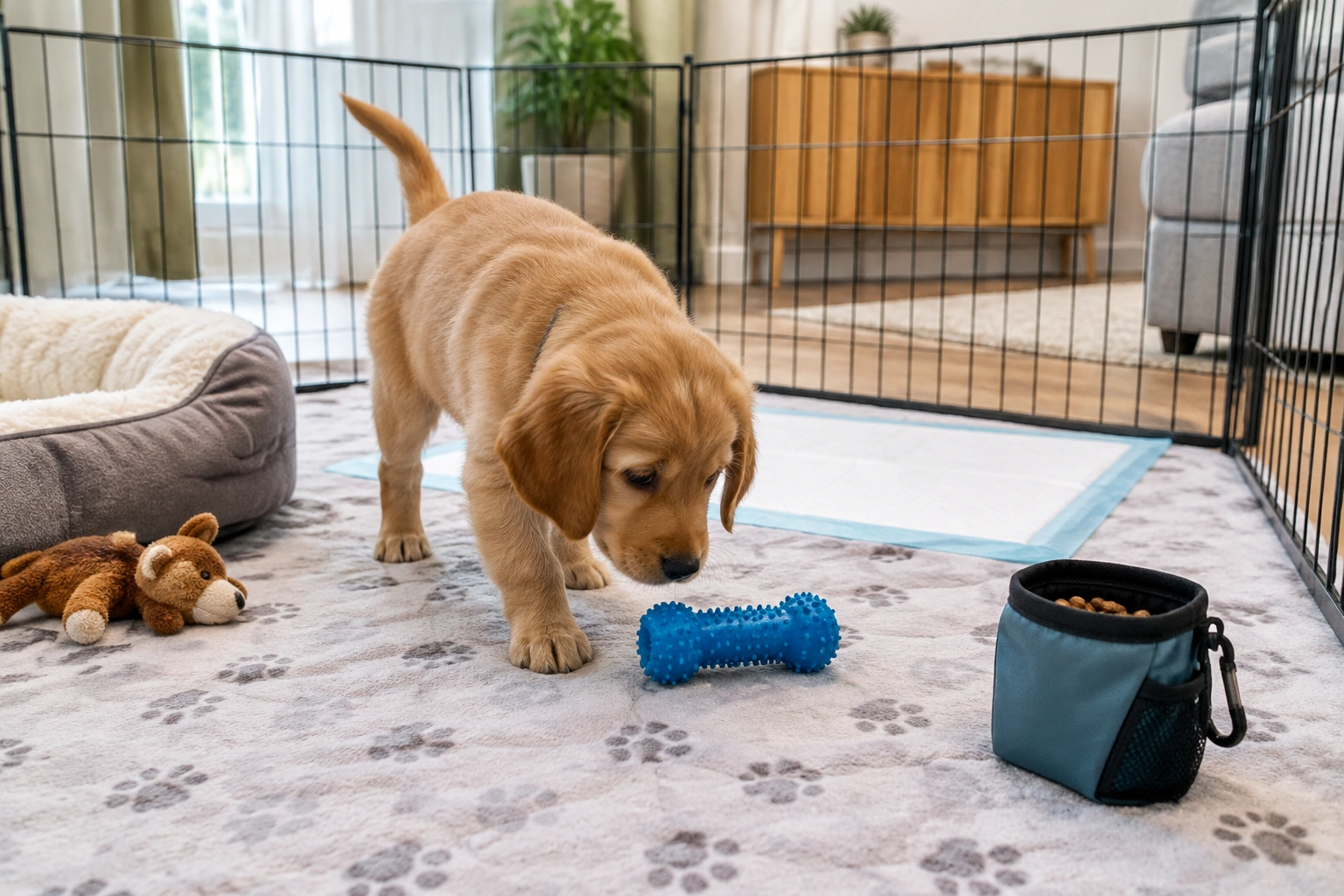
That can include:
- hearing the vacuum, blender, or doorbell
- seeing people from a distance
- walking on different surfaces
- meeting calm, healthy dogs in a controlled setting
- being gently touched on the feet, tummy, and mouth
The point is to build confidence, not flood the puppy. One new thing at a time is often enough. A shy puppy may do better with a short look at a new person or sound, then a break. That is progress.
If your puppy has not finished vaccines, ask your veterinarian what environments are low-risk and what should wait.
How to handle biting, chewing, and jumping
These are normal puppy behaviors, but they still need management. The goal is not to punish the puppy for being a puppy. The goal is to teach better outlets.
Biting and nipping
When a puppy bites during play, redirect to a chew toy. If the puppy stays too amped up, pause the interaction briefly and let them reset. Many puppies bite more when they are tired, overstimulated, or under-supervised.
Chewing is not a moral failure; it is how puppies explore and soothe themselves. Give them legal targets before they choose your furniture.
Jumping
Jumping often happens because the puppy wants attention. Calmly turn away, wait for four paws on the floor, then reward that behavior. Consistency matters more than drama.
If everyone in the house reacts differently, the puppy gets mixed messages. That is why the whole family should use the same rules.
What vet care a puppy needs in the first weeks
Schedule the first vet visit soon after bringing the puppy home, especially if vaccine history is unclear. Your vet can review the puppy’s current status and help you plan vaccinations, deworming, and parasite prevention.
What to expect at the first appointment
A first visit usually includes:
- a full physical exam
- weight check and growth discussion
- review of vaccination records, if available
- deworming discussion or treatment if needed
- parasite prevention advice
- diet and feeding review
- guidance on safe socialization and exercise
What to bring or ask
Bring any records you have from the breeder, rescue, or previous owner, plus the food the puppy is currently eating if you are unsure about a switch. It also helps to ask:
- What vaccines does my puppy need next, and when?
- Does my puppy need deworming now?
- What foods are appropriate for this age and breed size?
- What socialization is safe before the vaccine series is complete?
- When should the next visit happen?
The exact schedule varies, but many puppies need more than one early visit because vaccines are given in a series. Your veterinarian can map out the timing based on your puppy’s age and health history.
This is also the time to ask what activities are safe before the vaccine series is complete. That guidance matters because the right socialization plan depends on your puppy’s health status and local risk level.
For a broader look at timing for later procedures, you may also find this guide on when puppies are usually neutered helpful once your vet starts discussing long-term planning.
Puppy supplies checklist
You do not need to buy everything, but a few items are genuinely useful from day one.
Essentials
- leash
- collar or harness
- ID tag
- crate or secure pen
- safe chew toys
- food and water bowls
- puppy food
- cleaning supplies for accidents
- bed or blanket
- gate or barrier if needed
The point of this list is safety and routine. A puppy does not need dozens of toys or fancy gear. They need a few reliable tools that help you manage sleep, potty training, and supervision.
Common mistakes to avoid with a new puppy
A lot of puppy stress comes from a few predictable errors.
The biggest ones
- expecting too much bladder control too soon — instead, schedule frequent potty breaks and build up slowly
- giving the puppy too much freedom too early — instead, use a crate, pen, or gated area until habits improve
- punishing accidents — instead, clean thoroughly and reward the right potty spot
- overexercising or overtraining — instead, keep sessions short and include plenty of rest
- introducing too many new people, dogs, or places at once — instead, use gradual, low-pressure exposure
- skipping the first vet visit — instead, book an early wellness exam and vaccination plan
- letting the puppy rehearse biting, chewing, or jumping without redirection — instead, interrupt, redirect, and reward the behavior you want
The pattern behind most of these mistakes is the same: too much, too soon. Puppies do best when life is structured enough to feel safe but not so packed that they are overwhelmed.
When to Call Your Veterinarian
Call your veterinarian if your puppy is not eating, seems unusually lethargic, has repeated vomiting or diarrhea, is struggling to breathe, or seems dehydrated. You should also contact the clinic if you are unsure about vaccine timing, deworming, or whether a symptom is normal for your puppy’s age.
If you are ever caught between “wait and see” and “call,” it is usually safer to call.
FAQs
What should I do first with a new puppy?
Take the puppy to the potty area, offer water, keep the first meal routine consistent, and set them up in a safe, quiet space. Keep the first day calm and predictable.
Should I use a crate or puppy pads?
A crate is usually better for house training and routine. Puppy pads can help in limited situations, but they may slow the move to outdoor potty training if used as the main plan.
How soon should I start training my puppy?
Right away. Keep the first lessons short and simple, using positive reinforcement for basic behaviors like name recognition, coming when called, and sitting.
How much should a puppy sleep?
A lot. Puppies need frequent naps and an early bedtime routine so they can learn, grow, and avoid overtired behavior.
When should my puppy see a vet?
Soon after coming home, especially if vaccine history is unclear. Your vet can confirm the vaccination and deworming plan and guide safe socialization.
Final thoughts
The best thing you can do for a puppy is not complicated: build a safe space, follow a routine, reward good behavior, and protect the puppy from too much freedom too soon. If you keep those priorities in order, the first weeks become much easier to manage—and much better for the puppy.