
How to Manage Water During Border Collie Bath Time

Quick Answer
Manage excess water during Border Collie bath time by bathing your dog in a contained area, using a low-pressure handheld sprayer or small cup, wetting the coat in sections, and keeping towels ready to catch drips. Use a nonslip surface, avoid spraying the face and ears directly, and rinse the thick coat thoroughly without flooding the surrounding floor.
Bathing a Border Collie can leave water across the bathroom floor, around the tub, and on nearby walls if your dog shakes or moves frequently. The solution is to control where the water goes before bathing begins, rather than trying to mop up every splash while handling a wet dog.
Border Collies have coats that can hold considerable water, especially when the undercoat is dense. A controlled rinsing routine helps manage runoff while making it easier to clean the coat properly and keep your dog comfortable.
1. Prepare the Bathing Area to Contain Water
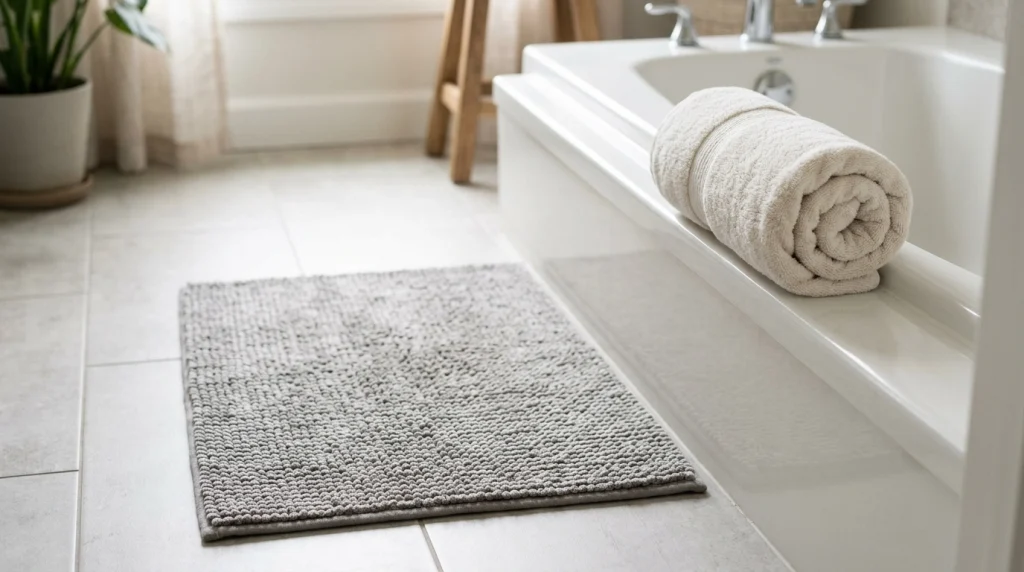
The most effective way to manage excess water is to prepare a small, washable bathing area before turning on the tap. A bathtub, walk-in shower, or suitable enclosed washing space can work, provided your dog can stand securely and you can reach the coat without straining.
- Remove nearby clutter: Move baskets, electrical devices, toiletries, and loose fabrics away from the splash zone.
- Protect the floor: Place absorbent towels outside the tub or shower where water is likely to drip. Use a nonslip bath mat designed for wet conditions.
- Check drainage: Remove loose hair from the drain cover before bathing so water can escape freely.
- Keep supplies close: Position shampoo, a rinse cup, washcloths, and several towels within reach before bringing your dog into the area.
- Control the exit: Put a dry towel or absorbent mat where your Border Collie will step out after the bath.
A contained area reduces the distance water can travel, but it does not eliminate the need to supervise your dog. Never leave a dog unattended in a bathtub, even briefly, and do not rely on a slippery floor or high tub walls to keep the dog in place.
2. Use a Controlled Water Flow Instead of a Strong Spray
A handheld showerhead on a low setting or a small plastic cup usually gives you better control than a fully opened faucet or a high-pressure spray. Strong water flow can startle a dog, encourage sudden movement, and send water beyond the bathing area.
Test the water temperature on your wrist before it touches your Border Collie’s coat. Aim for comfortably lukewarm water, and adjust the flow until it wets the fur without splashing forcefully off the body.
Choose the right rinsing method
- Low-pressure handheld sprayer: Useful for directing water through thicker body fur while keeping the spray close to the coat.
- Small rinse cup: Helpful for dogs that dislike the noise of a showerhead or become unsettled by moving spray.
- Damp washcloth: Best for cleaning around the eyes, muzzle, and other areas where direct spraying is unsuitable.
Keep the nozzle close enough to control the water without pressing it against the skin. Direct the flow downward and toward the body instead of outward across the room.
The ASPCA’s dog grooming guidance recommends using a controlled spray or pouring water carefully while avoiding direct water exposure to the ears, eyes, and nose.
3. Wet the Coat in Sections to Reduce Runoff
Wet your Border Collie’s coat gradually, working from the neck and shoulders toward the back, sides, legs, and tail. This gives you more control over runoff and helps prevent water from pouring off several parts of the dog at once.
- Start at the shoulders. Wet a manageable section of the body with a low, steady flow.
- Move along the back and sides. Use your free hand to guide water through the fur instead of repeatedly spraying the same area.
- Work down the legs and toward the tail. Allow water to drain into the tub rather than spraying outward.
- Check the coat underneath. Part the fur gently with your fingers to see whether water is reaching the skin, especially in dense areas.
- Leave the face for separate cleaning. Use a damp washcloth around the muzzle and eyes instead of directing a showerhead at the head.
Do not rush by increasing the water pressure. Thick fur may take longer to wet thoroughly, and adding more pressure often creates extra splashing without improving control.
Brushing before the bath also helps remove loose hair and identify tangles that could become harder to manage once wet. If you find a tight mat, avoid pulling or scrubbing it aggressively; severe matting may need professional grooming.
4. Prevent Water From Reaching the Face and Ears
Keep direct water flow away from your Border Collie’s eyes, nose, and ear openings. These areas need careful cleaning, not a forceful rinse, and splashing near the face can make a dog resist the rest of the bath.
Use a clean, damp washcloth to wipe the muzzle and facial fur gently. Rinse the cloth as needed rather than pouring water over the head.
For the ears, clean only the accessible outer area and avoid directing water into the ear canal. Do not insert cotton swabs or other objects into the canal. If water accidentally reaches the ears, allow your dog to shake naturally and gently blot the outside with a towel.
Dogs with a history of ear problems may need additional care. Watch for persistent head shaking, redness, unusual discharge, odor, or discomfort after bathing; these signs warrant veterinary advice rather than repeated home cleaning.
Warning
Never force a struggling Border Collie to remain under running water. Pause, reduce the flow, and let your dog settle before continuing. A calm, controlled bath is safer than trying to finish quickly while the dog is panicking.
5. Control Splashes When Your Border Collie Moves or Shakes
Even with careful rinsing, a Border Collie may step around, turn suddenly, or shake water from its coat. The goal is to reduce unnecessary movement and contain the water that cannot be avoided.
- Use a secure footing: A properly fitted nonslip bath mat can help your dog stand more confidently on a wet surface.
- Keep sessions calm: Speak quietly, use rewards when appropriate, and allow brief pauses if your dog becomes restless.
- Work in a consistent order: A predictable routine reduces the need to move your dog repeatedly to reach missed areas.
- Pause before rinsing again: If your dog begins to shake, stop the water and allow room for the movement rather than spraying through it.
- Use a helper when needed: A second person can calmly reward the dog or manage supplies while you rinse, provided both people can work safely.
Do not tightly restrain your dog’s neck or use a collar arrangement that could tighten or catch during movement. If your dog repeatedly tries to escape, growls, snaps, or shows intense fear, stop and consider gradual bath training or help from a qualified, reward-based trainer or groomer.
A useful distinction is that shaking is a normal way for dogs to shed water, not necessarily a sign that something has gone wrong. You can limit the mess by stopping the spray before the shake and keeping towels ready for afterward.
6. Rinse Thoroughly Without Flooding the Bathroom
Reducing excess water does not mean leaving shampoo in the coat. Residue can irritate the skin, and a Border Collie’s dense fur may conceal soap that has not been rinsed away.
Use a low, steady flow and work systematically through the back, sides, chest, legs, belly, and tail. Part the fur with your fingers as you rinse, paying particular attention to areas where the coat is thick or folded against the body.
Run your hands over the rinsed coat and check for slippery patches or visible foam. If you find either, continue rinsing that area until the residue is gone. Follow any special contact-time instructions if your veterinarian has prescribed a medicated shampoo.
The Virginia Tech Veterinary Teaching Hospital’s bathing guidance emphasizes thorough rinsing because leftover shampoo can irritate the skin, including in less visible areas of the coat.
To manage runoff during rinsing, keep the dog’s body positioned over the tub drain, work on one section at a time, and stop the flow while repositioning your hands or checking the coat. Avoid repeatedly soaking an area that is already clean.
7. Remove Excess Water Before Your Dog Leaves the Bath
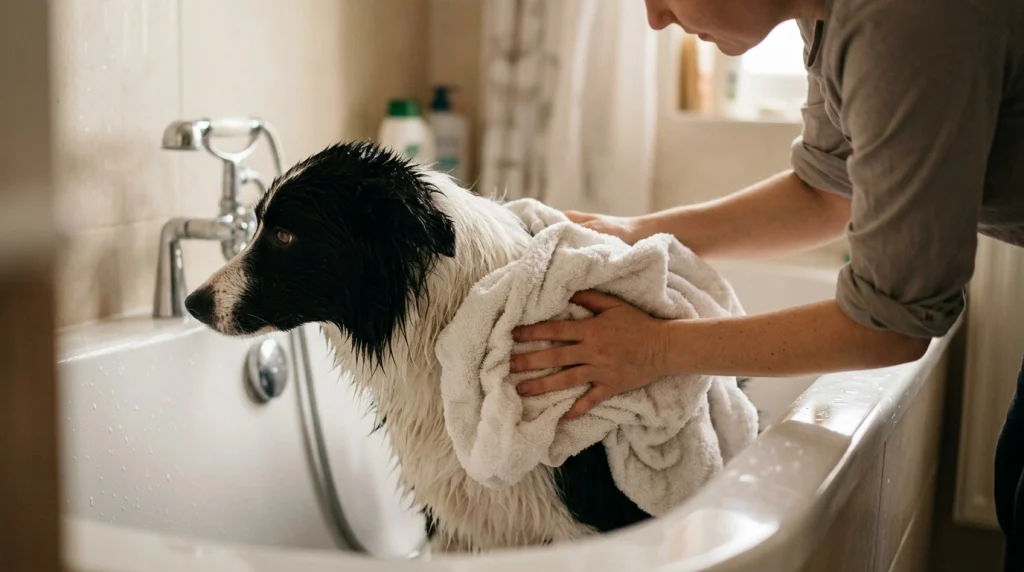
Once the coat is fully rinsed, turn off the water before guiding your Border Collie out. Give the coat a moment to drain over the tub, then use absorbent towels to remove as much moisture as practical.
- Blot the coat: Press a towel gently against the back, sides, chest, and legs. Avoid vigorous rubbing, which can tangle longer fur.
- Use another towel if needed: A saturated towel will absorb less water, so replace it when it becomes too wet.
- Catch drips at the exit: Guide your dog onto the prepared absorbent mat or towel before it walks across the bathroom.
- Dry the coat completely: Pay attention to the undercoat, skin folds, paws, and spaces between the toes.
- Clean the bathing area: Remove loose fur and standing water once your dog is safely settled.
If you use a dog-safe dryer, choose a cool or low-heat setting, keep it moving, and introduce the noise gradually. Stop if your dog becomes distressed, and never direct hot air at one patch of skin.
Drying matters beyond keeping the floor clean. Moisture trapped in a dense coat can contribute to skin discomfort, so do not stop at a dry-looking outer layer if the undercoat remains wet.
8. What Should You Do If Water Still Spreads Everywhere?
If the bathroom remains soaked after each bath, identify where the water escapes instead of changing every part of the routine at once.
- Water sprays across the room: Reduce pressure and keep the nozzle closer to the coat.
- Water pours over the tub edge: Work on smaller sections, keep the dog positioned over the drain, and check whether movement is causing the overflow.
- The floor becomes wet during drying: Move the drying step onto an absorbent mat and blot the coat before your dog exits.
- The tub fills with water: Pause bathing and check for a blocked drain or excessive water flow before continuing.
- Your dog panics or struggles: Stop the bath if necessary. Use gradual, reward-based practice or seek help from a qualified groomer instead of forcing the process.
For a Border Collie that dislikes full baths, a brief wash of muddy paws or a targeted clean of dirty areas may be sufficient when the rest of the coat is clean. However, if the entire coat needs washing, prioritize complete rinsing and safe drying over finishing with the least possible water.
Tip
For the next bath, change only one variable at a time: water pressure, bathing position, or towel placement. This makes it easier to identify what actually reduces splashing without making the process harder for your dog.
Frequently Asked Questions
Should I bathe my Border Collie in a bathtub or shower?
Choose whichever space provides secure footing, good drainage, and enough room to control the water. A bathtub can contain runoff well, while a walk-in shower may be easier for a larger or reluctant dog to enter.
Can I use a regular showerhead to rinse my Border Collie?
Yes, if the water pressure is low and your dog tolerates the sound. Keep the spray directed toward the body, and use a cup or damp cloth around the face and ears.
How can I stop my Border Collie from shaking water everywhere?
You cannot reliably eliminate a dog’s natural shaking reflex. Turn off the water when your dog starts to shake, allow the movement, and use towels and an absorbent mat to catch the remaining water.
Is it safe to put cotton balls in my dog’s ears during a bath?
Do not force cotton balls into the ear canal. The safer approach is to keep direct water away from the ears and gently blot the outer ear if it becomes wet. Ask your veterinarian about additional precautions if your dog has recurring ear problems.
How do I dry a Border Collie’s thick coat without making a mess?
Blot the coat with absorbent towels while your dog is still over the tub, then move to a washable or absorbent drying area. If using a dryer, choose low heat or a cool setting and ensure the undercoat dries thoroughly.
What should I do if my Border Collie is afraid of bath time?
Keep sessions short, reward calm behavior, and gradually introduce the bathing area, water sounds, and gentle wetting without forcing the dog to continue when distressed. If fear is severe or persistent, seek help from a qualified reward-based trainer or experienced groomer.
Conclusion
Managing excess water during Border Collie bath time starts with a contained washing area, controlled water pressure, and a consistent rinsing routine. Wet the coat in sections, protect the face and ears, and keep absorbent towels ready before your dog steps out of the tub.
Remember that less splashing should never mean incomplete rinsing or inadequate drying. If your Border Collie is nervous about water, slow down and build tolerance gradually. With a few practical changes to the setup and routine, you can reduce bathroom cleanup while keeping bath time safer and more comfortable for your dog.