
How Border Collie Coat Texture Changes With Age

Quick Answer
A Border Collie’s coat usually changes from a soft, fluffy puppy coat to a more developed adult double coat as the dog matures. The adult topcoat often begins appearing around 4–6 months, becoming more noticeable over the following months. The final texture, length, and fullness vary with genetics, coat type, sex, season, and individual development.
A Border Collie puppy may feel surprisingly soft and fluffy, while the same dog can develop a firmer, more weather-resistant outer coat as it grows. The change is part of normal coat development, but it does not happen at exactly the same age or to the same degree in every dog.
The most useful distinction is between normal maturation of the coat and a new texture change caused by a skin or health problem. Understanding the difference helps you set realistic expectations and choose appropriate grooming care.
How Does a Border Collie’s Coat Change From Puppyhood to Adulthood?
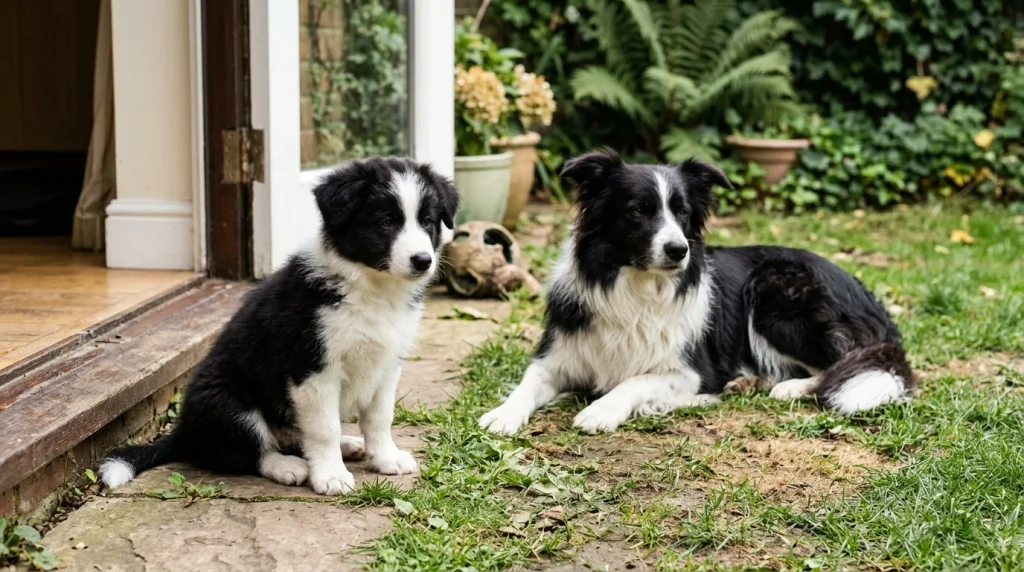
Most Border Collies gradually develop a more defined adult coat, with a denser, softer undercoat beneath a stronger outer layer. The puppy coat may initially feel uniformly soft, whereas the mature coat can feel slightly coarser on the surface and fuller in areas such as the chest, tail, and hindquarters.
Border Collies have two recognized coat varieties: smooth and moderately long, often called rough. Both have a double coat, but their visible length and feathering differ. The United Kennel Club’s Border Collie breed standard describes a dense, medium-textured topcoat and a soft, short, dense undercoat.
These layers serve different purposes. The outer coat helps protect the skin and provides resistance to weather, while the undercoat contributes insulation. A mature coat does not have to be extremely long or fluffy to be normal.
At What Age Does the Adult Border Collie Coat Start Appearing?
The adult topcoat often starts becoming noticeable at around 4–6 months of age, although the transition can begin earlier or progress more gradually. The extended Border Collie breed standard published by the Border Collie Club of South Australia describes baby puppies as having variable coat qualities until the adult topcoat begins to appear during this period.
This age range is a guide, not a deadline. One puppy may develop a more defined outer coat relatively early, while another may retain a soft, fluffy appearance for longer. Coat length, genetics, and individual maturation all influence what you see.
What changes might you notice at different ages?
- Birth to approximately 3 months: The coat is generally soft and puppy-like. Its texture and fullness may not accurately predict the adult coat.
- Approximately 4–6 months: Adult hairs may begin appearing, and the surface can feel less uniformly fluffy. The coat may look uneven during the transition.
- Approximately 6–12 months: Differences between the undercoat and outer coat may become easier to see. Feathering and the outline of the mature coat can develop gradually.
- Beyond the first year: The coat may continue changing in fullness, length, and seasonal shedding. Some dogs take longer to develop their mature appearance.
These stages overlap, and there is no universal age when every Border Collie’s coat is considered finished. A dog’s coat can continue responding to seasonal cycles and other influences after its main puppy-to-adult transition.
Does a Border Collie’s Fur Become Coarser, Softer, or Thicker With Age?
It can become more defined and somewhat coarser on the surface as the adult outer hairs replace the puppy coat. However, this does not mean the entire coat should feel rough. The undercoat should remain soft and dense, and individual Border Collies naturally differ in texture.
Three changes are worth distinguishing:
- Texture: The outer hairs may feel firmer or more substantial than the puppy fur.
- Fullness: The coat may look thicker as the adult layers and feathering develop, although fullness varies considerably.
- Length: Rough-coated Border Collies may develop more visible feathering around the chest, tail, and backs of the legs. Smooth-coated dogs remain comparatively short-haired.
A coat that feels softer than another Border Collie’s is not automatically unhealthy. Breed standards describe the general coat structure, not an identical feel for every individual. Genetics and coat variety are important reasons two healthy dogs of the same age can look and feel different.
Why Do Some Border Collies Develop Longer or Fluffier Coats Than Others?
The main explanation is natural variation in coat type and inherited characteristics. Age alone cannot predict whether a Border Collie will develop a short, close-fitting coat or a moderately long coat with prominent feathering.
Smooth versus rough coats
A smooth-coated Border Collie has shorter hair over most of the body, although some feathering may be visible on the chest, forelegs, or tail. A rough-coated Border Collie has a moderately long coat, often with a more noticeable mane, breeches, and tail brush.
Both coat varieties have an undercoat and an outer coat. A smooth-coated dog is not necessarily missing its protective undercoat, and a rough-coated dog does not need excessive length or curls to have a healthy coat.
Genetics and individual development
Inherited traits influence coat length, texture, density, and feathering. The coat of a puppy’s parents and close relatives may offer clues, but it cannot guarantee the exact adult appearance.
Sex can also influence fullness: breed-standard guidance notes that females are generally less heavily coated than males. This is a tendency rather than a rule for every dog.
Seasonal changes
Adult Border Collies can shed undercoat as seasons change. The coat may look less full during a shedding period and denser when the undercoat grows back. Temperature, daylight, indoor living conditions, and the individual dog’s shedding pattern can affect how obvious this change appears.
Seasonal shedding can make the coat look different without changing its basic coat variety. It should not, however, cause unexplained bald patches or inflamed skin.
How Can You Tell Normal Coat Development From a Potential Problem?
Normal development is generally gradual and occurs without discomfort. A coat may change from soft to more defined, become fuller in some areas, or shed more visibly at certain times of year while the skin remains comfortable and intact.
A sudden or pronounced change is different. Dry, brittle, greasy, unusually dull, or thinning fur can sometimes reflect a skin problem, nutritional issue, parasites, or another health concern. Texture alone cannot identify the cause.
| What you notice | Possible interpretation | Reasonable next step |
|---|---|---|
| Gradually firmer outer hairs | Normal adult-coat development | Continue routine grooming and observation. |
| More loose fur during seasonal shedding | Normal coat turnover may be occurring | Brush gently and monitor skin and coat coverage. |
| New bald patches or obvious thinning | Possible skin, parasite, or health issue | Arrange veterinary assessment. |
| Itching, redness, sores, or persistent greasy fur | Possible irritation or skin disease | Contact a veterinarian for appropriate advice. |
The PDSA’s veterinary guidance on hair loss in dogs explains that ordinary moulting should not leave bald or patchy areas and that several conditions can cause abnormal fur loss.
Seek veterinary advice if the coat change is accompanied by persistent scratching, excessive licking, dandruff, unpleasant odor, sores, or a clear change in the skin. Sudden extensive hair loss or painful, infected-looking skin warrants prompt attention. Do not assume these signs are simply part of growing up.
How Should You Groom a Border Collie During the Coat Transition?
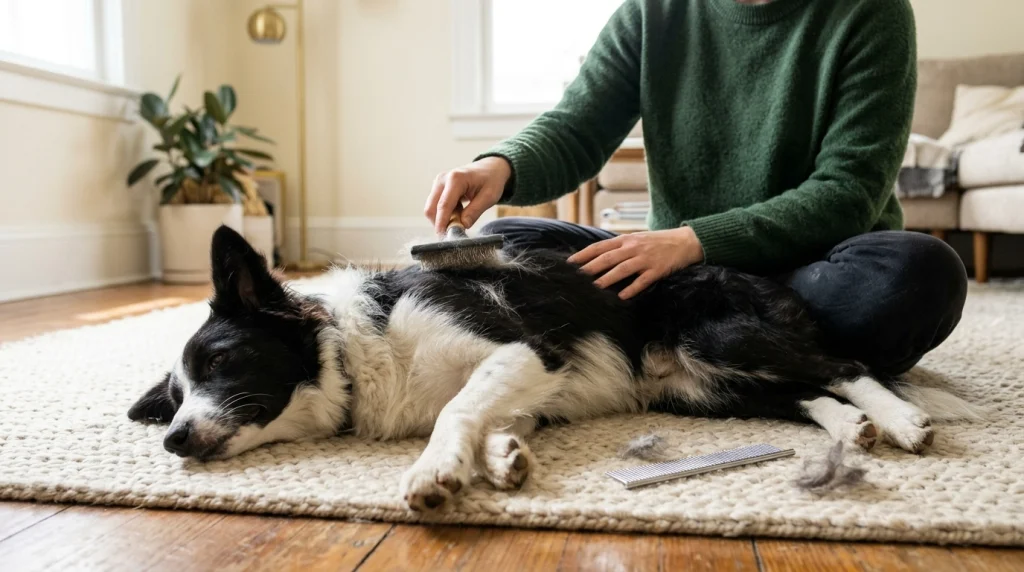
Use gentle, regular brushing to remove loose hair, separate the coat, and notice changes in the skin. During a shedding period, you may need to brush more often, but forceful brushing or repeatedly pulling at tangles can irritate the skin and damage hairs.
- Start gently. Introduce short brushing sessions while your dog is relaxed. Use a tool suitable for the coat length and avoid scraping the skin.
- Work through the longer areas. Check behind the ears, around the chest, beneath the legs, and behind the thighs, where loose hair and small tangles may collect.
- Separate the layers carefully. For a rough-coated dog, gently work through the outer hair so loose undercoat does not remain packed underneath.
- Check the skin. Look for redness, flakes, bumps, parasites, or sore areas as you groom. Stop if brushing causes pain.
- Bathe only when needed. Use a dog-appropriate shampoo and rinse thoroughly. Frequent unnecessary bathing can dry or irritate some coats.
Regular brushing is usually sufficient for routine coat maintenance. The Border Collie Club of South Australia’s grooming guidance explains the protective role of the double coat and recommends routine brushing to help manage loose hair.
Tip
Take a photo of your dog’s coat every few weeks under similar lighting. Comparing the same areas over time can help you distinguish gradual maturation from a sudden change in texture, coverage, or skin condition.
Avoid shaving a Border Collie’s double coat simply because it seems thick or sheds heavily. If matting, skin disease, or another condition makes clipping necessary, ask a veterinarian or experienced groomer about the safest approach for that individual dog.
Related Product
Dog Grooming Brush for Double-Coated Breeds
A suitable grooming brush can help remove loose fur and gently maintain your Border Collie’s coat during seasonal shedding and the transition to adult hair. Choose one appropriate for your dog’s coat length and skin sensitivity.
As an Amazon Associate, we earn from qualifying purchases.
Frequently Asked Questions
Will my Border Collie puppy get fluffier as it grows?
Possibly, particularly if your dog develops a moderately long coat with more feathering. However, puppies do not all become equally fluffy. Genetics and coat variety influence the final appearance, so puppy softness alone cannot predict adult fullness.
Can a Border Collie’s puppy coat stay soft into adulthood?
Yes, the coat may remain relatively soft, especially in some areas. A mature double coat should still have an outer layer and an undercoat, but individual texture varies. Softness alone does not indicate that the coat has failed to mature.
Does a Border Collie’s coat change color as it gets older?
Some dogs show changes in the appearance of their coat as they mature, shed, or grow new hairs. However, color change and texture change are different processes. A sudden or unusual color change accompanied by skin symptoms should be checked by a veterinarian.
Do smooth-coated Border Collies develop an undercoat?
Yes. Smooth-coated Border Collies also have a double coat, with a protective outer layer and a soft, dense undercoat. Their shorter visible hair does not mean they have no undercoat or no seasonal shedding.
How often should I brush a Border Collie puppy?
Start with short, gentle sessions and adjust the frequency to the coat and the amount of loose hair. Regular brushing helps your puppy become comfortable with grooming and lets you check for tangles or skin changes without overworking the coat.
Should I worry if my adult Border Collie’s coat suddenly becomes rough or thin?
A gradual change in texture can be normal, but sudden roughness, persistent dryness, thinning, bald patches, itching, or redness deserves attention. Contact your veterinarian if the change persists or comes with other symptoms, because coat appearance alone cannot establish the cause.
Conclusion
A Border Collie’s coat usually develops gradually, with the adult topcoat beginning to appear around 4–6 months and further changes occurring as the dog matures. The finished coat may feel more defined, look fuller, or develop more feathering, depending on whether the dog has a smooth or rough coat and on its inherited traits.
Focus on the overall pattern rather than expecting a specific texture by a particular birthday. Gentle brushing, routine skin checks, and sensible bathing help maintain the coat during development. If a change is sudden or accompanied by itching, sores, bald patches, or persistent dryness, seek veterinary advice instead of assuming it is a normal age-related transition.